 Whatcom County
 Why Sunnyland Homes Wear Out Siding Faster Than You'd Expect
Sunnyland sits close enough to Bellingham Bay that salt-laden air is a daily fact of life, not an occasional nuisance. Add Whatcom County's long stretch of driving rain each fall and winter, plus a moss season that can run from October well into spring, and you've got a combination that's genuinely hard on exterior siding. Homes here don't fail because owners neglected them. They fail because the siding material wasn't built for this specific mix of conditions, or it was installed in a way that gave moisture and salt a way in.
If you're looking at cracked caulk lines, soft spots near the bottom courses, paint that won't hold a finish anymore, or green streaking that comes back within a season of cleaning, you're seeing the effects of this climate doing what it does. The question isn't whether Sunnyland's weather will test your siding — it's whether the siding and the installation were designed to handle that test.
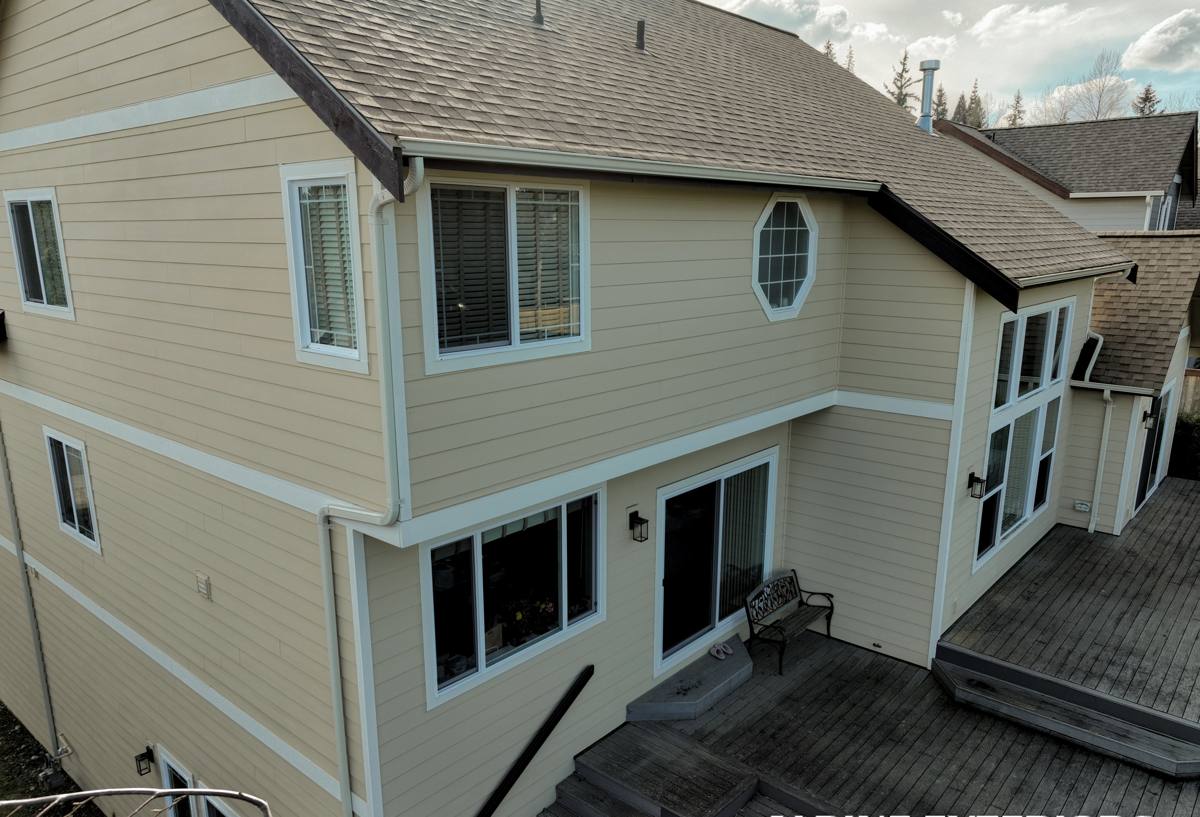
What Salt Air, Rain, and Moss Actually Do to Siding
Salt Air
Airborne salt from the bay settles on exterior surfaces and accelerates corrosion of exposed fasteners, staples, and any metal trim that isn't properly protected. On wood-based products, salt exposure combined with moisture speeds up the breakdown of the material's surface, which is why homes closer to the water tend to need repainting or residing sooner than homes further inland in the county.
Driving Rain
Wind-driven rain doesn't just fall straight down — it gets pushed sideways and upward into laps, seams, and butt joints. Siding that isn't installed with correct overlaps, flashing, and clearances will let water track behind the panel over time. Once moisture gets behind siding and can't dry out, you're dealing with rot, mold, and sheathing damage long before the siding itself shows obvious signs of failure.
Moss Season
Whatcom County's damp, shaded conditions are ideal for moss and algae growth, especially on north-facing walls and anywhere siding stays shaded most of the day. Moss holds moisture against the surface longer than open air would, which compounds the rain problem. Materials that absorb water are far more vulnerable here than materials engineered to shed it.
What a Correct Siding Replacement Involves in Sunnyland
A siding replacement isn't just pulling off old panels and nailing up new ones. Done right, in this climate, it's a sequence where each step protects the next:
- Tear-off and inspection. Removing the old siding is also when we find out what's actually happening underneath — soft sheathing, hidden rot, old flashing that was never installed correctly, or framing that needs attention before anything new goes up.
- Sheathing repair. Any compromised sheathing gets replaced. Installing new siding over damaged sheathing just hides a problem that will keep getting worse.
- Water-resistive barrier. A correctly lapped and sealed weather barrier goes on next, giving the wall a second line of defense if any moisture ever does get past the siding itself.
- Flashing at every penetration. Windows, doors, hose bibs, light fixtures, and anywhere else the wall is interrupted need proper flashing so wind-driven rain can't work its way behind the cladding.
- Correct fastening and clearances. Fastener type, placement, and the gap left at the bottom of the wall all affect how well the assembly sheds water and resists corrosion over the long run.
- Factory-finished siding installed to spec. The siding itself goes on last, following the manufacturer's installation requirements exactly — not a generalized "close enough" approach.
Skip or rush any one of these steps and you can end up with siding that looks fine for a year or two, then starts showing the exact problems the old siding had.
Why We Install Only James Hardie Fiber Cement
We don't install vinyl, LP SmartSide, primed spruce, cedar, or other fiber cement brands. That's a deliberate standard, not a limitation on what we're capable of installing. In a climate like Sunnyland's, the material matters as much as the workmanship.
James Hardie fiber cement is non-combustible and engineered specifically for wet, marine-influenced climates through its HZ5 product line, which is built for the Pacific Northwest's moisture and temperature patterns. It doesn't absorb water the way wood-based siding does, which matters enormously given how much rain and humidity this area sees. The ColorPlus factory finish is baked on under controlled conditions, so it holds color and resists the fading and chalking that field-applied paint struggles with here — especially with salt air working against any painted surface year-round.
We've seen what happens to wood-based and vinyl products in this specific climate over years of local work: swelling, delamination, warping, and finishes that fail well before their expected lifespan. Fiber cement isn't immune to every issue, and installation quality still matters enormously, but it starts from a material foundation that's actually suited to salt air, driving rain, and a moss season that doesn't let up for months.
Comparing Siding Options for a Sunnyland Home
| Factor | James Hardie Fiber Cement | Vinyl | Wood-Based (LP SmartSide, Cedar, Primed Spruce) |
|---|---|---|---|
| Moisture resistance | Does not absorb water; engineered for wet climates (HZ5) | Doesn't absorb, but seams and fasteners can let water track behind | Absorbs moisture; prone to swelling and rot without diligent maintenance |
| Salt air performance | Non-combustible, stable material with factory-cured finish | Can become brittle over time; fasteners still exposed to corrosion | Salt-accelerated finish breakdown; more frequent repainting |
| Moss/algae resistance | Dense material sheds surface moisture; factory finish holds up to periodic cleaning | Can trap moisture at laps and grow algae in shaded areas | More porous surface holds moisture, feeds moss growth |
| Finish longevity | Factory ColorPlus finish, long service life before repaint needed | Color molded in, can fade and chalk with UV/salt exposure | Field-applied paint, shorter repaint cycle in this climate |
| Fire resistance | Non-combustible | Combustible | Combustible |
Signs Your Sunnyland Home May Need Siding Replaced Now
- Soft or spongy areas when you press on the siding, especially near the bottom courses or under windows
- Paint that's peeling, bubbling, or won't hold a fresh coat for more than a season or two
- Persistent moss or algae staining that returns quickly after cleaning
- Visible warping, cupping, or separation at panel seams
- Rising energy bills that suggest the wall assembly isn't sealing the way it should
- Musty smells or visible mold on interior walls that back up to exterior siding
- Rust streaking from corroded fasteners or trim
If you're noticing more than one of these, it's worth getting a professional look before small problems turn into sheathing or framing repairs.
Our Process for a Sunnyland Siding Replacement
We walk every job the same way, whether it's a single wall or a full reside:
- On-site assessment. We look at your current siding, note problem areas, and check for signs of moisture intrusion before we ever talk product or price.
- Clear scope and pricing. You get a written estimate that spells out what's being replaced, what the sheathing and moisture barrier plan is, and which James Hardie products and colors fit the home.
- Scheduled around Whatcom County weather. Siding work needs dry conditions to do right, so we plan around the rain patterns rather than rushing a job into a wet stretch.
- Daily site care. Materials and open wall sections are protected from moisture at the end of every work day, not just when the job wraps.
- Final walkthrough. Before we call it done, we walk the finished siding with you and address anything that needs attention.
Why Hiring a Crew That Already Works in Sunnyland Matters
Siding installation instructions look the same on paper everywhere. What changes is how those instructions need to be applied given the actual conditions on your street — wind exposure, how close you are to the bay, whether your lot stays shaded and damp longer than a lot a mile away. A crew that regularly works Whatcom County jobs already knows where moss builds up fastest, which wall orientations take the worst of the driving rain, and how to sequence a job around this area's weather windows instead of learning it on your project.
Local experience also means realistic scheduling. We know how long a Sunnyland job typically takes to get through dry-in before rain moves back in, and we plan accordingly instead of promising a timeline that doesn't account for how this county actually behaves in October through March.
What Siding Replacement Costs Depend On
| Cost Factor | Why It Matters |
|---|---|
| Home size and wall complexity | More square footage and more corners, dormers, or trim details mean more material and labor time |
| Sheathing condition | Hidden rot or damage found during tear-off adds repair work that a quote can't fully predict in advance |
| Siding profile and accessories | Lap width, trim style, and any additional detailing affect material cost |
| Color and finish | Factory ColorPlus finishes vary by product line and color selection |
| Site access and prep | Tight lots, tall walls, or extensive landscaping protection can add time |
We don't quote flat per-square-foot numbers before seeing the home, because the sheathing condition alone can change the scope significantly once tear-off starts. What we can promise is a clear, itemized estimate before any work begins, so there are no surprises mid-project.
Ready to Talk About Your Sunnyland Home?
If your siding is showing wear from salt air, driving rain, or moss, we're happy to take a look and give you an honest read on what your home actually needs. Request a free, no-pressure estimate below and we'll walk the property with you and talk through the right approach for your home.