 Whatcom County
 Siding Built for Sehome's Climate
Sehome sits close enough to Bellingham Bay that salt-laden air is a real factor in how exterior materials age here, and it sits on enough elevation and tree cover that shade, moss, and slow-drying surfaces are just as much a factor. That combination — salt air pulling moisture into porous materials, driving rain off the Sound working into every seam and lap, and a moss season that can run most of the year in the shadier pockets of the neighborhood — is a tougher test for siding than most homeowners realize until they've lived with a failing product for a few years. We've built our business around one material that holds up to that combination without the maintenance treadmill: James Hardie fiber cement. We don't install vinyl, LP SmartSide, cedar, primed spruce, Cemplank, or Allura. This page explains what Sehome homes are up against and why Hardie is the only siding we put on them.
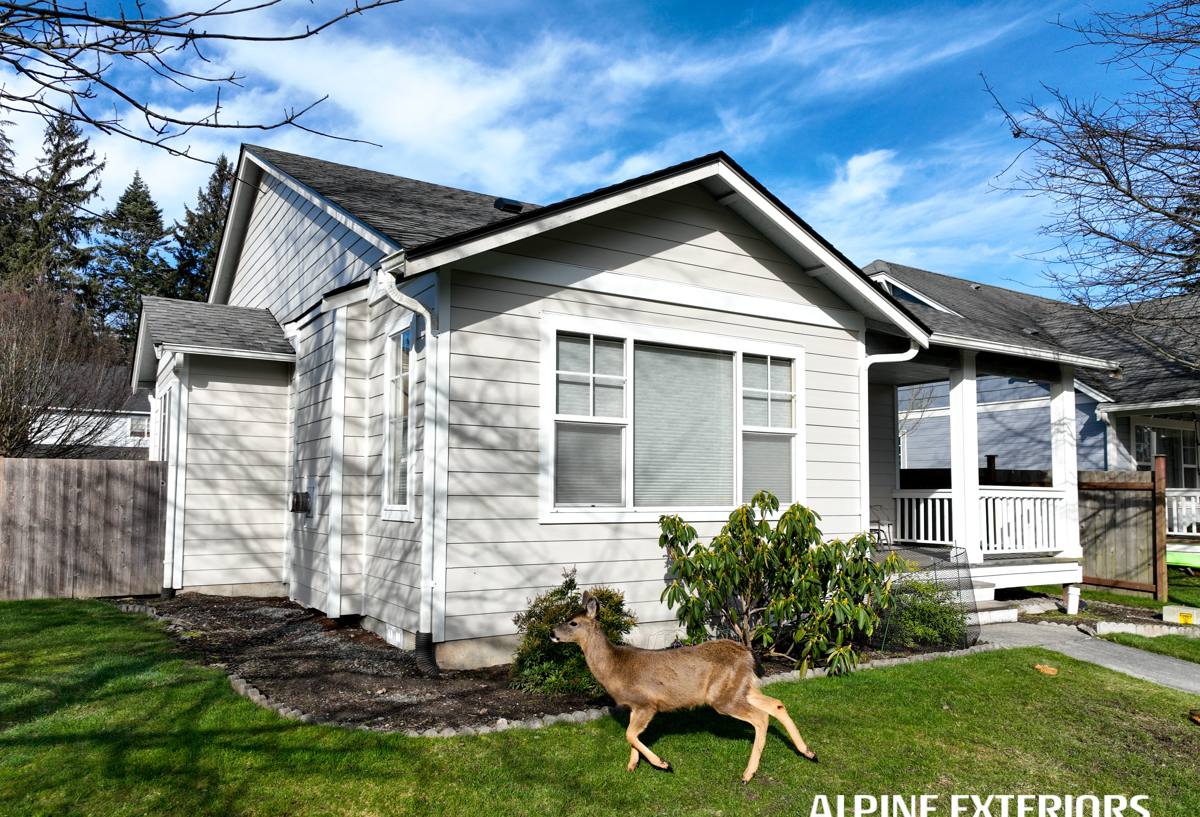
What Whatcom County Weather Does to Exterior Materials
Salt Air and Corrosion
Homes closer to Bellingham Bay deal with airborne salt that accelerates corrosion on fasteners, flashing, and any metal trim tied into the siding system. It also speeds up the breakdown of coatings that aren't formulated to resist it. Over years, that means chalking, fading, and in some cases premature failure of paint films on wood or engineered wood products.
Driving Rain
Whatcom County gets a lot of rain, and a meaningful share of it comes in sideways during winter storms off the Strait of Georgia and Puget Sound. Driving rain doesn't just wet a wall's surface — it tests every seam, every lap joint, every point where trim meets field siding. Materials that swell, wick moisture, or rely on a perfect paint film to stay sealed are the ones that eventually let water in.
Moss and Slow-Drying Shade
Sehome has a good amount of mature tree cover and terrain that keeps some exterior walls in shade for long stretches of the day, especially through fall and winter. That's exactly the environment moss and algae like: surfaces that stay damp longer than they get direct sun. Siding that absorbs moisture holds onto that dampness and gives moss more to grow on; siding that doesn't absorb moisture dries out faster and gives moss less of a foothold.
Why We Standardized on James Hardie
James Hardie fiber cement is engineered specifically to resist the failure modes that matter most in a marine, high-rainfall climate like ours:
- Non-combustible material — fiber cement doesn't burn, which matters for insurance considerations and peace of mind alike
- Dimensionally stable — it doesn't swell, warp, or crack the way wood-based products can when they take on moisture
- ColorPlus factory finish — a baked-on finish that resists fading and chipping far better than field-applied paint, and holds up to salt air exposure better than typical site-applied coatings
- HZ5 product engineering — Hardie's HZ5 line is specifically formulated for cold, wet Pacific Northwest climates like ours, with moisture and freeze-thaw performance built into the product from the factory
- Strong transferable warranty — meaningful coverage that follows correct installation, which matters if you ever sell the home
None of this means fiber cement is magic — it still has to be installed correctly, with proper clearances, flashing, and caulking details, to perform the way it's designed to. But it starts from a much stronger baseline than the alternatives, and that baseline matters more in a climate like Whatcom County's than it would somewhere dry and mild.
Why We Don't Install the Alternatives
Vinyl Siding
Vinyl is inexpensive and low-maintenance in mild climates, but it has real limitations here. It can warp or become brittle over time with temperature swings, it doesn't offer much impact resistance, and its seams and panel design rely on lap-and-lock installation that isn't as forgiving of driving rain as a properly flashed fiber cement wall. Color is baked into the material itself, so fading over years of UV and salt exposure isn't something you can simply repaint without replacing panels.
LP SmartSide, Cemplank, and Allura
LP SmartSide is an engineered wood product — it performs reasonably well when installation and caulking are perfect and stay perfect, but any gap in maintenance lets moisture into the wood fiber core, and that's a much less forgiving failure mode in a wet climate than fiber cement's. Cemplank and Allura are both fiber cement products, and they're not inherently bad materials — but we've standardized on one manufacturer's system so our crews install one set of details to one spec, backed by one warranty structure, rather than juggling multiple products with different quirks.
Cedar and Primed Spruce
Real wood siding has a warmth and character that's hard to replicate, and we understand the appeal. But wood siding in a marine climate with this much rainfall is a genuine maintenance commitment — recoating on a schedule, staying ahead of any checking or splitting, and watching closely for moisture intrusion at end grain and joints. In a neighborhood with the shade and moisture load Sehome sees, that maintenance burden compounds. We'd rather be honest about that up front than sell a product we know most homeowners won't keep up with for 20-plus years.
Comparing the Options
| Material | Moisture Behavior | Maintenance | Fire Resistance | We Install It? |
|---|---|---|---|---|
| James Hardie fiber cement | Dimensionally stable, doesn't swell or rot | Low — occasional wash, repaint on decades-long cycle | Non-combustible | Yes |
| Vinyl | Doesn't absorb moisture, but seams can leak | Low, but color can't be refreshed | Combustible | No |
| LP SmartSide (engineered wood) | Vulnerable if caulking/paint fails | Moderate — needs consistent upkeep | Combustible | No |
| Cedar / primed spruce | Absorbs moisture, prone to checking | High — regular recoating required | Combustible | No |
How Our Process Works for Sehome Homes
Every project starts with a walk-around of the home to look at existing siding condition, trim and flashing details, roof lines that drain onto walls, and any areas with heavy shade or standing moisture. From there:
- We assess the existing wall assembly, including water damage that may not be visible from the outside
- We plan flashing and drainage details specific to the home's exposures — north-facing and shaded walls get particular attention given how long they stay damp here
- We install per James Hardie's published fastening, clearance, and caulking specifications, not shortcuts
- We coordinate trim, window, and roof-line details so water is directed away from the wall assembly rather than trapped behind it
Because we handle siding, roofing, windows, and decks, we can look at a home's whole exterior envelope rather than treating siding as an isolated project. A roof edge that dumps water onto a wall, or a window that isn't flashed correctly, will undermine even the best siding job — so we flag those issues rather than installing new siding around a problem that will just come back.
Why a Local Crew Matters
Installation quality is what determines whether fiber cement performs the way it's designed to. Clearances above grade and roof lines, gaps at butt joints, caulking at penetrations, and fastener placement all matter more in a climate that tests them constantly with wind-driven rain and prolonged damp. A crew that works Whatcom County regularly has already seen how these details hold up — or fail — over multiple wet seasons, and adjusts accordingly. That's different from a crew installing the same product in a dry climate and applying the same techniques here.
What to Check Before Hiring Any Siding Contractor
- Are they a manufacturer-certified installer, and can they explain why?
- Will they show you the specific flashing and clearance details they plan to use, not just "we'll caulk it"?
- Do they carry current liability insurance and workers' compensation coverage?
- Will they put the warranty terms — both material and labor — in writing before work starts?
- Can they explain, specifically, why they recommend one siding product over another for your home and site conditions?
- Do they have experience with homes in similar exposure conditions — shaded, moss-prone, or close to the water?
Roofing, Windows, and Decks Alongside Siding
Siding rarely fails in isolation. A roof that's shedding granules or has failing flashing will send water down onto walls below. Old windows without proper flashing create a path for moisture behind new siding. Decks attached to the house need flashing details that integrate with the wall assembly, not just the deck ledger. Because we do all four — siding, roofing, windows, and decks — we can address these as one connected system rather than sending a homeowner to three different contractors who don't talk to each other about how the pieces fit together.
If you're weighing a siding project in Sehome — whether it's a full replacement or you're trying to figure out how much life is left in what's on the house now — we're happy to take a look and give you a straightforward, no-pressure estimate. There's no cost or obligation to have us out.