 Whatcom County
 Two Products, One Hard Choice
Homeowners in Bellingham, Ferndale, Lynden, and out toward Blaine and Birch Bay ask us the same question almost every week: "What's the difference between fiber cement and engineered wood siding, and which one should I actually put on my house?" It's a fair question, because on paper the two products look like they're competing for the same job. Both come as lap boards or panels, both can be pre-finished, both are marketed as upgrades over vinyl or old-fashioned solid wood.
We install James Hardie fiber cement siding exclusively. We don't install engineered wood products like LP SmartSide. That's not a marketing position — it's a decision we made after weighing how each material actually performs in Whatcom County's specific mix of salt air, driving rain off the Strait of Georgia and Puget Sound, and a moss season that can run eight months of the year in shaded, low-sun-exposure lots. This page walks through the real differences, gives engineered wood credit where it's earned, and explains why we landed where we did.
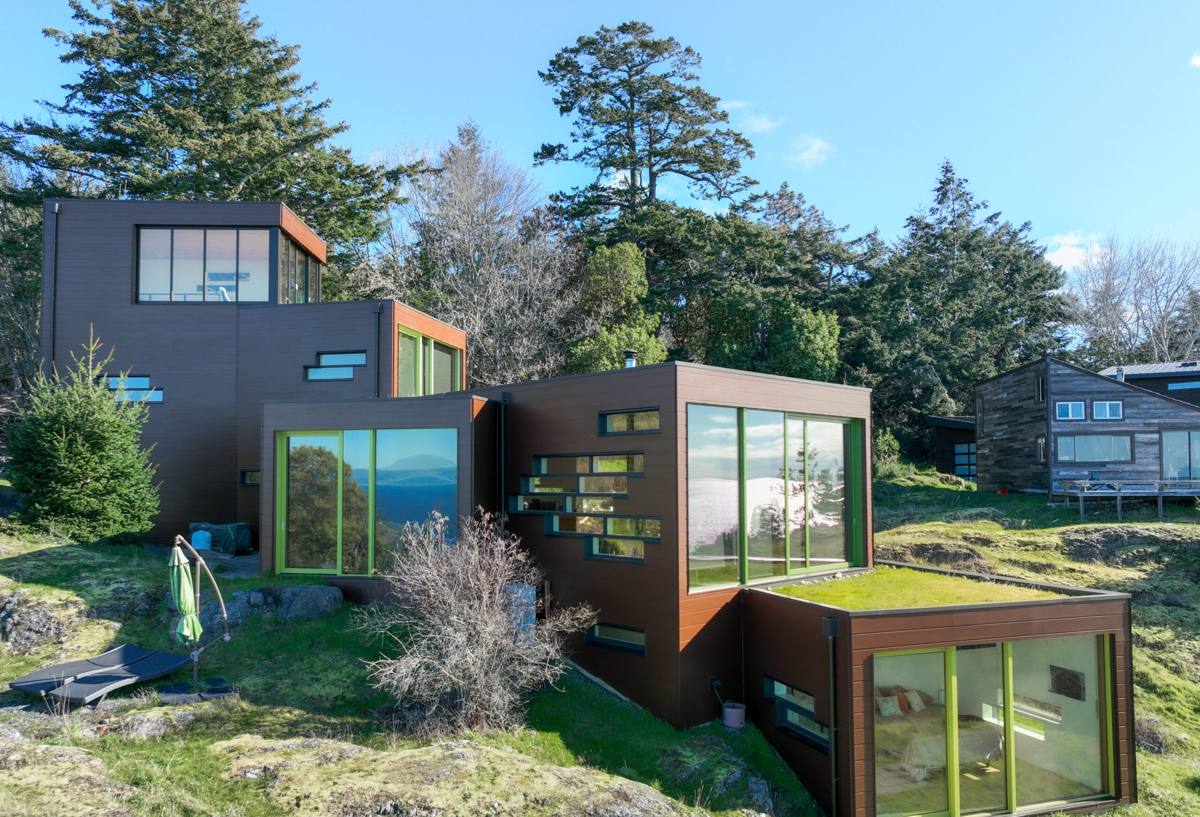
What Engineered Wood Siding Actually Is
Engineered wood siding is a legitimate improvement over the hardboard products that gave wood-composite siding a bad name in the 1990s. Modern versions use strand-based wood fiber bonded with resin under heat and pressure, then coated with a treated overlay and factory primer. The result is more dimensionally stable and more resistant to fungal decay than old-style hardboard, and it's noticeably lighter than fiber cement, which makes it easier and faster to install.
Where it still runs into trouble is at its core: it's wood. Wood fiber, no matter how it's engineered, swells when it takes on sustained moisture, and once the factory-applied protective layer is breached — a poorly sealed cut end, a nail hole that wasn't caulked, a butt joint that opens up as the house settles — water can wick into the substrate. In a dry climate that's a rare event. In Whatcom County, where boards face months of saturated air, wind-driven rain, and morning dew that doesn't burn off until afternoon on north-facing walls, it's a maintenance item you can't skip.
The Maintenance Commitment
Manufacturers of engineered wood siding are upfront that the product depends on the homeowner keeping caulking, touch-up paint, and joint sealant current — typically inspected annually and refreshed on a multi-year cycle. That's a reasonable ask in a lot of the country. Here, with our wet season running roughly October through May, any gap in that maintenance schedule gives moisture a longer window to work with before things dry out again. We've been called out to homes where a few seasons of deferred caulking led to soft spots at butt joints and lower courses — not because the product failed outright, but because the maintenance clock caught up with the climate.
What Fiber Cement Is Made Of
James Hardie fiber cement is a mix of Portland cement, sand, and cellulose fiber, cured into a rigid board. There's no wood fiber in the finished product to swell, rot, or feed fungal growth. It won't support combustion, which matters increasingly to insurers and to homeowners who've watched wildfire smoke drift into the county during late summer. And it holds paint and factory finish differently than wood-based products because the substrate itself isn't reactive to moisture the way wood is.
Hardie's ColorPlus finish is baked on in a controlled factory environment rather than field-applied, which gives more consistent color and adhesion than site-applied paint can typically achieve, and the color coat carries its own warranty coverage separate from the substrate. For a region where UV exposure is moderate but moisture exposure is constant, that combination — inert substrate plus factory-cured finish — is the trade-off we were willing to build our business around.
Side-by-Side: The Honest Comparison
| Factor | Engineered Wood Siding | James Hardie Fiber Cement |
|---|---|---|
| Core material | Wood strand/fiber with resin binder | Cement, sand, cellulose fiber |
| Moisture behavior | Swells if protective layer is breached | Does not swell; not wood-based |
| Fire classification | Combustible | Non-combustible |
| Finish | Factory-primed, field-painted (typical) | Factory-applied ColorPlus finish available |
| Weight / installation | Lighter, faster to hang | Heavier, requires cement-board tooling and technique |
| Moss/algae resistance in shaded, wet exposures | Wood substrate provides organic food source if surface is compromised | Inert substrate; less hospitable to organic growth |
| Ongoing maintenance | Regular caulk/paint inspection cycle recommended | Lower maintenance burden once installed to spec |
| Warranty structure | Varies by product line | Long-term, transferable coverage on substrate and finish |
Why Moss and Salt Air Change the Calculation Here
This isn't a generic siding comparison — it's a Whatcom County one, and the local climate is doing real work in this decision. Properties near Bellingham Bay, Semiahmoo, and Birch Bay see salt-laden air that accelerates wear on fasteners, trim, and any exposed seam. Combine that with the shaded, tree-covered lots common from Lynden down through the Nooksack valley, and you get long stretches where siding simply doesn't fully dry between rain events. Moss and algae need organic material and sustained moisture to establish, and a wood-based substrate — even a well-engineered one — gives them more to work with than an inert cement-based board does if the surface finish is ever nicked or worn through.
We're not saying engineered wood siding fails in this climate. Plenty of it is out there performing fine, particularly where it was installed meticulously and the homeowner has kept up with sealant maintenance. But "performs fine as long as maintenance never lapses" is a harder promise to stand behind on a roof-height product that most people don't think about until something goes wrong. We'd rather install a product whose core material isn't in a race against moisture in the first place.
Where Engineered Wood Still Makes Sense
We'll say plainly: engineered wood siding isn't a bad product. It's a real step up from vinyl in appearance and from old hardboard in durability, it costs less than fiber cement in most markets, and it's lighter to work with on complex trim details. In drier regions of the state, or on structures with generous roof overhangs and good sun exposure that keep walls drying quickly, it can be a sound long-term choice with proper upkeep. We simply concluded that Whatcom County's combination of salt exposure, driving rain, and extended moss season narrows that margin more than we're comfortable installing behind our name.
What Correct Fiber Cement Installation Requires
Fiber cement isn't foolproof either — it performs the way it's rated to perform only when installed correctly. That means:
- Proper clearance from grade, decks, and roof lines to keep the bottom edge out of standing water
- Correctly sized and spaced fasteners driven to manufacturer torque specs, not overdriven
- Factory-cut edges used wherever possible, with field cuts sealed per Hardie's installation guidance
- A drainage plane and weather-resistive barrier behind the siding, not direct-to-sheathing installation
- Correct caulking at penetrations and trim joints, using compatible sealants
- Use of the HZ5 product line engineered for the higher-moisture, freeze-thaw conditions of the Pacific Northwest, rather than a milder-climate formulation
An installer who rushes fastener spacing or skips the drainage plane can undercut even the best siding material. That's as true for fiber cement as it is for engineered wood — the material choice matters, but so does the crew putting it up.
Cost Perspective, Without the Guesswork
Material and labor costs for both products vary by home size, trim complexity, and current market pricing, so we won't quote numbers here that would be stale in six months. What we can say directionally: engineered wood siding typically carries a lower material cost than fiber cement, while fiber cement generally carries a higher upfront cost offset by a longer service life and lower long-term maintenance spend, assuming correct installation on both. The right way to compare them for your specific home is a real quote against your actual square footage and trim detail, not a per-square-foot rule of thumb pulled from a national average.
The Bottom Line
We standardized on James Hardie fiber cement because it removes the variable we worried about most in this climate: a wood-based substrate depending on an unbroken maintenance streak to keep moisture out. Fiber cement isn't magic, and it isn't maintenance-free — nothing on the exterior of a house in Whatcom County is — but its core material doesn't swell, doesn't feed rot, and doesn't need the same vigilance against moss and algae that a wood-based product does on a shaded, damp lot near the bay.
If you're weighing siding options for a home in Bellingham, Ferndale, Lynden, or anywhere else in the county, we're happy to walk your specific property, point out the exposures that matter — sun, shade, wind direction, proximity to water — and give you a straight answer about what we'd recommend and why. Reach out for a free, no-pressure estimate using the form below.