 Whatcom County
 Siding Built for Everson's Climate, Not Just Its Curb Appeal
Everson sits in the Nooksack River valley in Whatcom County, a part of Washington where the weather doesn't do anything in half measures. Winters bring long stretches of steady, soaking rain. Spring and fall add fog and heavy dew that can linger on north-facing walls well into the afternoon. And because the region sits close enough to the Salish Sea to pick up marine-influenced weather patterns, homes here deal with a level of ambient moisture that drier parts of the country never have to think about. Whether your property is closer to the water or further out along the valley floor, the exterior of your home is working against the same basic problem year-round: too much water, not enough drying time.
Siding is the first line of defense against all of that. When it's the wrong material, installed the wrong way, or simply worn out, moisture finds its way in — behind trim, around windows, into seams — and the damage shows up as rot, mold, or a paint job that needs redoing every few years. When it's the right material installed correctly, your home sheds water, resists the moss and mildew that thrive in this climate, and holds its color and shape for decades. That's the entire premise behind how we approach siding work in Everson: match the product to the climate, not the other way around.
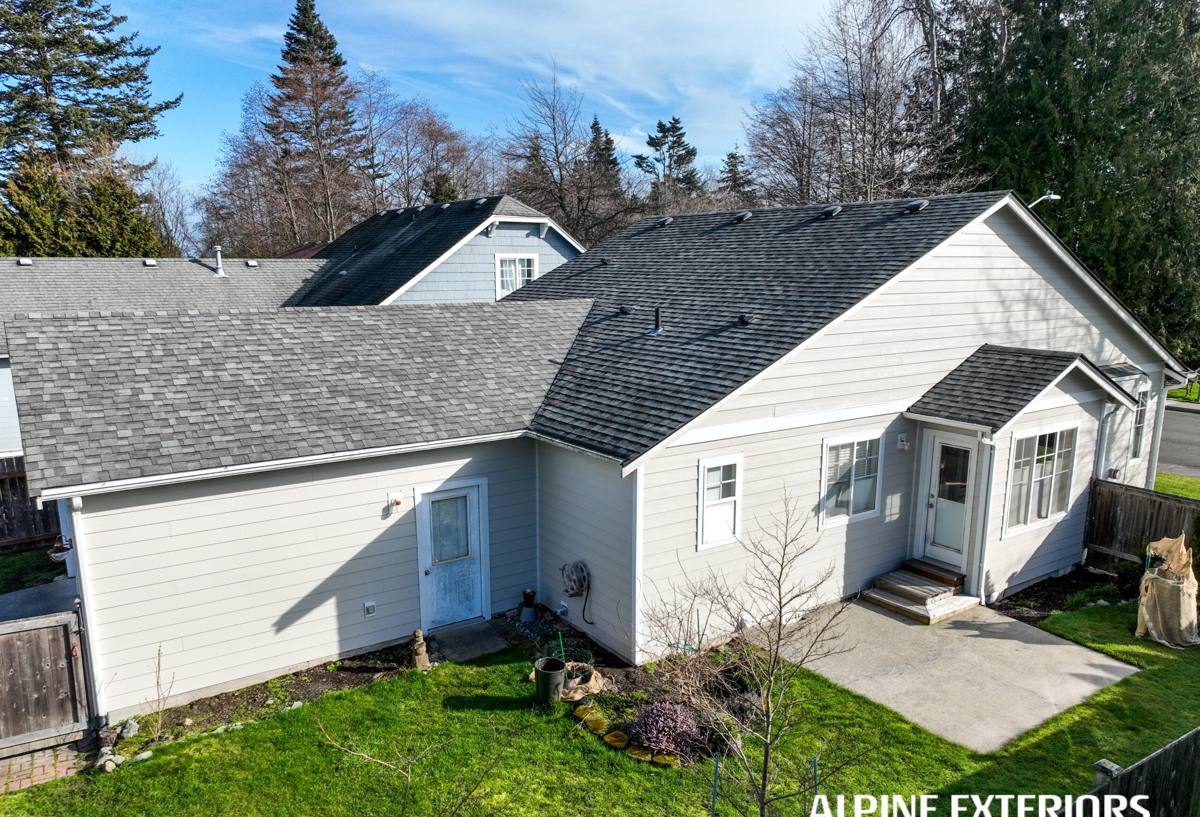
What Whatcom County Weather Does to a House Over Time
Driving Rain and Wind-Driven Moisture
Storms coming off the Pacific don't just drop rain straight down — wind pushes it sideways into walls, especially on west and south exposures. Over years, that repeated wetting cycle is what breaks down inferior siding materials: water gets into seams, joints, and any spot where caulking has started to fail, and it doesn't get a chance to fully dry before the next system rolls through.
Moss, Algae, and the Long Wet Season
Whatcom County's moss season isn't really a season — it's most of the year. Shaded walls, roof lines, and anywhere organic debris collects become breeding grounds for moss and algae. On porous or wood-based siding, that growth holds moisture against the surface and accelerates decay. On a dense, factory-finished fiber cement product, it's mostly a surface issue that rinses off rather than a structural one.
Temperature Swings and Material Movement
It doesn't get brutally cold here, but the freeze-thaw cycles that do happen put stress on any siding material that expands and contracts a lot with temperature and moisture changes. Materials that move more than they should tend to open up gaps at seams and fasteners over time, which is exactly where water gets in.
Why We Only Install James Hardie Fiber Cement
We get asked fairly often why we don't offer vinyl, LP SmartSide, or some of the other lower-cost siding options that are common around the Pacific Northwest. It's a fair question, and the honest answer is that we made a decision as a company to standardize on one product because we're tired of doing warranty calls and re-work on materials that weren't built for this climate.
- Vinyl siding is inexpensive and easy to install, but it's a thin plastic product that can warp in heat, crack in cold, and rarely stays looking new for the life of a home. It also can't take paint if you ever want to change the color.
- LP SmartSide and other engineered wood products use a wood-strand core. If the factory coating is ever breached — at a cut edge, a fastener hole, or a joint that wasn't sealed exactly right — moisture gets into the wood fiber, and in a climate as wet as Whatcom County's, that's a real risk over the life of the siding.
- Primed spruce and cedar are attractive, traditional choices, but solid wood siding demands ongoing maintenance — repainting, caulking, and moisture monitoring — to hold up here. It's a beautiful product for someone who wants to actively maintain it, not a low-maintenance long-term solution.
James Hardie fiber cement is cement, sand, and cellulose fiber — not wood, not vinyl. It doesn't rot, it's non-combustible, and it's manufactured with a factory-applied ColorPlus finish that's baked on and backed by its own finish warranty, so you're not relying on a field-applied paint job to hold up against this weather. Hardie also engineers its HZ5 product line specifically for the kind of freeze-thaw and moisture exposure the Pacific Northwest sees, which matters more here than in most parts of the country. It's a heavier, denser product to install correctly, and that's exactly why installation quality matters as much as the material choice.
Siding Comparison for Whatcom County Homes
| Material | Moisture Resistance in This Climate | Maintenance | Longevity |
|---|---|---|---|
| James Hardie Fiber Cement | Excellent — cement-based, doesn't absorb and swell | Low — occasional rinse, no repainting needed | Decades, with a strong transferable warranty |
| Vinyl | Fair — doesn't rot, but can warp and gap at seams | Low, but can't be repainted if it fades | Moderate — degrades faster in UV and temperature swings |
| LP SmartSide | Moderate — vulnerable if coating is compromised | Moderate — cut edges and seams need attention | Good if maintained perfectly; risk increases with age |
| Cedar / Primed Wood | Poor to Fair — absorbs moisture without upkeep | High — regular painting, caulking, inspection | Variable — heavily maintenance-dependent |
How We Approach a Siding Job in Everson
Inspection First
Before we talk about new siding, we look at what's actually happening on your home right now — where moisture has gotten in, whether there's rot in the sheathing or trim, how the current siding was flashed around windows and doors, and whether ventilation behind the siding is doing its job. Replacing siding over hidden damage just buries a problem you'll have to deal with again.
Correct Installation Detail Work
Fiber cement performs the way it's supposed to only when it's installed to spec — proper clearances, correct fastening, sealed joints, and flashing that actually directs water away from the wall rather than behind it. This is where a lot of siding jobs go wrong regardless of the material used, and it's the part of the job we treat as non-negotiable.
Beyond Siding
We also handle roofing, windows, and decks, which matters because your exterior works as a system. A roof that's shedding water onto a wall, a window that isn't flashed correctly, or a deck ledger board that's trapping moisture against the house will undermine even a perfectly installed siding job. Having one crew look at the whole exterior instead of just one component tends to catch problems that get missed when trades don't talk to each other.
Why a Local Crew Matters Here
Whatcom County's weather isn't generic Pacific Northwest weather — the rainfall patterns, humidity, and moss growth in this specific area shape how exteriors age here versus, say, drier parts of eastern Washington or even parts of the Puget Sound corridor with different exposure. A crew that works in Everson and the surrounding county regularly knows what these homes are actually up against, has seen what happens when the wrong product or the wrong install detail meets this climate, and can spot the early warning signs before they turn into a bigger repair. That local, repeated exposure is worth more than a generic install crew that treats every region the same.
What to Ask Before Hiring Anyone for Siding Work
- Are they licensed and insured to work in Washington, and can they provide proof?
- Do they install one product exclusively, or a range of materials — and if a range, do they explain trade-offs honestly or just upsell the cheapest option?
- Will they inspect for existing moisture or rot damage before quoting the job, not just measure for new siding?
- Do they follow the manufacturer's installation specifications, including fastener type, clearances, and flashing details?
- What does the warranty actually cover — material only, or labor too — and is it transferable if you sell the home?
- Can they explain why they'd recommend one product over another for your specific home and exposure?
Cost Factors for a Siding Project
Every home is different, so we don't post blanket pricing, but the main factors that drive cost on a siding project are worth understanding upfront:
- Home size and complexity — square footage, number of stories, and how much trim and detail work (corners, windows, gables) the crew has to work around.
- Condition of what's underneath — if sheathing or framing needs repair before new siding goes on, that adds to the scope.
- Product line and finish — Hardie's various siding profiles and ColorPlus finish options carry different costs, and choosing factory-applied color versus field painting affects both price and long-term maintenance.
- Tear-off versus new construction — removing and disposing of old siding adds labor compared to new-build installation.
The most reliable way to understand what your specific project will cost is a walk-through and a written estimate — not a rough number based on square footage alone.
Ready to Talk About Your Home
If your Everson home's siding is showing its age, dealing with recurring moss, or you're just planning ahead of a needed replacement, we're happy to take a look and give you an honest assessment — no pressure, no obligation. Reach out for a free estimate using the form below, and we'll walk you through exactly what we see and what we'd recommend for your home.