 Whatcom County
 Siding in South Hill: Built for What This Corner of Whatcom County Throws at a House
South Hill sits close enough to the water and the weather patterns that roll in off it that homes here take a different kind of beating than houses twenty miles inland. Salt-laden air works on anything metal or poorly sealed. Driving rain off Bellingham Bay finds every gap in a wall system that wasn't detailed correctly the first time. And the long, damp moss season that defines a Pacific Northwest winter doesn't just make roofs green — it keeps siding surfaces wet for weeks at a stretch, which is exactly the condition that punishes the wrong exterior product. We've been doing siding, roofing, windows, and decks across Whatcom County long enough to know which materials hold up here and which ones quietly fail a few years after the crew that installed them has moved on.
This page walks through what South Hill homes typically face, how we approach siding replacement and repair in this specific area, and why the product we standardize on — James Hardie fiber cement — is the one we're willing to put our name behind.
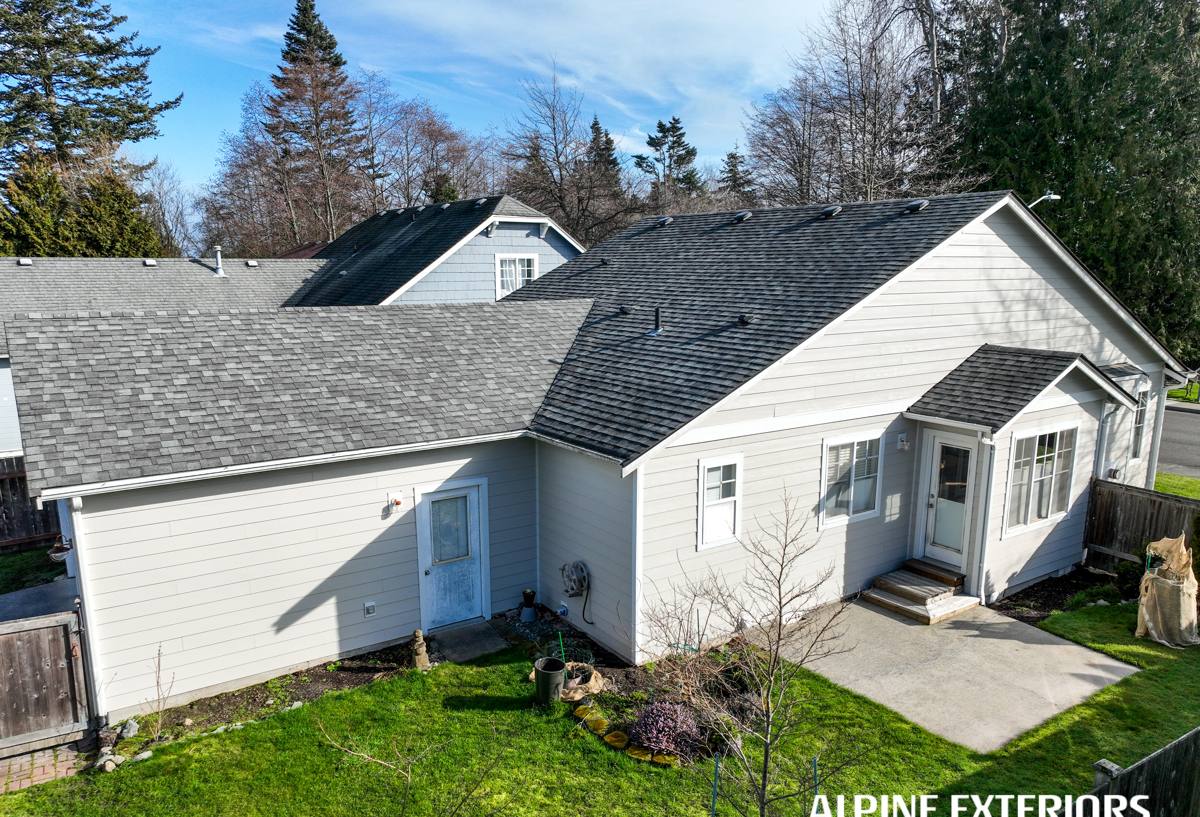
What South Hill's Climate Actually Does to a House
Salt Air
Proximity to Puget Sound and the bay means airborne salt is a constant, low-level presence, even a few miles inland. It doesn't damage every material equally, but it does accelerate corrosion on fasteners, flashing, and any exposed metal trim, and it can dull or degrade finishes that weren't formulated to handle it. Over years, that adds up — especially on the windward side of a home.
Driving Rain
Whatcom County doesn't get the heaviest rainfall totals in the state, but it gets a lot of wind-driven rain, the kind that hits siding at an angle instead of running straight down. That matters because wind-driven rain finds horizontal seams, poorly lapped joints, and gaps around windows and trim that vertical rain would never reach. A siding system's water-shedding detailing is put to a real test here, not a theoretical one.
Moss and Sustained Moisture
The long stretch of gray, wet months means siding surfaces — especially north-facing walls and anything shaded by trees — stay damp far longer than they would in a drier climate. That sustained moisture is what feeds moss, mildew, and, on materials prone to it, gradual swelling or softening. A siding product's ability to shrug off weeks of dampness without absorbing it is one of the biggest differences between a material that lasts and one that doesn't.
Why We Only Install James Hardie Fiber Cement
We get asked fairly often why we don't offer vinyl, LP SmartSide, Cemplank, Allura, or primed wood siding. It's a fair question, and the honest answer is that we made a standard for our own installs based on what actually holds up in this climate over a 20-30 year timeframe, not just what looks good going up.
Vinyl
Vinyl is inexpensive and low-maintenance in mild climates, and it has real advantages in dry regions. But it's a thin material that flexes with temperature swings, can crack in impact-prone spots, and its seams and J-channels are exactly the kind of horizontal detail that wind-driven rain exploits. It also isn't fire-rated the way fiber cement is, which matters more each year as wildfire smoke and ember exposure become a broader regional concern.
LP SmartSide, Cemplank, Allura, and Primed Wood/Spruce
Engineered wood products like LP SmartSide perform well when installation and maintenance are perfect, but they're wood-based, which means moisture is always the variable to manage — caulking, painting, and touch-up on cut edges are not optional, they're required upkeep. In a moss-season climate like South Hill's, that maintenance schedule gets tested every single winter. Cemplank and Allura are both fiber cement competitors to Hardie, and they're reasonable products, but we've standardized on one manufacturer so we can guarantee consistent factory finishes, matching trim systems, and a warranty structure we fully understand and stand behind. Primed spruce and cedar are beautiful but the most maintenance-intensive option on this list — they need repainting on a real cycle, and in a wet climate that cycle comes faster than most homeowners expect.
What James Hardie Gets Right
Fiber cement is non-combustible, dimensionally stable, and doesn't absorb water the way wood-based products do. Hardie's ColorPlus factory-applied finish is baked on under controlled conditions, which gives it more consistent, longer-lasting color than field-applied paint — and it means far less repainting over the life of the siding. Hardie also engineers different product lines (their HZ5 line, for example) specifically for climate zones with more moisture exposure, which is directly relevant to a place like South Hill. It's not the cheapest option on the market, but it's the one that best matches what this climate demands.
Comparing Siding Materials for South Hill's Climate
| Material | Moisture Resistance | Maintenance | Fire Rating | Typical Lifespan |
|---|---|---|---|---|
| James Hardie Fiber Cement | Excellent — doesn't absorb water, climate-engineered lines | Low — factory finish, occasional wash | Non-combustible | 30+ years with proper install |
| Vinyl | Fair — seams vulnerable to driving rain | Low, but cracks/fades over time | Combustible, melts under heat | 15-25 years |
| LP SmartSide / Engineered Wood | Good if maintained; poor if neglected | High — caulk and paint cycles required | Treated, but wood-based | 20-30 years with strict upkeep |
| Cedar / Primed Wood | Fair — absorbs moisture, prone to rot | Very high — frequent repainting | Combustible | 15-25 years with heavy upkeep |
How We Approach a South Hill Siding Project
Assessment First
Every project starts with a real look at the house — which walls take the worst weather exposure, where past moisture damage may be hiding behind existing siding, and what the trim, flashing, and window details actually need. South Hill homes vary in age and construction, so we don't quote off a formula; we look at the specific building.
Correct Installation Details
Fiber cement siding performs exactly as well as its installation. Proper flashing above windows and doors, correct fastener spacing and type (matched to coastal-air conditions), proper clearance at grade, and correctly lapped and caulked joints are what actually keep water out — the material is only half the equation. We install to manufacturer spec, not to whatever's fastest.
Full Exterior Scope When It Makes Sense
Because we also handle roofing, windows, and decks, a siding project is a natural point to address related issues — aging flashing at the roofline, windows that are no longer sealing well, or a deck ledger board that ties into the same wall system. We'll flag what we see, but we're not going to sell you scope you don't need.
Signs a South Hill Home May Need Siding Attention
- Soft or spongy spots when pressed, especially near the bottom of walls or below windows
- Persistent moss or dark streaking on north-facing or shaded walls that pressure washing doesn't fix for long
- Visible gaps, warping, or separation at seams and corners
- Peeling or bubbling paint on wood-based siding, particularly after a wet winter
- Rusting or staining around fasteners and metal trim
- Rising energy bills that may point to compromised insulation behind failing siding
- Visible rot at the bottom edges of boards or around window and door trim
Cost Factors for a South Hill Siding Project
Every home is different, but a few factors consistently drive cost on siding projects in this area:
- Extent of existing damage — hidden rot behind old siding adds sheathing repair before new siding can go up
- Home size and wall complexity — more corners, dormers, and trim details mean more labor
- Siding profile chosen — Hardie offers lap, shingle, and panel styles at different price points
- Access and site conditions — tree cover, slope, and setback affect staging and scaffolding needs
- Scope beyond siding — flashing, trim, or window replacement bundled into the same project
Why a Local Crew Matters in Whatcom County
A crew that works this county regularly knows the difference between a house that needs a straightforward re-side and one that's hiding moisture problems behind the wall — because they've seen that pattern before, on the street over, in the same weather. They know which wall orientations in South Hill take the worst of the wind-driven rain and plan flashing and fastening accordingly. That local pattern-recognition is worth more than a lower bid from a crew that's never worked in a coastal, moss-heavy climate before.
Get a Straight Answer for Your Home
If your South Hill home's siding is showing its age, or you're just not sure whether what you have is holding up the way it should, we're happy to take a look. We'll give you an honest assessment — no pressure, no inflated scope — and walk you through what James Hardie siding would look like for your specific house. Reach out for a free estimate using the form below.