 Whatcom County
 Why Color Is a Bigger Decision Than It Looks
Picking a siding color feels like the fun part of a project, right up until you realize it's also one of the most permanent decisions you'll make about your home. Roofing gets replaced on its own cycle, landscaping changes, but siding color sets the tone for a house for fifteen, twenty, sometimes thirty years. In Whatcom County, that decision carries extra weight because our climate is genuinely hard on exterior finishes. Salt-laden air off the Sound, months of driving rain, and a moss season that can run from October through May all work against a finish that isn't built for the job.
This page walks through how James Hardie's color system actually works, which product lines and palettes make sense for local homes, and what to think about before you commit to a color. We only install James Hardie fiber cement siding, and a large part of that decision comes down to how its color system is engineered compared to alternatives.
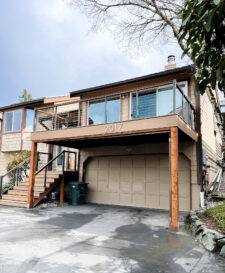
ColorPlus Technology: What's Actually Different
Most exterior color failures aren't really about the color itself — they're about how the color was applied. Field-painted siding, whether it's cedar, primed spruce, or primed fiber cement, gets its finish coat sprayed or rolled on-site, often in a single pass, under whatever weather conditions happen to be available that week. James Hardie's ColorPlus panels skip that step entirely. The color is baked on in a factory using a multi-coat, oven-cured process before the boards ever leave the plant.
Why the Factory Process Matters Here
A factory-cured finish isn't dependent on humidity, temperature, or wind on installation day — all things Whatcom County doesn't reliably cooperate with outside of a few summer months. It also means every board in a given color run has the same finish thickness and cure quality, rather than variation based on which section of wall a painter tackled first versus last. That consistency shows up years later as more even fading and fewer touch-up mismatches.
What ColorPlus Doesn't Eliminate
Factory finish doesn't make siding maintenance-free. Cut edges exposed during installation still need touch-up sealing, caulked joints need periodic inspection, and the surface still needs washing to stay looking sharp — more on that below. What it does is remove the weakest link in the traditional paint process, which is the field application itself.
The James Hardie Color Palette Lines
Hardie offers color through a few distinct programs, and understanding the difference helps you shop with realistic expectations.
Standard ColorPlus Palette
This is the core, most widely available lineup — a curated set of colors developed to work across siding profiles (lap siding, shingle-style panels, board and batten, trim) and to hold up in a range of climates. These colors are the ones you'll see on sample boards at most Hardie-focused showrooms and are generally the fastest to source.
Statement Collection
The Statement Collection expands on the core palette with a broader range of shades, including deeper, more saturated colors for homeowners who want something bolder than the standard lineup offers. It uses the same ColorPlus factory process, just with more design range. If you're picturing a deep charcoal, a rich forest green, or a true black trim accent, this is usually where you'll find it.
Primed Hardie for Field Painting
Hardie also sells primed (unfinished) siding for situations where a custom, non-catalog color is required. This is field-painted after installation, similar to traditional wood siding, and loses the factory-cure advantage described above. We reserve this option for genuinely custom color requests, since it shifts more of the finish quality burden onto weather conditions and installation timing.
ColorPlus vs. Field-Applied Paint: A Practical Comparison
| Factor | ColorPlus (Factory-Finished) | Field-Painted (Primed Siding) |
|---|---|---|
| Finish applied | Multi-coat, oven-cured at the factory | Sprayed or rolled on-site after install |
| Weather dependency | None — controlled indoor process | High — needs dry, moderate-temperature conditions |
| Color consistency | Uniform across every board in a color run | Varies with technique, coverage, and drying conditions |
| Typical repaint interval | Often 15+ years before touch-up is needed | Commonly 7–10 years in wet marine climates |
| Warranty coverage | Finish warranty separate from and layered onto the substrate warranty | Substrate warranty only; finish is not covered |
| Color options | Curated catalog (standard + Statement Collection) | Any color available in exterior acrylic paint |
How Whatcom County's Climate Actually Affects Color Choice
Salt Air and Coastal Exposure
Homes closer to Bellingham Bay, Birch Bay, and the county's shoreline neighborhoods deal with airborne salt that accelerates chalking and dulling on lower-grade finishes. ColorPlus's factory coating resists this better than field paint, but salt-exposed homes still benefit from periodic rinsing to keep residue from building up on the surface, especially in color choices with a matte or low-sheen finish where salt film shows more readily.
Driving Rain and Water Contact
Wind-driven rain off the Sound doesn't just wet a wall, it pushes moisture into every seam, corner, and butt joint if those details weren't installed correctly. Color performance and moisture performance are connected here: a finish that's compromised at a poorly sealed cut edge will show staining or streaking well before the rest of the wall fades, regardless of how good the base color is.
The Long Moss Season
Whatcom County's moss and algae growth isn't limited to roofs. North-facing and heavily shaded wall sections — common under mature Douglas fir and cedar canopy in county neighborhoods — can develop green or black streaking over a wet fall-through-spring stretch. This is a surface-growth issue, not a finish failure, and it's manageable with a soft wash on a normal schedule, but it's worth knowing in advance: darker colors show less contrast against algae streaking, while very light colors show it more visibly but wash cleaner overall.
Matching Color to Whatcom County Home Styles
The county's housing stock runs from Bellingham craftsman bungalows to newer farmhouse-style builds in Ferndale and Lynden to coastal-modern homes near the water. A few practical patterns tend to hold up regardless of trend cycles:
- Craftsman and bungalow homes generally read best with warm neutrals (deep bronze, warm gray, muted green) paired with a lighter or white trim to preserve architectural detail.
- Farmhouse-style builds lean into higher-contrast combinations — a dark body color with crisp white trim, or the reverse with black window and door accents.
- Coastal and modern homes tend to favor cooler grays, blues, and near-black tones, which read cleanly against water and evergreen backdrops but require more attention to salt film buildup near the shoreline.
- Homes surrounded by heavy tree canopy often do better with mid-tone colors that don't show moss streaking as starkly as very dark or very light extremes.
Trim, Accent, and Multi-Color Strategy
Most Hardie projects use at least two colors: a body color and a trim color, sometimes with a third accent color on shutters, a front door surround, or a gable feature. Trim boards and fascia are typically ColorPlus finished as well, which keeps the color match consistent instead of pairing a factory-finished body with field-painted trim that will age differently. If you're planning an accent wall or a mixed-material look — Hardie panel with a stone or shake accent — it's worth finalizing that layout before ordering, since color selection interacts with how those transitions get flashed and trimmed.
Maintenance Realities, Even With ColorPlus
Factory-cured color reduces maintenance, it doesn't eliminate it. A realistic annual routine for Whatcom County homes includes:
- A soft wash (garden hose and mild detergent, or a gentle pressure wash from a distance) once or twice a year, more often on shaded or moss-prone elevations.
- A visual check of caulked joints and trim seams each fall before the wet season sets in, since a failed seal is where water — and eventually staining — gets in.
- Keeping touch-up paint matched to your specific ColorPlus color code on hand for any accidental scuffs from lawn equipment or ladders.
- Trimming back vegetation that keeps wall sections shaded and damp longer than the rest of the house, since that's where moss and algae take hold first.
A Practical Checklist Before You Choose a Color
- View physical sample boards outdoors, in your own yard's light — screen colors and showroom lighting both distort how a shade will actually look.
- Check your neighborhood or HOA guidelines if applicable, since some Whatcom County developments restrict certain color ranges.
- Consider your roof, stone, or brick tones already on the house — color should coordinate, not compete.
- Think about sun exposure and tree canopy on each elevation, not just the front-facing wall.
- Decide on your trim and accent strategy at the same time as the body color, not afterward.
- Ask your contractor whether your chosen color is standard ColorPlus, Statement Collection, or would require field-painted primed siding — the answer affects cost, lead time, and long-term maintenance.
Why We Standardized on Hardie's Color System
We install James Hardie exclusively, and the color system is a real part of that decision, not an afterthought. A factory-cured finish that isn't dependent on the weather the week your crew happens to be on site is a meaningful advantage in a county where dry installation windows are limited and the finished product has to survive salt air, driving rain, and a long moss season year after year. Combined with Hardie's climate-engineered HZ product lines and transferable warranty coverage, it's a system we're comfortable standing behind on homes across Whatcom County.
If you're weighing colors for a siding replacement or new build, we're happy to walk you through sample boards in person and talk through what will actually hold up on your specific lot. Reach out for a free, no-pressure estimate using the form below.