 Whatcom County
 Siding Built for Ferndale's Coastal Climate
Ferndale sits close enough to Bellingham Bay and the Salish Sea that salt-laden air is a fact of life here, not an occasional nuisance. Add in the driving rain that rolls off the water through fall and winter, and a moss season that can stretch for months on shaded north- and west-facing walls, and you've got a climate that is genuinely hard on exterior building materials. We install James Hardie fiber cement siding exclusively, and a big part of why is that it holds up to exactly these conditions without the maintenance treadmill that other products demand in a place like Whatcom County.
This page is about what siding actually has to survive in Ferndale, how our crews approach jobs in this area, and why we standardized on one product system instead of offering a menu of options.
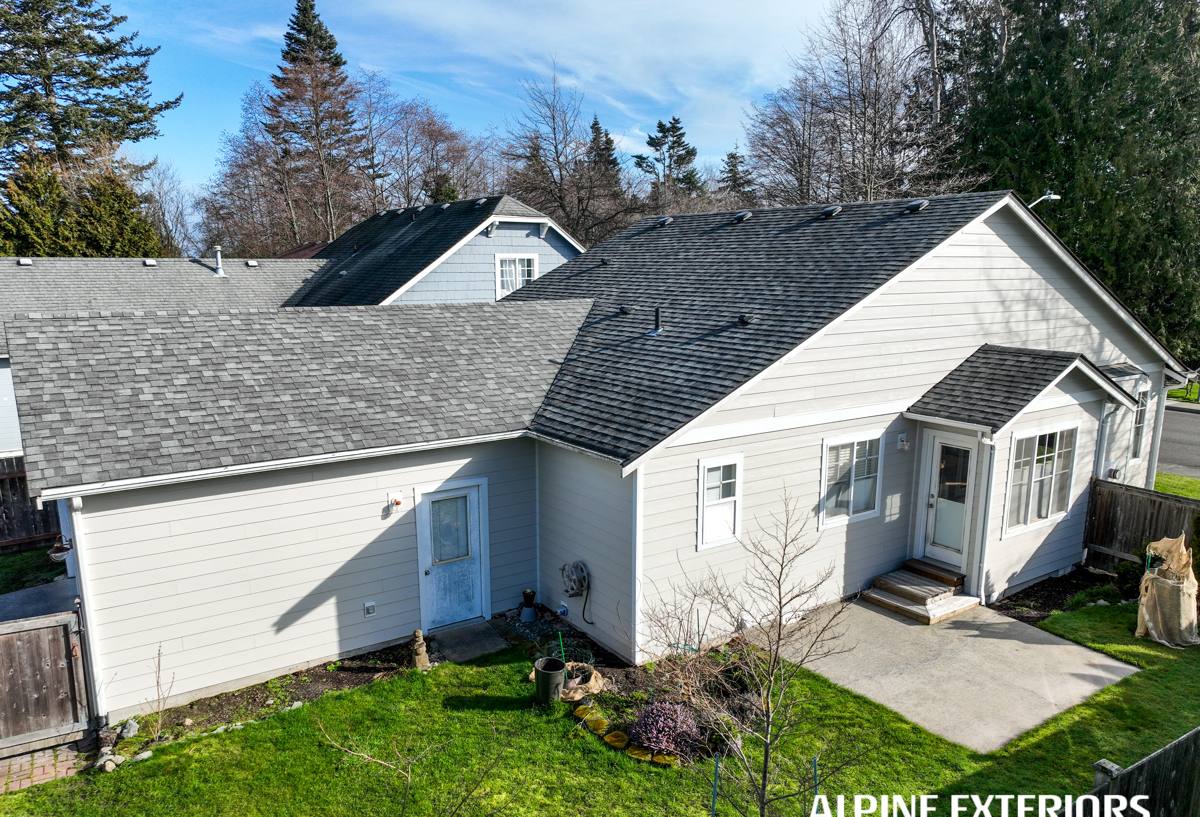
What Ferndale Homes Are Up Against
Salt Air and Metal Fastener Corrosion
Proximity to saltwater accelerates corrosion on anything metal — nail heads, flashing, hose bib fittings, even HVAC components. Siding systems that rely on face-nailing with lower-grade fasteners, or that trap moisture against metal trim, show rust streaking and failure points years before they should. Correct installation in a coastal-influenced area like Ferndale means using corrosion-resistant fasteners rated for the exposure and detailing flashing so water sheds away from metal rather than sitting on it.
Driving Rain and Wind-Driven Moisture
Storms coming off the Strait of Georgia and the Salish Sea don't just drop rain straight down — wind pushes it sideways into wall assemblies, especially on exposed elevations and around window and door openings. A siding product's ability to shed that water, combined with a properly installed weather-resistive barrier and correctly lapped flashing behind it, matters more here than in drier inland climates. Gaps in house wrap, under-flashed windows, or siding that wicks moisture into its own material are where problems start.
Moss, Algae, and Prolonged Dampness
Whatcom County's long wet season means shaded siding surfaces can stay damp for extended stretches, which is exactly what moss and algae need to take hold. Once organic growth establishes on a porous or wood-based surface, it holds moisture against the material and accelerates rot or paint failure underneath. Siding that doesn't feed that cycle — because it isn't organic and doesn't absorb water the way wood-based products do — saves homeowners a recurring maintenance chore.
Temperature Swings and Material Movement
Ferndale doesn't see extreme heat, but the freeze-thaw cycles of a wet Pacific Northwest winter still stress materials that expand, contract, or absorb moisture unevenly. Products engineered for regional climate zones handle that movement better than generic, one-size-fits-all siding.
Why We Only Install James Hardie
We made a decision a long time ago to install one siding system instead of offering vinyl, LP SmartSide, primed spruce, cedar, or other fiber cement brands as interchangeable options. That's not because those products have no merit — some do specific things well. It's because we wanted to stand behind one product line we know performs correctly when installed to spec in this specific climate, and we didn't want to be in the business of selling a customer something we wouldn't put on our own home.
James Hardie fiber cement is non-combustible, doesn't rot or feed insects the way wood-based siding can, and carries a factory-applied ColorPlus finish that's baked on rather than field-painted — which matters in a region where damp weather can extend paint cure times and shorten the life of a job-site paint job. Hardie also engineers specific product lines (HZ5, HZ10) for different climate zones, so the plank installed in Whatcom County is specified for the moisture and temperature profile it will actually face here, not a generic national spec.
How Hardie Compares to Other Common Siding Choices
| Material | Moisture Behavior in a Wet Climate | Maintenance Load | Fire Rating |
|---|---|---|---|
| James Hardie Fiber Cement | Doesn't absorb and swell like wood-based products; engineered for climate exposure | Low — factory finish, no repainting cycle needed for years | Non-combustible |
| Vinyl | Doesn't rot, but can warp, crack in cold, and gaps let moisture behind panels | Low, but limited repair options — often full-section replacement | Combustible |
| LP SmartSide (engineered wood) | Wood-based; performs well when perfectly maintained, vulnerable at cut edges and seams if not | Moderate — edge sealing and caulking upkeep matters | Combustible |
| Cedar / Primed Spruce | Absorbs moisture, prone to rot and moss growth in shaded, damp conditions | High — regular refinishing, caulking, and moss treatment | Combustible |
This isn't a claim that the other materials are defective — plenty of homes wear them fine with diligent upkeep. It's a statement of our own standard: in a climate that punishes wood-based and moisture-sensitive products the way Whatcom County does, we'd rather install the system that gives homeowners the least maintenance and the longest realistic service life.
Roofing, Windows, and Decks in the Same Weather
Siding doesn't work in isolation — the same salt air, rain, and moss pressure that affects walls hits the roof, window flashing, and any exposed deck framing or decking material. We handle all four (siding, roofing, windows, and decks) because they share the same building envelope, and a mistake in one area — a poorly flashed window, an undersized gutter, a deck ledger without proper flashing — shows up as a moisture problem in another. When we're on a Ferndale property for a siding job, we're looking at the whole envelope, not just the wall in front of us.
How a Siding Project Runs, Start to Finish
1. Assessment and Estimate
We walk the exterior, check for existing moisture damage, rot, or failed flashing behind current siding where accessible, and talk through what's driving the replacement — age, damage, appearance, or an upcoming remodel.
2. Scope and Product Selection
Since we install one siding system, this step is mostly about plank profile (lap, shingle-style panels, board and batten) and ColorPlus color selection, plus any trim and accent decisions.
3. Tear-Off and Envelope Check
Old siding comes off, and we inspect the sheathing and weather-resistive barrier underneath. Any rot or damaged sheathing gets addressed before new siding goes up — covering a problem is not an option.
4. Weather Barrier and Flashing
Proper house wrap lapping and window/door flashing get installed or corrected. This step is where most long-term moisture failures are prevented or created, and it's the one corners get cut on most often by less careful crews.
5. Installation to Manufacturer Spec
Correct fastener type and placement, proper clearances at grade and roof lines, and correct joint treatment all matter for both performance and warranty coverage.
6. Final Walkthrough
We review the finished work with the homeowner before calling the job done.
Why a Local Crew Matters Here
Whatcom County's microclimates vary block to block depending on elevation, tree cover, and exposure to the water — a shaded, moss-prone north wall in one Ferndale neighborhood can behave very differently from a wind-exposed wall a few miles inland. A crew that works this specific area regularly recognizes those patterns: where moss tends to establish first, which elevations take the worst wind-driven rain, and how local permitting and inspection processes run. That local knowledge shows up in better flashing decisions and fewer callbacks, not just faster scheduling.
What to Ask Any Siding Contractor Before You Hire
- Are you licensed and insured to work in Washington, and can you provide proof?
- Who manufactures the fasteners and flashing materials you use, and are they rated for coastal exposure?
- Will you inspect and, if needed, repair sheathing and the weather barrier before new siding goes on — not just cover it?
- What's the manufacturer's warranty, and is it transferable if you sell the home?
- Can you walk me through how you'll flash windows, doors, and roof-to-wall transitions specifically?
- Do you subcontract the installation crew, or is this your own team?
Cost Factors for a Ferndale Siding Project
Every home is different, but the main variables that move the price of a siding replacement in this area are consistent:
- Home size and wall complexity — more corners, dormers, and trim details mean more labor.
- Current siding removal — tear-off of multiple existing layers or hazardous materials (like old asbestos-cement siding) adds scope.
- Sheathing and moisture repair — hidden rot found during tear-off is common in older homes near the water and can't be quoted until the walls are opened up.
- Plank profile and trim package — lap siding versus shingle-style panels, and the amount of trim, batten, or accent work specified.
- Access and site conditions — steep lots, limited driveway access, or multi-story walls affect labor and equipment needs.
We give straightforward, itemized estimates so homeowners can see exactly what's driving the number, rather than a single lump figure.
Get a Free Estimate
If your Ferndale home's siding is showing its age — moss buildup, peeling paint, soft spots, or just a look you're ready to update — we're happy to come take a look. The estimate is free, there's no pressure, and we'll give you an honest read on what your home actually needs, whether that's a full siding replacement or targeted repairs. Use the form below to get started.