 Whatcom County
 Happy Valley and the Whatcom County Climate
Happy Valley sits in the kind of Pacific Northwest setting that looks beautiful nine months of the year and tests every exterior material on a house the other three. Homes here deal with a marine climate shaped by proximity to Bellingham Bay and the broader Whatcom County coastline: salt-laden air, long stretches of driving rain, low winter sun angles that keep north- and west-facing walls damp for days at a time, and a moss and algae season that can run from fall through spring. None of that is unusual for this part of Washington. What matters is whether the siding, roofing, windows, and trim on a given house were actually chosen and installed with those conditions in mind, or whether they were specified for a warmer, drier climate and are now quietly failing a few years ahead of schedule.
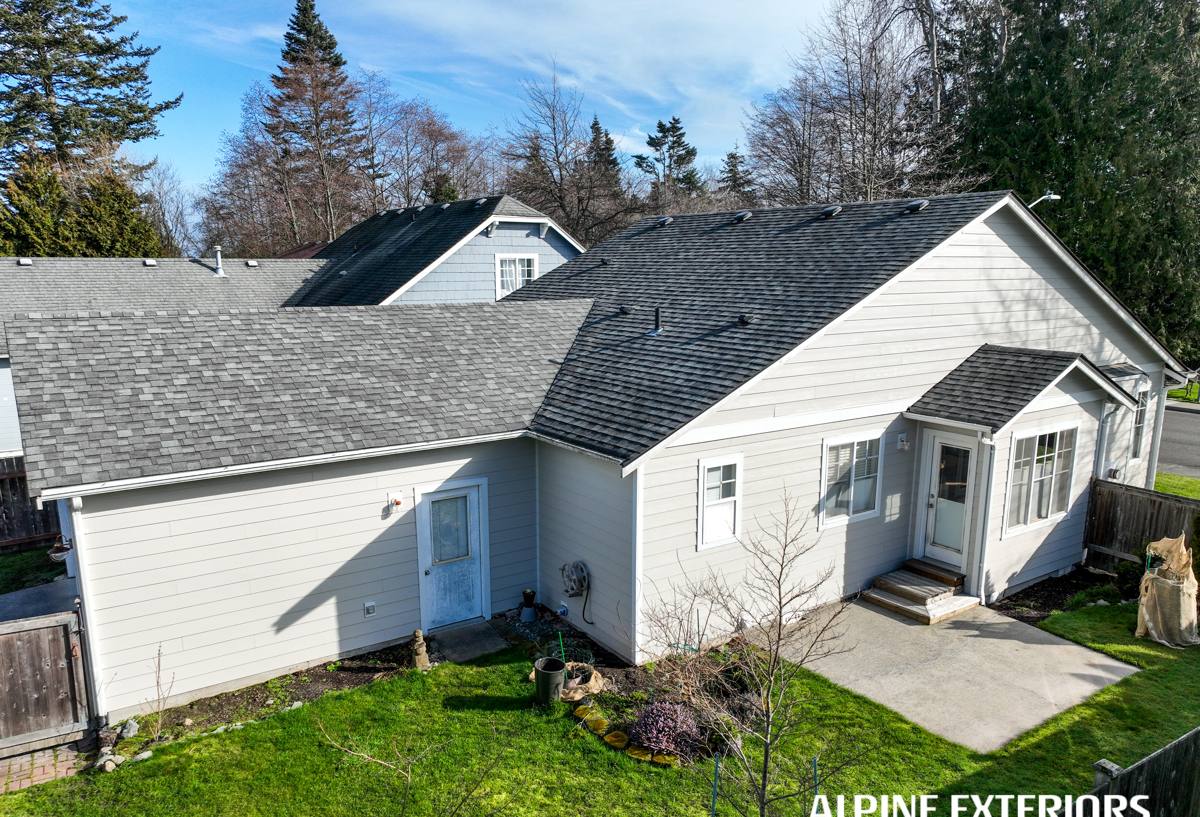
We work on homes throughout Whatcom County, and Happy Valley properties tend to share a few things in common: mature tree cover that keeps exterior walls shaded and slow to dry, elevation and exposure that can funnel wind-driven rain into siding laps and window flashing, and roofs that collect moss faster than owners expect. None of these are dramatic problems on their own. Left unaddressed over several winters, they add up to rot, paint failure, and siding that has to be replaced far sooner than it should.
Salt Air and Moisture: The Slow Damage Nobody Notices Right Away
Coastal proximity does two things to a house exterior. First, airborne salt accelerates corrosion on fasteners, flashing, and any exposed metal trim — a slow process, but a steady one, especially on the sides of a house that face open water or prevailing wind. Second, and more significant for most homeowners, is moisture. Whatcom County gets a lot of rain, but it's the combination of rain and wind that causes the real damage: water doesn't just fall straight down, it gets driven sideways into seams, laps, and anything with an unsealed edge.
Wood-based and wood-composite siding products are the most vulnerable to this cycle. Even with paint and caulking maintained on a normal schedule, cut edges, butt joints, and areas around windows and doors are where moisture finds its way in first. Once water gets behind a wood-based product, it doesn't dry out quickly in this climate — the same humidity and shade that make the Northwest pleasant to live in also slow evaporation to a crawl. That's the mechanism behind most of the siding failures we get called out to inspect: not one big storm, but years of small moisture intrusion nobody could see from the ground.
Why This Shapes What We Recommend
This is the core reason our company made a hard decision a long time ago: we install James Hardie fiber cement siding, and we don't install vinyl, LP SmartSide, Cemplank, Allura, primed spruce, or cedar. That's not a knock on every homeowner who has one of those products on their house today — plenty of them look fine and are holding up adequately. It's a statement about what we're willing to put our name behind after years of doing repair and replacement work throughout Whatcom County and seeing which materials hold up to salt air and driving rain, and which ones need a level of ongoing maintenance most homeowners don't realize they're signing up for.
The Long Moss Season
Moss and algae growth is one of the most visible symptoms of this climate, and it shows up on roofs first, but it doesn't stop there. Shaded siding, especially on the north side of a house or under overhangs and tree canopy, can develop the same greenish film over time. It's mostly a cosmetic issue on siding, but it's a signal worth paying attention to — if a wall stays damp enough long enough to grow moss, it's also damp enough to slowly degrade whatever material is underneath, particularly at seams and fastener points.
On roofs, moss is more than cosmetic. Moss growth lifts shingle edges, holds moisture against the roof deck, and shortens the useful life of the roofing material. In a county where the growing season for moss can run eight months or more, roof maintenance isn't optional — it's part of protecting the investment in the whole exterior envelope, siding included, since a roof that's shedding water properly is what keeps water off the walls below it in the first place.
Why We Install Only James Hardie Fiber Cement Siding
James Hardie fiber cement is a cement-and-cellulose composite, not a wood product, which changes its relationship with moisture entirely. It doesn't absorb water the way wood-based siding does, it isn't a food source for the rot and mold that thrive in damp, shaded conditions, and it holds its factory-applied ColorPlus finish without the repainting cycle that wood siding demands in a wet climate. It's also non-combustible, which matters increasingly to insurers and to homeowners thinking about wildfire smoke and ember exposure even outside of high-risk zones.
James Hardie also engineers specific product lines (their HZ5 designation, for example) for climates with more moisture exposure, which is directly relevant to anywhere in Whatcom County near open water. The company backs its siding with a strong, transferable limited warranty, and the ColorPlus finish comes with its own separate finish warranty — something that matters if you plan to sell the house before you plan to repaint it.
We're not going to tell a homeowner that vinyl or LP SmartSide is a bad product in every application — vinyl is inexpensive and low-maintenance in the right circumstances, and LP SmartSide has improved over the years. But in a climate that hits siding with salt air and sideways rain for months at a stretch, the trade-offs stop penciling out for us: vinyl can warp and fade and doesn't hold paint if you ever want a different color; engineered wood products remain vulnerable at cut edges and require diligent caulk and paint maintenance to keep water out; cedar looks great new but demands a maintenance commitment most homeowners underestimate, especially in constant shade and moisture. Fiber cement is the one product in this lineup that we've found consistently earns its keep over 30-plus years in this climate with the least maintenance drama.
Siding Material Comparison for a Whatcom County Climate
| Material | Moisture Resistance | Maintenance Burden | Fire Resistance | Typical Repaint Needs |
|---|---|---|---|---|
| James Hardie Fiber Cement | High — cement-based, engineered for wet climates | Low | Non-combustible | Factory finish lasts many years; not repaint-dependent |
| Vinyl | Moderate — can trap moisture behind panels | Low, but limited repair options | Combustible, can warp near heat | Cannot be repainted a different color reliably |
| LP SmartSide / Engineered Wood | Moderate — vulnerable at cut edges and seams | Moderate to high | Combustible | Regular paint/caulk maintenance required |
| Cedar | Low to moderate — absorbs moisture, needs airflow | High | Combustible | Frequent staining or painting cycle |
Beyond Siding: Roofing, Windows, and Decks
Siding doesn't work in isolation, and we treat it that way. A roof that isn't shedding water and moss properly will eventually push moisture problems down into the wall assembly no matter how good the siding is. Windows that aren't flashed correctly are one of the most common entry points for water intrusion in this climate — it's often not the window unit itself but the flashing and sealant detail around it that fails first. And decks, especially uncovered ones exposed to driving rain, take a similar beating to siding: ledger boards, fasteners, and any wood-to-wood contact point are where rot starts.
Because we handle all four — siding, roofing, windows, and decks — we can look at a Happy Valley home as one connected system rather than four separate trades that don't talk to each other. That matters most at transitions: where a roofline meets a wall, where a window sits in a siding field, where a deck ledger attaches to the house. Those transition points are where most real-world water damage actually originates, and they're easy to get wrong when different crews handle each piece without coordinating.
What a Local Crew Means in Practice
A crew that works Whatcom County regularly has already seen how a given orientation, elevation, or tree cover pattern plays out on a house over a few winters. That's not a marketing point — it changes practical decisions on site: where extra flashing attention goes, which walls need a closer look at existing damage before new siding goes up, and how a roof's moss history should factor into the timeline for the whole exterior. It also means being reachable for a warranty question or a follow-up inspection without a homeowner having to track down an out-of-area contractor.
We approach every estimate the same way: an honest look at what's actually happening on the house, not a sales pitch for the most expensive option available. Sometimes that means a full siding replacement. Other times it means a targeted repair, a roofing job, or window flashing correction is what actually solves the problem — and we'll say so.
A Seasonal Exterior Maintenance Checklist
- Inspect roof for moss buildup at least once a year, ideally before the wet season builds momentum
- Check siding seams, butt joints, and areas around windows and doors for gaps or soft spots
- Clear gutters and downspouts so water isn't overflowing onto siding or foundation areas
- Look for greenish staining on shaded or north-facing walls as an early moisture indicator
- Check deck ledger boards and fastener points for softness or discoloration
- Confirm window flashing and caulking haven't cracked or separated after freeze-thaw cycles
- Trim back vegetation and tree limbs that keep walls in constant shade and slow drying
Planning a Siding, Roofing, Window, or Deck Project
Whether a Happy Valley home needs a full siding replacement, a roof that's finally past its moss-fighting years, window flashing repair, or a deck rebuild, the right first step is an honest, in-person look at the house — not a generic estimate based on square footage alone. Every home's exposure, shade pattern, and existing condition are different, and that's what actually drives scope and cost.
If you're weighing options for a home in Happy Valley or elsewhere in Whatcom County, we're glad to walk the exterior with you, point out what we see, and put together a straightforward, no-pressure estimate using the form below.