 Whatcom County
 A One-Product Policy, and Why We Don't Apologize For It
Most siding contractors install whatever the homeowner asks for — vinyl one week, LP SmartSide the next, cedar on a custom job after that. We don't. Every siding job we take on in Whatcom County goes on the wall as James Hardie fiber cement, full stop. That's not a marketing gimmick and it's not because we get a better margin on it. It's because after years of tear-offs, warranty calls, and repair jobs on almost every other product sold in this region, Hardie is the only material we're willing to put our name behind.
This page explains the reasoning in plain terms: what our climate actually does to siding, what James Hardie is and isn't, and why we decided one product done right beats five products done "okay."
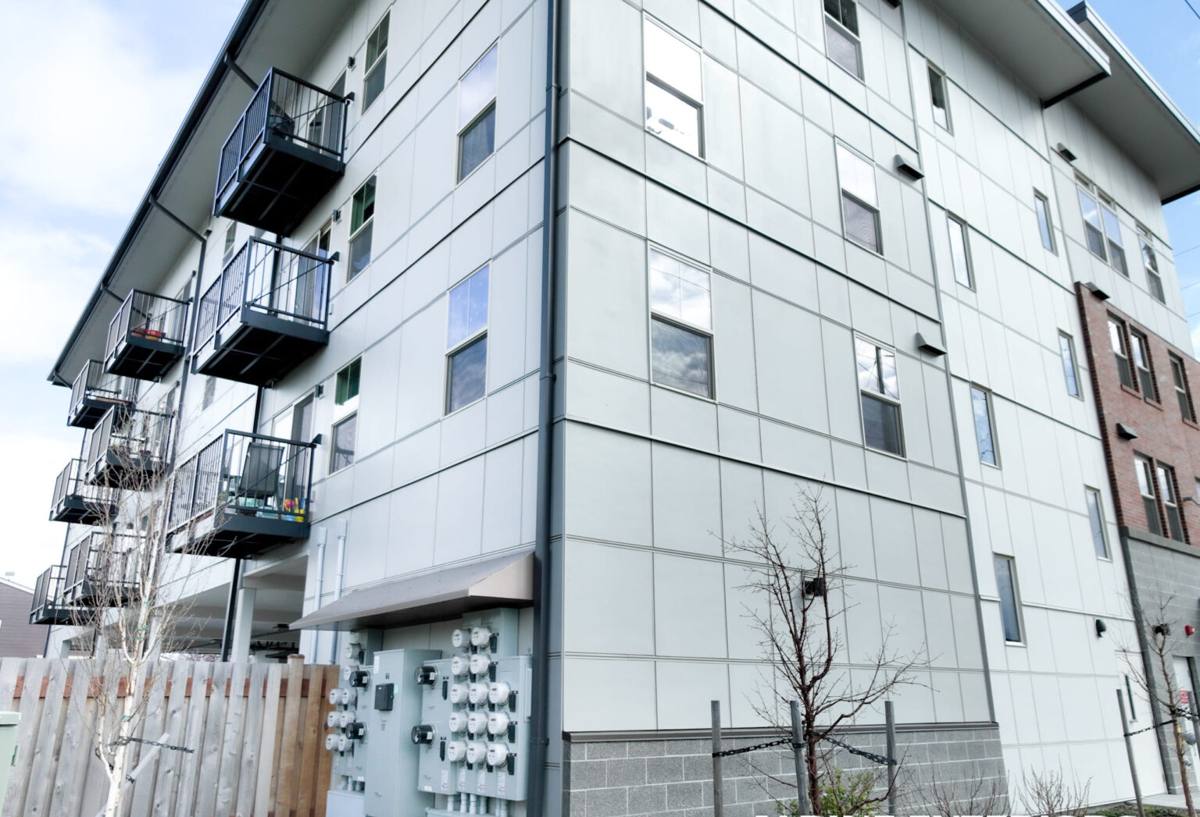
What Whatcom County Actually Does to a Wall
Whatcom County sits where the Salish Sea meets the Cascade foothills, and that combination is hard on exterior building materials in ways that don't show up in a showroom.
Salt Air Off Bellingham Bay and the Strait
Homes near Bellingham Bay, Semiahmoo, Drayton Harbor, and the Blaine waterfront sit in a salt-laden marine air that accelerates corrosion of fasteners, staining of painted surfaces, and breakdown of certain coatings. Materials that hold up fine fifty miles inland can fail early within a mile or two of saltwater.
Driving Rain, Not Just Rain
Whatcom County doesn't just get a lot of rain — it gets wind-driven rain off Pacific storm systems that pushes water sideways into laps, seams, and trim joints. A siding product's water-shedding design matters more here than in a drier, calmer climate, because the water isn't just falling, it's being forced into every gap that isn't detailed correctly.
A Long Moss and Mildew Season
Between the tree cover, the humidity, and the mild temperatures, this county has an extended season — often eight months or more — where moss, algae, and mildew can take hold on north-facing and shaded walls. Some siding materials feed that growth or trap moisture behind it; others resist it. This is one of the biggest visible differences between products over a ten-year span.
Why We Walked Away From the Other Options
We're not going to tell you competing products are junk — that's not honest and it's not our call to make about materials engineered by other companies. What we will tell you is what we personally observed installing and repairing them in this specific climate, and why we chose to stop.
- Vinyl siding is affordable and low-maintenance in the sense that it doesn't need paint, but it expands and contracts significantly with temperature swings, can crack in impact or cold snaps, and simply melts or warps near heat sources. It also telegraphs every wave in the wall sheathing behind it rather than hiding it.
- LP SmartSide and other engineered wood products perform well when installation and caulking are perfect and stay perfect for decades — a hard standard to guarantee on a house that will see forty more years of driving rain. Any breach in the factory coating exposes wood-based substrate to moisture, and repair is rarely invisible.
- Primed spruce and cedar are beautiful and traditional, but they are wood: they need ongoing paint maintenance, they're combustible, and in a moss-prone climate like ours they're more work to keep looking good than most homeowners expect when they buy the house.
- Cemplank and other fiber cement alternatives use similar underlying technology to Hardie, but we standardized on one manufacturer so our crews master one installation system, one flashing detail set, and one warranty process instead of splitting expertise across several.
None of this means those products can't work somewhere. It means we decided we'd rather be excellent at installing one system correctly, in this climate, than average at installing several.
What James Hardie Fiber Cement Actually Is
James Hardie siding is made from cement, sand, and cellulose fiber, cured under pressure and heat into a rigid, dense board. It is not plastic, and it is not wood. That distinction drives almost every practical advantage:
- It does not burn — it's rated non-combustible, which matters both for insurance conversations and for peace of mind during the dry summer months when wildfire smoke reaches even wet Western Washington counties.
- It does not rot, because there's no organic wood fiber for moisture to break down.
- It holds paint and factory finish far longer than wood substrates because it doesn't expand and contract with humidity the way wood does.
- It resists pests — no target for carpenter ants or woodpeckers looking for insects in soft wood.
HZ5 — Engineered for This Exact Climate
James Hardie makes different formulations for different climate zones across the country, sold under their HardieZone system. The Pacific Northwest, including all of Whatcom County, falls into HZ5, the zone engineered specifically for cold, wet, moisture-heavy conditions. The HZ5 formulation is designed to resist moisture-related damage and freeze-thaw stress better than a generic one-size-fits-all board would. This is one of the clearest reasons we don't substitute a cheaper fiber cement alternative — the specific engineering for our exact climate is part of what we're selling.
ColorPlus Technology and the Finish That Actually Lasts
A huge share of siding complaints we hear from homeowners aren't about the substrate failing — they're about paint failing. Peeling, fading, chalking. James Hardie's ColorPlus finish is baked on at the factory in a controlled environment, multiple coats, cured before the board ever reaches a job site. That process produces a more consistent, UV- and moisture-resistant finish than field-applied paint can typically achieve, especially in a climate where field-painted surfaces get wet again before they've fully cured.
ColorPlus finishes carry their own dedicated finish warranty separate from the substrate warranty, which is a detail worth understanding before you assume "the siding has a warranty" covers everything equally.
Product Lines We Install
James Hardie makes several distinct profiles, and matching the right one to the home matters as much as the material choice itself.
| Product | Typical Use | Notable Trait |
|---|---|---|
| HardiePlank lap siding | Most common wall application, all home styles | Widest color/texture selection, classic lapped look |
| HardiePanel vertical siding | Board-and-batten, modern or farmhouse styles | Clean vertical lines, less lap-seam exposure |
| HardieShingle siding | Accent gables, Craftsman and cottage details | Staggered or straight-edge shingle profiles |
| HardieTrim boards | Corners, window and door surrounds, fascia | Matches panel finish, resists the rot common in wood trim |
| HardieSoffit panels | Vented and non-vented eaves | Keeps combustible wood off the most fire-exposed area of a home |
Installation Standards That Actually Protect the Warranty
A material is only as good as its installation, and this is where we've seen more failures than in the material itself — on any brand. James Hardie's written installation instructions are specific, and skipping them is the single most common reason siding fails early in wet climates like ours.
- Minimum clearances from the roofline, deck surfaces, and grade to keep the bottom edge of the siding out of standing water and splash-back.
- Correct nail placement and fastener type — over-driven or wrong-gauge fasteners are a leading cause of cracking at the fastener line.
- Proper lap and joint flashing so wind-driven rain off the Strait doesn't find a path behind the board.
- A drainage plane and rainscreen gap behind the siding so any moisture that does get behind the cladding can dry out instead of sitting against the wall sheathing.
- Factory-cut and factory-primed cut edges sealed correctly on site, since an unsealed cut edge is a moisture entry point regardless of how good the board itself is.
- Caulking only at manufacturer-specified joints — over-caulking can trap moisture just as easily as under-caulking lets it in.
This is also why the installer matters as much as the product. A Hardie board installed against spec performs worse than a lesser product installed correctly — which is part of why we treat installation training as seriously as material selection.
What It Actually Costs, and Where the Money Goes
We won't quote a number here because every home's siding removal, wall condition, trim complexity, and square footage change the price. What we can lay out honestly is where the cost differences between materials come from.
| Cost Factor | How It Plays Out Over Time |
|---|---|
| Material upfront cost | Fiber cement typically costs more per square foot installed than vinyl, less than premium cedar |
| Repainting | ColorPlus finish is warrantied for years without repainting; wood and field-painted products need repainting on a recurring cycle |
| Moisture-related repair risk | Correctly installed fiber cement in HZ5 formulation has low moisture-failure risk; wood-based products carry more exposure if a coating breach goes unnoticed |
| Insurance and fire rating | Non-combustible cladding is occasionally reflected in insurance conversations, particularly as wildfire-adjacent risk gets more underwriting attention statewide |
| Resale positioning | Buyers and inspectors in this region increasingly recognize James Hardie by name, which can simplify a future sale conversation |
Living With Hardie Siding in a Moss-Prone Climate
No siding is maintenance-free, and we're not going to claim Hardie is. What it needs is far less than wood, and different from vinyl:
- An occasional gentle wash — a soft-bristle brush or low-pressure rinse — on north-facing and tree-shaded walls where moss and algae are most likely to establish during our long wet season.
- A visual check of caulked joints every year or two, since caulk (not the siding itself) is usually the first thing to age out.
- Prompt attention to any physical impact damage — a cracked board should be replaced rather than just caulked over, to keep the drainage plane behind it intact.
- Keeping gutters and downspouts functioning, since concentrated overflow water is hard on any siding material's bottom courses.
None of this is unusual homeowner work — it's closer to what you'd do for a deck than what wood siding demands with its repaint cycle.
The Warranty, Explained Honestly
James Hardie backs its fiber cement products with a non-prorated limited warranty, and ColorPlus finishes carry their own separate finish warranty — meaning the substrate and the paint are covered under different terms. Warranties are also transferable to a subsequent homeowner within certain conditions, which matters if you plan to sell the home during the coverage period. We'll walk you through the actual warranty documents before any work begins rather than summarizing them from memory, because warranty terms are the kind of thing worth reading yourself.
What We'd Tell a Neighbor Before They Sign Anything
If you're comparing bids for siding anywhere in Whatcom County, ask every contractor these questions, not just us:
- What specific product line and HardieZone formulation are they quoting, and is it correct for our climate zone?
- Who is factory-trained on installation, and can they walk you through the flashing and clearance details for your specific home?
- Is a rainscreen or drainage gap included, or just direct-to-sheathing installation?
- What's covered under the material warranty versus the finish warranty, and is workmanship separately warrantied by the contractor?
- Will cut edges be factory-primed and field-sealed before installation, not after?
If you'd like to talk through what this would look like on your own home, we're happy to come take a look and put together a straightforward, no-pressure estimate — no obligation, and no pressure to decide on the spot.