 Whatcom County
 Siding in Birchwood: Built for What This Neighborhood Actually Deals With
Birchwood sits in one of the wetter, greener corners of Whatcom County, and the houses here show it. Walk a few blocks in almost any season and you'll spot the same tells: streaked north-facing walls, soffits with a faint green tinge, trim boards that have started to cup or crack at the joints. None of that is bad luck. It's what happens to exterior materials that weren't built for this specific mix of moisture, mild temperatures, and long stretches without direct sun. We've been working on homes throughout Whatcom County long enough to know that a siding product that performs fine in a drier climate can fail here in a fraction of the time, and that's the lens we use on every Birchwood job.
This page covers what the Birchwood climate does to siding over time, how we approach siding, roofing, window, and deck work for homes in this area, and why we install James Hardie fiber cement exclusively rather than offering a menu of lower-cost alternatives.
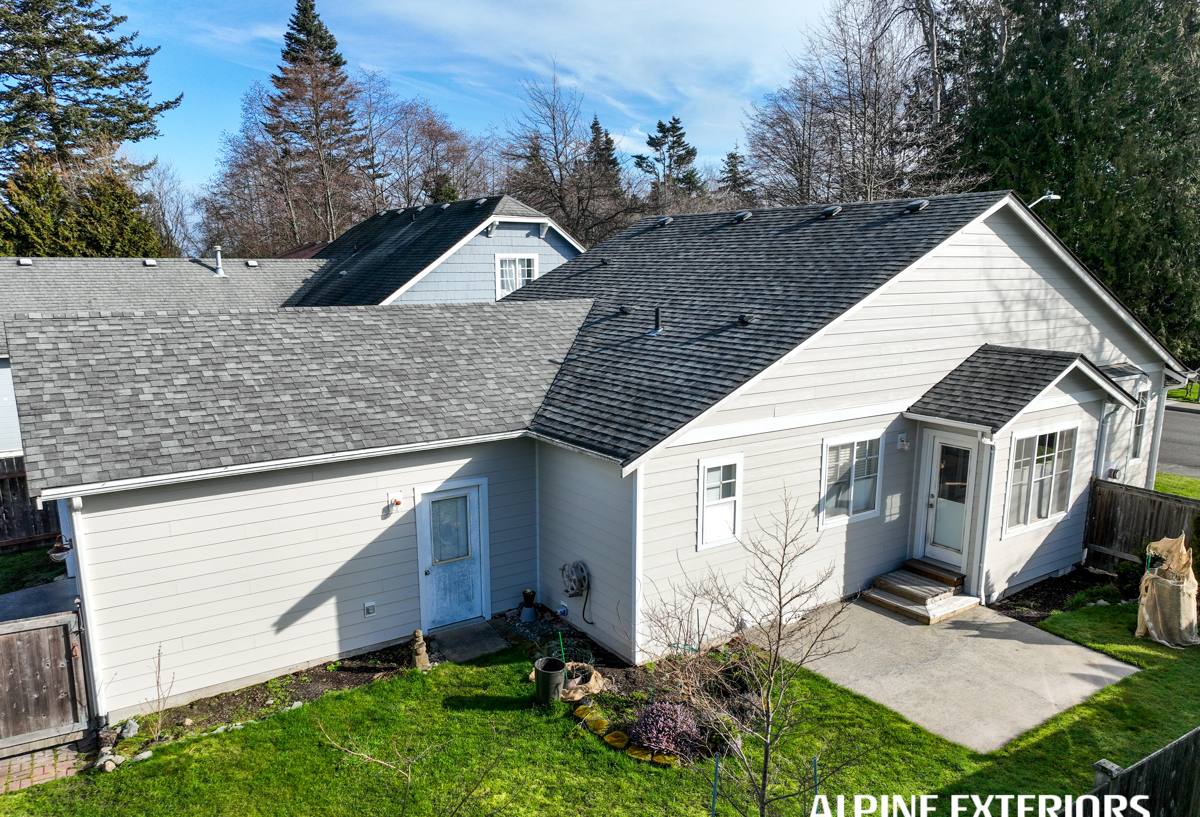
What the Local Climate Does to Exterior Materials
Moisture That Doesn't Let Up
Whatcom County gets a long, low-intensity rain season rather than short heavy downpours, and Birchwood is no exception. The problem isn't any single storm — it's the cumulative effect of siding staying damp for days at a stretch, especially on shaded or north-facing walls that don't get enough sun to dry out between rain events. Wood-based siding products absorb that moisture at cut edges, fastener holes, and any place the factory coating has been compromised. Once moisture gets into the substrate, it doesn't leave quickly, and that's where rot, swelling, and paint failure start.
Salt Air, Even Inland
Whatcom County's proximity to Bellingham Bay and the greater Puget Sound means a salt component in the air that reaches further inland than most homeowners assume. Salt-laden moisture accelerates corrosion on fasteners and hardware and adds another layer of stress to any siding material that relies on a surface coating to stay protected. Materials that hold up fine in a landlocked climate can wear faster here.
Moss, Algae, and Shade
Mature trees and cloud cover mean a lot of Birchwood homes have walls that rarely see direct sunlight. That's ideal growing conditions for moss and algae, which thrive on the sustained dampness described above. Beyond the cosmetic issue, moss holds water against the siding surface, which extends every wet cycle and speeds up whatever breakdown is already happening underneath.
Mild but Persistent Temperature Swings
Winters here rarely hit hard freezes, but the freeze-thaw cycles that do occur happen on already-saturated material, which is worse than a dry freeze. Combined with year-round humidity, this is a climate that rewards materials engineered specifically for wet, temperate conditions and punishes ones that weren't.
Why We Only Install James Hardie Fiber Cement
We get asked fairly often why we don't offer vinyl, LP SmartSide, or a lower-cost fiber cement alternative alongside James Hardie. The honest answer is that we used to see a wide range of siding products fail in this exact climate, and we made a business decision to stop installing products we didn't believe would hold up here long-term.
What We Ruled Out and Why
- Vinyl siding: It's inexpensive and low-maintenance in the sense that it doesn't need painting, but it's a thin material that can warp in temperature swings, crack on hard impact in cold weather, and it doesn't offer the fire resistance or the substantial, factory-painted look that fiber cement does.
- LP SmartSide and other engineered wood products: These are wood-based, which means the cut edges and fastener points remain vulnerable to moisture intrusion if caulking and maintenance aren't kept up perfectly, every year, for the life of the product. In a climate with Birchwood's rain patterns, that's a maintenance burden we don't think is fair to hand a homeowner.
- Primed spruce and cedar: Natural wood siding can look great, but it demands the most maintenance of any option — regular refinishing, vigilant caulk inspection, and real vulnerability to the moss and moisture issues covered above. It's a legitimate product for the right owner, but it's not what we build our business around.
- Other fiber cement brands (Cemplank, Allura): These are closer competitors to James Hardie on paper, but we standardized on Hardie specifically for its factory-applied ColorPlus finish, its climate-engineered HZ5 product line built for Pacific Northwest conditions, and the depth of its installation network and warranty support in this region.
None of this means these products are junk — vinyl and engineered wood siding are on a lot of well-maintained homes. It means that after years of installation and repair work in this specific climate, we decided we'd rather install one product we trust completely than several we'd have to caveat.
What James Hardie Gets Right for This Climate
| Concern in Birchwood | How James Hardie Addresses It |
|---|---|
| Sustained moisture exposure | Fiber cement composition resists moisture-driven swelling and rot far better than wood-based products |
| Moss and algae growth | ColorPlus factory finish resists staining and holds up to cleaning better than field-applied paint |
| Salt air corrosion | Non-organic material composition doesn't feed the same breakdown process as wood-based siding |
| Fire exposure | Non-combustible material, a meaningful factor as wildfire smoke seasons have become more common regionally |
| Long-term appearance | Factory-baked finish holds color longer than site-applied paint, reducing repaint cycles |
Siding Installation: What Correct Work Looks Like
Fiber cement siding is only as good as its installation. A misinstalled Hardie job — wrong fastener pattern, insufficient clearance from grade or roofline, poor flashing details, improperly sealed joints — can develop moisture problems just like any other siding, and that defeats the entire point of choosing the product. Our installation approach on Birchwood homes includes:
- Proper water-resistive barrier and flashing integration at every window, door, and roofline transition
- Correct fastener spacing and depth per James Hardie's published installation guidelines, which matter for both warranty coverage and actual performance
- Adequate clearance between siding and grade, decks, and roof lines to prevent standing moisture contact
- Factory-caulked and sealed joints at butt seams, using products compatible with the ColorPlus finish
- A tear-off and inspection of the sheathing underneath, since siding replacement is the best opportunity to catch and fix hidden moisture damage before it's covered back up
Roofing, Windows, and Decks: The Full Exterior Picture
Siding doesn't work in isolation. A roof that's shedding water onto a wall, a window that's letting moisture behind the flashing, or a deck ledger board that's trapping water against the house can undermine even a perfect siding job. Because we handle roofing, windows, and decks in addition to siding, we look at the whole exterior envelope on a Birchwood property rather than treating siding as a standalone project. That matters most at transition points — where a roofline meets a wall, where a deck attaches to the house, where a window is set into new siding — since that's where the majority of real-world moisture problems in this climate actually start.
What a Siding Project in Birchwood Typically Involves
Assessment
We start by looking at the current siding's condition, the sheathing underneath where accessible, and any trouble spots — shaded walls, areas with recurring moss, spots near grade level with limited drainage. This tells us whether it's a straightforward re-side or whether there's underlying moisture damage to address first.
Scope and Product Selection
We walk through James Hardie's product lines and color options relevant to the home's style and the neighborhood's general character, and we're upfront about what full replacement involves versus more limited repair scope where that's genuinely sufficient.
Installation Timeline
Weather windows matter in Whatcom County. We plan installation around realistic dry-weather stretches rather than rushing work into marginal conditions, since fiber cement installation quality depends on proper handling and sealing during dry conditions.
Cost Factors Homeowners Should Understand
| Factor | Why It Affects Cost |
|---|---|
| Home size and wall complexity | More corners, dormers, and transitions mean more cutting, flashing, and labor time |
| Current siding removal | Tear-off and disposal of existing material adds labor beyond new installation alone |
| Sheathing repair needs | Hidden moisture damage found during tear-off may require sheathing replacement before new siding goes on |
| Hardie product line selected | Different HZ lines and plank profiles (lap, shingle, panel) carry different material costs |
| Color and finish choice | Factory ColorPlus finishes vs. primed-for-paint options affect both material cost and long-term maintenance |
We don't publish fixed pricing because every home's scope varies enough that a number without an inspection would be misleading. What we can say honestly is that fiber cement siding is a mid-to-upper cost option relative to vinyl, but it's priced where it is because of what it saves in maintenance and repainting over the life of the siding.
Signs a Birchwood Home Might Need Siding Attention
- Visible cracking, cupping, or gaps at siding seams and corners
- Paint that's peeling, bubbling, or failing faster than a normal repaint cycle would suggest
- Soft spots or give when you press on wood-based siding, especially near the bottom courses
- Persistent moss or algae staining that returns quickly after cleaning
- Visible daylight or drafts at siding-to-window or siding-to-trim transitions
- Rising utility bills that may point to compromised insulation behind aging siding
Why a Local Crew Matters Here
Whatcom County's climate isn't generic Pacific Northwest weather — the combination of coastal salt exposure, tree cover, and rainfall patterns specific to this part of the county shapes how we sequence a job, where we pay extra attention to flashing, and which parts of a house we flag for closer inspection. A crew that works this area regularly recognizes the difference between cosmetic moss staining and a wall that's actually retaining moisture, and knows which older Birchwood homes are more likely to have hidden issues based on their age and original construction. That local pattern recognition is hard to replace with a general contractor unfamiliar with the area.
Get a Free Estimate
If you're noticing wear on your Birchwood home's siding, or you're planning ahead for a replacement, we're happy to take a look and give you an honest read on condition and options — no pressure, no obligation. Use the form below to request a free estimate for siding, roofing, window, or deck work.