 Whatcom County
 Fairhaven's Exterior Climate: Salt, Rain, and Shade
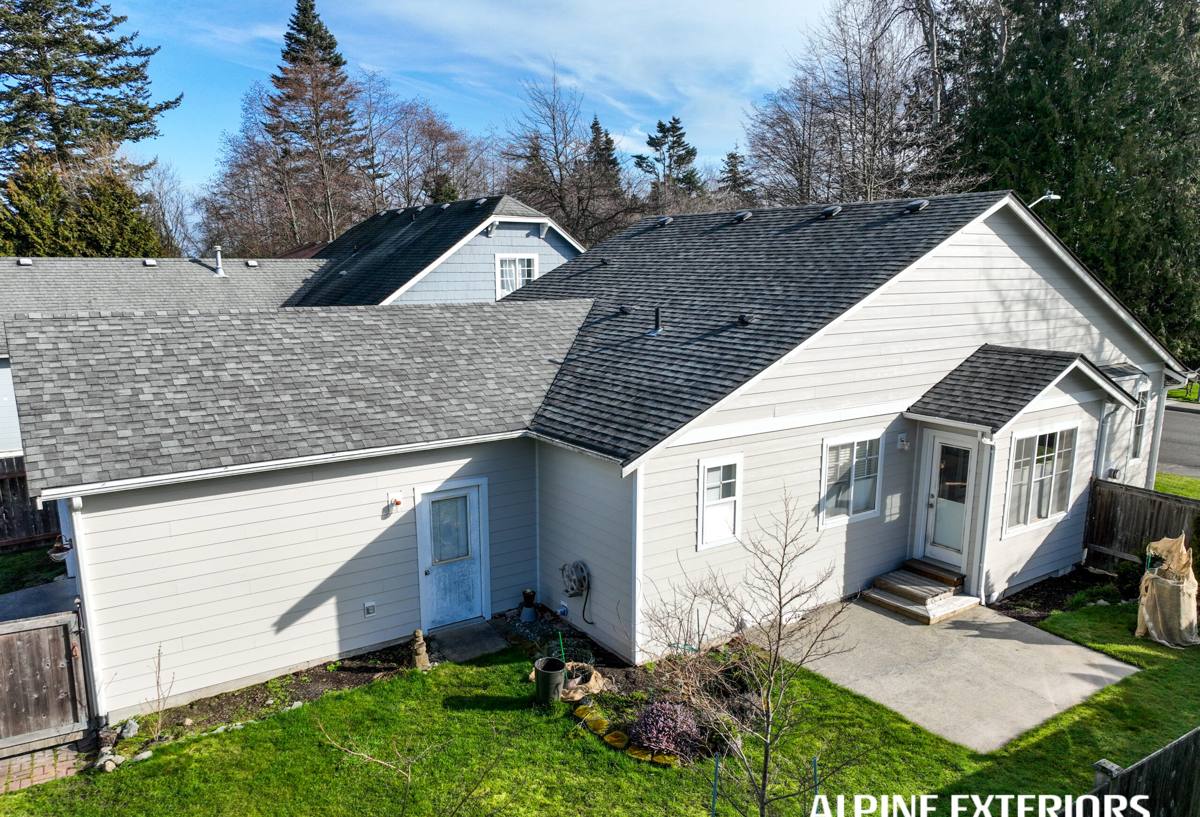
Fairhaven sits close to Bellingham Bay, which means homes there deal with a version of Whatcom County weather that inland neighborhoods don't face quite as hard. Salt-laden air off the water accelerates corrosion on fasteners, flashing, and cheap trim. Driving rain off the Sound gets pushed sideways by wind more often than homeowners expect, working its way into siding laps, window seams, and deck ledger connections that were installed with margins for calm weather rather than storm weather. And because much of Fairhaven's housing stock sits under mature tree cover on sloped, partially shaded lots, homes here get less direct sun to dry out after a soaking than a home out in open farmland east of Bellingham. Less sun plus more moisture plus salt air is exactly the combination that ages an exterior fast.
None of this means Fairhaven homes need exotic materials or unusual construction. It means the ordinary decisions — what siding goes on the walls, how the roof sheds water, how windows are flashed, what a deck is built from — carry more consequence here than they would in a drier part of the state. We've built our whole approach around materials and installation methods that hold up to marine-climate conditions, not just materials that look fine on a spec sheet.
Why Siding Material Choice Matters More Near the Bay
A lot of siding products perform acceptably in a mild, dry climate and then underperform once you add sustained moisture and salt exposure to the equation. This isn't a knock on every alternative product — it's why we made a deliberate decision about what we will and won't install.
What We Don't Install, and Why
We don't install vinyl siding, engineered wood products like LP SmartSide, or primed cedar and spruce on Fairhaven homes. Vinyl expands and contracts with temperature swings and can warp or pull away from fastening points over years of wet-dry cycling, and its seams give moisture more opportunities to get behind the cladding near the coast. Engineered wood siding is a wood product at its core — even with resin treatment, any breach in the factory coating or field-cut edge that isn't properly sealed opens a path for moisture absorption, and repeated wet seasons in a shaded, salt-air environment are an unforgiving test of that seal. Primed wood siding requires a maintenance commitment — regular repainting and caulk inspection — that most homeowners underestimate until they're dealing with soft spots at butt joints and corners a decade in.
These aren't failures waiting to happen on every installation. They're trade-offs, and in a climate like Fairhaven's, the trade-offs stack against those products more than they would in a drier region. That's why we standardized on one system instead of offering a menu of options with different risk profiles.
James Hardie Fiber Cement: What We Install Instead
We install James Hardie fiber cement siding exclusively. It's a cement, sand, and cellulose fiber composite — non-combustible, dimensionally stable, and manufactured with regional climate zones in mind rather than a one-size-fits-all specification.
HardieZone Engineering for the Pacific Northwest
James Hardie makes climate-specific product formulations under its HardieZone system. The HZ5 formulation is engineered for the wetter, more moisture-exposed regions of the country, which includes Western Washington and Whatcom County. That's the line we specify for Fairhaven installations — it's built to resist moisture absorption and freeze-thaw stress better than a product formulated for a uniformly dry climate.
ColorPlus Factory Finish
Most Hardie siding we install carries the ColorPlus finish — a baked-on, multi-coat color system applied in a controlled factory environment rather than sprayed on-site. It resists fading and chipping better than field-applied paint, and because it's cured under controlled conditions, you don't get the uneven absorption and premature wear that field painting can produce on a humid job site. That matters in a place where a fresh coat of exterior paint might not get a full dry cure before the next rain moves in.
Warranty and Longevity
James Hardie backs its siding with a transferable limited warranty, and the ColorPlus finish carries its own separate finish warranty. Warranty terms and coverage details should always be reviewed directly for your specific product line, but the structure itself — manufacturer-backed, transferable to a future buyer — is part of why we consider it the responsible long-term choice for coastal Whatcom County homes.
Roofing for a Wet, Shaded, Salt-Air Neighborhood
Siding gets most of the attention, but the roof is doing more work keeping water out of a Fairhaven home than almost any other component. In a shaded, moisture-heavy environment, roofs hold onto moss, algae, and debris longer than they would in full sun, and that buildup traps water against roofing material and flashing. We pay particular attention to:
- Flashing at valleys, chimneys, and roof-to-wall intersections, where the majority of real leaks originate
- Ventilation, so trapped attic moisture doesn't condense and rot sheathing from the inside
- Gutter and downspout capacity sized for sustained heavy rain, not just average rainfall
- Moss and debris management, since organic buildup holds moisture against roofing surfaces far longer than clean shingles do
A roof and siding system that aren't coordinated — mismatched flashing details, gutters that dump water against a wall instead of away from it — is a common source of moisture problems that get blamed on the siding when the real issue started at the roofline.
Windows: Where a Lot of Coastal Leaks Actually Start
Window replacement in Fairhaven isn't just about energy efficiency, though better glass and frames do help with heating costs through the wet months. The bigger issue is flashing and sealing. Wind-driven rain off the bay finds gaps at window perimeters that would never leak in a still, dry climate. Correct window installation means integrating the window flashing with the home's weather-resistive barrier and, where applicable, the siding water-management system — not just caulking the exterior trim and calling it done. We install and integrate window work as part of the same envelope approach we use for siding, so the transitions between window and wall are handled by the same crew with the same standard, rather than left to whoever shows up last.
Decks: Built for Shade, Rain, and Moss
Decks in Fairhaven's tree-covered, moisture-heavy lots face a specific problem: they often don't get enough sun to dry out fully between rain events, which accelerates decay in untreated or poorly maintained wood and creates ideal conditions for moss and algae growth on walking surfaces. That's a safety issue as much as a cosmetic one — a mossy deck board gets slick fast. We build decks with attention to proper ledger flashing (a common source of structural water damage when done wrong), adequate airflow underneath the structure, and decking materials suited to a shaded, wet environment, whether that's a well-maintained wood deck or a low-maintenance composite alternative.
What Cost Factors Actually Look Like
Every Fairhaven home is different — lot slope, tree cover, existing wall condition, and access all move the number. This table gives a general sense of what tends to drive cost up or down on exterior projects in this area; it's not a quote.
| Factor | Tends to Lower Cost | Tends to Raise Cost |
|---|---|---|
| Existing wall condition | Sound sheathing, no rot found | Water damage requiring sheathing repair |
| Home access | Flat, open lot with driveway access | Sloped lot, limited equipment access, mature trees close to walls |
| Siding profile | Standard lap siding | Board-and-batten, shingle-style, or custom trim details |
| Scope | Siding only | Combined siding, roofing, window, and deck work |
| Color | Standard ColorPlus color | Custom or premium color selections |
Maintaining an Exterior in a Marine Climate
Even with the right materials, ongoing upkeep matters more here than in a dry climate. A short list we walk Fairhaven homeowners through:
- Rinse siding and decking periodically to clear salt residue and organic buildup before it stains or promotes moss growth
- Keep gutters clear, especially in fall, so water doesn't back up against fascia and siding
- Trim back tree limbs and vegetation that keep exterior surfaces shaded and damp longer than necessary
- Inspect caulking and sealant at windows, doors, and trim annually — this is where small gaps become real leaks
- Address moss on roofing and decking promptly rather than letting it accumulate over multiple wet seasons
Why a Local Crew Matters
Whatcom County's exterior conditions aren't uniform — a home in Fairhaven facing the bay deals with different wind and moisture exposure than a home further inland, and a crew that only works in dry-climate regions will make assumptions that don't hold up here. A local crew knows to expect wind-driven rain from the water, understands how shade and slope affect drying time on a given lot, and has seen firsthand what happens when flashing details are cut short on a coastal property. That local knowledge shows up in the small decisions — how flashing is lapped, where extra sealant gets used, how ventilation is planned — that don't show up on a spec sheet but determine how the exterior performs ten and twenty years out.
If you're planning siding, roofing, window, or deck work on a Fairhaven home, we're happy to walk the property, look at what your exterior is currently dealing with, and put together a free, no-pressure estimate — no obligation, just a straight assessment of what your home needs.