 Whatcom County
 Siding in Nooksack: Built for a Whatcom County Climate
Nooksack sits in the Nooksack River valley, tucked between the foothills of the North Cascades and the broader Whatcom County lowlands that stretch toward the Salish Sea. It's a small community, but the weather doesn't treat it any gentler than it treats the rest of the county. Homes here deal with the same marine-influenced moisture, driving rain, and long gray stretches that define exterior work anywhere in Northwest Washington. Add in the valley's fog, cooler shaded microclimates, and the moss that comes with all of it, and siding here has a genuinely hard job to do.
We install James Hardie fiber cement siding exclusively — no vinyl, no LP SmartSide, no cedar, no primed spruce. That's not a marketing line, it's a standard we hold to on every job, including the ones we do in Nooksack. Below is an honest look at what local homes are up against and how we approach siding, roofing, windows, and decks for this part of the county.
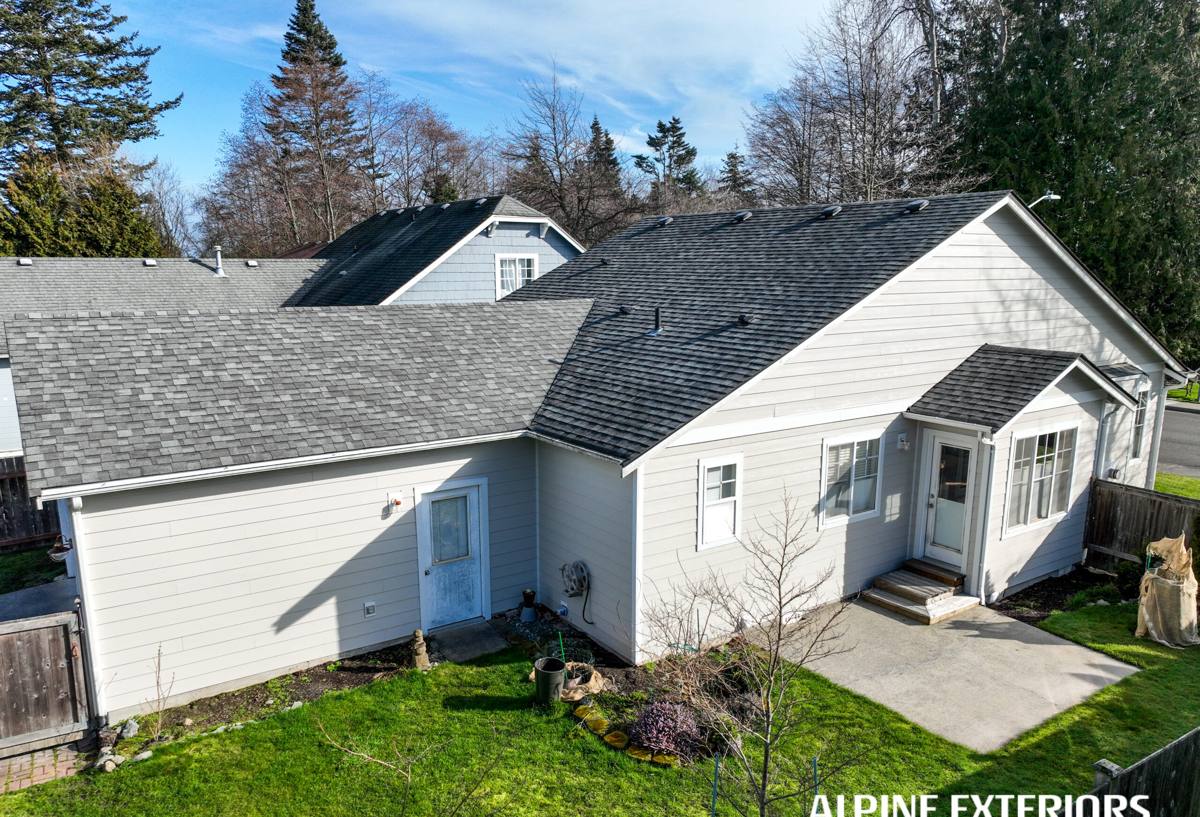
What Nooksack Homes Are Actually Up Against
Whatcom County's climate is defined by persistent moisture more than by extreme temperatures. Nooksack's inland, river-valley setting doesn't exempt it from that — if anything, the surrounding terrain traps humidity and fog longer than more open, wind-exposed areas.
Rain That Doesn't Let Up
The Pacific Northwest's rain isn't usually violent, but it's relentless. Long, low-intensity rain events soak siding for days at a stretch during fall, winter, and spring. Material that can't shed water efficiently, or that absorbs and holds moisture at seams and edges, starts showing problems within a few seasons — swelling, delamination, or paint failure.
Moss and Sustained Shade
Between tree cover, valley fog, and north-facing walls that rarely see direct sun, moss and algae growth is a near-constant maintenance issue here. It's not just cosmetic — moss holds moisture directly against the siding surface, which accelerates whatever underlying vulnerability a material already has.
Marine Air and Humidity
Air moving inland off the Salish Sound and up the river corridors carries salt-tinged moisture with it. Combined with the valley's naturally higher humidity, that means metal fasteners, trim, and any wood-based product are under more or less constant low-grade moisture exposure, even on days it isn't actively raining.
Temperature Swings
Nooksack sees colder overnight lows than areas closer to the water, especially in winter when cold air settles in the valley. Materials that expand and contract significantly with temperature — vinyl in particular — are working harder here than they would on a milder site.
Why Fiber Cement Outperforms the Alternatives in This Climate
We get asked fairly often why we don't offer vinyl or engineered wood siding. The honest answer is that we've made a professional judgment call based on what holds up long-term in exactly the conditions Nooksack sees every year.
| Material | How It Handles This Climate | Why We Don't Install It |
|---|---|---|
| Vinyl | Sheds rain reasonably well but flexes and warps with temperature swings; seams loosen over time | Shorter realistic lifespan, fades and becomes brittle, doesn't hold paint if you ever want to change color |
| LP SmartSide (engineered wood) | Performs fine when sealed edges stay intact; vulnerable at cuts, seams, and any breach in the factory coating | Wood-based core means moisture intrusion at a compromised seam can cause swelling and rot; installation has to be near-perfect every time |
| Primed Spruce / Cedar | Natural material, needs active upkeep to perform | Requires ongoing painting, sealing, and moss/mildew treatment; highest maintenance burden of any common siding option |
| James Hardie Fiber Cement | Non-combustible, dimensionally stable, factory-baked ColorPlus finish resists fade and moisture absorption | This is what we install — engineered for exactly this climate profile |
None of this means the alternatives are junk products across the board — they have their place in drier climates or lower-budget applications. It means that for a river valley climate with heavy moss, sustained shade, and year-round moisture, we don't think they're the right long-term investment for a homeowner's money.
Why We Standardized on James Hardie
James Hardie fiber cement is cement, sand, and cellulose fiber — it doesn't rot, it doesn't feed moss the way wood fiber can, and it holds its shape through the valley's freeze-thaw and wet-dry cycles far better than wood-based or vinyl products. A few specifics that matter for Nooksack homes:
- Non-combustible core — a real advantage as wildfire smoke and dry-season risk become more common concerns even in the wetter parts of the state.
- ColorPlus factory finish — baked-on color that resists fading and chalking far longer than field-applied paint, which matters when a home sits in shade most of the year and doesn't get the natural "bleaching" that sun exposure gives painted siding elsewhere.
- HZ5 and HZ10 product engineering — Hardie's climate-specific formulations are built to handle cold, wet regions like ours, rather than a one-size-fits-all national product.
- Transferable, long-term warranty — backed by the manufacturer, not just the installer, which matters if the home changes hands.
Correct installation still matters enormously — proper clearances, flashing, and fastening are what actually deliver the performance the product is engineered for. A great material installed poorly will still fail. That's why we treat installation detail as seriously as the product choice itself.
Our Approach to Nooksack Homes
We work on siding, roofing, windows, and decks, and we treat the exterior as one connected system rather than isolated projects. Water that gets past a bad roof-to-wall transition doesn't stay in the attic — it finds its way behind siding. A deck ledger board attached without proper flashing can rot the wall it's bolted to. When we're on a Nooksack property, we're looking at how all of it works together.
Siding
Full tear-off and replacement with James Hardie lap siding, panel siding, or shingle-style products, matched to the home's style and the specific exposure of each wall.
Roofing
Roof condition drives siding performance more than most homeowners realize — proper drip edge, flashing, and gutter integration keep water off the siding in the first place.
Windows
Window replacement done alongside siding work lets us properly integrate flashing and house wrap in one continuous system, rather than patching around old window trim.
Decks
Deck ledger connections and any siding that meets deck framing are common leak points in wet climates — we address that intersection directly rather than working around it.
Signs a Nooksack Home Needs Siding Attention
- Persistent moss or dark streaking that returns within weeks of cleaning
- Soft spots or visible swelling, especially near the bottom courses or window trim
- Paint that's peeling or bubbling rather than just fading evenly
- Visible gaps at seams, corners, or where siding meets trim boards
- A musty smell or visible staining on interior walls that share an exterior wall
- Siding that flexes or feels hollow when pressed near the bottom edge
What Drives the Cost of a Siding Project
| Factor | Why It Matters |
|---|---|
| Existing siding removal | Tear-off complexity and any hidden sheathing damage found underneath affects labor and material costs |
| Home size and wall complexity | Dormers, multiple stories, and cut-up floor plans take more time than simple rectangular walls |
| Product line and profile | Lap width, panel style, and shingle-style Hardie products vary in material cost |
| Trim and detail work | Window and door trim, corner treatments, and fascia detailing add labor |
| Access and site conditions | Steep grades, tree cover, or tight lot lines common in valley properties can affect staging and scaffolding needs |
We don't publish blanket price lists because every home is different, but we'll walk a Nooksack property with you and give a clear, itemized estimate before any work starts.
Why a Local Crew Matters
Whatcom County's microclimates vary more than people expect — a wall that's shaded and damp most of the year behaves differently than an open, sun-exposed one just a few miles away. A crew that works this county regularly knows which walls need extra attention to moss and moisture, how the river valley's fog patterns affect drying time during installation, and how to sequence a job around a wet forecast instead of fighting it. That local knowledge shows up in the details — flashing choices, fastening schedules, and where we spend extra time versus where we don't need to.
Maintenance in This Climate
Even a low-maintenance material like fiber cement benefits from periodic attention in a climate like Nooksack's. A yearly rinse to knock back moss and algae buildup, keeping gutters clear so water isn't sheeting down wall sections, and a visual check of caulking at trim and window edges will keep siding performing at its best for the long haul. None of this is heavy work — it's the difference between siding that looks good for decades and siding that starts showing its age early.
If you're noticing moss buildup, aging siding, or you're just planning ahead for a Nooksack home, we're happy to come take a look. Estimates are free, there's no pressure, and we'll give you a straight answer about what your home actually needs — use the form below to get started.