 Whatcom County
 What the Climate in Columbia Actually Does to a House
Columbia sits close enough to the water and to Whatcom County's marine weather patterns that homes here take a different kind of beating than houses further inland. It's not one dramatic event that wears out an exterior — it's the accumulation of small, constant exposures: salt-tinged air moving in off the bay, long stretches of driving rain that comes in sideways during winter storms, and a moss season that can run from October well into spring on shaded north and east-facing walls.
Salt air is corrosive to exposed metal fasteners, flashing, and trim over time, and it accelerates the breakdown of paint films on wood and composite products. Driving rain finds every gap in a siding system — not just the face of the panel, but the seams, the butt joints, and the transitions around windows and doors. And moss doesn't just look bad; it holds moisture against the wall assembly, which is exactly the condition that leads to rot, delamination, and paint failure underneath.
None of this means Columbia is a uniquely hostile place to own a home. It means the exterior products and installation details matter more here than they would in a dry inland climate, and that's the lens we use on every project in this part of Whatcom County.
Why Not Every Siding Product Holds Up the Same Way Here
We get asked regularly why we don't offer vinyl, LP SmartSide, cedar, or primed spruce siding. Each of these products has a legitimate place in the market — we're not going to tell you they're junk, because they aren't. But when we weigh them against what a Whatcom County exterior actually has to survive year after year, we've made a professional decision to stand behind one product system instead.
Vinyl
Vinyl is affordable and low-maintenance in mild, dry climates. In sustained wind-driven rain, though, its seams and lap joints are more prone to water intrusion behind the panel, and it can become brittle and crack in freeze-thaw swings. It also softens and can warp near heat sources, and it doesn't hold up to direct flame exposure — a real consideration on properties near wooded lots.
LP SmartSide and Other Engineered Wood
Engineered wood siding has improved a great deal, but it's still a wood-based product at its core, which means its long-term performance depends heavily on unbroken paint and caulk seals. In a climate with this much sustained moisture and moss growth, any breach in that seal — a nail pop, a hairline crack, a spot where caulk has failed — can let water into the substrate, and wood-based products swell and deteriorate once that happens.
Cedar and Primed Spruce
Real wood siding has genuine appeal, but it demands an ongoing maintenance commitment: re-staining or repainting on a cycle, careful caulk upkeep, and vigilance about moss and mildew on shaded walls. In a marine climate, that cycle comes faster than most homeowners expect, and skipping a cycle shortens the material's life significantly.
| Material | Moisture Behavior | Fire Resistance | Maintenance Burden | Typical Warranty |
|---|---|---|---|---|
| Vinyl | Prone to intrusion at seams | Softens/melts near heat | Low, but limited repairability | Prorated, material only |
| LP SmartSide | Depends on paint/caulk integrity | Treated wood product | Moderate, seal inspection needed | Limited, often prorated |
| Cedar | Absorbs moisture, needs sealing | Combustible | High, re-stain/repaint cycle | None from manufacturer |
| James Hardie Fiber Cement | Dimensionally stable, resists swelling | Non-combustible | Low, factory finish | Long, transferable, includes ColorPlus finish coverage |
Why We Install Only James Hardie Fiber Cement
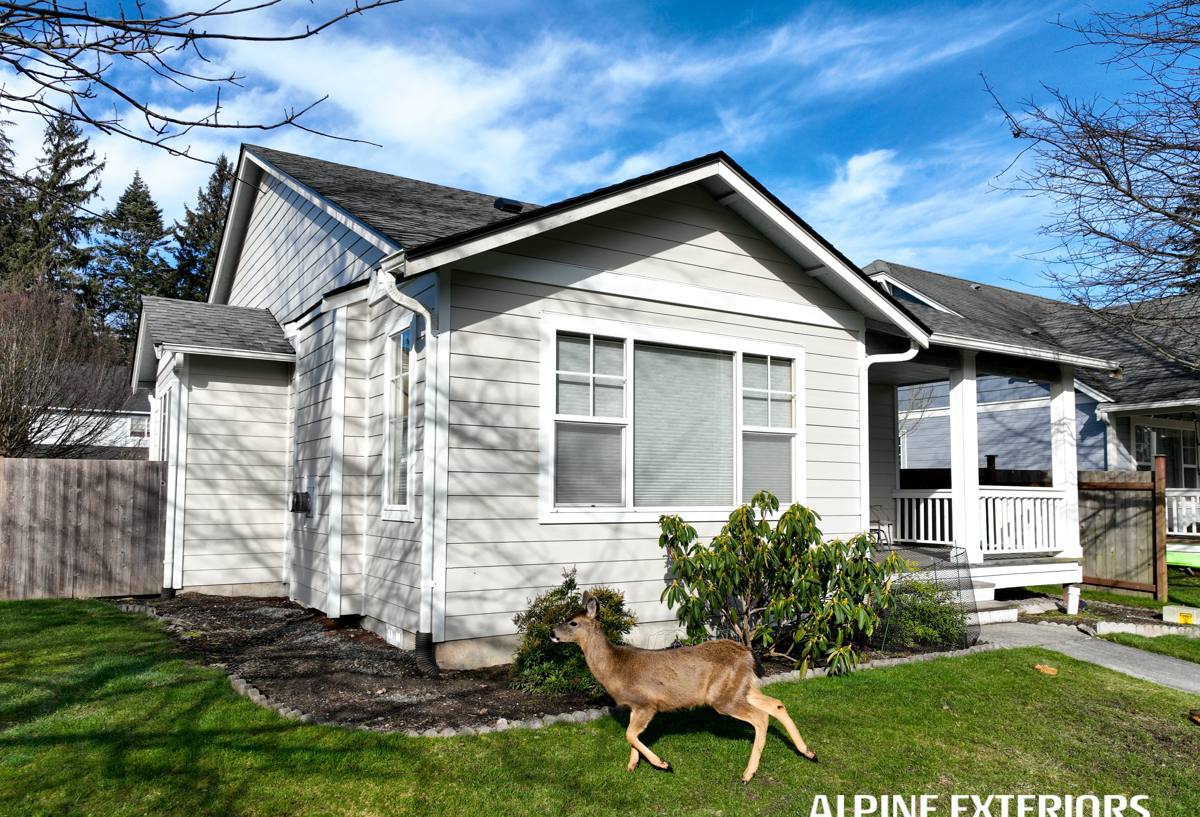
James Hardie's fiber cement is engineered from cement, sand, and cellulose fiber, which gives it a dimensional stability that wood and vinyl products can't match — it doesn't swell, warp, or rot the way wood-based products can when moisture gets past the surface. That matters directly for a place like Columbia, where wall assemblies deal with prolonged dampness and salt-laden air for months at a stretch.
Climate-Engineered Product Lines
Hardie builds region-specific formulations under its HZ product system, designed for the moisture and humidity conditions of the Pacific Northwest. That's a meaningful distinction from a one-size-fits-all product — the formulation used here is built for exactly the kind of weather Whatcom County sees.
ColorPlus Factory Finish
Rather than relying on field-applied paint that has to be maintained on a cycle, Hardie's ColorPlus finish is baked on in a controlled factory setting, which gives a more consistent, fade-resistant color and reduces the maintenance burden that comes with site-painted siding — a real advantage in a climate where repainting scaffolding and weather windows are hard to line up.
Non-Combustible Material
Fiber cement doesn't contribute fuel to a fire the way wood-based sidings can, which is an increasingly relevant factor for insurance and for peace of mind, particularly for homes near tree cover.
A Warranty Built for Longevity
Hardie backs its products with a long-term, transferable warranty structure, which matters if you plan to sell the home down the line — a transferable warranty is a tangible selling point that other siding categories generally can't offer in the same way.
Beyond Siding: Roofing, Windows, and Decks
Siding doesn't work in isolation. Water management on a home is a system — roofing sheds the bulk of it, siding and flashing handle what runs down the walls, windows are one of the most common leak points if not properly integrated, and decks take the most direct beating from standing water and UV exposure. We handle all four because a siding replacement done without attention to roof flashing, window integration, or deck ledger connections just relocates the moisture problem instead of solving it.
When we're on-site for a siding project, we're also looking at the roofline, the window flashing, and any attached deck structures, because a full picture of the exterior tells us where water is actually getting in — not just where the old siding looks worn.
What Correct Installation Looks Like in This Climate
Fiber cement siding is only as good as the installation behind it. In a wet marine climate, a few details matter more than they would elsewhere:
Drainage Plane and Rainscreen
A proper weather-resistive barrier with a drainage gap behind the siding lets any moisture that does get past the cladding drain and dry out, instead of sitting against the wall sheathing.
Flashing at Every Penetration
Windows, doors, hose bibs, light fixtures, and deck ledgers all need correctly lapped flashing. This is the single most common failure point we see on homes with worn-out prior installations, regardless of what siding material was used.
Fastener Placement and Clearances
Hardie specifies exact nailing patterns and ground clearances for a reason — installed too low to grade, or fastened incorrectly, even the best material can trap moisture or void the warranty.
Caulk and Joint Detailing
Butt joints and trim transitions need to be sealed and detailed to shed water, not just to look clean on installation day.
Cost Factors for a Columbia-Area Project
Every home is different, so we don't quote a price without walking the property, but the factors that typically move a project's scope and cost are consistent:
| Factor | Why It Matters |
|---|---|
| Existing wall condition | Rot or moisture damage found during tear-off adds repair scope before new siding goes on |
| Home size and complexity | Dormers, multiple gables, and cut-up wall lines add labor and trim detail |
| Siding profile and trim package | Lap width, trim style, and accent details affect material and install time |
| Access and site conditions | Slope, landscaping, and setback distances affect staging and scaffolding needs |
| Scope of related work | Bundling roofing, windows, or deck work with siding can reduce redundant setup costs |
Why a Local Crew Matters in Whatcom County
A crew that works this region regularly understands things a traveling or out-of-area contractor won't have internalized — how far moisture pushes into a wall assembly during a typical winter storm cycle, which sides of a house in this area tend to grow moss fastest, and how the permitting and inspection process works with local jurisdictions. That local knowledge shows up in the small decisions made on-site: where to add extra flashing, how much drainage gap to build in, and which details are worth the extra time given what this climate actually does to a house.
It also matters for accountability after the job is done. A local company is still here next year and the year after — for warranty questions, for a caulk touch-up, or just to look at something that's bothering you.
Maintenance Checklist for Homes in This Climate
Even with a low-maintenance product like Hardie fiber cement, a little seasonal attention goes a long way in a marine environment:
- Rinse siding annually to remove salt residue and airborne grime, especially on walls facing prevailing wind
- Check and clear gutters before the fall rains so water isn't overflowing down the siding face
- Inspect caulk joints around windows, doors, and trim once a year for cracking or separation
- Trim back vegetation and tree cover on shaded walls to reduce moss growth and slow drying
- Look at ground clearance periodically, especially where mulch or landscaping has built up over time
- Address any moss growth promptly rather than letting it establish and hold moisture against the wall
If you're weighing a siding, roofing, window, or deck project on a home in Columbia, we're happy to take a look and walk you through what we're seeing and why — no pressure, no obligation. Use the form below to request a free estimate.