 Whatcom County
 Siding Built for Sunnyland's Climate, Not Against It
Sunnyland is one of Bellingham's older, established residential neighborhoods, and that means a lot of the housing stock here has been through decades of Whatcom County weather. If you've owned a home in this part of town for more than a few years, you already know the pattern: damp winters that never seem to fully dry out, salt-laden air drifting in off Bellingham Bay, driving rain that hits siding sideways during winter storms, and a moss season that seems to start earlier and last longer every year. None of that is exotic weather. It's just relentless, and relentless is what wears exterior materials down over time.
We're a local exterior contractor working throughout Whatcom County, and Sunnyland is exactly the kind of neighborhood where the right siding choice matters more than the marketing on the bag or the brochure. Homes here need a cladding system that can handle sustained moisture exposure, resist the organic growth that thrives in shaded, damp conditions, and hold its finish without constant homeowner intervention. That's the lens we bring to every siding, roofing, window, and deck project we do in this area.
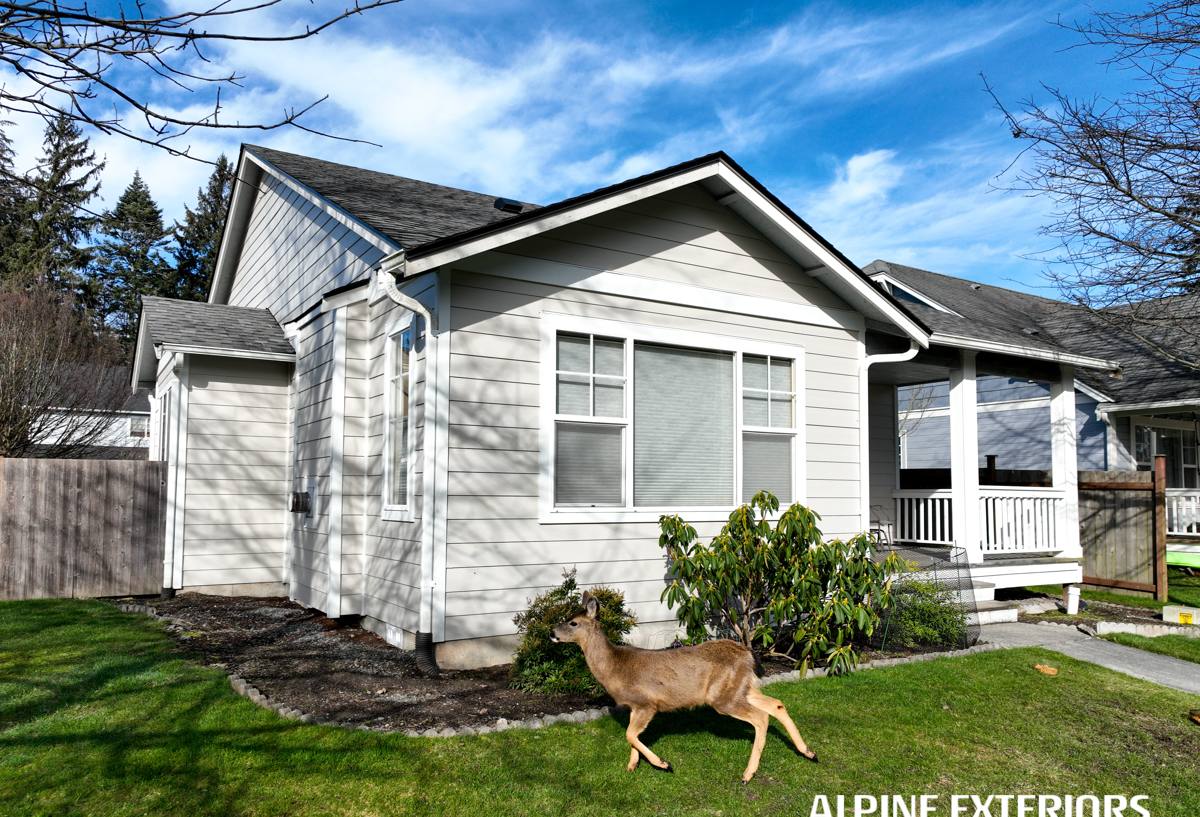
What Sunnyland Homes Are Actually Up Against
Salt Air and Coastal Moisture
Bellingham sits right on the bay, and neighborhoods like Sunnyland get a steady dose of salt-influenced air even without being directly waterfront. Salt air accelerates corrosion on fasteners and metal trim, and it degrades certain paint and coating systems faster than inland environments would. Siding materials that aren't engineered with moisture and salt exposure in mind tend to show it first at the edges, seams, and fastener heads.
Driving Rain
Whatcom County doesn't get the heaviest rainfall totals in the state, but it gets a lot of wind-driven rain, especially during fall and winter storm systems moving in off the water. Rain that hits a wall at an angle finds every gap, every poorly lapped seam, and every piece of caulk that's starting to fail. Over years, that's how water gets behind siding and starts causing rot in the sheathing and framing underneath, long before anything looks obviously wrong from the street.
Moss, Mildew, and Extended Damp Season
Shaded lots, mature trees, and long stretches of overcast, damp weather add up to a moss and mildew season that can run most of the year in the shadier parts of Sunnyland. Moss holds moisture directly against a wall surface, which is bad news for any siding material that isn't dimensionally stable or that swells when wet. It also just looks bad, and scrubbing moss and mildew off siding every year or two isn't a maintenance routine most homeowners actually want to keep up with.
Why We Install Only James Hardie Fiber Cement
We made a deliberate decision as a company to install James Hardie fiber cement siding exclusively. We don't install vinyl, LP SmartSide, Cemplank, Allura, or primed wood products like spruce or cedar siding. That's not a marketing gimmick — it's a standard we hold because of what we've seen these products do, and not do, in exactly the kind of climate Sunnyland sits in.
Vinyl siding is affordable and low-maintenance in a general sense, but it's a petroleum-based product that expands and contracts with temperature swings, can warp or crack in impact or extreme cold, and simply melts if exposed to enough radiant heat. It also doesn't offer the same fire resistance as fiber cement, which matters more every year as wildfire smoke and heat events become a bigger part of Pacific Northwest summers.
Engineered wood products like LP SmartSide use wood strand technology with a resin binder, which is a real improvement over old-style wood siding, but it's still an organic, wood-based product at its core. In a climate with Sunnyland's sustained moisture and moss exposure, wood-based siding is more dependent on perfect caulking, flashing, and paint maintenance to keep water out over the long run. Miss a maintenance cycle and moisture-related damage can move faster than it would on a non-organic material.
Primed cedar or spruce siding is a traditional, attractive option, but raw or primed wood requires the homeowner to stay on top of repainting and resealing on a tight schedule, especially in a climate this damp. Skip a cycle or two and you're looking at cupping, checking, and rot in localized spots. We've replaced enough failed wood siding jobs to know how expensive that catch-up work gets.
Other fiber cement brands, like Cemplank or Allura, are legitimate fiber cement products, and we're not here to disparage them. Our decision to standardize on James Hardie comes down to a few specific things: Hardie's ColorPlus factory-applied finish, the HZ5 product line engineered specifically for climates with high moisture exposure like ours, a strong transferable warranty structure, and a long track record of performance when installed to the manufacturer's spec in the Pacific Northwest. Standardizing on one system also means our crews install it the same correct way every time, rather than switching techniques between different manufacturers' requirements.
The James Hardie System We Install
HardiePlank Lap Siding
The most common choice for Sunnyland homes, available in a range of exposures and textures, from smooth to traditional woodgrain. It's the classic lap look most buyers expect on a Pacific Northwest home, and it's engineered to hold up to sustained wet weather without the swelling or warping issues of organic siding.
HardiePanel Vertical Siding
Often used as an accent on gables, entry features, or in combination with lap siding for a more modern or craftsman look. Vertical panel siding sheds water efficiently when installed with proper flashing and battens.
HardieTrim
Fiber cement trim boards around windows, corners, and fascia that match the durability of the field siding, so you're not pairing a long-lasting wall material with a trim product that will fail first.
ColorPlus Technology
A factory-applied finish, baked on and cured under controlled conditions, that resists fading and holds its color far longer than field-applied paint. In a climate where repainting siding is a real recurring cost, a factory finish that's engineered to last is one of the more practical advantages Hardie offers Whatcom County homeowners.
Siding Material Comparison
| Material | Moisture Resistance in Wet Climates | Maintenance Burden | Fire Resistance | Do We Install It |
|---|---|---|---|---|
| James Hardie Fiber Cement | Engineered for high-moisture climates (HZ5) | Low; factory ColorPlus finish | Non-combustible | Yes |
| Vinyl | Doesn't rot, but seams and gaps can trap moisture | Low, but limited repair options | Can melt or warp under heat | No |
| LP SmartSide | Improved over raw wood, still organic/resin-based | Moderate; depends on sealed edges | Combustible | No |
| Primed Cedar/Spruce | Prone to cupping and rot without upkeep | High; regular repaint/reseal needed | Combustible | No |
| Other Fiber Cement (Cemplank, Allura) | Generally strong, comparable material class | Low to moderate | Non-combustible | No, we standardize on Hardie |
Beyond Siding: Roofing, Windows, and Decks
Siding doesn't work in isolation on a home. Water management around a house is a system, and we handle the other pieces of that system for Sunnyland homeowners too.
Roofing
Your roof is the first line of defense against Whatcom County's rain and wind, and a roof in poor condition undermines even the best siding job by pushing water into places it shouldn't be. We inspect roof condition, flashing, and ventilation as part of any full exterior project.
Windows
Old or poorly flashed windows are one of the most common sources of hidden water intrusion we find when we open up a wall during a siding replacement. Replacing windows alongside siding lets us properly integrate flashing and weather barriers in one continuous system instead of patching around old openings.
Decks
Decks in this climate face the same driving rain and moss pressure as siding, plus direct foot traffic and standing water on horizontal surfaces. We build and repair decks with materials and detailing suited to sustained Pacific Northwest exposure.
What a Local Crew Actually Means in Sunnyland
A lot of contractors can install siding. Fewer of them install it correctly for the specific moisture, wind, and vegetation conditions of a given neighborhood. Working throughout Whatcom County day in and day out means we see how James Hardie siding performs on homes in Sunnyland and nearby neighborhoods years after installation, not just on install day. That feedback loop shapes how we flash windows, how we space fasteners, how we detail butt joints, and where we pay extra attention to moss-prone, shaded elevations.
It also means we're not guessing about permitting, local code requirements, or the kind of weather sequencing that matters when you're tearing siding off a house in a region where rain can show up with little warning. A crew based elsewhere may not have the same working knowledge of how Bellingham's microclimates, from waterfront exposure to shaded inland lots, actually behave over a full year.
Signs Your Sunnyland Home May Need Siding Attention
- Visible cupping, warping, or cracking in existing wood or engineered wood siding
- Persistent moss or dark streaking that returns shortly after cleaning
- Soft or spongy spots when you press on siding near the bottom of walls or around windows
- Peeling or bubbling paint that keeps recurring in the same spots
- Visible gaps, cracked caulk, or separation at seams and trim joints
- Rising heating bills that may point to compromised insulation behind failing siding
- Interior signs like musty smells or discoloration on walls that share an exterior wall with problem siding
What to Expect From a Siding Project
Every home is different, but a full siding replacement in this area generally follows a similar sequence: an on-site assessment of the existing siding, sheathing, and moisture barrier condition; removal of old siding down to the sheathing; repair of any rot or damaged sheathing found underneath; installation of a proper weather-resistant barrier and flashing at all windows, doors, and penetrations; then installation of James Hardie siding, trim, and factory-finished ColorPlus panels to spec. Timeline depends on the size of the home and the weather window, which in Whatcom County means we plan projects around the wetter months carefully rather than fighting the rain.
Cost Factors Homeowners in Sunnyland Should Understand
| Factor | How It Affects the Project |
|---|---|
| Home size and wall square footage | Larger surface area means more material and labor |
| Extent of underlying sheathing damage | Rot repair discovered during tear-off adds time and cost |
| Siding profile and texture chosen | Different HardiePlank exposures and finishes vary in price |
| Trim and detail complexity | Homes with more gables, dormers, or accent features take more labor |
| Window or roof work bundled in | Combining projects can improve efficiency and integration of flashing |
| Access and site conditions | Tight lots, mature landscaping, or steep grades affect labor time |
If your Sunnyland home is showing signs of wear from salt air, driving rain, or a moss season that just won't quit, we're glad to take a look and give you an honest read on what's going on. We offer free, no-pressure estimates for siding, roofing, window, and deck projects throughout Whatcom County — just fill out the form below to get started.