 Whatcom County
 Roof Replacement Built for Everson's Climate
Everson sits in the Nooksack River valley, inland from Bellingham Bay but still squarely inside the wet weather pattern that defines Whatcom County. The same Pacific storm systems that push salt-laden air off the saltwater shoreline also dump long, steady rain on the valley for much of the year. Add a shaded tree canopy on many older Everson lots and a moss season that can stretch from fall through spring, and you have a set of conditions that are genuinely hard on a roof. A roof replacement done right here isn't a generic install — it's a job planned around moisture, ventilation, and the specific way Whatcom County weather attacks a roof system over time.
This page covers what a proper roof replacement in Everson actually involves, what separates a lasting job from one that fails early, and how our process works from first look to final cleanup.
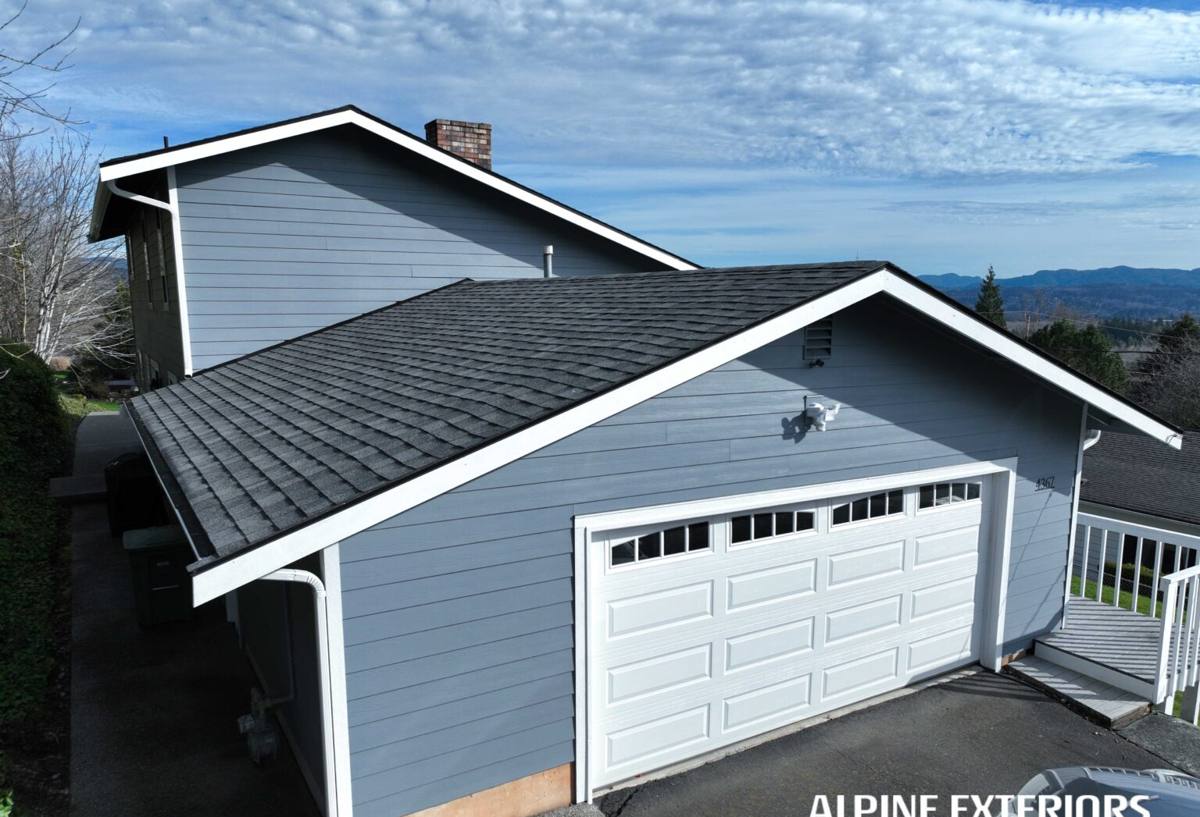
Why Local Roofs Wear the Way They Do
Roofs in Everson rarely fail because of one dramatic event. They fail slowly, from repeated cycles of soaking, drying, and freezing that most homeowners never see happening underneath the shingles or panels.
Driving Rain and Wind-Driven Moisture
Whatcom County storms don't just rain straight down — wind pushes water sideways under shingle tabs, around chimney flashing, and into valleys where two roof planes meet. Over years, that wind-driven moisture finds any weak point in the underlayment or flashing detail and works its way into the decking below.
Moss, Shade, and a Long Wet Season
Moss doesn't just sit on top of a roof looking bad. Its root structure holds moisture against the shingle surface and can lift shingle edges, and on shake or older composition roofs it accelerates decay underneath. A long moss season means many Everson roofs are damp far more of the year than roofs in drier parts of the state, which shortens the practical service life of materials that aren't installed with that in mind.
Salt Air's Reach Inland
Everson isn't waterfront, but Whatcom County's weather doesn't respect city limits. The same marine air systems that carry salt off Bellingham Bay move inland through the valley, and over time that adds a corrosion factor to exposed metal flashing, fasteners, and vents that a purely inland climate wouldn't produce. It's a slower effect than direct coastal exposure, but it's real, and it's part of why we don't treat metal component selection as an afterthought here.
Signs a Roof Needs Replacement, Not Another Repair
Not every roof problem calls for a full tear-off. Part of doing this job honestly is telling a homeowner when a repair still makes sense and when it's throwing money at a roof that's past the point of patching.
- Granule loss heavy enough that you're finding shingle granules in gutters or downspouts every season
- Shingles that are cupping, curling, or cracking across large sections rather than one isolated area
- Soft or spongy decking felt underfoot in the attic, especially near valleys or penetrations
- Daylight visible through the roof deck from inside the attic
- Moss or algae growth that returns within months of cleaning, even after treatment
- Repeated leaks in different spots each year rather than one consistent trouble area
- A roof already at or past its rated service life for the material installed
If a roof shows one or two of these signs isolated to a small area, targeted repair is often the right call. When several show up together, or the roof is already old, replacement is usually the more honest recommendation — patching a roof that's structurally tired just delays a bigger repair bill later.
What a Correct Roof Replacement Actually Involves
A roof replacement is more than swapping old shingles for new ones. Done correctly for this climate, it's a system, and every layer matters.
Full Tear-Off and Deck Inspection
We remove the existing roofing down to the deck rather than layering over old material. That's the only way to actually see the condition of the plywood or planking underneath — soft spots, rot, or old water staining only show up once the old roofing is gone. Any damaged decking gets replaced before anything new goes down.
Underlayment Suited to a Wet Climate
Underlayment is the backup layer that protects the deck if wind-driven rain ever gets past the primary roofing surface. In a valley climate like Everson's, we treat this as a real line of defense, not a formality, with particular attention to eave lines, valleys, and anywhere ice or standing moisture is more likely to sit.
Flashing and Penetration Detail
Most roof leaks don't happen in the open field of the roof — they happen at chimneys, skylights, vent pipes, and valleys. Correct flashing work at every one of these points is what actually keeps water out over the long run, more so than the shingle brand itself.
Ventilation
Proper intake and exhaust ventilation keeps the attic space from trapping moisture, which matters directly for moss prevention and for the life of the decking. A roof can be installed with premium materials and still underperform if the attic underneath it can't breathe.
Moss and Algae Considerations
Where it fits the roof design, we install zinc or copper strips near the ridge, which release trace metal ions that discourage moss and algae growth as rain washes down the roof slope. It's a low-maintenance way to extend the practical life of a roof in a climate like this one, rather than relying on annual cleaning alone.
Comparing Roofing Materials for This Climate
There's no single "best" roofing material — the right choice depends on the home, the budget, and how much long-term maintenance a homeowner wants to take on. Here's how the common options compare for a wet, moss-prone Whatcom County property.
| Material | Typical Lifespan | Moss/Moisture Behavior | Relative Cost |
|---|---|---|---|
| Architectural asphalt shingle | 25-30 years | Good with algae-resistant granules; needs ventilation and occasional cleaning | Moderate |
| Standard 3-tab shingle | 15-20 years | More prone to early moss and granule loss without treatment | Lowest |
| Metal panel roofing | 40-50+ years | Sheds moisture fast; moss has little to hold onto on a smooth surface | Higher |
| Cedar shake | 20-30 years with upkeep | Attractive but holds moisture; needs regular maintenance in this climate | High |
We don't push cedar shake as a default choice for damp, shaded Everson lots. It can look great, but it demands more upkeep in a long-moss climate than most homeowners want to sign up for, and moisture retention is a real maintenance burden over time — not a knock on the material itself, just an honest trade-off worth knowing before you choose it.
Our Process, Start to Finish
- On-site assessment — we walk the roof and attic, check decking condition, ventilation, and flashing points, and take photos to document what we find.
- Written estimate — a clear breakdown of material options, scope of work, and cost, with no pressure to decide on the spot.
- Scheduling around weather — we plan the tear-off and install for a stretch of dry weather where possible, since an open deck needs protection if rain moves in mid-project.
- Tear-off and deck repair — old roofing removed, deck inspected and repaired as needed before anything new is installed.
- Underlayment, flashing, and roofing installation — installed in the sequence that actually keeps water out, not just what looks finished from the ground.
- Site cleanup — magnetic sweep for nails, debris removal, and a final walkthrough with the homeowner.
Timing, Permits, and Weather Windows
Whatcom County's wet season makes scheduling matter more here than in drier climates. An open roof deck during a heavy rain event is a real risk, so we plan tear-offs around forecasted dry stretches whenever the project allows it, and we protect exposed sections if weather turns mid-job. Local permitting requirements apply to most full roof replacements, and we handle that process as part of the job rather than leaving it to the homeowner to sort out.
Why a Crew That Already Works Everson Matters
A roofing crew that regularly works Whatcom County properties has already seen how local conditions affect different materials and installation details over years, not just in a training manual. That matters for practical decisions — how much ventilation a given attic actually needs, where moss tends to collect first on a given roof pitch, which flashing details hold up and which ones fail early in this rain pattern. It also means realistic scheduling expectations, since we're not guessing at typical weather windows for the area — we're working around them regularly.
Choosing a Roofing Contractor: A Practical Checklist
- Ask for proof of current licensing and insurance, and confirm it directly rather than taking it on faith
- Get a written estimate that breaks down materials, labor, and scope — not just a single lump number
- Ask specifically how they handle underlayment and flashing detail, not just which shingle brand they use
- Confirm whether full tear-off is included, or whether they're proposing to roof over existing material
- Ask how they plan around weather delays and what protection is used if rain hits mid-project
- Clarify what warranty coverage applies to labor versus material, and who you'd contact if an issue comes up later
A contractor who answers these questions clearly and specifically, without vague reassurances, is usually one worth trusting with a project this size.
Get a Straightforward Estimate
If your Everson roof is showing its age or you're just not sure whether it needs repair or full replacement, we're happy to take a look and give you a straight answer. Use the form below to request a free, no-pressure estimate — we'll walk the roof, explain what we find, and lay out your options plainly.