 Whatcom County
 Asphalt Shingle Roofing Built for Sehome's Weather, Not Generic Weather
Sehome sits close enough to Bellingham Bay that salt-laden air is a constant factor in how a roof ages, and far enough into the Pacific Northwest weather pattern that driving rain and long stretches of overcast, damp conditions define most of the year. A shingle roof installed here does a different job than the same product installed in a dry inland climate. It has to shed water fast, resist moss and algae colonization for years at a stretch, and hold its seal through repeated wet-dry cycling without the granule loss and curling that shortens roof life elsewhere in the country.
We install asphalt shingle roofing across Whatcom County, and Sehome's mix of older homes, mature tree cover, and proximity to the water makes it one of the neighborhoods where doing the underlayment, ventilation, and flashing details correctly matters more than picking a premium shingle. A great shingle over a mediocre installation still fails early here. A solid installation with a mid-range shingle will outlast it.
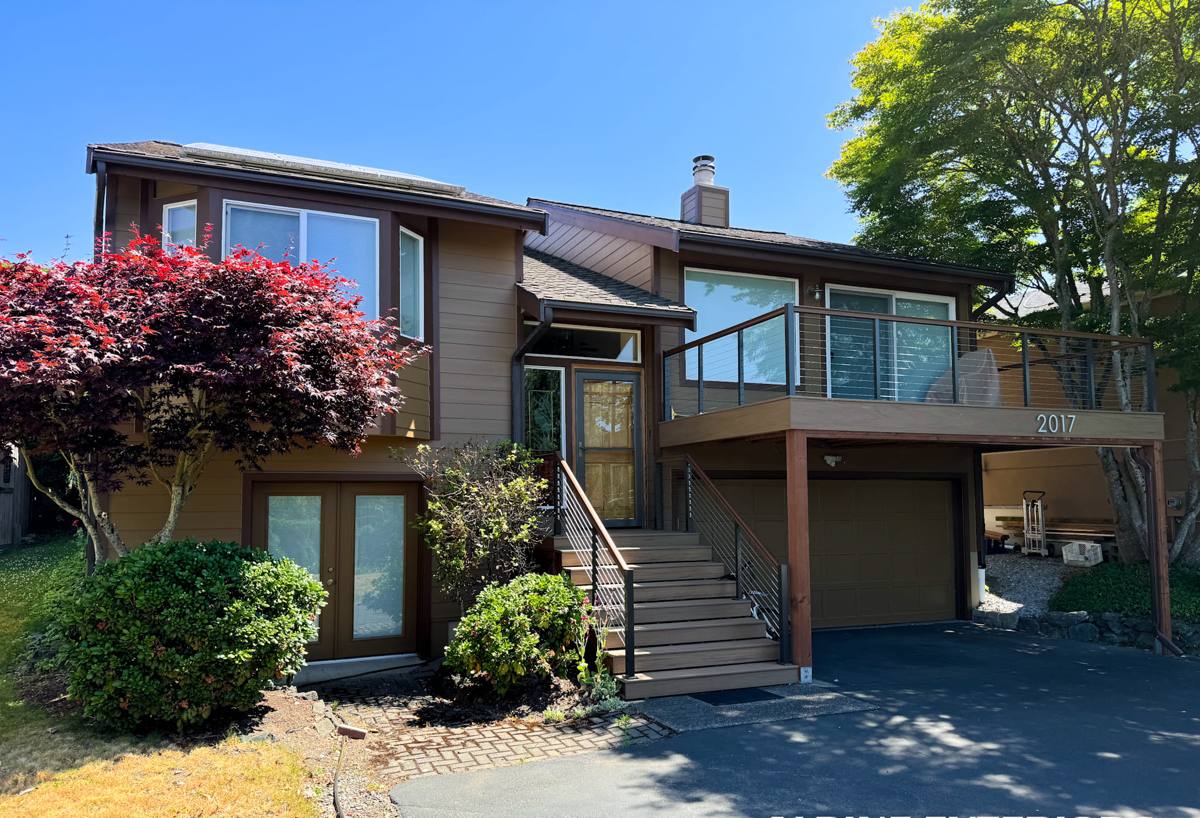
What Sehome's Climate Actually Does to a Roof
Salt Air and Corrosion
Homes within a few miles of Bellingham Bay see accelerated corrosion on any exposed metal — nails, flashing, vent stacks, and drip edge. Standard electro-galvanized fasteners and thin-gauge flashing can start showing rust streaks and pinholing years before they would inland. This doesn't ruin a roof overnight, but it's exactly the kind of slow degradation that turns into a leak at a valley or chimney flashing five or six years down the road if the original materials weren't chosen with salt exposure in mind.
Driving Rain and Wind-Driven Water
Whatcom County storms frequently push rain sideways, not straight down. That changes how water finds its way under shingles — it's not just falling onto the roof plane, it's being forced up under tabs and along exposed edges. Underlayment coverage, shingle nailing pattern, and edge detailing all have to account for wind-driven rain, not just gravity drainage.
Moss Season
Sehome's tree cover and the region's long damp season create ideal conditions for moss growth on north-facing and shaded roof slopes. Moss isn't just cosmetic — as it establishes, it lifts shingle edges, holds moisture against the roof deck, and accelerates granule loss. A roof with the right shingle coating, proper attic ventilation to reduce condensation-driven moisture, and a maintenance plan will resist moss far longer than one installed without those considerations.
What a Correct Asphalt Shingle Job Includes
A shingle roof is a system, not a single product. Skipping or shortcutting any layer shows up as a problem within a few years, usually right when it's least convenient.
- Deck inspection and repair: Any soft, delaminated, or water-stained sheathing gets replaced before anything goes down. Roofing over a bad deck just hides the problem.
- Ice-and-water shield at vulnerable zones: Eaves, valleys, and roof-to-wall transitions get self-adhered waterproof membrane, not just felt, because these are the spots where wind-driven rain and ice damming (yes, it happens here too) cause the most damage.
- Synthetic underlayment across the field: A durable, water-resistant underlayment as the secondary barrier under the shingles themselves.
- Corrosion-resistant flashing and fasteners: Especially important this close to the water — we don't cut corners here with cheap electro-galvanized components that will show rust streaks in a few winters.
- Proper nailing pattern: Correct nail count and placement per manufacturer spec, driven straight and flush — not overdriven, not at an angle — because bad nailing is one of the leading causes of shingle blow-off in high wind.
- Balanced attic ventilation: Intake at the eaves, exhaust at the ridge, sized to the attic volume. Poor ventilation traps moisture, which feeds moss and rot from underneath.
- Valley and penetration detailing: Woven, closed-cut, or open metal valleys done to spec, and every pipe boot, vent, and chimney properly flashed and sealed.
- Ridge cap and finishing: Proper ridge cap shingles and a clean, uniform finish line — the details that separate a roof that looks right from one that's actually built right.
Comparing Shingle Types for Sehome Conditions
Not every asphalt shingle product performs the same way in a marine, moss-prone climate. Here's how the common tiers compare for this specific area:
| Shingle Type | Typical Lifespan Here | Moss/Algae Resistance | Wind Rating | Best Fit |
|---|---|---|---|---|
| 3-tab economy | 15-20 years | Low without added treatment | Lower | Budget-driven projects, secondary structures |
| Standard architectural (laminate) | 20-30 years | Moderate, better with algae-resistant granules | Moderate to high | Most Sehome homes — solid balance of cost and durability |
| Premium algae-resistant architectural | 25-30+ years | High — copper or zinc granules actively resist moss/algae | High | Heavily shaded lots, north-facing roofs, homes near the bay |
| Designer/luxury laminate | 30+ years | High | High | Homes prioritizing appearance and longevity together |
For most Sehome properties, we steer homeowners toward a standard or premium architectural shingle with algae-resistant granules. The upcharge over economy 3-tab is modest, and given how much shade and moisture this neighborhood deals with, it's the difference that actually shows up on the roof ten years later.
Our Process, Start to Finish
1. On-Site Assessment
We walk the roof, check the attic for ventilation and moisture issues, and look at deck condition, flashing points, and any existing moss or algae growth. We'll tell you honestly if repair is a reasonable option versus full replacement — we don't push a full roof when a targeted repair will genuinely hold up.
2. Written Estimate
You get a clear, itemized estimate covering materials, labor, tear-off and disposal, and any deck repair contingencies, so there are no surprises mid-project.
3. Material Selection
We walk through shingle options with your specific roof exposure in mind — sun, shade, tree cover, and proximity to the bay all factor into the recommendation, not just color and price.
4. Tear-Off and Deck Prep
Old roofing comes off down to the deck. We don't roof over existing layers — it traps moisture and voids most manufacturer warranties. Damaged sheathing is identified and replaced.
5. Installation
Ice-and-water shield, underlayment, flashing, shingles, and ridge cap installed to manufacturer spec and local code, with attention to the wind-driven rain and moss factors specific to this area.
6. Final Walkthrough and Cleanup
We inspect the completed roof with you, do a magnetic sweep for stray nails, and haul away all debris. You should be able to walk your property the same day and not find a trace of the job except the new roof.
Why Hiring a Crew That Already Works in Sehome Matters
A roofing crew that's worked this neighborhood before already knows which streets sit closest to salt spray, which lots hold shade long enough to grow moss on two sides of a roof instead of one, and how local permitting and inspection works. That's not a marketing point — it changes real decisions on the job, like which flashing metal to spec, where extra ice-and-water shield is worth the material cost, and how aggressively to ventilate a given attic.
It also means we're accountable locally. If a flashing detail needs a warranty callback two years from now, we're not driving in from three counties away — we're already working in Whatcom County, and a Sehome roof is a short trip, not a special trip.
Maintenance That Extends Roof Life Here
Asphalt shingle roofs in this climate benefit from a bit of regular attention. None of this requires a contractor visit every time — but it's worth knowing:
- Keep gutters clear of needles and leaf debris so water isn't backing up under the eave line during heavy rain.
- Have moss growth addressed before it establishes thickly — light growth is a simple treatment, heavy growth means lifted shingles and possible deck damage.
- Trim back overhanging branches to reduce shade, debris buildup, and physical abrasion on the roof surface.
- After major windstorms, a visual check (from the ground, or have us look) for lifted or missing shingles catches small problems before they become leaks.
- Watch for granules collecting in gutters or downspouts — it's an early sign of shingle wear that's worth having evaluated.
Cost Factors Worth Understanding
Pricing on a shingle roof replacement depends on several variables, and it's worth knowing what actually drives the number before you start comparing quotes:
| Factor | Why It Matters |
|---|---|
| Roof size and pitch | Steeper roofs take longer to work safely and require more fall protection setup |
| Number of layers to remove | Tear-off of multiple existing layers adds labor and disposal cost |
| Deck condition | Rotted or delaminated sheathing found during tear-off adds material and labor |
| Shingle tier selected | Economy to premium architectural shingles vary meaningfully in material cost |
| Roof complexity | Valleys, dormers, chimneys, and skylights all add flashing work and time |
| Ventilation upgrades | Adding or correcting intake/exhaust ventilation is sometimes needed alongside the reroof |
We give straight, itemized numbers rather than a single vague lump sum, so you can see exactly what you're paying for and where, if needed, there's room to adjust scope.
Signs Your Sehome Roof May Need Attention Soon
- Granules accumulating in gutters or at downspout outlets
- Shingles that look curled, cupped, or cracked, especially on south- or west-facing slopes
- Dark streaking or thick moss on shaded, north-facing sections
- Daylight visible through the roof deck from inside the attic
- Soft or spongy spots when walking the roof (or reported by a previous inspector)
- Water stains on interior ceilings, particularly after heavy wind-driven rain events
Catching these early usually means a repair conversation instead of a full replacement conversation. If you're seeing any of them, it's worth having a look sooner rather than later.
If you're weighing a roof replacement or want a second opinion on your current roof's condition, we're glad to come take a look. We offer a free, no-pressure estimate for Sehome homeowners — just fill out the form below and we'll get in touch to schedule a time that works.