 Whatcom County
 Deck Replacement Built for Edgemoor's Waterfront Climate
Edgemoor sits on the wooded bluffs and waterfront lots above Bellingham Bay, and that setting is exactly what wears a deck out faster than it would inland. Salt-laden air off the bay accelerates corrosion on fasteners and hardware, driving rain off the water finds every gap in old flashing, and the tree canopy that gives Edgemoor its privacy also means shade, damp leaf litter, and a moss season that can run most of the year. A deck built without those three factors in mind will look fine for a few seasons and then fail all at once — soft joists, rusted-through hangers, a railing that flexes when you lean on it.
We replace decks across Whatcom County, and Edgemoor jobs get treated differently from the start. The framing, fastener grade, flashing detail, and decking material all get chosen for a bayfront, moss-heavy microclimate — not a generic spec sheet.
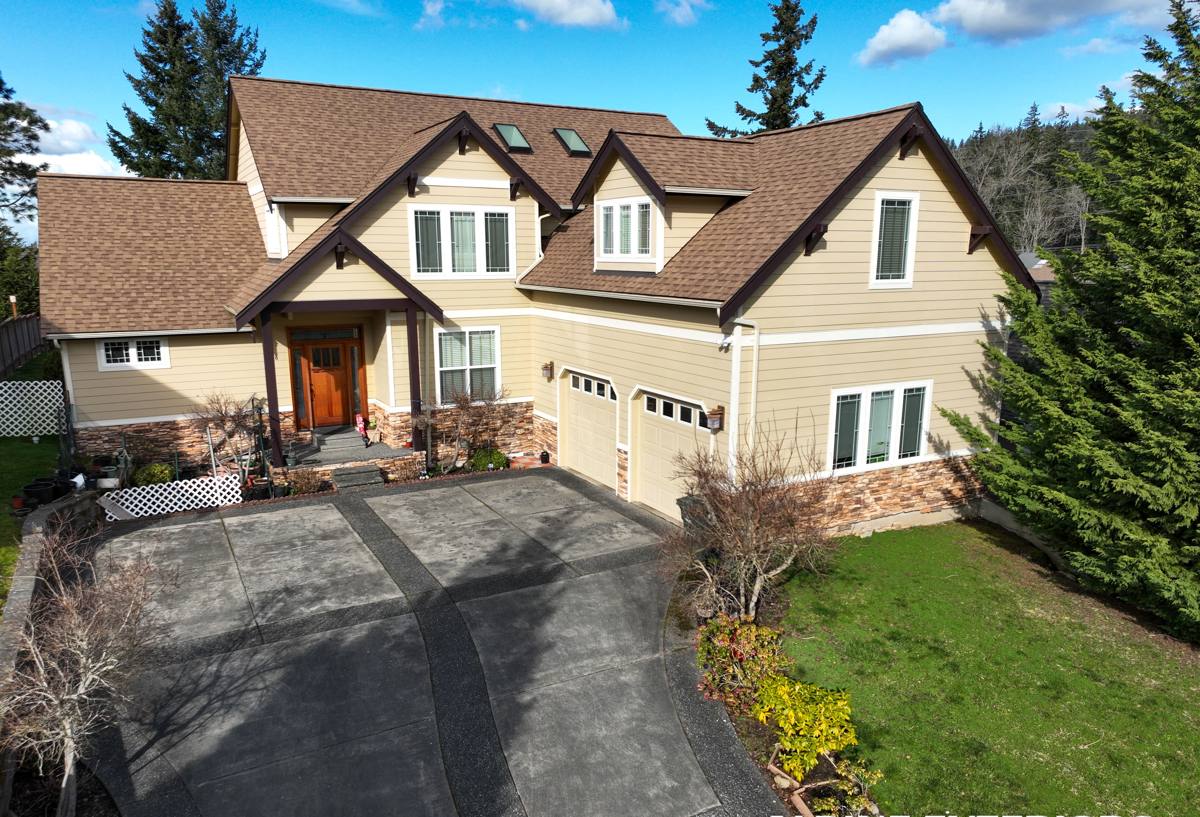
Signs an Edgemoor Deck Needs Replacement, Not Another Repair
Homeowners often call us for a repair and find out the deck has moved past the point where patching makes sense. A few boards or a repainted railing can hide real structural decay for a while, but not indefinitely.
- Joists or beams that feel spongy or give slightly when you walk near the edge of the deck
- Rust streaking down from screws, joist hangers, or bolts — a sign the galvanizing has already failed
- Ledger board pulling away from the house, or gaps opening up where the deck meets the wall
- Persistent moss or black-green staining on the deck surface that comes back within weeks of cleaning
- Railing posts that wobble, or stair stringers that have visibly shifted
- A deck older than 15-20 years that was built with untreated hardware or standard construction-grade lumber
Any one of these on its own might be repairable. Two or three together usually means the substructure has been absorbing moisture for years and a full replacement is the more honest recommendation — patching around rot just moves the problem, it doesn't fix it.
What a Correct Deck Replacement Involves
Framing and the Ledger Connection
The ledger board — where the deck attaches to the house — is the single most common failure point on older decks in this region, because it's the spot where wall moisture and deck moisture meet. A correct install uses proper flashing behind and over the ledger, a water-resistant barrier between the ledger and the house sheathing, and structural screws or bolts rated for the load, not just nails. This is the detail that's invisible once the deck is finished and the one that determines whether the next deck lasts 10 years or 25.
Fasteners and Hardware
Given the salt exposure common to Edgemoor's location near the bay, we use stainless steel or heavy hot-dip galvanized fasteners and connectors rated for coastal or treated-lumber contact, not the standard-grade hardware that's fine 30 miles inland but corrodes visibly within a few years here. It costs more up front. It's also the difference between hardware that outlives the deck boards and hardware that's the reason you're replacing the deck again in a decade.
Decking Material Options for a Marine, Mossy Climate
There's no single "best" decking material — there's a best fit for how the deck is used, how much shade it gets, and how much upkeep you want to do. Here's how the common options actually perform in Whatcom County conditions.
| Material | Moisture & Salt-Air Behavior | Moss / Algae Resistance | Maintenance | Typical Lifespan |
|---|---|---|---|---|
| Pressure-treated lumber | Good if properly sealed and re-sealed; end grain is the weak point | Needs periodic cleaning, especially in shade | Annual sealing recommended | 10-15 years |
| Cedar | Naturally moisture- and insect-resistant; still needs finish upkeep | Moderate; greys and can host moss without cleaning | Stain/seal every 1-2 years | 15-20 years |
| Capped composite | Excellent — won't absorb water or rot | Good; smooth cap sheds moss more easily than wood | Occasional wash, no sealing | 25-30+ years |
| Uncapped composite | Fair; core can wick moisture at cut ends over time | Fair; textured surface can hold organic buildup | Periodic cleaning | 15-25 years |
For homes closest to the water, we generally steer people toward capped composite or well-detailed cedar over standard pressure-treated boards for the surface decking — not because treated lumber is a bad product, but because the combination of salt spray and shade is a tougher environment than treated lumber's warranty was written for. That's a maintenance and longevity trade-off we'll walk through honestly, not a hard rule.
The Substructure Is Where Decks Actually Fail
Homeowners naturally focus on the decking surface — the boards you walk on and see every day — but the framing underneath is what determines whether a deck is safe. On a proper replacement, every joist gets a protective tape or coating over the top edge before decking goes down, since that's the spot where water sits longest and rot starts first. Joist hangers get matched to the fastener type to avoid galvanic corrosion between dissimilar metals, which is a real issue in salt air even when both pieces are technically "rated." Footings get checked for movement or rot at the base, especially on older decks built directly on buried posts rather than proper concrete footings.
None of this is visible in the finished deck. All of it is why two decks that look identical on day one can have completely different lifespans.
Our Process, Start to Finish
- Walkthrough and assessment — we inspect the existing structure, ledger connection, and footings to confirm what's actually salvageable versus what needs to come out
- Honest estimate — a clear scope and price range before any demo starts, with material options explained rather than assumed
- Permit handling — we pull what's required for the jurisdiction and scope of work
- Demo and disposal — full removal of the old deck, checking framing and ledger condition as it comes apart
- Rebuild — correct flashing, corrosion-resistant hardware, and framing sized for the load and material you've chosen
- Final walkthrough — we go over the finished deck and basic care with you before we call the job done
Permits and Code Basics
Deck replacement in Whatcom County and within Bellingham city limits generally requires a permit once you're doing more than a like-for-like surface swap, particularly if railings, stairs, or structural framing are involved. Requirements can vary depending on deck height, size, and whether it's attached to the house, so this isn't something to assume either way. Guardrail height, baluster spacing, and stair rise/run also have to meet current code, which matters most on older decks that were built to whatever standard was in place decades ago. We handle the permit process as part of the job rather than leaving it for the homeowner to sort out.
Keeping a New Deck Looking Right Through Whatcom County's Wet Season
A well-built deck still needs some seasonal attention in this climate — the goal is to keep moss and standing moisture from getting a foothold rather than scrubbing it out after the fact.
- Sweep leaves and debris off the deck regularly in fall, especially in shaded corners where they pile up and stay wet
- Keep gutters and downspouts near the deck clear so runoff isn't draining directly onto or under it
- Rinse off moss and algae buildup at the start of spring before it has a chance to spread across the whole surface
- Check railing posts and stair connections once a year for movement or looseness
- Reseal wood decking on the schedule appropriate to the species — don't wait until it's visibly greying
- Keep planters and rugs from sitting directly on the boards for long stretches, since they trap moisture underneath
Why a Crew That Already Works Edgemoor Matters
A contractor who mostly works drier, inland areas will often spec a deck the same way they would anywhere else — because that's what's worked for them elsewhere. A crew that regularly works Edgemoor and the rest of Whatcom County already knows to upgrade the fastener grade for salt exposure, detail the ledger flashing for driving rain off the bay, and choose decking that won't turn into a moss farm under tree cover by year three. That's not a sales pitch — it's the difference between a deck that needs attention again in five years and one that doesn't.
If you're weighing repair versus replacement, or just want a straight answer on what a new deck would look like for your home, we're happy to take a look and give you a free, no-pressure estimate — use the form below to get started.