 Whatcom County
 Why Fiber Cement Makes Sense on a Lynden Home
Lynden sits far enough inland from Bellingham Bay that people sometimes assume the salt-air and moisture problems that plague coastal Whatcom County homes don't apply here. They still do, just in a different form. The Nooksack River valley funnels marine air and rainfall through the area most of the year, and Lynden's farmland setting keeps humidity high even when it isn't actively raining. Add in the long stretch of gray, wet months from October through April, and you have a climate that is genuinely hard on exterior building materials — wood siding checks and rots, vinyl goes brittle and fades, and cheap composite products swell at the seams.
Fiber cement siding was engineered for exactly this kind of exposure. It's a mix of Portland cement, sand, and cellulose fibers pressed into planks and panels, then cured. It doesn't absorb bulk water the way wood does, it doesn't expand and contract with humidity swings the way vinyl does, and it holds a factory finish far longer than anything field-painted. For a Lynden home taking on driving rain off the valley and months of damp, shaded conditions that feed moss and algae, that combination of dimensional stability and moisture resistance is the whole ballgame.
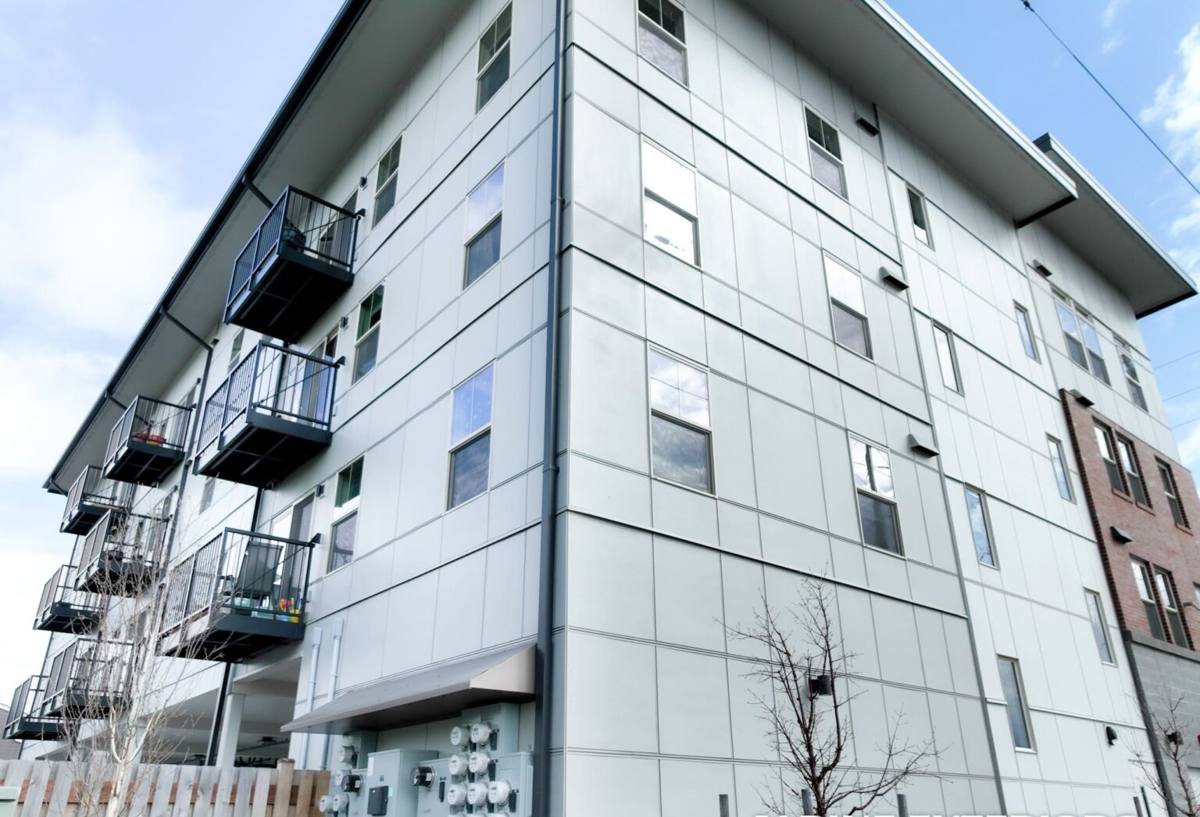
What Whatcom County's Climate Actually Does to Siding
Driving Rain and Wind-Driven Moisture
Rain in this part of Washington rarely falls straight down. Storms moving through the Fraser Lowland and Nooksack valley push rain sideways into wall assemblies, which means siding isn't just shedding water off its face — it's being tested at every seam, lap, and penetration. A siding system with weak joints or poor flashing detail will let water track behind the cladding long before anyone notices a problem on the surface.
Moss, Algae, and the Long Wet Season
Whatcom County effectively has a moss season that runs most of the year on north-facing walls, under eaves, and anywhere siding stays shaded and damp. Organic growth isn't just cosmetic — moss and algae hold moisture against the siding surface, which accelerates deterioration on materials that aren't built to handle sustained dampness. Siding with a factory-baked finish resists staining and growth far better than field-painted or unfinished products.
Salt Air's Reach Inland
Lynden isn't waterfront, but Whatcom County's proximity to Bellingham Bay and the Strait of Georgia means marine air moves inland regularly, especially during winter storm patterns. Salt-laden moisture accelerates corrosion of fasteners and trim metal and adds another layer of stress to any siding material that isn't dimensionally stable.
Why We Only Install James Hardie
We made a decision as a company to install James Hardie fiber cement exclusively — not LP SmartSide, not vinyl, not Cemplank or Allura, not primed spruce or cedar. That's not a marketing position; it's a practical one built from watching how different products actually hold up in this climate over years, not just on install day.
Hardie's fiber cement formulation is non-combustible and doesn't rely on an engineered wood core, which removes the moisture-swelling and edge-delamination risks that come with wood-based composite siding in a wet climate. Its ColorPlus factory finish is baked on under controlled conditions, giving it far more consistent coverage and UV/moss resistance than anything painted on-site or touched up in the field. Hardie also engineers regional product lines (HardiePlank, HardiePanel, and trim in formulations suited to different climate zones), and their warranty structure is transferable to a new owner if the home sells — a real factor in a market where buyers ask about siding age and condition.
None of this means other fiber cement products are junk. It means that when we compare the long-term maintenance burden, moisture behavior, and warranty backing across the options, Hardie is what we're willing to put our name behind and warranty our labor against.
What a Correct Fiber Cement Installation Involves
Fiber cement siding is only as good as the installation behind it. A huge share of the siding failures we get called out to inspect in Whatcom County trace back to installation shortcuts, not the material itself. On a Lynden home, correct installation means:
- Weather-resistive barrier and drainage plane: a continuous water-resistive barrier behind the siding with a drainage gap so any moisture that gets past the cladding can escape rather than sit against the sheathing.
- Proper flashing at every penetration: windows, doors, hose bibs, light fixtures, and vents all need correctly lapped flashing — this is where most water intrusion actually starts.
- Correct fastener placement and type: Hardie specifies fastener type, spacing, and embedment depth; corrosion-resistant fasteners matter more here given the marine air exposure.
- Manufacturer-specified clearances: siding held off decks, patios, and grade by the specified minimum clearance so splash-back and standing water don't sit against the plank edge.
- Caulked and sealed joints per spec: not every joint gets caulk — Hardie's details call for some joints sealed and others left to shed water naturally, and getting this backwards causes trapped moisture.
- Factory-cut and factory-primed edges protected: any field cuts need sealing per Hardie's instructions to keep raw edges from wicking moisture.
Skipping any one of these doesn't usually cause an immediate, visible problem. It shows up two, five, or ten years later as staining, soft trim, or paint failure at seams — by which point the fix is far more expensive than doing it right the first time.
Our Process for a Lynden Project
1. On-Site Assessment
We walk the exterior, check the current siding and sheathing condition where accessible, and look specifically at moisture-prone zones: north and west walls, areas under eaves, anywhere with visible moss or algae staining, and grade clearance around the foundation.
2. Scope and Product Selection
We talk through Hardie's plank profiles, panel options, and color choices, and we're upfront about where ColorPlus finishes make sense versus where a different trim detail might be needed. We also flag any sheathing or framing repairs that should happen before new siding goes on — covering up rot with new siding just delays the same problem.
3. Tear-Off and Prep
Old siding comes off, sheathing gets inspected and repaired as needed, and the weather-resistive barrier goes on correctly lapped, shingle-style, so water sheds down and out rather than behind the assembly.
4. Installation to Manufacturer Spec
Siding, trim, and flashing go on following Hardie's published installation instructions for our climate zone — not generic best guesses. This is also where fastener choice and joint treatment get handled correctly the first time.
5. Final Walkthrough
We walk the finished job with the homeowner, check caulk lines, trim reveals, and clearances, and go over basic care so the finish holds up through the area's wet seasons.
Comparing Siding Options for a Whatcom County Home
| Factor | James Hardie Fiber Cement | Vinyl | Wood-Based Composite / Cedar |
|---|---|---|---|
| Moisture resistance | High — cement-based, doesn't absorb bulk water | Moderate — doesn't absorb water but seams and expansion gaps can let it in | Lower — wood core swells and can rot if moisture reaches it |
| Performance in driving rain | Strong when flashed and lapped correctly | Adequate but panels can flex and gap in wind | Sensitive to sustained wetting at joints and edges |
| Moss/algae resistance | Strong with factory ColorPlus finish | Fair — surface can stain and hold growth | Weaker — organic material is more hospitable to growth |
| Finish longevity | Factory-baked, long service life before repaint | Color molded in but fades and chalks over time | Requires more frequent repainting/resealing |
| Fire resistance | Non-combustible | Combustible | Combustible |
| Typical warranty | Long-term, transferable to new owner | Varies by manufacturer | Varies; wood especially depends on maintenance history |
Cost Factors to Understand Before You Budget
Every Lynden home is different, so we won't quote a number without seeing the house, but a few factors consistently move the price:
| Factor | Why It Matters |
|---|---|
| Tear-off scope | Full removal of old siding down to sheathing costs more than installing over sound existing prep, but it's the only way to catch hidden moisture damage. |
| Sheathing/framing repair | Rot found during tear-off adds cost but is far cheaper to fix now than after new siding is installed over it. |
| Plank vs. panel vs. shingle profile | Different Hardie profiles and trim details carry different material and labor costs. |
| Wall complexity | Dormers, multiple gables, and lots of trim/window penetrations add labor time and flashing detail. |
| Color and finish choice | Factory ColorPlus finishes cost more upfront than primed product but save on repainting over the life of the siding. |
| Access and site conditions | Fencing, landscaping, outbuildings, and slope around the home can affect staging and labor time. |
Signs Your Current Siding Is Losing the Fight
- Persistent moss or algae staining that comes back within a season of cleaning
- Soft or spongy spots when you press on siding or trim near the bottom courses
- Paint that's peeling or bubbling rather than just fading
- Visible gaps, warping, or buckling at seams
- Rising energy bills that suggest the wall assembly isn't sealing the way it used to
- Cracking at panel joints or corners, especially after a hard winter
Any one of these can be a minor fix. Several together, especially on a home over 15-20 years old, usually mean the siding system as a whole is past the point where patching makes sense.
Why Local Installation Experience Matters
Correct fiber cement installation isn't just about following a manual — it's about knowing how a specific climate behaves against a wall. A crew that works Whatcom County regularly knows which walls in a Lynden neighborhood take the worst of the wind-driven rain, how long moss actually takes to establish on a shaded north wall in this valley, and how the freeze-thaw swings in winter affect caulk and trim over time. That local pattern recognition is what catches problems in the design phase instead of after the siding's been up for a few winters.
It also matters for accountability. A crew based in and working Whatcom County has a reputation in the community to protect and is around to stand behind the work — not a name that showed up for storm season and moved on.
If you're considering new siding for a home in Lynden, we're happy to walk the exterior with you, talk through what James Hardie's product lines offer, and give you a straightforward, no-pressure estimate. There's a form below to get started.