 Whatcom County
 Why Blaine Homes Need a Different Siding Approach
Blaine sits about as close to saltwater and the Canadian border as a Washington town gets, and that location shapes what happens to exterior siding here faster than in most of Whatcom County. Homes near the water take on salt-laden air that settles into porous or poorly sealed materials, while the rest of the town still deals with the same driving rain and long wet winters that define this corner of the Pacific Northwest. Add in a moss season that can run eight or nine months out of the year on north-facing walls and shaded lots, and you have a climate that punishes siding choices that were never engineered for it.
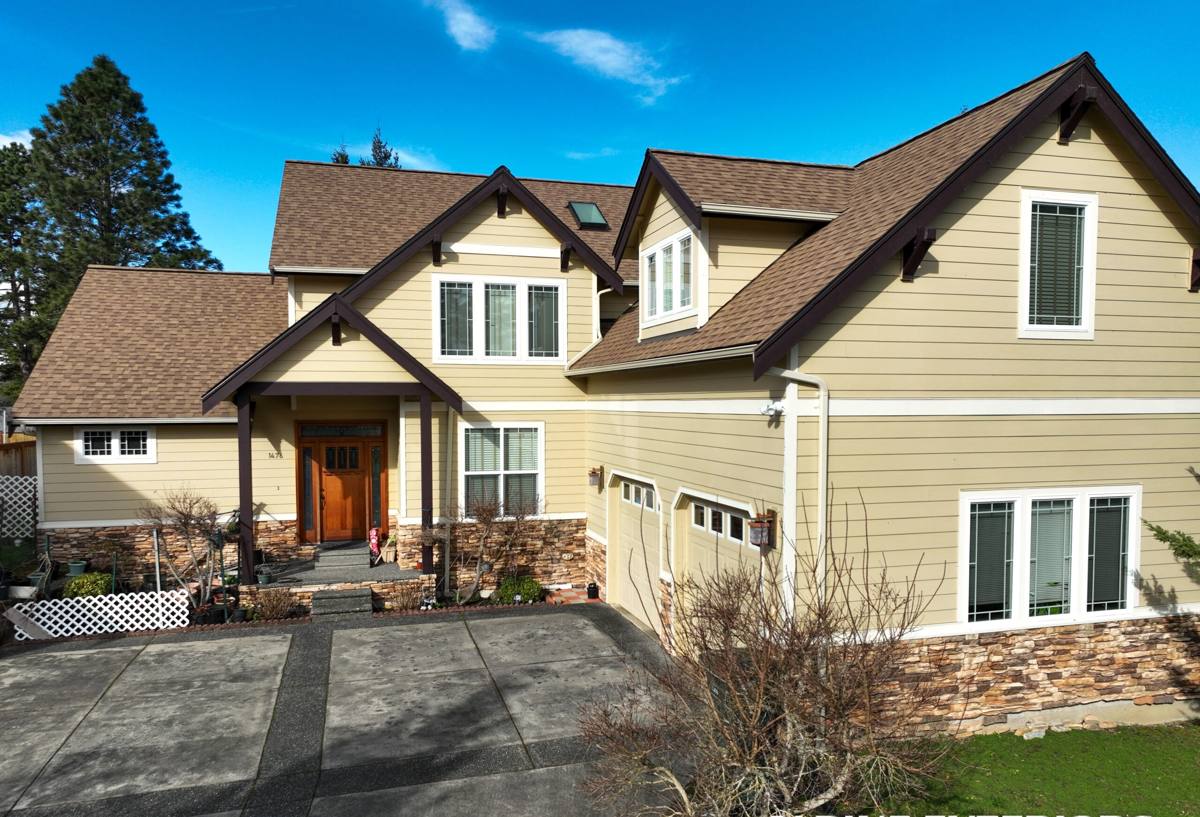
We install James Hardie fiber cement siding exclusively in Blaine and across Whatcom County. That is not a marketing position — it is the result of watching which products actually hold up here and which ones create callbacks, repaint cycles, and moisture problems within a decade of installation.
What Salt Air and Driving Rain Actually Do to Siding
Salt exposure
Airborne salt is corrosive to fasteners, trim, and any exposed metal, and it accelerates the breakdown of finishes that aren't formulated to resist it. On wood-based products, salt-laden moisture speeds up swelling and checking at the surface. On vinyl, it can dull and chalk the finish faster than inland installations of the same product. Fiber cement doesn't rot or corrode the way wood does, and James Hardie's ColorPlus factory finish is baked on and formulated to resist fading and the kind of surface breakdown that coastal exposure causes.
Driving rain
Whatcom County's storms don't just fall straight down — wind off the Strait of Georgia and the Salish Sea pushes rain sideways into wall assemblies, which means siding here has to perform as a real drainage system, not just a decorative skin. Laps, joints, and butt seams that are cut a little short or caulked instead of properly flashed will let water in eventually, and once water gets behind siding in this climate, it doesn't dry out quickly.
Moss and organic growth
Shaded, north-facing walls and anything near overhanging trees develop moss and algae far faster here than in drier parts of the state. Moss holds moisture against the surface and, on materials that absorb water, keeps that section of wall damp for weeks at a time. Fiber cement doesn't feed mold or moss growth the way wood substrates can, but no siding material is moss-proof — the real defense is proper standoff, ventilation gaps, and drainage detailing behind the cladding, which is installation work, not a product feature.
Why We Only Install James Hardie
We get asked regularly why we don't offer vinyl, LP SmartSide, cedar, or primed spruce as options. The honest answer is that we evaluated what each of those products does over a 20-30 year window in this exact climate, and we didn't like the trade-offs enough to keep installing them.
- Vinyl expands and contracts with temperature swings and can become brittle in cold snaps; sealed too tightly it traps moisture, and it doesn't stand up to years of driving rain and salt exposure without visible wear.
- Wood-based products (cedar, primed spruce, engineered wood) depend on an intact finish and perfect flashing to keep moisture out; any breach in a wet climate like this leads to swelling, rot, or the need for frequent repainting.
- James Hardie fiber cement is non-combustible, dimensionally stable, holds its factory finish for years, and is engineered in HZ5 and HZ10 product lines specifically for high-moisture climates like ours.
None of those other products are bad in every application — they're just not the right match for a peninsula town that gets salt air, sideways rain, and moss all in the same year.
What a Correct James Hardie Install Involves
The material only performs as advertised if the installation respects how water moves through a wall assembly. A correct job in Blaine includes:
- Proper weather-resistive barrier and flashing at every window, door, and penetration, lapped shingle-style so water sheds outward.
- Correct fastening pattern and fastener type — James Hardie specifies fastener spacing, penetration depth, and corrosion-resistant fasteners, and skipping this is one of the most common causes of premature failure.
- Proper clearance at the bottom of the siding above grade, decks, and roof lines so splash-back and standing water don't sit against the plank.
- Correctly caulked and painted cut edges, since factory ColorPlus finish only protects the face and factory edges — field cuts need to be sealed per manufacturer spec.
- Rainscreen or drainage gap detailing on walls that see the most wind-driven rain and shade, so moisture that does get past the surface can drain and the wall can dry.
Any one of these steps done wrong doesn't usually show up as a problem in year one — it shows up in year eight or ten, as staining, soft spots, or paint failure at the joints. That gap between installation mistakes and visible symptoms is exactly why hiring based on price alone is risky.
Our Process for a Blaine Project
1. On-site assessment
We look at your home's exposure — how much direct salt air and wind-driven rain it takes, which walls hold moss, where the existing siding or sheathing shows moisture damage — and use that to plan product line, color, and detailing.
2. Tear-off and sheathing check
We remove the old siding and inspect the sheathing and framing underneath for rot or moisture damage before anything new goes up. This is often where hidden problems from a prior installation surface.
3. Weather barrier and flashing
We install or verify the weather-resistive barrier and flash every penetration before a single piece of Hardie goes up. This step is invisible once the job is done, which is exactly why it has to be done right the first time.
4. Installation to manufacturer spec
Fastening, clearances, joint treatment, and caulking follow James Hardie's published installation guidelines, not shortcuts that speed up the crew's day.
5. Final detailing and walkthrough
Trim, caulking, and touch-up paint on cut edges get finished, and we walk the property with you before calling the job complete.
Product Lines and What Fits Blaine
| Product Line | Best Fit | Why It Matters Here |
|---|---|---|
| HardiePlank Lap Siding (HZ5/HZ10) | Most homes, standard exposure | Engineered moisture and freeze-thaw performance for coastal PNW conditions |
| HardieShingle | Accent walls, gables, coastal cottage look | Traditional shingle appearance without wood's rot risk |
| HardiePanel | Modern facades, garages, accent sections | Clean vertical lines, low maintenance in wet climates |
| HardieTrim | Corners, window and door trim | Won't rot or split the way wood trim does under constant moisture |
Color and finish
ColorPlus factory-applied finish is baked on under controlled conditions rather than field-painted, which gives more consistent coverage and better fade resistance than a job-site paint job — a real advantage in a town that gets this much sun-fade-then-soak weather cycling.
Maintenance Expectations After Installation
James Hardie siding is low-maintenance, not no-maintenance. A realistic yearly routine for a Blaine home includes:
- Rinsing off salt residue and general grime, especially on walls facing the water or prevailing wind
- Checking caulking at trim and joints annually for cracking or separation
- Keeping gutters clear so overflow doesn't run down the wall face
- Trimming back vegetation and tree cover that keeps a wall shaded and damp longer than necessary
- Washing off moss or algae buildup on shaded walls before it thickens and holds moisture
None of this is unusual maintenance for a coastal PNW home — it's just consistent upkeep that keeps a correctly installed system performing for its full service life.
Why Local Installation Experience Matters
A crew that already works Blaine and the rest of Whatcom County knows which walls on which orientations take the worst of the wind-driven rain, how much moss pressure to expect on shaded elevations, and how salt exposure near the water changes fastener and flashing decisions. That's different knowledge than a crew that mostly works drier, inland parts of the state and treats every install the same way. It also means faster response if something needs a look after the job is done, rather than waiting on a contractor with no ongoing presence in the area.
Warranty and What It Actually Covers
James Hardie backs its siding with a manufacturer's limited warranty that is transferable to a future homeowner, which matters both for your own protection and for resale. That warranty depends on installation following manufacturer specifications — another reason correct installation detailing isn't optional, since it's what keeps the warranty valid if you ever need to use it.
If you're planning a siding project in Blaine and want a straightforward look at what your home actually needs, we're happy to walk the property with you. Reach out for a free, no-pressure estimate — the form below gets you started.