 Whatcom County
 Building Decks That Actually Hold Up in Columbia
Columbia sits close enough to the water and the weather patterns that roll through Whatcom County that a deck here takes a different kind of beating than one built forty miles inland. Salt-laden air corrodes hardware faster than most homeowners expect, driving rain finds every gap in a poorly flashed ledger board, and the long moss season coats anything horizontal in a slick green film that outlasts most warranties. We've built and repaired enough decks in this area to know which shortcuts cause callbacks two winters later, and which details actually matter when the forecast is grey nine months out of twelve.
This page is about one thing: custom deck construction for homes in and around Columbia. Not a general overview of decking materials nationwide, not a sales pitch for one brand — just what it actually takes to build a deck here that stays solid, safe, and good-looking through Whatcom County's wet season after wet season.
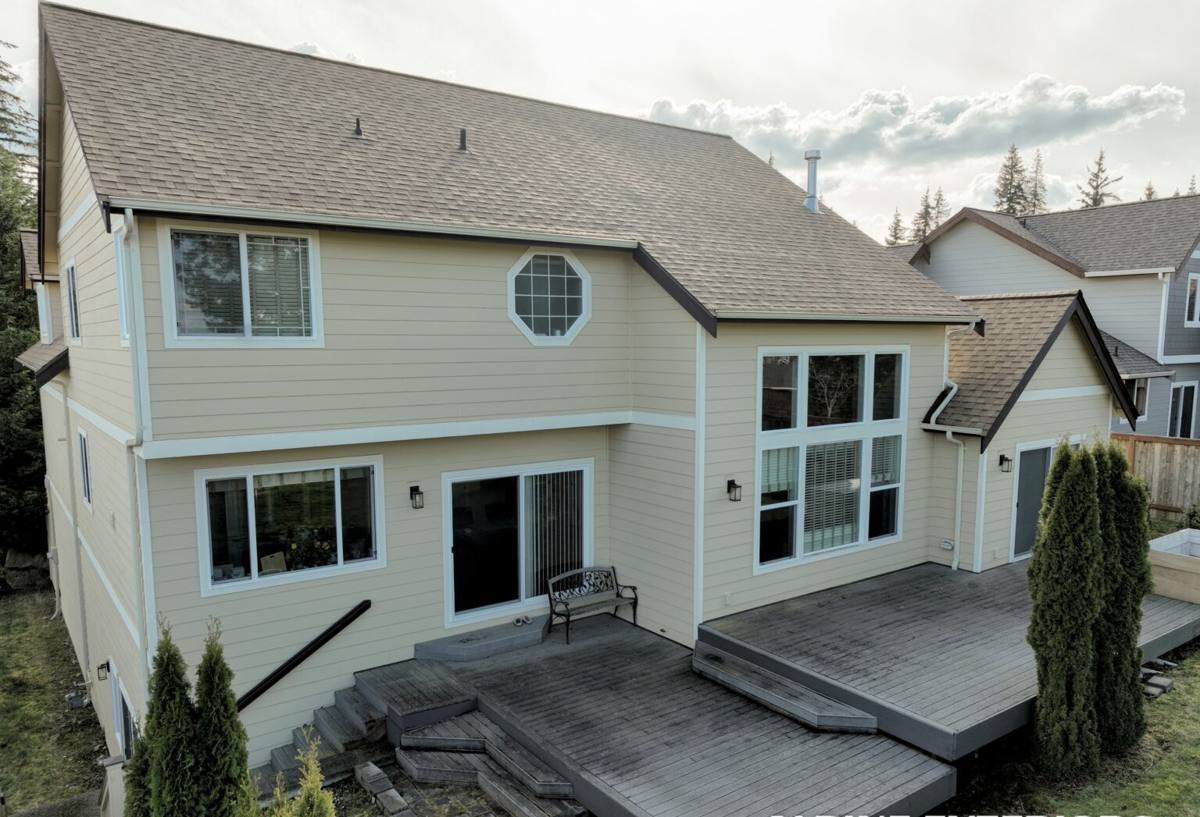
What Columbia's Climate Does to a Deck
Three factors drive almost every deck problem we get called out for in this area:
Salt Air and Corrosion
Proximity to marine air accelerates rust and pitting on fasteners, brackets, and joist hangers far faster than inland builds. A deck framed with standard hot-dip galvanized hardware in a low-salt environment might go a decade before corrosion becomes a structural concern. Closer to the water, that same hardware can start showing rust streaks and weakening within a few years if it wasn't rated for the exposure.
Driving Rain
Whatcom County doesn't just get rain — it gets rain pushed sideways by wind off the water often enough that vertical surfaces and ledger connections take on moisture that a calm, straight-down rain would never reach. Any point where the deck attaches to the house, or where a post meets a footing, is a place water will find a way in if it isn't detailed correctly.
Moss and Prolonged Damp
A long stretch of grey, damp months means deck boards rarely get a full dry-out period. Moss and algae take hold on any surface that doesn't shed water quickly or get enough airflow underneath, and once established, that growth holds moisture against the wood or composite surface and turns boards slick and slippery underfoot.
What a Correctly Built Deck Looks Like Here
A deck that's going to last in this climate isn't built any differently in terms of basic carpentry — it's built with more attention to the details that water and salt exploit. That means:
- Ledger board flashing that actually sheds water away from the house rim joist, not just a bead of caulk behind the board
- Fasteners and structural hardware rated for coastal or high-moisture exposure, not the cheapest galvanized option on the shelf
- Post bases set above grade and away from standing water, with proper footings sized for our soil conditions
- Joist spacing and blocking that accounts for the decking material's actual span rating, not just "close enough"
- Gaps between boards sized to let water drain and air circulate underneath, reducing the moss and mildew that build up on tight-fitted decking
- Railing posts through-bolted rather than lag-screwed into rim joists wherever the framing allows it, for a connection that won't loosen as wood moves with moisture cycles
Decking Material Choices for This Climate
There isn't one right answer for every home — it depends on budget, how the deck will be used, and how much upkeep the homeowner wants to take on. Here's how the common options actually perform in Whatcom County's wet, mossy conditions:
| Material | Moisture Behavior | Maintenance | Typical Lifespan Here |
|---|---|---|---|
| Pressure-treated lumber | Resists rot when properly sealed; can cup or check if left unsealed | Needs re-staining/sealing every 2-3 years in this climate | 15-20 years with upkeep |
| Cedar | Naturally rot-resistant, but softens over time with constant damp exposure | Regular sealing to preserve color and resist moss | 15-25 years with upkeep |
| Composite decking | Won't rot or absorb water into the board core; surface can still host moss film | Periodic cleaning to prevent surface algae buildup | 25-30+ years |
| PVC/capped polymer | Fully moisture-resistant, best option where standing dampness is constant | Occasional wash-down; least maintenance overall | 30+ years |
We'll walk through these trade-offs honestly during the estimate — composite and PVC cost more upfront but cut down dramatically on the re-staining cycle that pressure-treated and cedar decks need out here. For a lot of Columbia homeowners, that maintenance math is the deciding factor, not the sticker price alone.
Why We're Selective About Certain Products
Not every decking product on the market is a good fit for a climate this wet. Some lower-end composite boards, for instance, are more sensitive to moisture at cut edges and fastener penetrations than others — if those aren't sealed correctly during install, they can swell or delaminate over time. We stick to products with warranty structures and installation specs that hold up to sustained damp exposure, and we install them exactly to spec, because the installation sensitivity of some materials is where problems actually start, not in the material itself.
Our Process for a Columbia Deck Project
- On-site assessment. We look at the house's attachment point, grade slope, sun/shade exposure, and how close the site is to prevailing wind and moisture, since that shapes material and flashing decisions.
- Design and layout. We talk through size, railing style, stair placement, and material with the homeowner, factoring in how the deck will actually be used — entertaining, grilling, just extra outdoor space.
- Permitting. Deck projects above a certain height or attached to the structure typically require a permit through the local building department; we handle that paperwork so it's not left on the homeowner's plate.
- Framing. Footings, posts, beams, and joists go in first, built to the load and span requirements for the chosen decking material and railing system.
- Flashing and waterproofing. This is the step that determines whether the deck stays dry at the house connection for the next twenty years — we don't shortcut it.
- Decking and railing installation. Boards, fascia, and railing go in with attention to drainage gaps and fastener placement.
- Final walkthrough. We go over the finished deck with the homeowner, including basic care guidance specific to our climate.
Sizing Up the Cost Factors
Every deck is priced around the specifics of the site and material, but the main cost drivers are consistent across most Columbia projects:
- Square footage and shape complexity (multi-level decks, angled corners, and built-in seating all add labor)
- Decking material selected (pressure-treated at the low end, PVC/composite at the higher end)
- Railing style — basic wood/composite balusters versus cable or glass panel systems
- Height above grade and whether stairs are required
- Site access and how much excavation or grading the footings need
- Permit and inspection requirements based on size and attachment type
We'll walk the site and give a straightforward number for your specific project rather than a generic per-square-foot estimate that doesn't account for what your yard and home actually require.
Maintenance That Actually Matters Here
A deck in Columbia needs a slightly different maintenance rhythm than one in a drier part of the state. A few habits go a long way:
- Sweep debris off the deck surface regularly — trapped leaves and needles hold moisture and speed up moss growth
- Rinse or lightly scrub composite and PVC decking a couple times a year to keep surface algae from establishing
- Check and re-seal wood decking on the schedule the manufacturer recommends for wet climates, not the generic label instructions
- Keep gutters and downspouts near the deck clear so runoff isn't dumping extra water onto or under the structure
- Have fasteners and railing connections checked periodically, especially on older decks closer to the water where corrosion moves faster
Why Hire a Crew That Already Works in Columbia
Deck-building fundamentals are the same everywhere, but the failure points aren't. A crew that mostly builds in dry, inland climates isn't necessarily thinking about salt-rated hardware or wind-driven rain at the ledger connection, because they haven't had to deal with the callbacks that happen when those details get missed. We've done this work throughout Whatcom County long enough to know which fastener specs, flashing details, and material choices actually hold up here — and which ones look fine on day one and start failing in year three. That local track record is worth more than a lower bid from a crew that's guessing at what our weather does to a structure over time.
Get a Straightforward Estimate
If you're planning a new deck or replacing one that's past its prime, we're happy to come take a look, talk through material options that make sense for your home's exposure, and give you a clear, no-pressure estimate. Use the form below to get started.