 Whatcom County
 Building New in South Hill: Windows Are Not the Place to Cut Corners
If you're building new in South Hill, the window package is one of the few decisions on the job that quietly determines how the whole house performs for the next 20-30 years. Framing gets inspected. Roofing gets inspected. Window flashing, more often than not, gets covered up by siding before anyone outside the crew ever looks at it closely. In a part of Whatcom County that deals with salt air, driving rain, and a long moss season every year, that's exactly the detail that can't be rushed.
New-construction windows are a different job than a replacement. On a replacement, we're working around existing siding and trim, often using a "pocket" or insert approach. On new construction, the wall is open. We get to install the window and its flashing the way manufacturers actually engineer it to work — full nailing flange, proper flashing sequence, integrated with the weather-resistive barrier from the start. Done right, this is the best chance a house will ever have at a dry, well-sealed window opening. Done wrong, it's the kind of mistake that doesn't show up as a leak for two or three winters, by which point it's inside the wall cavity instead of on the sill.
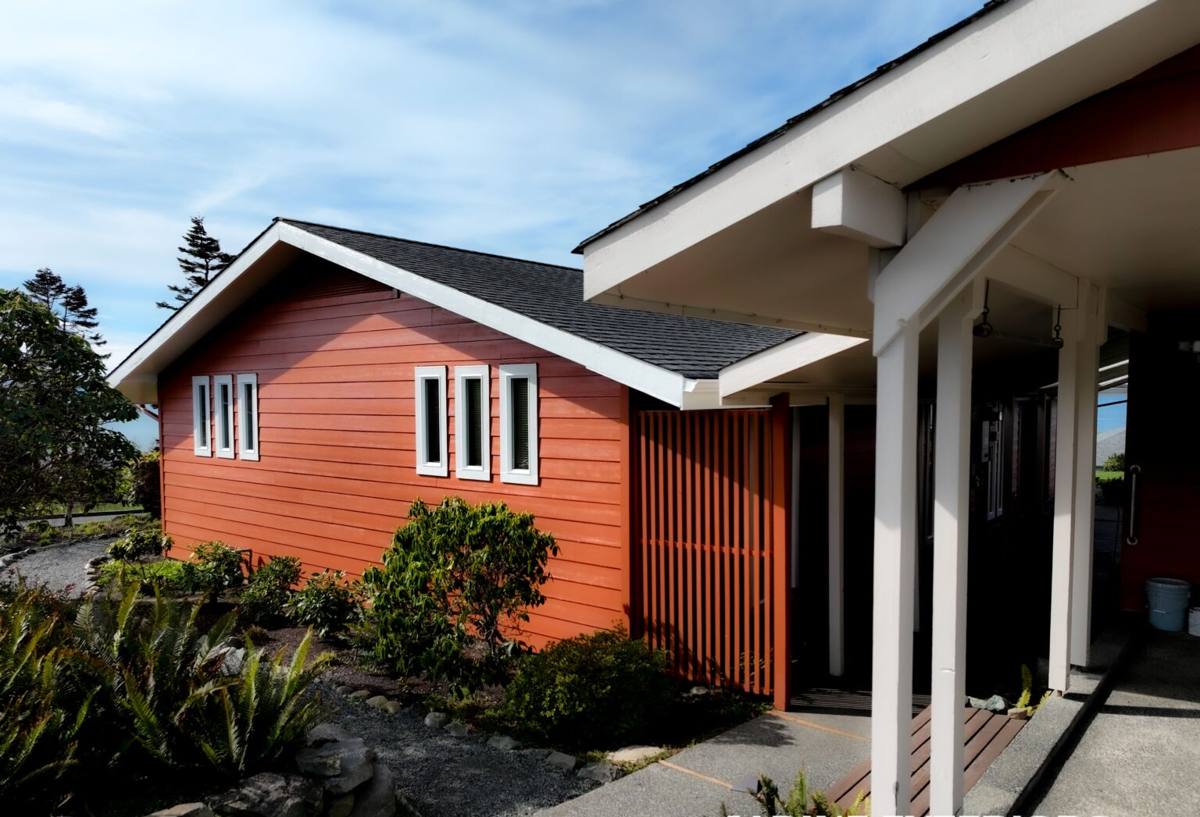
What South Hill's Climate Actually Demands From a Window Install
Whatcom County sits close enough to the water and gets enough sustained wet weather that window installers here can't treat this as a generic build-anywhere task. A few things matter more locally than they would in a drier climate:
Driving Rain, Not Just Rain
Wind-driven rain doesn't just fall on a window — it gets pushed sideways and upward under sills and around trim. That means flashing details that would be fine in a calm-rain climate aren't sufficient here. Every horizontal flange, every sill pan, and every head flashing needs to be lapped correctly, in the right order, with the right materials, so water is directed out and down no matter which direction it's coming from.
Salt Air and Metal Components
Homes closer to the water deal with airborne salt that accelerates corrosion on unprotected metal — fasteners, flashing, and hardware included. We factor that into what fasteners and flashing materials we spec for a build in this area, rather than defaulting to whatever's cheapest at the yard.
Moss and Prolonged Moisture Exposure
Whatcom County's long moss season is really a symptom of a longer underlying issue: extended periods where surfaces stay damp instead of drying out. Moss on a roof is visible; the same moisture dynamic working on window sills, trim, and the wall assembly behind the siding is not. Windows installed with poor drainage paths or without a way for incidental moisture to escape will sit wet longer here than they would in a drier climate, and that shortens the life of everything around them — trim, sheathing, and the window itself.
What a Correct New-Construction Window Install Actually Involves
There's a sequence to this, and skipping steps or doing them out of order is where most window-related water damage traces back to — not the window unit itself.
- Rough opening check. Confirm the opening is square, plumb, and sized correctly before the window ever shows up on site. Framing tolerances get exposed fast once a window is set.
- Sill pan flashing. A sloped, sealed pan at the bottom of the opening so any water that gets past the window has a path out, not a place to pool.
- Weather-resistive barrier integration. The house wrap or building paper has to be cut and lapped in the correct order relative to the window flange — this is the single most common place we see it done backwards on other jobs.
- Setting the window. Level, plumb, square, and fastened per the manufacturer's schedule — not "close enough."
- Flange sealing and flashing tape. Sides first, then head flashing lapped over the top — shingle-style, so every layer sheds water onto the layer below it.
- Interior air sealing. Low-expansion foam or backer rod and sealant around the frame so the house's air barrier is continuous, not just the water barrier.
- Final inspection before siding covers it up. This is the last point anyone can visually confirm the work before it's hidden for decades.
Window Types Suited to New Builds in This Area
| Window Type | Where It Fits Well | Local Considerations |
|---|---|---|
| Vinyl, fusion-welded frame | Most new-construction budgets | Good moisture tolerance, low maintenance, wide performance range for coastal wind and rain exposure |
| Fiberglass frame | Larger openings, higher-exposure walls | Dimensionally stable in temperature swings, holds up well against sustained damp conditions |
| Aluminum-clad wood | Interior wood aesthetic desired | Needs correct exterior cladding and flashing detail — the exterior face must fully protect the wood from driving rain |
| Aluminum frame (uninsulated) | Rarely recommended for this climate | Prone to condensation and heat loss here; we'll walk you through why before you commit to this option |
We're not tied to one brand, and we'll say plainly if a product isn't a good fit for a South Hill build — that's about matching materials to what this climate does to a house over time, not brand preference.
Our Process, Start to Finish
For new-construction work, we coordinate directly with your builder or general contractor, or we work as your window and siding subcontractor if you're managing the build yourself. Either way, the process looks like this:
- Review plans and rough opening schedule before framing is finalized, so window sizes and header heights are confirmed early — not discovered as a problem on install day.
- Walk the framed openings on site before ordering, checking for squareness and any structural issues that need to be resolved first.
- Order windows to spec with realistic lead times factored into the build schedule.
- Install using the flashing sequence above, with photos taken at each stage before it's covered by siding.
- Final walkthrough with the builder or homeowner, confirming operation, sealing, and trim before the job is signed off.
Why It Matters That We Already Work in South Hill
A crew that works regularly in South Hill and the surrounding parts of Whatcom County has already seen how houses here age — which orientations take the worst of the wind-driven rain, which details tend to hold up and which don't, and how quickly moss and moisture problems show up on homes that got rushed flashing details. That's not something you can fully substitute with a manufacturer's install manual, because the manual doesn't know your site's exposure, your lot's drainage, or how the prevailing weather hits your particular wall.
It also means straightforward logistics — we're not driving in from out of the area to hit a install date, then unavailable if the builder needs a follow-up visit before drywall or siding closes things in.
Questions Worth Asking Before You Hire a Window Installer for New Construction
- Will you show me your flashing sequence before you cover it with siding?
- Do you take photos of the flashing and sill pan detail before it's closed in?
- What fastener and flashing materials do you spec for homes closer to the water?
- How do you handle a rough opening that's out of square or undersized?
- What's your process if a leak shows up after the siding is on?
Cost Factors on a New-Construction Window Package
New-construction window pricing depends on more variables than a single number can capture honestly. The main drivers we see:
| Factor | Why It Moves the Price |
|---|---|
| Window count and size | Larger openings and higher unit counts scale material and labor cost directly |
| Frame material | Vinyl, fiberglass, and clad-wood carry different material costs and install labor |
| Wall height and access | Second-story and hard-to-access openings take more time and equipment |
| Glass package | Standard dual-pane vs. upgraded low-E or triple-pane options for higher-exposure walls |
| Coordination complexity | Working directly with a GC's schedule vs. standalone scope changes labor planning |
We'll give you a real number for your specific plan set rather than a rough per-window estimate that doesn't hold up once the actual openings are counted.
Get an Estimate for Your South Hill Build
If you're framing a new build in South Hill or elsewhere in Whatcom County, we're happy to look at your plans and walk the site before you finalize your window order. There's no pressure and no cost to have us take a look — fill out the form below and we'll get back to you.