 Whatcom County
 Windows Built for Sunnyland's Weather, Not a Catalog Somewhere Else
Sunnyland sits close enough to the water that homes here take a different kind of beating than houses ten miles inland. Salt-laden air off Bellingham Bay works on metal hardware and weep systems year-round. Driving rain, pushed sideways by wind off the water, tests every seal and sightline a window has. And the long, damp moss season that runs from fall through spring keeps wood trim, sills, and cladding wet for weeks at a time. A window that's fine in a dry climate can fail here in half the time if it wasn't chosen and installed with that reality in mind.
We work Whatcom County homes regularly, and Sunnyland's mix of older bungalows, mid-century houses, and newer infill means we see a wide range of window conditions and framing situations. This page is about what actually matters when you're replacing or custom-fitting windows for a home in this specific pocket of the county — not a generic rundown that could apply anywhere.
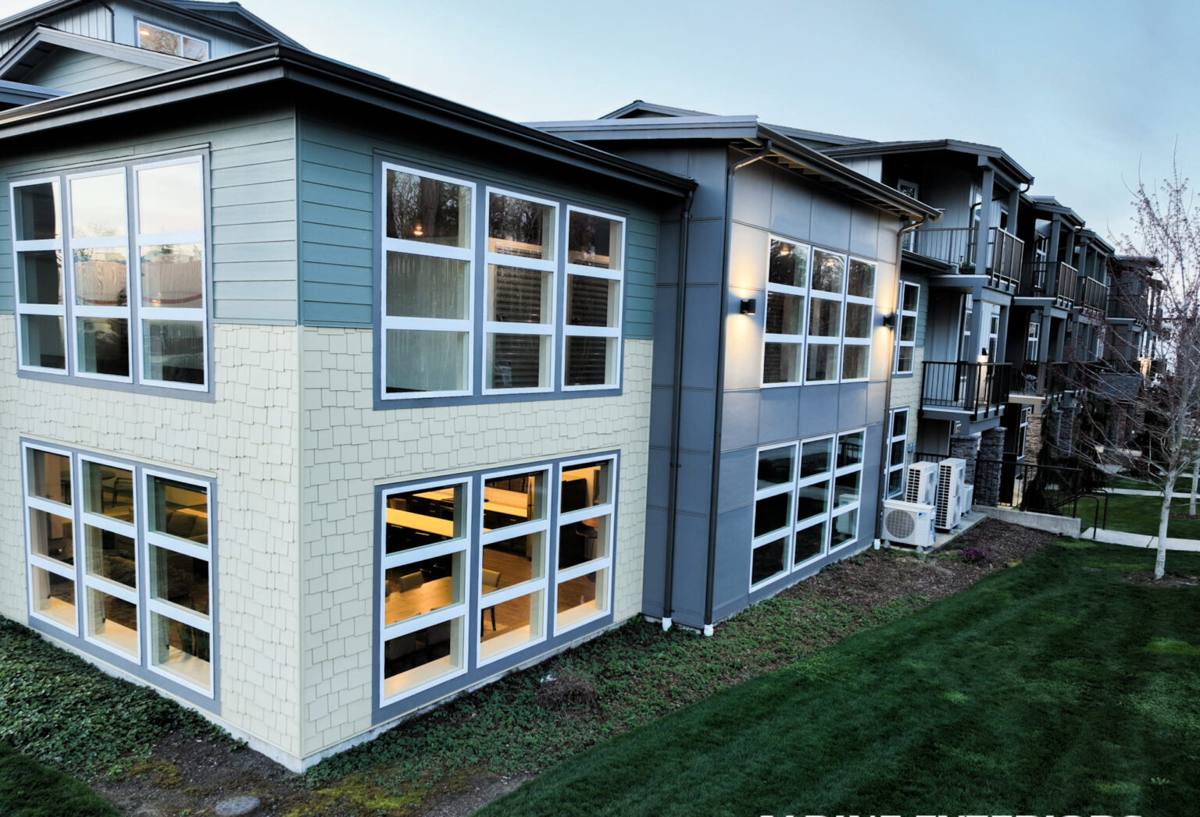
What "Custom" Actually Means Here
Custom windows aren't just special shapes or oversized picture units, though we install plenty of those. In older Sunnyland homes, "custom" more often means the rough openings are slightly out of square, the original trim profiles don't match anything sold off the shelf, or the wall assembly behind the siding was never designed for a modern window's flashing flange. A correct custom job accounts for all of that before a single window is ordered.
Where Custom Sizing Comes Up Most
- Older homes with settled framing where openings are no longer perfectly square or plumb
- Bay, bow, or angled window replacements where standard stock sizes don't exist
- Additions or renovated spaces with unusual ceiling heights or wall thicknesses
- Matching a mismatched window on a wall of otherwise uniform openings
- Historic-style trim and muntin patterns that need to be replicated, not approximated
Getting this right starts with accurate field measurements, not a quick guess based on the old unit's label. We measure the actual opening — width, height, diagonal, and depth — at multiple points, because a frame that's off by even a quarter inch can create gaps that no amount of caulk will fix long-term.
Frame Material: What Holds Up in This Climate
Frame material choice matters more here than in drier parts of the state, mostly because of moisture exposure and the corrosive effect of salt air on fasteners and hardware. We install and stand behind a range of materials, but each comes with real tradeoffs worth understanding before you decide.
| Frame Material | How It Handles This Climate | Maintenance |
|---|---|---|
| Vinyl | Doesn't corrode or rot; handles moisture well; can expand/contract with temperature swings | Low — occasional cleaning, no painting |
| Fiberglass | Very stable dimensionally, resists moisture and salt exposure well | Low — durable finish, rarely needs attention |
| Wood-clad | Good insulation and classic look, but the wood core is vulnerable if the exterior clad or seals fail | Moderate to high — clad needs inspection, interior wood needs occasional care |
| Aluminum | Strong and slim-profile, but conducts cold and is more prone to condensation in our damp winters | Moderate — hardware and seals need regular checks |
For most Sunnyland homes exposed to direct weather off the water, we lean toward vinyl or fiberglass for standard replacements, and reserve wood-clad for homes where the look is the priority and the owner understands the added upkeep. We'll walk through the real tradeoffs for your specific exposure rather than pushing one product for every house.
Hardware and Fasteners
Salt air corrodes lower-grade hardware faster than most homeowners expect — hinges, cranks, and locks on cheaper window lines can start sticking or corroding within a few years this close to the water. We use corrosion-resistant hardware and stainless or coated fasteners on every install, not because it's required, but because it's the difference between a window that operates smoothly in year eight and one that doesn't.
Glazing and Glass Packages That Make Sense Here
Glass selection affects comfort, energy bills, and condensation control — and condensation is a real issue in a climate this damp. A poorly specified glass package will fog or sweat on the interior during our cold, wet winters, especially in bedrooms and bathrooms.
- Low-E coatings reduce heat loss and help manage interior condensation risk during cold snaps
- Argon or krypton gas fill between panes improves insulation value without adding bulk
- Warm-edge spacers reduce the cold spot at the glass edge where condensation tends to start first
- Tempered glass where code requires it — near doors, low sills, and wet areas
We size the glass package to the room and exposure, not a single default. A north-facing bedroom wall that catches wind off the bay needs a different spec than a sheltered south-facing sunroom.
Installation Details That Actually Prevent Failures
Most window failures we get called out to inspect in this area aren't the window's fault — they're an installation problem. Flashing done wrong, sealant applied over the wrong surface, or a rough opening that wasn't properly prepped will let water in behind the siding, and in a climate that gets driving rain regularly, that shows up as rot and mold faster than homeowners expect.
What a Correct Install Includes
- Removing old units carefully and inspecting the rough opening and sill for existing rot or moisture damage before anything new goes in
- Repairing or replacing damaged framing or sheathing — never installing a new window over a compromised opening
- Installing proper flashing that directs water out and away from the wall assembly, layered correctly with the building paper or house wrap
- Setting the window level, plumb, and square, shimmed correctly so it operates smoothly and doesn't stress the frame
- Sealing with the correct sealant for the substrate — not just running a bead of caulk around the trim and calling it done
- Insulating the gap between the frame and the rough opening without overpacking, which can bow the frame
- Finishing interior and exterior trim to shed water and match the home's existing lines
Skipping or rushing any one of these steps is exactly how a window that looks fine on day one starts leaking by the second wet season.
Our Process for a Sunnyland Window Project
We keep the process straightforward and try not to waste your time with unnecessary visits or vague estimates.
- On-site assessment: We look at your existing windows, openings, siding condition, and any signs of past moisture problems before recommending anything.
- Honest recommendation: We'll tell you which frame material and glass package fit your home's exposure and your budget — including if a repair makes more sense than full replacement.
- Precise measurement and ordering: Every opening is field-measured; nothing is ordered off assumptions.
- Careful removal and prep: Old units come out cleanly, and we address any framing or moisture issues found underneath before installing anything new.
- Proper installation: Flashing, shimming, sealing, and trim work done in the order that actually keeps water out.
- Walkthrough and cleanup: We test operation on every window, clean up the site, and walk through what was done.
Signs Your Windows Need Attention
Not every window problem means full replacement, but these are worth having looked at, especially given how much moisture this area sees:
- Fogging or moisture between panes (a sign the seal has failed)
- Soft or discolored wood trim around the frame
- Drafts you can feel near the frame even when the window is latched
- Difficulty opening, closing, or locking that wasn't there a year or two ago
- Visible gaps, cracked caulk, or paint failure around the exterior trim
- Condensation forming on the interior glass regularly during cold weather
- Musty smell or visible mold near the sill or lower corners of the frame
Why a Crew That Already Works Sunnyland Matters
Window work in this part of Whatcom County isn't the same job as window work in a dry inland climate, and it isn't identical to window work on the immediate waterfront either. A crew that regularly works Bellingham-area homes understands the balance of moisture exposure, the kind of framing common in this neighborhood's housing stock, and how long moss season actually runs here — which affects when installation and exterior finish work should happen for the best results. That familiarity shows up in fewer callbacks and installs that hold up through several wet seasons, not just the first one.
If you're weighing custom window replacement for a Sunnyland home, we're glad to take a look, explain what we see, and give you a straightforward estimate — no pressure, no inflated scare tactics about your current windows. Reach out through the form below and we'll set up a time to assess your home.