 Whatcom County
 Windows on South Hill Take a Different Kind of Beating
South Hill sits up out of the flatlands, which means more direct exposure to wind off the water and longer stretches of wind-driven rain than homes tucked down in more sheltered parts of Whatcom County. That elevation and exposure is great for a view. It is hard on window frames, sills, and the seals around glass. Salt-laden air moving in off the bay accelerates corrosion on metal hardware and fasteners, while our long wet season — often eight or nine months of the year with some form of moisture in the air — keeps wood and lower-grade composite frames damp for days at a time instead of drying out between storms.
Add in moss and algae growth, which thrives in the shade of mature trees common on South Hill lots, and you get a slow, steady breakdown of caulking, weatherstripping, and paint or finish coatings. None of this happens overnight. It shows up as a window that used to open smoothly and now sticks, a sill that feels soft when you press on it, or a bedroom that is noticeably colder near the glass in January than it was five years ago. By the time most homeowners notice, the damage is already past a simple repair.
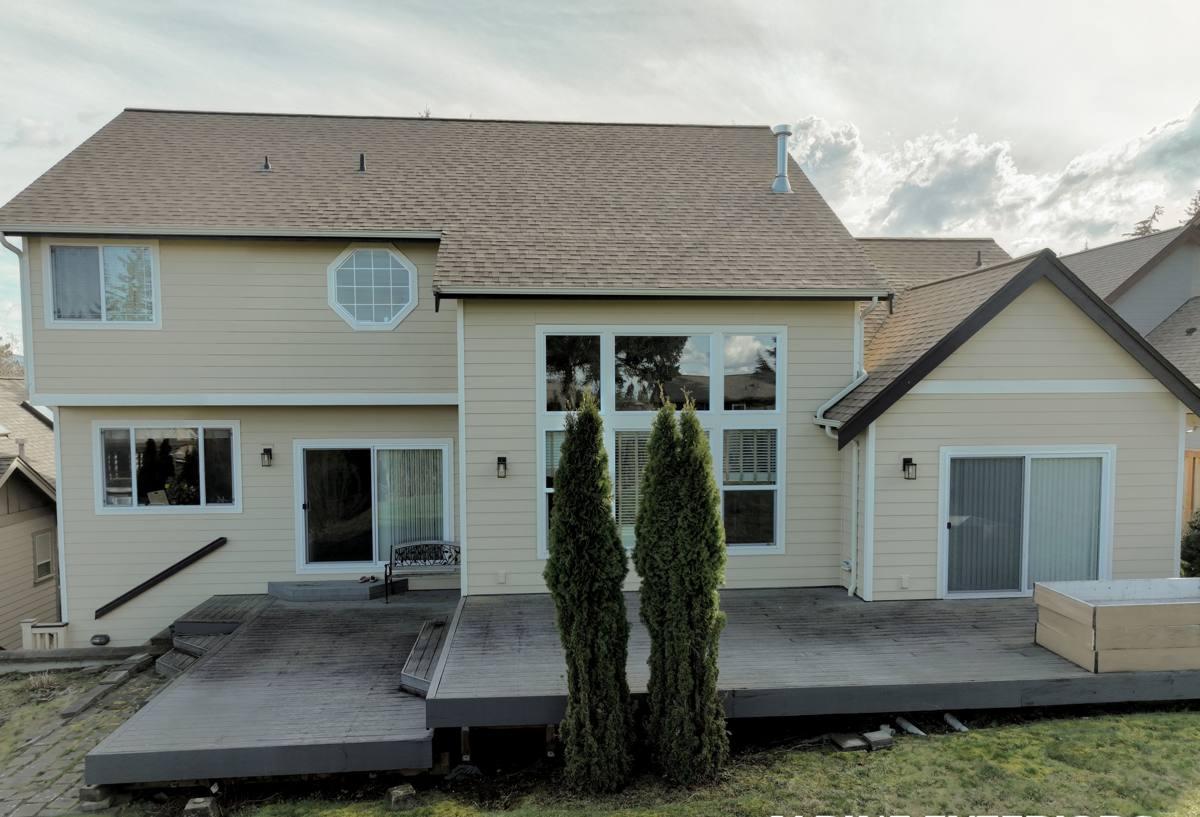
What Actually Wears Out First
When we assess a window replacement job on South Hill, we are not just looking at the glass. Most failures start at the edges — the places where the window meets the house.
- Seals and weatherstripping: UV exposure and constant damp-dry cycling cause rubber and vinyl seals to harden and crack, letting in drafts and moisture.
- Sills and sashes: Wood or composite sills that sit under a poorly flashed window absorb water over years, leading to soft spots, rot, and eventually structural failure of the frame itself.
- Hardware: Locks, cranks, and hinges exposed to salt air corrode faster than the same parts would inland, which is why a window can look fine but operate poorly.
- Glazing seals on insulated glass: Once the seal between panes fails, you get fogging or moisture between the glass — a sign the insulated unit itself needs replacing, not just the frame.
Understanding which of these is failing matters, because it changes what "correct" replacement looks like for your specific windows.
Signs It's Time to Replace, Not Repair
Not every problem window needs full replacement. But in our experience working in Whatcom County's climate, certain signs almost always point to replacement being the more honest recommendation over patching:
- Visible fogging or moisture trapped between panes of glass
- Frames that are soft, spongy, or show rot when pressed with a thumb
- Windows that won't stay open, won't latch, or have warped enough to bind in the frame
- Noticeable drafts even with the window fully closed and locked
- Condensation forming on the inside of the glass regularly during cold months
- Visible daylight or gaps around the frame from outside
- A jump in heating costs without a clear other explanation
If you're only seeing one or two of these on a single window, a repair may still make sense. If you're seeing several across multiple windows, especially on the sides of the house that take the most weather, replacement is usually the more cost-effective path long term.
What a Correct Window Replacement Job Involves
The window unit itself is only part of the job. In our climate, the installation details matter as much as the product, and this is where a lot of replacement jobs go wrong — not because the window was bad, but because the installation didn't account for how much water this region throws at a house.
Removal and Inspection
Old windows come out carefully so we can see the condition of the rough opening underneath — the framing, sheathing, and any existing flashing. This is often the first time hidden rot or water damage becomes visible, and it needs to be addressed before a new window goes in, not covered up.
Flashing and Weatherproofing
This is the step that determines whether a window replacement lasts fifteen years or thirty. Proper flashing — sill pan, jamb flashing, and head flashing installed in the right order with correct overlaps — directs water away from the framing instead of letting it collect at the bottom of the opening. On a South Hill home taking wind-driven rain from multiple directions, this step is not optional.
Setting and Shimming the Window
The window needs to sit level, plumb, and square in the opening, shimmed correctly so the frame isn't under stress that will eventually cause it to bind or fail prematurely.
Sealing and Insulating
Low-expansion foam or appropriate insulation around the frame, combined with correct exterior sealant at the right joints, closes the thermal and air gaps without trapping moisture where it can't escape.
Interior and Exterior Finish
Trim, casing, and any siding tie-in around the window get finished so the whole assembly sheds water correctly, matching the look of the rest of the home.
Choosing the Right Window for a South Hill Home
There is no single "best" window for every house. The right choice depends on your home's age, exposure, and what you're trying to solve — energy loss, drafts, noise, or simple wear. Here's how the common options compare for our climate specifically:
| Frame Material | Moisture Behavior in Our Climate | Maintenance | Typical Lifespan |
|---|---|---|---|
| Vinyl | Does not rot or corrode; performs well in wet, salt-air conditions | Low — occasional cleaning | 20–30 years |
| Fiberglass | Very stable in moisture and temperature swings; strong resistance to warping | Low | 30+ years |
| Wood (clad exterior) | Good if cladding and seals are maintained; vulnerable where finish fails | Higher — finish and seal upkeep | 20–40 years with upkeep |
| Aluminum | Prone to condensation and corrosion in salt air unless thermally broken | Moderate | 15–25 years |
We install a range of these materials depending on the home, but we're upfront when a product isn't a good fit for a given exposure. A bare aluminum frame on a South Hill wall that takes direct weather off the water, for example, is going to fight condensation and corrosion in a way that a vinyl or fiberglass unit simply won't. That's a maintenance and moisture conversation we'll have honestly, not a sales pitch.
Glass and Performance Options
Beyond frame material, the glass package affects comfort and energy performance more than most homeowners expect.
- Double-pane, low-E glass: The standard baseline for our climate — good insulation and reduced UV/heat transfer.
- Triple-pane glass: Better insulation and noise reduction, worth considering on north- or west-facing walls that take the brunt of storms, though it adds weight and cost.
- Argon or krypton gas fill: Improves the insulating value of the sealed unit between panes.
- Warm-edge spacers: Reduce condensation risk at the edge of the glass, which matters in a climate with our humidity levels.
What Drives the Cost
Every home is different, and we'd rather walk your specific windows in person than quote numbers that don't apply to your house. In general, these are the factors that move the price up or down:
| Factor | Effect on Cost |
|---|---|
| Number and size of windows | More and larger openings increase material and labor cost |
| Frame material chosen | Vinyl is typically the most economical; fiberglass and wood-clad cost more |
| Glass package (double vs. triple pane, coatings) | Higher-performance glass adds cost but improves comfort and efficiency |
| Condition of the rough opening | Rot or framing repair found during removal adds labor before the new window can go in |
| Access and site conditions | Second-story or hard-to-access windows take more time to replace safely |
| Trim and finish work | Matching existing trim or siding tie-in adds finish carpentry time |
We'll always separate "the window replacement" from "the repair we found once we opened the wall" so you know exactly what you're paying for and why.
Our Process, Start to Finish
- Free on-site assessment: We walk the windows you're concerned about, check frames and sills for hidden damage, and talk through what you're actually trying to fix.
- Honest recommendation: We tell you which windows genuinely need replacement, which can wait, and what materials fit your home and budget.
- Written estimate: Clear line items, no vague allowances.
- Scheduling around the weather: We plan installation days with Whatcom County's rain patterns in mind so openings aren't left exposed longer than necessary.
- Careful removal and inspection: Any hidden rot or damage is shown to you before we proceed.
- Correct flashing, setting, and sealing: Done in the order and manner that actually sheds water in our climate.
- Finish work and cleanup: Trim matched, site cleaned, and a walkthrough so you know how to operate and maintain your new windows.
Why It Matters That We Already Work in South Hill
A window that's correctly installed in a dry inland climate can still fail early if the same techniques are used on a home taking direct weather off the water. Crews that don't regularly work in Whatcom County's wetter, wind-exposed neighborhoods sometimes skip flashing details that don't matter much elsewhere but matter a great deal here. We work these conditions regularly, which means we're not guessing at how much overlap a flashing needs or whether a sealant will hold up through a full wet season — we've seen what happens when those details are done right, and what happens when they're not.
Being local also means we're reachable after the job is done. If a window needs adjustment after the first hard storm of the season, or a warranty question comes up two years later, you're calling a crew that's still working in the area, not chasing down a company that came through once from out of town.
After Installation: Keeping Windows Performing
New windows are only as good as the care they get afterward. A little seasonal attention goes a long way in our climate:
- Clear moss and debris from nearby gutters and sills so water doesn't sit against the frame
- Wipe down tracks and weep holes periodically so drainage paths stay clear
- Check and touch up exterior caulking annually, especially after the first year as materials settle
- Operate locks and hardware periodically through the winter so moving parts don't seize
- Watch for condensation between panes, which signals a seal issue covered under most manufacturer warranties
If your South Hill home has windows that are drafty, foggy, sticking, or just past their working life, we're happy to take a look and give you a straight answer — no pressure, no upsell. Use the form below to request a free estimate and we'll schedule a time to walk your windows with you.