 Whatcom County
 Happy Valley sits close enough to the water and the trees that its roofs take a beating most inland neighborhoods never see. Wind off the Strait, driving rain that seems to fall sideways half the winter, and a moss season that barely takes a break — all of it works on a roof year after year. When a real storm comes through and knocks something loose, the difference between a repair that lasts and one that fails again next winter usually comes down to whether the contractor actually understood what caused the damage in the first place, not just what's visible from the ground.
This page is about one job, done right, in one neighborhood: storm damage roof repair for Happy Valley homes. Not a general overview of roofing services — the specific work of assessing what a storm did to your roof, fixing it correctly, and leaving you with a roof that's ready for the next one.
Why Happy Valley Roofs Take This Kind of Damage
Whatcom County's weather doesn't hit roofs the way a drier climate does. It's rarely one dramatic event — it's cumulative. A windstorm lifts a section of shingles just enough to break the seal. Weeks of steady rain find that opening before anyone notices a leak inside. Meanwhile, moss has been quietly working into the granule layer for months, holding moisture against the shingle surface and softening the material underneath. By the time a homeowner sees a stain on the ceiling, several separate problems have usually stacked up on top of each other.
Wind and Driving Rain
Storms in this part of Washington tend to bring wind and rain together, and wind-driven rain behaves differently than a straight-down downpour. It gets pushed under shingle tabs, up under flashing edges, and into any gap that a calm-weather rain would never reach. A roof that's held up fine through years of normal weather can still develop a leak the first time a real windstorm pushes rain sideways into a weak spot.
The Long Moss Season
Moss doesn't need a storm to cause damage, but storm damage repair often uncovers moss problems that were already underway. In a region where roofs stay damp and shaded for much of the year, moss can establish itself on north-facing slopes and anywhere tree cover keeps the roof from drying out between rains. Left alone, it lifts shingle edges, traps moisture against the roof deck, and accelerates wear in exactly the areas a storm is most likely to exploit.
Salt Air and Material Fatigue
Proximity to salt air adds a slower, less obvious factor. Salt-laden air accelerates the breakdown of exposed metal — flashing, fasteners, vent caps — well before the shingles themselves show their age. A storm can pop loose a nail or flashing seam that's already been weakened by years of salt exposure, in conditions that wouldn't have moved a fresh, unweathered fastener at all.
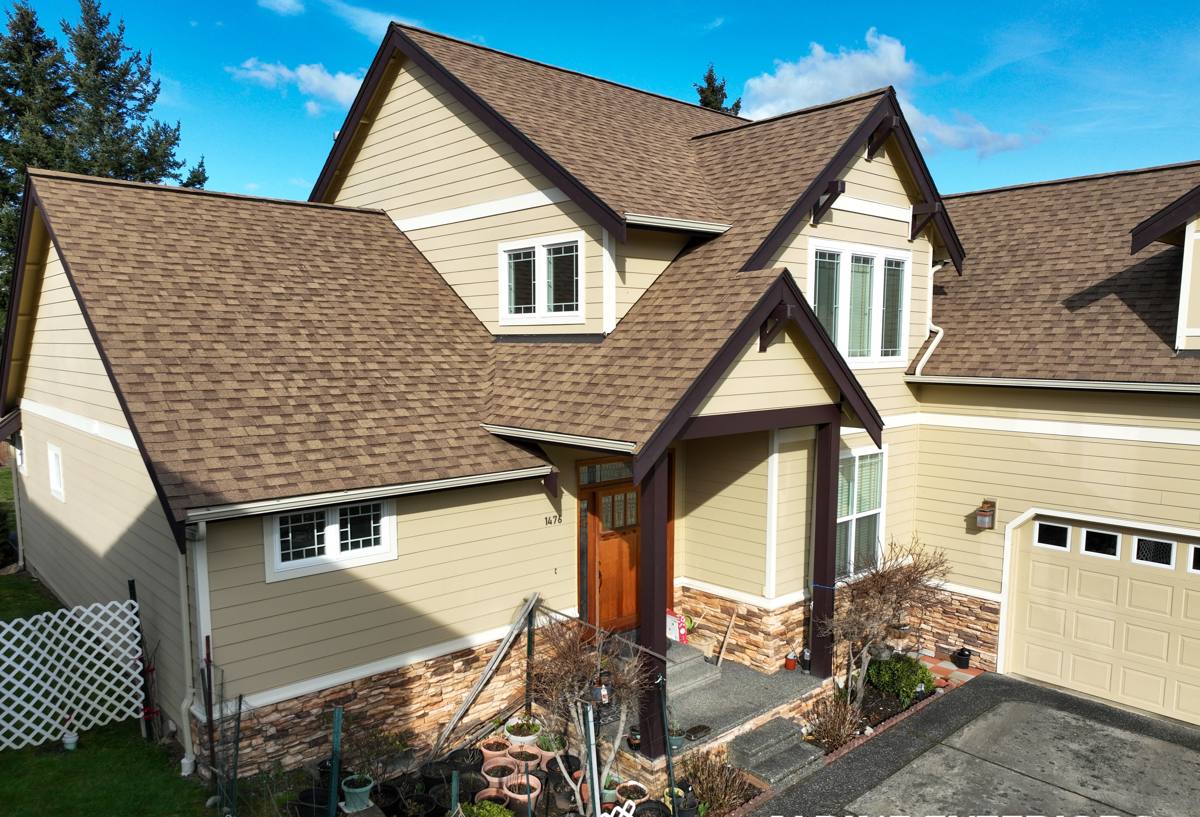
Signs of Storm Damage Homeowners Should Watch For
Not all storm damage announces itself with a dramatic leak. Some of the most costly damage starts quiet and gets worse with the next rain. After any significant wind or rain event, it's worth walking the exterior of the house and looking for:
- Shingles that look lifted, curled, or out of alignment compared to the rest of the roof
- Granules collecting in gutters or at the base of downspouts
- Bent, lifted, or missing flashing around chimneys, vents, and roof-to-wall transitions
- New or worsening moss growth in a concentrated area, which can signal a spot where water is sitting
- Water stains on interior ceilings or in the attic, even faint ones
- Debris — branches, gravel-sized shingle chunks, or granule buildup — on the ground near the house
- Sagging or soft-feeling spots on the roof surface, visible from a ladder or upstairs window
Any one of these on its own might not mean much. Several of them together, especially right after a storm, are worth a professional look before the next rain finds the weak spot.
What a Correct Storm Damage Repair Actually Involves
A repair that only addresses what's visible from the ground often misses the underlying cause. Storm damage repair done properly starts with figuring out how water is actually moving through the damaged area — not just patching the shingle that looks wrong.
Inspection Before Anything Gets Fixed
This means checking the roof deck underneath damaged shingles for soft spots or rot, not just the shingles themselves. It means tracing flashing lines around penetrations to confirm the seal is intact along its full length, not just at the point of visible damage. And it means checking the attic side, where insulation staining or damp framing can reveal a leak path that started well away from where the water is showing up inside the house.
Matching the Repair to the Damage
Once the cause is clear, the repair itself needs to match the actual extent of the problem. A localized wind-lift with no deck damage might genuinely only need a section of shingles replaced and re-sealed. But if water has been getting into the deck for any length of time, the repair needs to include replacing that decking — patching shingles over a soft deck just delays the next failure.
Flashing and Underlayment
Flashing is where a lot of storm-damage repairs go wrong if they're rushed. Reusing old, salt-fatigued flashing to save time on a repair is a common shortcut that fails again within a year or two. On any repair where flashing has been disturbed, it should be replaced with new material and properly integrated with underlayment — especially in valleys, around chimneys, and at wall transitions, which are the areas most exposed to wind-driven rain.
Repair Approach Comparison
Not every storm-damaged roof needs the same scope of work. The right approach depends on how much of the roof is affected, how long the damage has been present, and the condition of the roof overall.
| Approach | Best For | What's Involved | Key Trade-Off |
|---|---|---|---|
| Spot repair | Isolated wind or debris damage on an otherwise sound, newer roof | Replace affected shingles, re-seal flashing at the site, verify deck condition | Fastest and least costly, but only appropriate if surrounding materials are still in good shape |
| Section replacement | Damage concentrated in one slope or area, often with some deck involvement | Tear off and replace a full slope or section, including deck repair and new underlayment | Better long-term match to surrounding roof age, more labor than a spot repair |
| Full re-roof | Older roofs where storm damage exposes wider wear, or repeated storm events | Complete tear-off, deck inspection and repair, full new underlayment and roofing system | Highest upfront cost, but resets the clock instead of layering repairs on an aging roof |
Our Process for Happy Valley Storm Damage Calls
When a Happy Valley homeowner calls about storm damage, the process is straightforward and starts with getting eyes on the roof quickly — a damaged roof left exposed for weeks invites more water intrusion with every rain that follows.
- Assessment: A full inspection of the affected area, the surrounding roof, flashing, and attic where accessible — not just the spot that's visibly damaged.
- Documentation: Clear photos and a written description of the damage and its likely cause, useful whether you're paying out of pocket or working with an insurance adjuster.
- Honest scope recommendation: A straightforward explanation of whether this is a spot repair, a section replacement, or a sign the roof needs broader attention — with the reasoning behind it.
- Repair: The work itself, done to match the actual damage, with attention to flashing, decking, and underlayment, not just the top layer.
- Cleanup and follow-up: Debris cleared, the area checked after the repair, and a clear explanation of what was done and why.
Working With Insurance on Storm Damage
Many storm damage repairs in this area involve a homeowner's insurance policy. We're not an insurance company and don't make coverage decisions, but a thorough, well-documented assessment makes the claims process go more smoothly. Clear photos, an honest description of the cause of the damage, and a scope of work that matches what actually happened to the roof all help an adjuster understand the claim — and help you avoid disputes over whether damage was storm-related or pre-existing wear.
Preventing the Next Storm From Doing the Same Damage
A storm repair is a good opportunity to address the conditions that made the roof vulnerable in the first place, especially given how long the wet season runs here. A few things worth discussing as part of any repair:
- Whether moss growth contributed to the original damage and needs to be addressed as part of the repair, not just cosmetically after
- Whether gutters and downspouts near the damaged area are clear and functioning, since blocked drainage forces water to find another way off the roof
- Whether nearby tree cover is keeping the affected area damp and shaded longer than the rest of the roof
- Whether the flashing and fasteners used in the repair are suited to a salt-air environment, rather than standard materials that will fatigue faster here
- Whether the age and condition of the rest of the roof suggest more storm damage is likely in the near future
Why It Matters to Hire a Crew That Already Works in Happy Valley
Storm damage repair isn't a generic skill applied the same way everywhere. A crew that regularly works Happy Valley and the surrounding parts of Whatcom County has a working sense of how local wind patterns tend to hit roofs, how long moss takes to become a real problem on a shaded slope here versus a sunnier one, and how quickly salt air fatigues flashing and fasteners in this specific area. That familiarity shows up in faster, more accurate assessments — recognizing what's actually causing a leak instead of guessing — and in repairs that are built for the conditions the roof will keep facing, not just the storm that just passed.
It also matters for response time. Storm damage rarely waits for a convenient moment, and a roof with an active leak or exposed decking needs attention before the next rain, not next month. A contractor already working in the area is in a better position to get out to Happy Valley quickly when the weather turns.
Get a Free, No-Pressure Estimate
If a recent storm has left your Happy Valley roof looking questionable — lifted shingles, damaged flashing, granules in the gutters, or a leak that's just started — it's worth getting a professional look before it gets worse. Fill out the form below for a free estimate. There's no pressure and no obligation, just a clear, honest assessment of what's going on and what it would take to fix it right.