 Whatcom County
 Windows Built for Edgemoor's Bluff-Top Exposure
Edgemoor sits close to the water, and that proximity to Bellingham Bay shapes everything about how windows perform there. Homes on or near the bluff take a steady dose of salt-laden air, wind-driven rain off the Sound, and the long gray stretch of moss season that Whatcom County is known for. Windows in this setting aren't just letting in light and view — they're a sealed barrier standing between a house and weather that never really lets up from October through April.
We've installed and replaced windows across Edgemoor and the surrounding Bellingham neighborhoods long enough to know which failure patterns show up here specifically. It's rarely a single dramatic leak. It's slow: a frame that stays damp two extra days after a storm because of shade and airflow patterns near the water, a sill that never fully dries, hardware that corrodes faster than the manufacturer's spec sheet assumes. Good window work in this area accounts for that from the start, rather than treating Edgemoor like any other install.
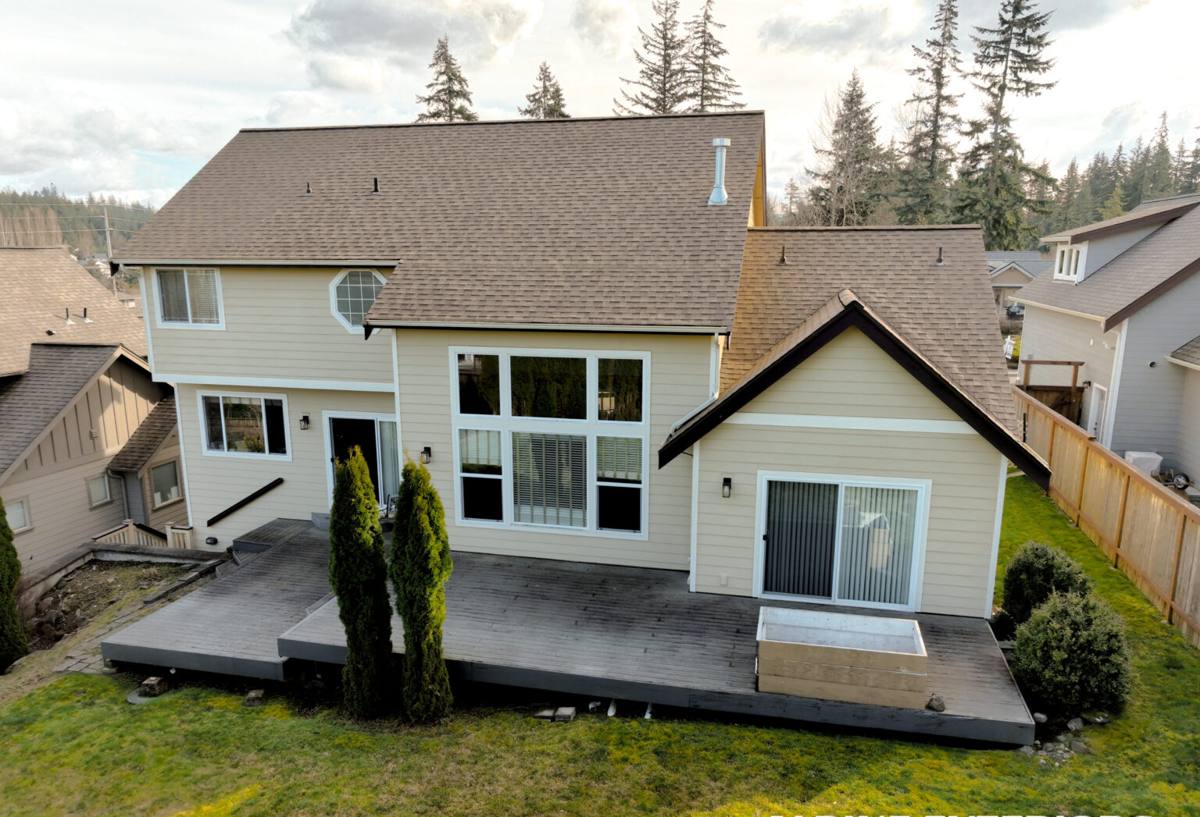
What the Local Climate Actually Does to a Window
Salt Air and Metal Components
Homes near Bellingham Bay get airborne salt in a way that inland Whatcom County properties simply don't. Salt accelerates corrosion on window hardware — hinges, locks, balance systems, and especially lower-grade aluminum cladding or trim. It also degrades some sealant formulations faster than their rated lifespan would suggest. We factor this into hardware and finish selection rather than assuming a standard spec will hold up the same way it would ten miles inland.
Driving Rain and Wind-Loaded Water
Edgemoor's exposure means rain frequently arrives sideways, not straight down. That matters enormously for window installation, because a window that's watertight in a light, vertical rain can still leak under wind-driven, horizontal rain if the flashing and sill pan weren't detailed for that load. This is one of the most common causes of hidden water intrusion we find in coastal Whatcom County homes, and it's almost always an installation issue, not a product defect.
Moss Season and Sustained Moisture
The long wet season here doesn't just mean rain events — it means weeks of sustained ambient moisture, shaded siding that never fully dries, and moss creeping onto trim, sills, and anything with a flat or low-slope surface. Around window openings, that sustained dampness is what turns a small sealant gap into rot. Detailing that manages bulk water is necessary but not sufficient; the assembly also has to let incidental moisture escape rather than trap it against wood framing.
Temperature Swings and Condensation
Whatcom County's marine climate keeps temperature swings milder than inland Washington, but the humidity load is higher. Combined with modern, tighter home construction, that can produce interior condensation on window glass and frames if the units aren't performing to spec or if interior ventilation is poor. It's worth mentioning during any window conversation, because homeowners sometimes mistake condensation for a product failure when it's actually a whole-house humidity issue the new windows are simply revealing.
What a Correct Window Installation Involves
A window install is judged almost entirely on details that are invisible once the trim goes back on. The window unit itself matters, but in our experience, installation quality accounts for the majority of long-term performance and failure difference between two homes with the same window brand.
- Full removal of the old unit and inspection of the rough opening framing for hidden rot or prior water damage before anything new goes in
- A sloped sill pan that directs any water that gets past the window back outside, not into the wall cavity
- Correctly layered flashing (sill, jamb, then head) so each layer sheds water onto the one below it, shingle-style
- Continuous sealant at the right locations — and intentional gaps at others, since sealing every joint solid can trap moisture instead of releasing it
- Proper shimming and fastening so the window operates square and doesn't rack or bind over time
- Insulation of the gap between window frame and rough opening without over-packing, which can bow the frame
- Interior and exterior trim reinstalled or replaced with attention to any signs of the damage that prompted the replacement in the first place
Skipping or rushing any one of these is how a brand-new window ends up with a moisture problem within a few wet seasons — which is a common reason we get called to homes near the water for a second opinion on someone else's recent work.
Our Process for an Edgemoor Window Project
1. On-Site Assessment
We start by looking at the actual condition of the openings, not just the visible window. In this neighborhood, that means paying particular attention to north- and west-facing walls that take the brunt of driving rain and stay shaded longest after storms. We'll tell you honestly if we find framing damage before we quote anything.
2. Product Selection Based on Exposure, Not Just Style
We walk through frame material, glazing package, and hardware finish with an eye toward this specific site's salt and moisture exposure, not a generic recommendation. A window that's a fine fit for a sheltered inland lot isn't automatically the right choice a few blocks from the bay.
3. Removal and Opening Prep
Old units come out carefully to limit disturbance to surrounding siding and trim. Any soft or damaged framing is addressed at this stage — installing a new window into a compromised opening just relocates the problem.
4. Installation with Full Flashing and Drainage Detail
This is where the work either holds up through Whatcom County winters or doesn't. We build the sill pan, flashing sequence, and sealant joints to shed and drain water rather than simply block it, since blocking alone tends to fail eventually in a driving-rain environment.
5. Finish, Test, and Walkthrough
Interior and exterior trim goes back on, operation is checked on every unit, and we walk the job with you so you know what was done and why — particularly around any areas where we found and corrected prior damage.
Replacement vs. Repair: How to Tell Which You Need
| Sign | Likely Points to Repair | Likely Points to Replacement |
|---|---|---|
| Foggy glass between panes | Failed seal, single unit only | Widespread across multiple windows of the same age |
| Drafts felt at the frame | Worn weatherstripping or loose hardware | Frame warping, visible gaps, or soft wood at the sill |
| Water staining below the window | Isolated sealant failure, caught early | Recurring staining after repairs, or soft framing underneath |
| Hard to open or lock | Balance or hardware adjustment | Frame no longer square due to structural movement |
| Visible moss or dark staining on sill/trim | Surface cleaning and resealing | Moss recurring yearly with soft wood beneath |
Cost Factors Worth Understanding
We won't quote a price without seeing the openings, but here's what actually moves a window project's cost up or down in this area:
| Factor | Why It Matters Here |
|---|---|
| Framing condition at removal | Hidden rot from long-term moisture exposure near the water adds repair scope that can't be quoted until the old window is out |
| Window count and size | Larger or custom-sized units and multi-window projects have different labor and material scaling than single replacements |
| Frame material and hardware grade | Corrosion-resistant hardware and finishes suited to salt exposure typically cost more upfront but reduce maintenance calls |
| Access and site conditions | Bluff-adjacent lots, tight setbacks, or second-story openings can add labor and equipment time |
| Trim and siding repair | Any rot found during removal needs to be corrected before the new window goes in, which adds scope but prevents a repeat failure |
Why Local Experience with Edgemoor Homes Matters
Window installation isn't a one-size-fits-all trade, and the difference between a crew that mostly works inland versus one that regularly works this stretch of Bellingham shows up in the details: how sill pans are built for wind-driven rain, which hardware finishes actually hold up to salt air, and how framing tends to fail near the water so it can be caught early rather than missed. We work Whatcom County broadly, but Edgemoor's particular exposure — the bay, the wind, the moss season — is something we plan for specifically rather than treat as an afterthought.
That local pattern recognition also means we can usually tell you, from the removal stage, whether what we're seeing is typical for a home in this location or a sign of a deeper issue worth addressing while the wall is already open.
Maintenance That Extends the Life of New Windows
- Rinse salt residue off exterior frames and glass periodically, especially after storms with onshore wind
- Clear moss and debris from sills and tracks before it holds moisture against the frame
- Check exterior sealant lines each fall before the wet season sets in, and have any cracked sections addressed early
- Keep gutters and downspouts near window openings clear so water isn't sheeting directly across the wall above a window
- Operate every window through its full range a few times a year so hardware doesn't seize from disuse
None of this is difficult, but it's the kind of upkeep that's easy to forget until a problem shows up — and in a driving-rain, high-moss environment like Edgemoor, small deferred maintenance compounds faster than it would somewhere drier.
Get a Straightforward Look at Your Windows
If you're noticing drafts, fogging, sticking sashes, or just want an honest read on how your current windows are holding up against Edgemoor's weather, we're happy to take a look. The estimate is free, there's no pressure to move forward, and you'll get a straight answer about what your windows actually need. Use the form below to get started.