 Whatcom County
 Storm Damage in Sehome: What Whatcom County Weather Actually Does to a Roof
Sehome sits close enough to the water and the hills to catch the worst of what Whatcom County weather has to offer. Winter storms roll in off the Strait of Georgia with driving rain and gusty wind, salt air works its way inland and accelerates corrosion on metal flashing and fasteners, and the long wet season keeps roofs damp for months at a stretch. Add in the shade from mature trees common in older Bellingham-area neighborhoods, and you get near-ideal conditions for moss and algae growth that most homeowners in drier climates never have to think about.
None of that means a roof is doomed — it means a roof here needs to be inspected and repaired with those specific stresses in mind. A crew that mostly works drier inland climates will look at a storm-damaged roof differently than a crew that repairs Sehome roofs every winter. We're the latter, and this page is about one job specifically: storm damage roof repair done right, for this neighborhood.
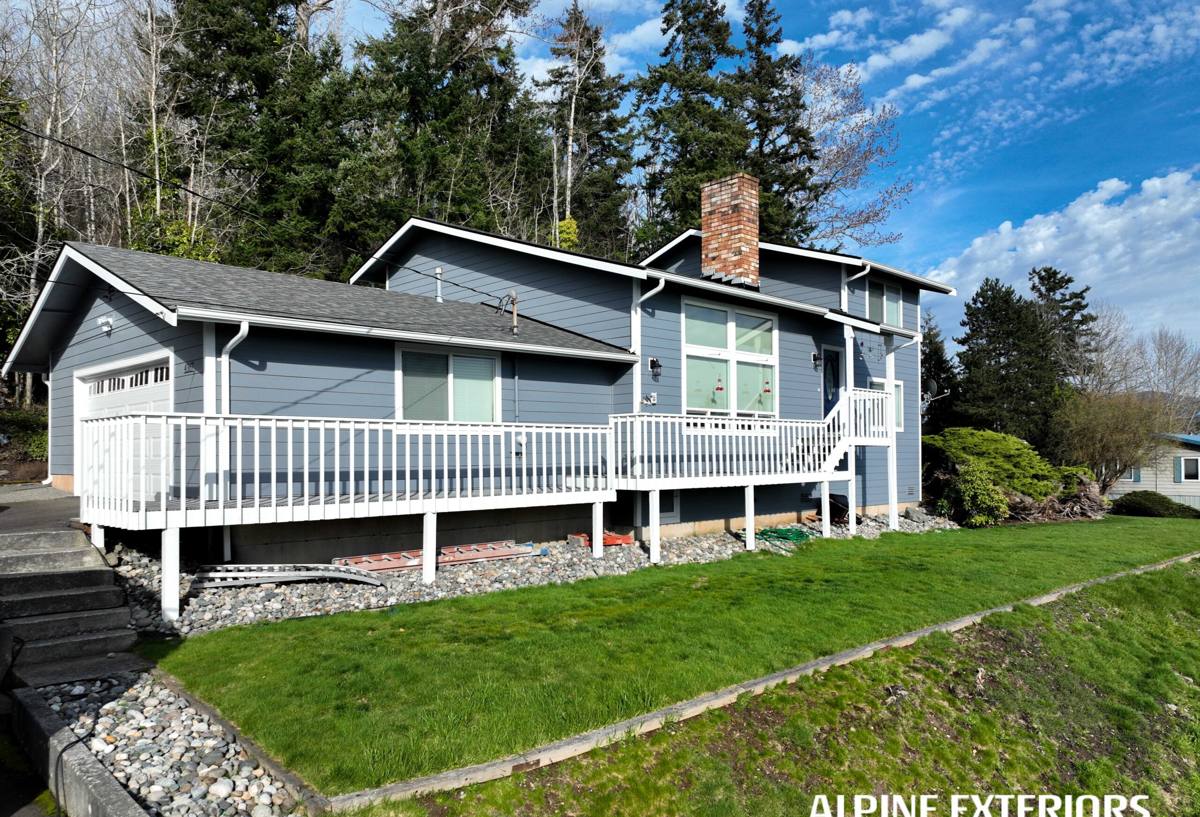
Signs Your Sehome Home Has Storm Damage
Storm damage isn't always obvious from the ground. Wind can lift shingles just enough to break the seal without tearing them off, and a slow leak from that kind of damage can take weeks to show up as a stain on your ceiling. Here's what we tell homeowners to watch for after a windstorm or heavy rain event:
- Shingles that look curled, cracked, or slightly out of alignment compared to the rest of the roof plane
- Granules collecting in gutters or at the base of downspouts — a sign of shingle wear accelerated by wind abrasion
- Bent, missing, or lifted flashing around chimneys, vents, and roof valleys
- Water stains on interior ceilings or upper walls, especially after a storm rather than during ordinary rain
- Visible moss buildup in valleys or along the north-facing slope, which holds moisture against the roof deck longer
- Debris — branches, needles, or gravel from asphalt shingles — accumulated in low spots on the roof
If you see any of these after a storm, the roof needs a look before the next rain event, not after the next leak.
What a Correct Storm Damage Repair Actually Involves
Assessment First, Not Assumptions
A proper storm damage repair starts with getting on the roof, not just looking at it with binoculars from the driveway. We check the full roof plane, not just the area a homeowner points to, because wind damage on one slope often means stress on the whole roof system — fasteners, flashing, underlayment included.
Underlayment and Deck Condition
In a climate as wet as Whatcom County's, the underlayment matters as much as the shingles on top of it. If water has been getting under damaged shingles for any length of time, the underlayment and even the roof deck itself may be compromised. Patching shingles over a soft or water-damaged deck is a short-term fix that fails again — we check the deck before closing anything back up.
Flashing Is Where Most Repeat Leaks Start
Salt-influenced air speeds up corrosion on lower-grade metal flashing, and flashing that's already marginal is often what fails first in a wind event. A correct repair replaces compromised flashing rather than resealing it, because caulk over corroded metal is a temporary patch, not a repair.
Matching, Not Just Patching
Where shingles need replacing, we match style, color, and where possible manufacturing batch as closely as the market allows, so the repair doesn't stand out as a patch job for the next twenty years.
Our Process for Sehome Storm Damage Calls
- Inspection: Full roof walk-through, photos of every area of concern, and a look at attic/interior signs of moisture if accessible.
- Honest scope: We tell you plainly whether this is a targeted repair or whether the damage points to a bigger issue — no upselling, no downplaying.
- Written estimate: Clear breakdown of materials and labor before any work starts, including a firm range, not a vague verbal number.
- Repair: Work performed with attention to matching existing materials and correcting the underlying cause, not just the visible symptom.
- Follow-up: We check our own work after the next significant rain where practical, especially on repairs made mid-storm-season.
Repair vs. Replacement: How We Help You Decide
Not every storm-damaged roof needs full replacement, and not every roof that "looks fine" from the ground is actually sound. Here's the general framework we use when advising Sehome homeowners:
| Factor | Leans Toward Repair | Leans Toward Replacement |
|---|---|---|
| Roof age | Under 12-15 years, remaining useful life | Near or past manufacturer-rated lifespan |
| Extent of damage | Isolated area, one slope or section | Multiple slopes, widespread granule loss |
| Deck condition | Solid, dry, no rot found | Soft spots or rot found during inspection |
| Moss/algae history | Manageable with cleaning and treatment | Long-term moss damage to shingle mat |
| Prior repairs | First or second repair on this roof | Repeated leaks in different spots over time |
We'll walk you through where your roof falls on this before recommending either path. A repair that's genuinely sufficient is the right call more often than not — we don't push replacement on a roof that doesn't need it.
Materials and Methods Suited to This Climate
For storm repairs in Sehome and the surrounding Whatcom County area, we favor materials and details that hold up specifically to salt air, driving rain, and prolonged dampness:
- Corrosion-resistant flashing: We use flashing rated for coastal exposure rather than the minimum-grade material sometimes used in drier climates, given how much faster standard steel flashing corrodes here.
- Proper ventilation checks: Poor attic ventilation traps moisture against the roof deck from underneath, which compounds moss and rot problems from above. We check this as part of any storm repair, not just the visible damage.
- Ice-and-water shield in vulnerable areas: Valleys, eaves, and around penetrations get extra protection against wind-driven rain, which is a bigger factor here than in inland climates.
- Moss-resistant approach: Where moss has contributed to the damage, we address the moisture and shade conditions causing it, not just clean the surface and leave the underlying cause untouched.
Storm Damage and Insurance Claims
Many storm damage repairs in this area are at least partially covered by homeowner's insurance, particularly when tied to a specific wind event. We're happy to document damage with dated photos and a written scope that you can submit to your insurer, and to work directly with an adjuster if that's useful to you. That said, we work for you, not the insurance company — our assessment reflects what the roof actually needs, regardless of what a claim does or doesn't cover.
Why a Crew That Already Works Sehome Matters
Storm damage repair isn't a one-size-fits-all job. A roofer who mostly works in a milder, drier region may not think to check flashing corrosion the way we do, or may not recognize the early signs of moss-related deck damage under a shingle that looks intact from above. Working in Whatcom County and this part of Washington year-round means we see the same weather patterns hit the same kinds of roofs repeatedly, and we know which repairs hold up through the next wet season and which ones come back as callbacks. That's the difference between a repair that's done and a repair that's actually finished.
After the Storm: What to Do While You Wait for an Inspection
If you've just been through a storm and are waiting on an inspection, a few simple steps can limit further damage without putting anyone at risk:
- Do not get on the roof yourself, especially in wet or windy conditions — this is not worth the fall risk
- If you see an active interior leak, place a container to catch water and move any furniture or belongings out of the way
- Take photos from the ground of any visible damage, debris, or missing materials for your records
- Clear debris away from downspouts and gutters at ground level if it's safe to do so
- Note the date and approximate time of the storm — this detail matters for insurance documentation
If you're seeing signs of storm damage on your Sehome home, we're glad to come take a look. A free, no-pressure estimate gets you a clear answer on what happened, what it'll take to fix it right, and what it costs — no obligation either way. The form below is the fastest way to reach us.