 Whatcom County
 Asphalt Shingle Roofing Built for Samish's Weather
Samish sits in that stretch of Whatcom County where saltwater air off Bellingham Bay meets steady marine rainfall and long stretches of shade from mature evergreens. That combination is hard on a roof in ways that don't show up right away. A shingle roof that would coast for twenty years in a dry inland climate can start showing granule loss, moss colonization, and flashing corrosion years earlier here if it wasn't installed with this specific environment in mind. We install asphalt shingle roofs for homes in Samish and the surrounding Whatcom County area, and we build every roof around the three things that actually wear a roof out here: salt-laden moisture, driving wind-driven rain, and moss that never really stops growing.
This page is about that one job — asphalt shingle roofing for Samish homes — not a general overview of every roofing product we offer. If you want the full range of options, our main roofing services page covers that. Here we're getting specific about what a correct install looks like for this exact location.
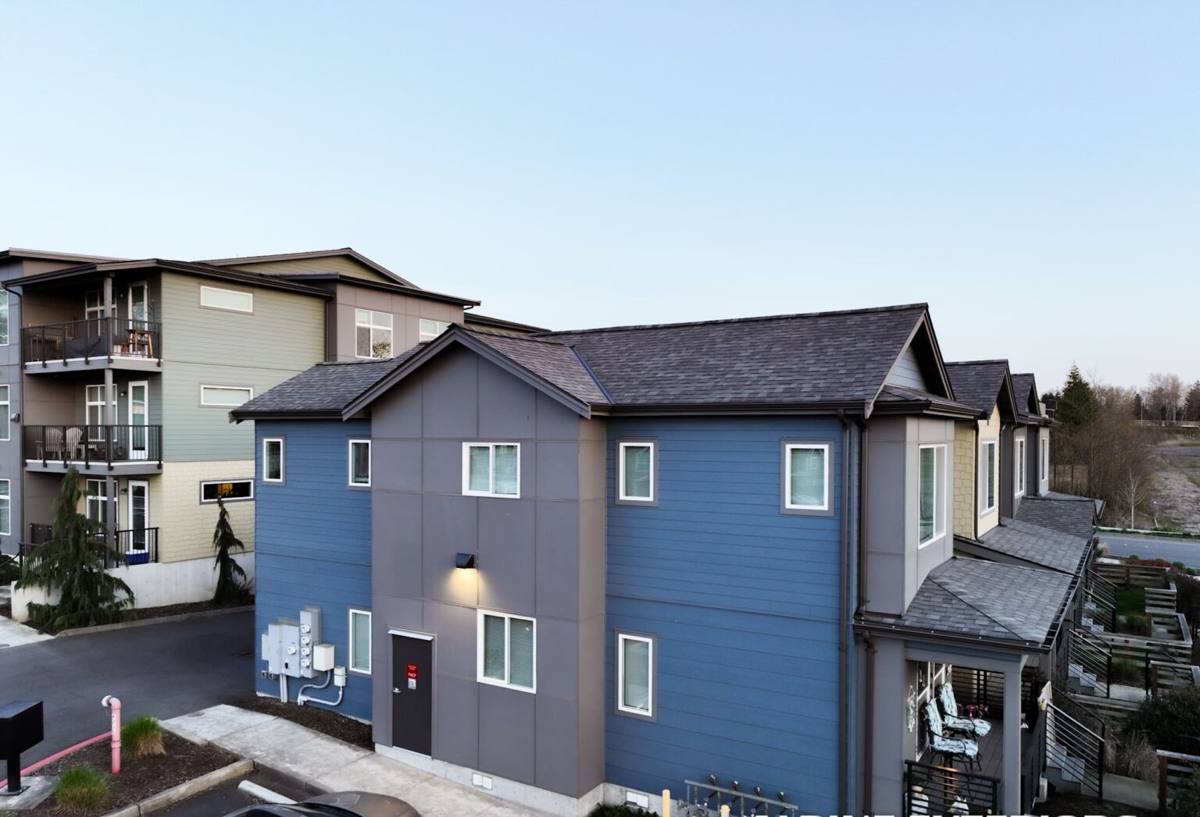
Why Samish's Climate Is Harder on Shingles Than It Looks
Salt Air and Metal Corrosion
Proximity to Bellingham Bay means airborne salt reaches roofs on Samish properties, especially those with any water exposure or elevation facing the coast. Salt accelerates corrosion on exposed fasteners, flashing, and drip edge. Standard galvanized roofing nails and generic aluminum flashing can start pitting years before a comparable roof further inland would show the same wear. This is a material selection issue, not just an installation issue — the wrong metal in the wrong spot becomes the failure point long before the shingles themselves give out.
Driving Rain and Wind-Driven Water
Whatcom County storms don't just drop rain straight down — winter systems push rain sideways, and that changes how water behaves at every transition point on a roof: valleys, sidewalls, chimney flashing, and low-slope sections. A roof that's watertight in a gentle vertical rain can still leak under wind-driven rain if the underlayment, flashing laps, and valley details weren't built for it. This is one of the most common causes of "mystery leaks" we get called out to diagnose on older Samish roofs — the shingles look fine from the ground, but the water management underneath them wasn't built for how rain actually arrives here.
Moss Season Runs Long
Shaded lots, mature tree cover, and the region's cool damp stretches mean moss has a long growing window in Samish — often close to year-round on north-facing slopes and shaded sections. Moss isn't just cosmetic. It holds moisture against the shingle surface, works its way under shingle tabs and edges, and can lift shingles enough to let wind-driven rain in behind them. Left unchecked over several seasons, moss growth measurably shortens the life of an otherwise sound roof.
What a Correctly Built Shingle Roof Looks Like Here
A roof designed for Samish's conditions isn't a different shingle — it's the same quality shingle installed with different attention to detail underneath and around it. The differences that matter:
- Corrosion-resistant fasteners and flashing in any coastal-exposed section, not just wherever the crew happened to have material on the truck
- Full synthetic underlayment as a genuine second layer of water protection, not just a code-minimum layer under the shingles
- Ice-and-water shield membrane at eaves, valleys, and around every penetration — the spots where wind-driven rain actually gets in
- Properly lapped step flashing at every sidewall and chimney, sealed and mechanically fastened rather than relying on caulk alone
- Balanced attic ventilation so moisture from inside the house doesn't condense against the roof deck and encourage rot and moss from below
- Shingle selection with algae-resistant granules where moss and moss-related staining is a known issue on the property
None of this shows up in a photo of a finished roof. It's the difference between a roof that looks the same on install day and looks completely different five years later.
Our Process for a Samish Roofing Project
1. On-Site Inspection and Honest Assessment
We start by actually getting on the roof — not estimating from the driveway. We check deck condition, existing ventilation, flashing condition at every penetration, and how much moss or organic growth is already established. We'll tell you plainly if you need a full replacement, a repair, or if the roof has more life left in it than you think.
2. A Written Scope, Not a Vague Quote
You get a scope that specifies shingle product, underlayment type, flashing material, ventilation plan, and tear-off details — not just a single price line. That's what lets you actually compare our quote to anyone else's on an apples-to-apples basis.
3. Tear-Off and Deck Inspection
We remove the existing roofing down to the deck and inspect for soft spots, rot, or prior water damage that's been hidden under the old shingles — common on older Samish homes where a leak went unnoticed for a season or two. Any deck repair needed gets addressed before anything new goes down, not covered over.
4. Water Management Layer First
Underlayment and ice-and-water membrane go down before a single shingle is nailed, with extra attention at valleys, eaves, and any wall or chimney transition — the areas driving rain actually targets.
5. Shingle Installation and Flashing Detail
Shingles are installed to manufacturer spec for nailing pattern and exposure, with new step flashing, counter-flashing, and drip edge in corrosion-resistant material where the property's exposure calls for it.
6. Final Walkthrough
We walk the finished roof and the ground with you, cover maintenance basics specific to your property (particularly moss management if your lot is shaded), and answer whatever questions come up before we consider the job done.
Comparing Approaches: Cutting Corners vs. Building for This Climate
| Detail | Minimum-Code Approach | Built for Samish Conditions |
|---|---|---|
| Fasteners & flashing | Standard galvanized, uniform everywhere | Corrosion-resistant in coastal-exposed areas |
| Underlayment | Single minimum layer | Full synthetic underlayment plus membrane at vulnerable areas |
| Valleys & penetrations | Basic coverage | Ice-and-water shield membrane, properly lapped |
| Ventilation | Whatever exists already | Assessed and balanced as part of the job |
| Moss resistance | Standard shingle | Algae-resistant granules where growth history warrants it |
| Expected added service life | Baseline for the product | Meaningfully longer before major issues surface |
The cost difference between these two approaches is usually smaller than homeowners expect — most of it is labor attention and material selection, not a completely different roof system.
What Drives Cost on a Samish Roof
| Factor | Why It Matters Here |
|---|---|
| Roof size and pitch | Steeper pitches and larger surface areas take more material and labor time |
| Number of valleys and penetrations | Each one is a water-management detail that has to be done right, not a place to speed through |
| Existing moss or deck damage | Hidden rot found during tear-off adds scope but prevents a redo in a few years |
| Ventilation upgrades needed | Older homes often need attic ventilation brought up to spec, which affects long-term roof health |
| Level of coastal exposure | Properties with more direct salt-air exposure warrant upgraded flashing and fastener material |
We give broad ranges upfront based on roof size and condition, then firm numbers after the on-site inspection — no surprise change orders for things we should have caught before starting.
Maintenance That Actually Extends Roof Life Here
A well-installed roof still needs upkeep in this climate, particularly around moss. A short list of what actually moves the needle:
- Keep gutters clear so water isn't backing up under the shingle edge during heavy rain events
- Trim back overhanging branches to reduce shade and debris buildup that feeds moss growth
- Have moss physically removed rather than just treated when it's established — treatment alone doesn't undo the lift it's already caused
- Schedule a flashing and penetration check every few years, since these are the first points to show wear, well before the shingle field does
- Address small leaks immediately — a slow drip against a Whatcom County deck over a wet winter does more damage than the same drip would in a dry climate
Why Hire a Crew That Already Works Samish
Roofing crews that mainly work drier, inland climates don't always default to corrosion-resistant flashing or extra membrane at valleys — because their usual jobs don't require it. A crew that regularly works Whatcom County's coastal communities treats those details as standard practice, not an upsell. We've seen what happens to roofs here that were built to a generic spec, and we've seen what a roof looks like ten years in when it was built for this exact climate from the start. That difference is the entire reason to hire local experience for this job rather than the lowest bid from a crew unfamiliar with salt air, driving rain, and moss season.
Signs Your Samish Roof Needs Attention Now
- Visible moss on north-facing slopes or anywhere shaded most of the day
- Granules collecting in gutters or at downspout outlets
- Shingle edges that look lifted or curled, especially at valleys and eaves
- Rust staining running down from flashing or fasteners
- Any interior ceiling stain that appears or grows after a windy rainstorm specifically
If you're seeing any of these, it's worth having the roof looked at before the next wet season rather than after a leak shows up inside the house.
If you're weighing a repair against a full replacement, or just want an honest read on how much life your current roof has left, we're happy to take a look. Request a free, no-pressure estimate using the form below and we'll get back to you with a straight answer.