 Whatcom County
 Building a Deck That Holds Up in Columbia's Climate
Columbia sits close enough to the water and the marine weather patterns of Whatcom County that decks here take a different kind of beating than decks built inland. Salt-laden air corrodes fasteners and hardware faster than most homeowners expect. Driving rain off Bellingham Bay finds every gap in flashing and framing. And the long, damp moss season that stretches from fall through spring turns any deck surface with poor drainage or airflow into a slick, green problem within a couple of years. Composite decking, installed correctly for this specific environment, handles all three of those pressures far better than wood — but "installed correctly for this environment" is doing a lot of work in that sentence, and it's the part that separates a deck that looks good for fifteen years from one that needs board replacement in five.
This page covers what a composite deck actually needs to hold up in Columbia specifically, what a correct installation involves, and how we approach the job from first look to final walkthrough.
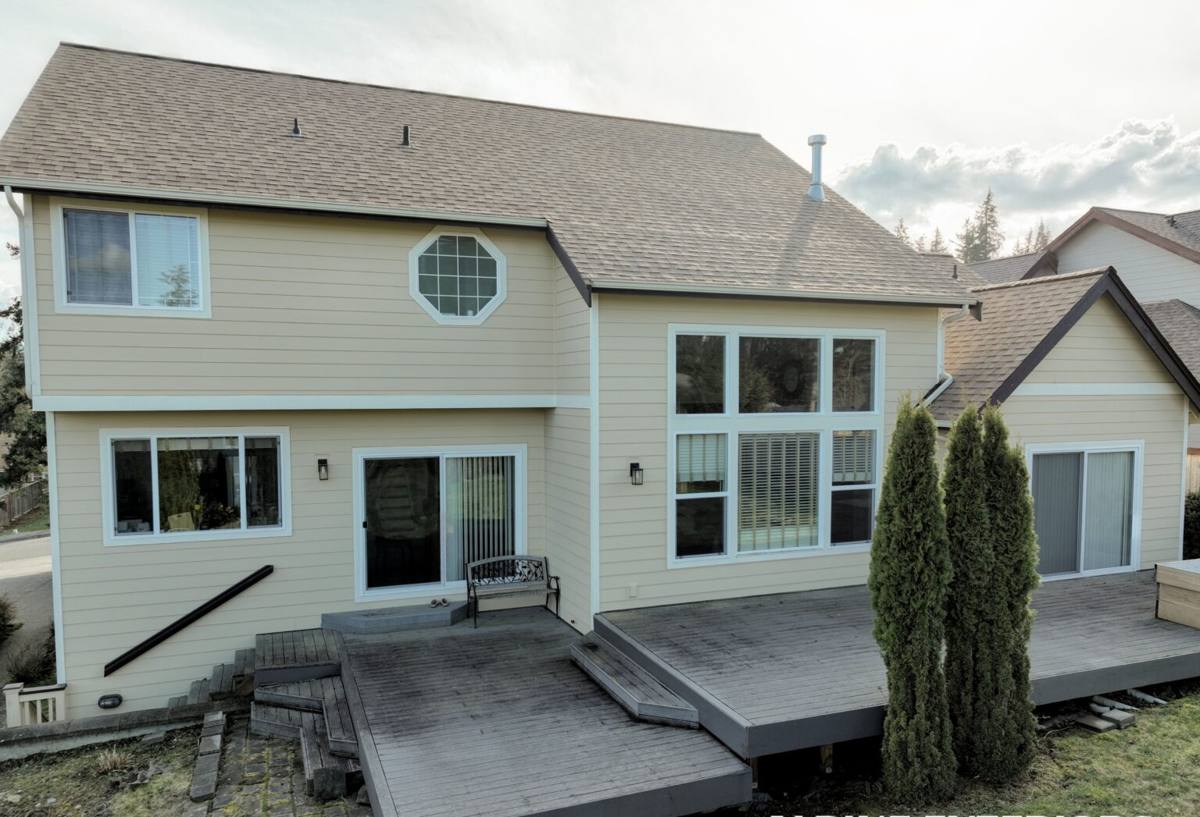
Why Composite Makes Sense for This Neighborhood
Wood decking isn't a bad product — it's a maintenance-intensive one, and Whatcom County's wet season doesn't give homeowners much of a window to keep up with sealing and staining. Composite decking is manufactured from a blend of wood fiber and recycled plastic (ratios and formulations vary by brand), which gives it a few practical advantages in a climate like ours:
- It doesn't absorb water the way solid wood does, so it's far less prone to cupping, splintering, or rot from months of standing moisture.
- It doesn't need annual sealing or staining, which matters when the dry-weather window to do that work properly is short.
- Modern capped composite boards resist the moss and algae growth that thrives in shaded, damp corners of a yard.
- Color and grain are baked into the board, so fading and graying happen more slowly and evenly than with wood.
None of that means composite is maintenance-free — it still needs to be cleaned and it still needs to be installed with drainage and airflow in mind. But it removes the single biggest failure point of a wet-climate deck: wood that stays wet too long.
What Salt Air and Driving Rain Actually Do to a Deck
Salt Air and Hardware
Proximity to salt water accelerates corrosion on anything metal — screws, joist hangers, post bases, railing brackets. A deck can have flawless composite boards on top and still fail early if the fasteners and structural hardware underneath weren't rated for a coastal environment. This is one of the most common shortcuts we see on decks that were built cheap: standard hardware instead of stainless or coated hardware rated for corrosion resistance.
Driving Rain and Flashing
Wind-driven rain off the water doesn't fall straight down — it gets pushed sideways into ledger boards, house connections, and any point where the deck meets the structure. If flashing at the ledger board isn't done right, water tracks behind the siding and into the rim joist, which can rot framing that's hidden from view for years before it shows up as a soft spot or a sagging deck edge.
Moss Season and Board Spacing
Whatcom County's moss season isn't a minor cosmetic issue — moss and algae hold moisture against the board surface, and on shaded or north-facing decks it can make a surface genuinely slick and unsafe underfoot. Proper board spacing, ventilation underneath the deck, and keeping surrounding vegetation trimmed back all reduce how much moss gets a foothold in the first place.
What a Correct Composite Deck Build Involves
A composite deck is only as good as the structure underneath it. Here's what we treat as non-negotiable on every build in this area:
Framing and Substructure
Pressure-treated framing lumber, joist spacing appropriate to the composite brand's span rating (composite boards generally need tighter joist spacing than wood — 12" on-center is common, sometimes closer for angled or picture-frame layouts), and joist tape or a comparable moisture barrier on top of the joists to keep water from sitting where the board meets the frame.
Fasteners and Hardware
Stainless steel or high-corrosion-resistant coated screws and structural hardware throughout — not just at the visible parts of the deck. Given the salt air exposure in this area, this is one place we don't cut cost.
Ledger Attachment and Flashing
Where the deck attaches to the house, proper ledger flashing (and often a waterproof membrane behind it) is what keeps driving rain from working its way into the wall assembly. This is the single most common source of hidden rot on older decks we're asked to repair or replace.
Drainage and Airflow
Correct board gapping, a slight slope away from the house for water runoff, and enough clearance underneath the deck for air to move all reduce standing moisture and slow moss growth.
Railings, Stairs, and Fasteners
Railing posts need to be through-bolted into framing, not just screwed to a rim joist. Stair stringers need proper support and — in our wet climate — attention to how water sheds off tread surfaces.
Composite Board Types: What the Differences Mean in Practice
| Board Type | What It Is | How It Performs Here |
|---|---|---|
| Uncapped composite | Wood fiber and plastic blended throughout, no protective outer layer | More affordable, but more exposed to moisture absorption and staining over time — generally not our first recommendation for a shaded, damp Whatcom County lot |
| Capped composite | Uncapped core wrapped in a plastic polymer shell | Best all-around choice for this climate — resists moisture, staining, and moss buildup much better; higher upfront cost, longer service life |
| PVC (fully synthetic) | No wood fiber at all, 100% polymer | Excellent moisture resistance and very low maintenance; tends to look less like natural wood and costs more, but performs well in wet, shaded areas |
We install capped composite as our standard recommendation for most Columbia projects because it holds up best against the combination of rain and moss exposure without pushing the budget as high as full PVC. That said, the right choice depends on how shaded the site is, how the deck will be used, and what look the homeowner wants — we'll walk through the real trade-offs on-site rather than pushing one product line.
Our Process, Start to Finish
- On-site assessment: We look at sun and shade exposure, existing structure (if this is a replacement), drainage patterns around the house, and how exposed the site is to wind-driven rain.
- Design and material selection: Board brand, color, railing style, and layout — with honest guidance on what performs best given the site conditions, not just what's cheapest or trendiest.
- Permitting: Whatcom County and local jurisdictions require permits for most deck construction and deck replacement above a certain height — we handle that paperwork as part of the job.
- Demolition (if replacing): Old decking and, if needed, old framing removed and hauled off.
- Framing and structural work: Ledger flashing, joist layout, hardware, and any post footing work done to code.
- Decking installation: Boards installed per manufacturer spacing and fastening specs, with attention to drainage and airflow underneath.
- Railings and finish work: Railing systems, stair treads, fascia, and trim.
- Final walkthrough: We go over care and cleaning with the homeowner before we call the job done.
Living With a Composite Deck in a Wet Climate
Composite is low-maintenance, not no-maintenance. A few habits keep a deck performing well through the wet season:
- Sweep off leaves and debris regularly in fall — trapped organic matter is what feeds moss and algae growth.
- Rinse the deck periodically with a hose or low-pressure wash; avoid high-pressure washing directly on board surfaces, which can damage the cap layer on some products.
- Keep gutters and downspouts near the deck clear so rain isn't dumping directly onto or under the deck surface.
- Trim back overhanging branches or vegetation that keeps sections of the deck shaded and damp longer than the rest.
- Check railing hardware and fastener points once a year for any early signs of corrosion, especially if the deck faces prevailing wind and rain.
Why a Local Crew Matters for This Job
Deck-building fundamentals are the same everywhere, but the details that make a deck last in Columbia are shaped by conditions specific to this part of Whatcom County — how much wind-driven rain a given site actually sees, how shaded a lot is and how long moss stays a problem, and which hardware and flashing choices actually hold up against salt air over years, not just on paper. A crew that works this area regularly has already seen which shortcuts fail here and which details are worth the extra cost. That's not something a generic national installer or a crew unfamiliar with this specific coastal, wet-climate environment reliably gets right on the first job.
We also know the local permitting process and inspection expectations, which keeps a project moving instead of stalling on paperwork.
Get a Straightforward Estimate
If you're planning a new composite deck or replacing an aging wood deck in Columbia, we're happy to come take a look, walk the site with you, and give you an honest read on what your deck needs given its exposure and layout. There's no pressure and no obligation — just a straight answer on materials, scope, and cost. Use the form below to request your free estimate.