 Whatcom County
 Why Everson Roofs Take a Beating
Everson sits inland from Bellingham Bay, but that doesn't mean the roof over your head is spared from marine influence. Moist air moves up the Nooksack valley and settles against roofs, siding, and fascia boards most mornings for a good chunk of the year. Add in wind-driven rain off Pacific storm systems and a shade-heavy, slow-to-dry tree canopy on a lot of Everson properties, and you get three separate stressors working on the same roof at once: corrosion-friendly moisture, water intrusion at every seam and penetration, and a moss season that can run from October clear through April.
Asphalt shingle roofs feel all three of these the hardest. Granules wash off faster in driving rain, moss roots into the mat and lifts tabs, and the freeze-thaw cycles we get a few times a winter open up small cracks that turn into leaks. Metal roofing doesn't eliminate the climate — nothing does — but it changes which problems you actually have to manage, and for most Whatcom County homes that trade is a good one.
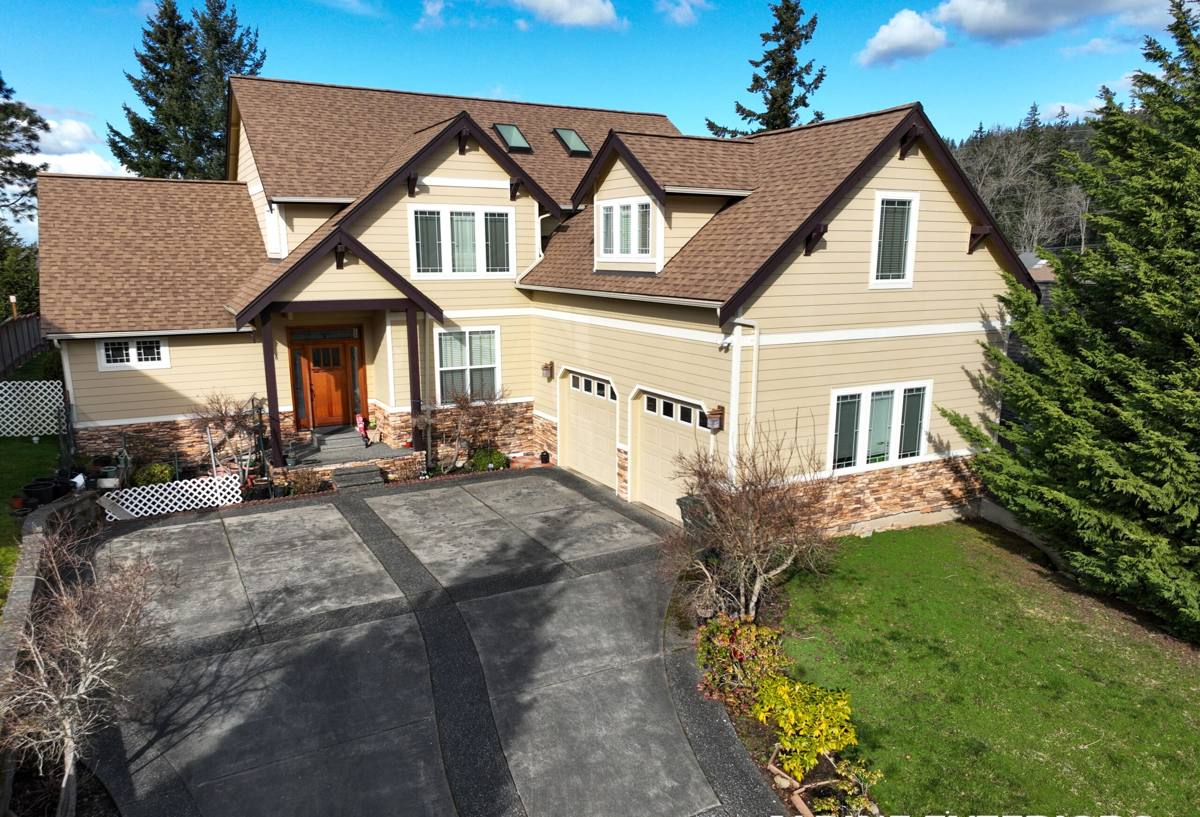
What This Climate Actually Demands From a Roof
Moisture that doesn't leave
Whatcom County humidity doesn't burn off with a quick afternoon of sun the way it might further inland or south. Roofs here stay damp longer after every rain event, which is exactly the condition moss, moss spores, and algae need to establish. A roofing material's surface texture and drainage behavior matter as much as its waterproofing rating.
Wind-driven rain, not just rain
Storms coming off the Pacific don't just drop water straight down — they push it sideways, up under laps, and into any gap in flashing or fastener seals. Roof details that work fine in a calm rain (a lazy shingle overlap, a minimal flashing return) get tested hard here.
A long moss season
Shaded roof planes, north-facing slopes, and anything near mature trees carry moss most of the year in this part of the county. Moss holds water against the roof surface, works into any seam it can find, and accelerates whatever decay process is already underway underneath it.
Why Metal Roofing Fits Everson Specifically
Metal roofing addresses all three of the issues above directly, not incidentally:
- A smooth, hard, non-porous surface gives moss and algae far less to grip onto compared to a shingle mat
- Steep-slope panel profiles shed wind-driven rain faster and don't have exposed granule surfaces to erode
- Proper metal roofing systems use fewer through-fasteners and continuous panel runs, which means fewer potential leak points over the life of the roof
- Coated steel and aluminum finishes are built to handle sustained damp exposure without the freeze-thaw cracking that shortens shingle life here
None of that means metal roofing is maintenance-free — no roof is — but it shifts the maintenance burden from "constant small repairs" to "periodic inspection and occasional debris clearing," which is a better position to be in through a wet Whatcom County winter.
Metal Roofing Options: An Honest Comparison
Not every metal roof is the same product, and the differences matter more in a climate like this than in a dry one. Here's how the common options stack up for a residential re-roof in this area:
| System | Fastening | Best For | Trade-Offs |
|---|---|---|---|
| Standing seam (concealed fastener) | Hidden clips, no exposed screws through the panel face | Long-term leak resistance, low-slope sections, homes wanting the fewest future maintenance items | Higher upfront material and labor cost |
| Exposed-fastener steel panel | Screws driven through the panel face with gasketed washers | Budget-conscious re-roofs, outbuildings, simpler roof shapes | Washers age and need replacement over time; more potential leak points |
| Steel or aluminum shingle/shake profile | Interlocking panels, concealed fastening | Homeowners wanting a traditional shingle or shake look with metal durability | More detailed installation, higher labor cost than standing seam on simple roofs |
For most Everson homes, we lean toward standing seam or a quality interlocking panel system precisely because concealed fastening removes the washer-replacement maintenance item that exposed-fastener panels eventually require in a climate this wet.
What a Correct Metal Roof Installation Actually Involves
The panels themselves get most of the attention, but the roof's actual performance in this climate comes down to what's underneath and around them.
Underlayment
A synthetic or high-temp ice-and-water-shield underlayment goes down first, with extra coverage at eaves, valleys, and any low-slope transitions — the areas where wind-driven rain is most likely to work its way backward under a panel lap.
Flashing and penetrations
Every pipe boot, chimney, skylight curb, and wall intersection is a place water can find a way in. Correct flashing detail — proper laps, sealant used as backup rather than primary defense, and step flashing tied into any adjacent wall cladding — is what separates a roof that holds up through decades of coastal-influenced storms from one that develops slow leaks nobody notices until there's ceiling damage.
Fastening and expansion
Metal panels expand and contract with temperature swings. Clips and fastener spacing need to account for that movement, or panels can oil-can (visibly ripple) or work fasteners loose over time.
Ventilation
A metal roof over a poorly ventilated attic can trap moisture underneath the deck, which defeats a lot of the corrosion resistance you're paying for. Ridge and soffit ventilation gets checked and corrected as part of the job, not treated as a separate project.
Our Process on an Everson Re-Roof
- On-site assessment — we walk the roof, check the decking condition, look at existing moss and moisture patterns, and identify any trouble spots (valleys, low-slope sections, tree-shaded planes) before quoting anything
- System selection — we talk through standing seam vs. panel profile options based on your roof's shape, slope, and budget, with honest trade-offs rather than an upsell pitch
- Tear-off or overlay decision — most re-roofs over an aging shingle roof call for a full tear-off so we can inspect and repair the decking; we'll tell you plainly if your roof is a candidate for anything less
- Underlayment and flashing install — done to the detail level described above, especially at valleys and penetrations
- Panel installation — proper fastener spacing, clip type, and expansion allowance for the specific system chosen
- Site cleanup and walkthrough — magnetic sweep for stray fasteners, debris removal, and a final walk-through so you know what maintenance (if any) the new roof needs going forward
Cost Factors on a Metal Re-Roof
Every roof is different, but these are the variables that actually move the price on a metal roofing project in this area — not marketing add-ons, just the real cost drivers:
| Factor | Why It Matters |
|---|---|
| Roof complexity (valleys, dormers, penetrations) | More flashing detail work and cut panels means more labor hours |
| Tear-off vs. overlay | Removing old roofing and repairing decking adds cost but is often the right call on an aging roof |
| Panel system chosen | Standing seam runs higher than exposed-fastener panel on material and labor |
| Roof access and pitch | Steep or hard-to-access roofs require more safety setup and slow the work down |
| Decking condition | Rot or soft decking found during tear-off needs repair before panels go on — this is the most common source of a mid-project cost change |
We'd rather flag a likely decking issue during the initial assessment than surprise you with it mid-project, which is part of why we walk the roof in person before quoting.
Maintenance That Actually Matters
A correctly installed metal roof needs far less attention than a shingle roof, but "far less" isn't "none." In this climate, the checklist that actually protects your investment is short and manageable:
- Clear gutters and valleys of needles and leaf debris each fall, before the wet season builds up
- Do a visual check after any major windstorm for lifted flashing or debris impact
- Trim back tree limbs that overhang the roof to reduce shade, debris, and moss pressure on that section
- Have flashing and sealant points inspected every few years, especially around chimneys and skylights
- Address any moss growth early with a gentle, roof-safe treatment rather than pressure washing, which can damage panel finishes
Why a Crew That Already Works Everson Matters
Roofing crews that mainly work drier parts of the state sometimes underestimate how much of a Whatcom County roof's real-world performance comes down to flashing detail and moisture management rather than the panel itself. A crew that regularly works Everson and the surrounding county knows which roof sections tend to hold moss the longest, how local wind patterns hit certain roof orientations, and what decking condition to expect opening up a roof of a given age in this climate. That local pattern recognition shows up in fewer surprises during the job and a roof that's actually built for the conditions it will sit in, not a generic install.
It also matters for permitting and code compliance specific to Whatcom County, and for being available if a question comes up after the job is done rather than being a crew that was only in the area for one project.
Is Metal Roofing Right for Your Everson Home?
Metal roofing isn't the correct answer for every roof or every budget, and we'll say so plainly if that's the case for yours. It tends to make the most sense when you're planning to stay in the home long-term, when your roof has significant moss or moisture history under the current shingles, or when you're tired of the recurring maintenance cycle a shingle roof demands in this climate. If a full metal re-roof isn't the right fit right now, we'll say that too, rather than push a system your roof or budget doesn't call for.
If you're weighing a re-roof for your Everson home, we're happy to walk the roof, look at what your specific structure and shade situation are dealing with, and give you a straightforward, no-pressure estimate — use the form below to get started.