 Whatcom County
 Metal Roofing Built for Nooksack's Weather, Not Just Its Curb Appeal
Nooksack sits in the part of Whatcom County where Pacific storm systems, river-valley humidity, and long stretches of tree cover all meet on the same roof. Homes here deal with driving, wind-pushed rain more often than a straight-down shower, salt-tinged marine air that drifts inland off the Sound and settles into the county's low spots, and a moss season that can run eight or nine months out of the year under the fir and cedar canopy common to this area. A metal roof handles all three of those conditions better than most other materials — but only when it's specified and installed correctly for this climate. A metal roof installed like it's going on a house in Arizona will underperform here just as fast as an asphalt roof would.
This page covers what we actually look at when we're pricing and installing metal roofing on a Nooksack home: the panel and finish choices that make sense for this environment, what correct installation involves underneath the metal itself, and why local experience matters more with this product than with almost any other roofing material.
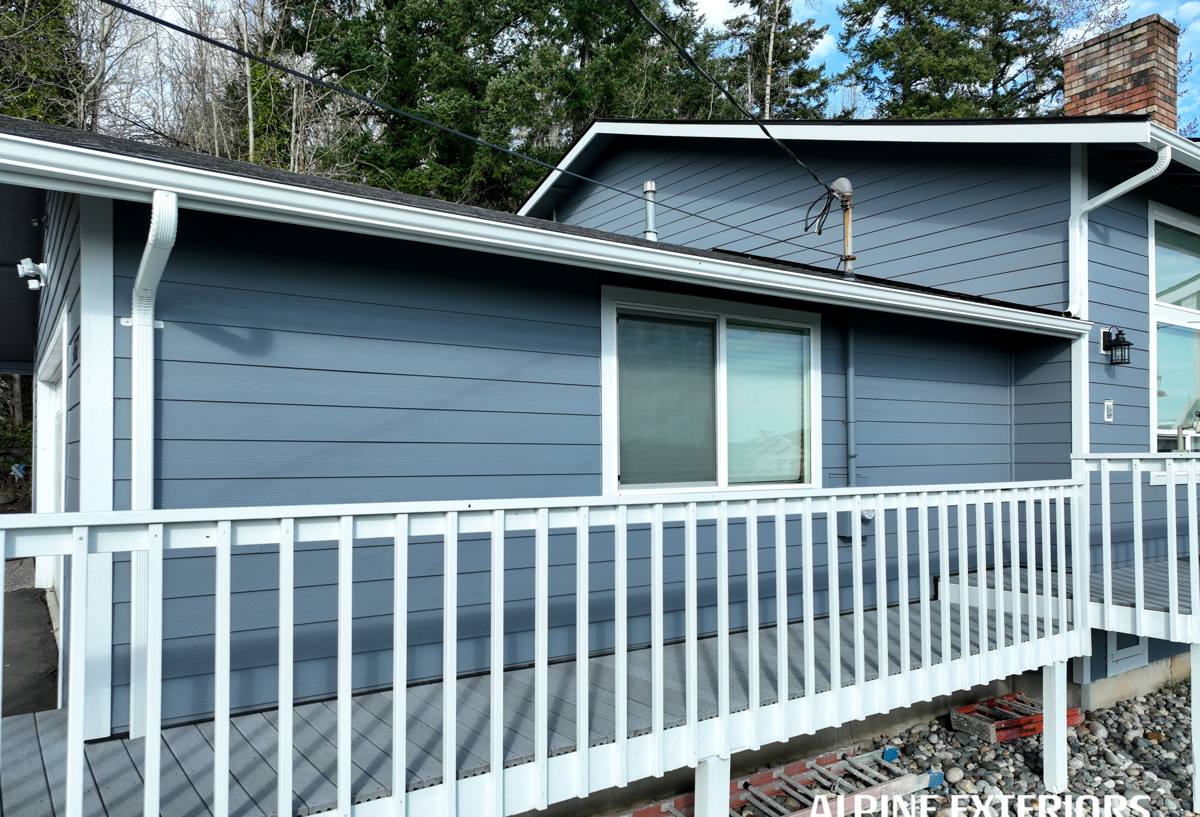
What Whatcom County's Climate Actually Does to a Roof
Driving Rain and Wind-Pushed Moisture
Straight-down rain is easy for any roof to shed. Wind-driven rain — the kind that comes in at an angle off a storm front — is what finds the weak points. It pushes water up under laps, through poorly sealed penetrations, and into any gap where two roofing components meet instead of overlap correctly. On a metal roof, this means seam design and fastener placement matter as much as the panel material itself. A standing seam roof with properly engineered ribs sheds wind-driven rain far better than an exposed-fastener panel installed with the wrong lap direction or spacing.
A Long Moss Season
Shaded, north-facing, and tree-lined roof sections in this part of Whatcom County stay damp long after the rest of the roof has dried out. That moisture-plus-shade combination is exactly what moss needs to establish. Moss doesn't just sit on top of a metal roof — over time it holds moisture against seams and fasteners, and on painted or coated panels it can dull or stain the finish faster than plain weather exposure would. Roof design that reduces standing debris and encourages fast drainage cuts down on moss dramatically compared to a roof that traps needles and leaf litter in valleys and low-slope sections.
Salt-Influenced Air
Even away from the immediate waterfront, air moving through Whatcom County carries a measurable salt content, and that has a real effect on unprotected or poorly coated metal over the years. It's a slow process, not a dramatic one, but it's why fastener material, panel coating, and flashing metal all need to be chosen to resist corrosion rather than just chosen for cost. A roof that's inconsistent about this — good panels with mismatched fasteners, for example — will show rust streaks at exactly those weak points well before the panels themselves show any wear.
Panel and Finish Options for Nooksack Homes
Not every metal roofing product performs the same way once you factor in rain exposure, moss risk, and coastal-influenced air. Here's how the common options compare for a home in this area:
| Panel Type | Best For | Climate Trade-Offs | Typical Cost Range |
|---|---|---|---|
| Standing seam (concealed fastener) | Most Nooksack homes, especially steeper or exposed roof sections | Best wind-driven rain resistance; higher material and labor cost; fewest long-term fastener issues | Highest of the three |
| Exposed-fastener panel (screw-down) | Outbuildings, shops, budget-conscious re-roofs | Lower upfront cost; fasteners need periodic inspection and eventual re-torque or replacement; more failure points in driving rain | Mid-range |
| Stone-coated steel | Homes wanting a shingle or shake look with metal's durability | Good moss and rain performance; coating and interlocking pattern need careful, experienced installation | Mid to upper range |
We'll talk through which of these fits your roof's slope, exposure, and budget honestly — including telling you when a lower-cost option is genuinely fine for your situation and when it isn't.
What a Correct Metal Roof Installation Actually Involves
The panels get most of the attention, but on a roof that has to deal with wind-driven rain and long wet seasons, everything underneath the metal is doing just as much work.
Underlayment
A high-temperature synthetic or self-adhered underlayment matters more under metal than under most other roofing materials, both for moisture backup protection and because metal roofs run hotter in direct sun and colder in a hard freeze than shingles do. In moss-prone, shaded sections we pay particular attention to underlayment continuity, since that's the backup layer if moss ever does hold moisture against a seam longer than it should.
Fastening and Flashing
Fastener material has to match the panel material to avoid galvanic corrosion — mixing metals is a common shortcut that causes rust stains and eventual fastener failure well before the roof's expected lifespan is up. Flashing at valleys, chimneys, and wall transitions is where the majority of real-world metal roof leaks originate, not the field panels themselves, so we treat flashing detail work as the most important part of the install, not an afterthought.
Ventilation
Metal roofs need a ventilated assembly to manage condensation on the underside of the panels, particularly during Whatcom County's damp, cool shoulder seasons. Skipping proper intake and exhaust ventilation is one of the more common ways a metal roof develops hidden moisture problems in the attic even though the roof surface looks fine.
New Roof vs. Metal Over an Existing Roof
Metal panels can sometimes go over an existing layer of asphalt shingles if the deck and structure support it and local code allows it, and doing so can reduce tear-off cost. But it's not automatically the right call. If the existing roof already has moisture damage, sagging, or more than one layer underneath it, installing over it just buries a problem instead of solving it — especially in a climate where trapped moisture has plenty of time to do damage before anyone notices. We inspect the existing roof and deck condition before recommending either approach, and we'll tell you plainly if a tear-off is the more honest option even though it costs more upfront.
Our Installation Process
- On-site assessment — we look at slope, exposure, tree cover, existing roof condition, and any known trouble spots before recommending a panel type.
- Straightforward proposal — panel and finish options with honest trade-offs, a clear cost range, and a realistic timeline.
- Deck and structure check — confirming the roof deck is sound before any panel goes down, and repairing it first if it isn't.
- Underlayment and flashing install — the layer that determines how the roof performs in wind-driven rain, done before a single panel is set.
- Panel installation — matched fasteners, correct lap and seam direction for this area's prevailing weather, and attention to every penetration.
- Final walkthrough — we go over the finished roof with you and explain what maintenance, if any, it actually needs.
Keeping a Metal Roof Performing Through Moss Season
Metal roofing needs far less maintenance than shingles, but "none" isn't accurate for a heavily shaded Nooksack property. A short annual checklist covers most of what matters:
- Clear needles, leaves, and debris from valleys and low-slope transitions before wet season, since trapped debris is what actually starts moss growth, not the metal itself.
- Check gutters and downspouts for blockages that can back water up under the roof's lower edge.
- Look at exposed-fastener panels (if that's what you have) for any early rust streaking at screw heads.
- Trim back overhanging branches where practical to reduce shade and debris load on north-facing sections.
- Have flashing at chimneys, vents, and wall transitions visually checked every couple of years, since that's where a slow leak is most likely to start.
Why It Matters That We Already Work in Nooksack
Metal roofing punishes generic installation more than most materials do — a roof that's technically installed to a national spec but not adapted for wind-driven rain, moss exposure, and locally salt-influenced air will show its weak points here faster than it would somewhere drier and calmer. Crews who work Whatcom County roofs regularly know which valleys and low-slope sections in this area tend to hold moss, which fastener and flashing metals hold up over years of this specific weather pattern, and how to detail a roof so those problem spots don't develop in the first place. That's the difference between a metal roof that looks right on installation day and one that still looks right ten and twenty years in.
If you're weighing a new metal roof, a replacement, or just want a straight answer about whether metal is the right call for your Nooksack home, we're glad to take a look and put together a free, no-pressure estimate — use the form below to get started.