 Whatcom County
 Asphalt Shingle Roofs in Everson Work Harder Than the Brochure Suggests
Everson sits along the Nooksack River in a part of Whatcom County that gets a steady diet of damp, mild weather for most of the year. That doesn't sound dramatic compared to a coastal storm town, but it's exactly the kind of weather that wears out an asphalt shingle roof from the inside out. Long stretches of overcast, low-intensity rain keep roof surfaces wet for days at a time. Heavy tree cover along the river corridor and on many rural lots shades roof planes just enough that they never fully dry between rain events. Add a marine-influenced climate that carries salt-laden air inland on a west wind, and you've got a combination that accelerates granule loss, fastener corrosion, and moss colonization faster than a shingle's warranty paperwork assumes.
None of that means asphalt shingles are a bad choice for this area — they're still the most practical, cost-effective option for the vast majority of homes here. It means the installation details matter more in Whatcom County than they would in a drier climate, and a roof that was installed by the book for a hot, dry region isn't automatically going to hold up the same way in Everson.
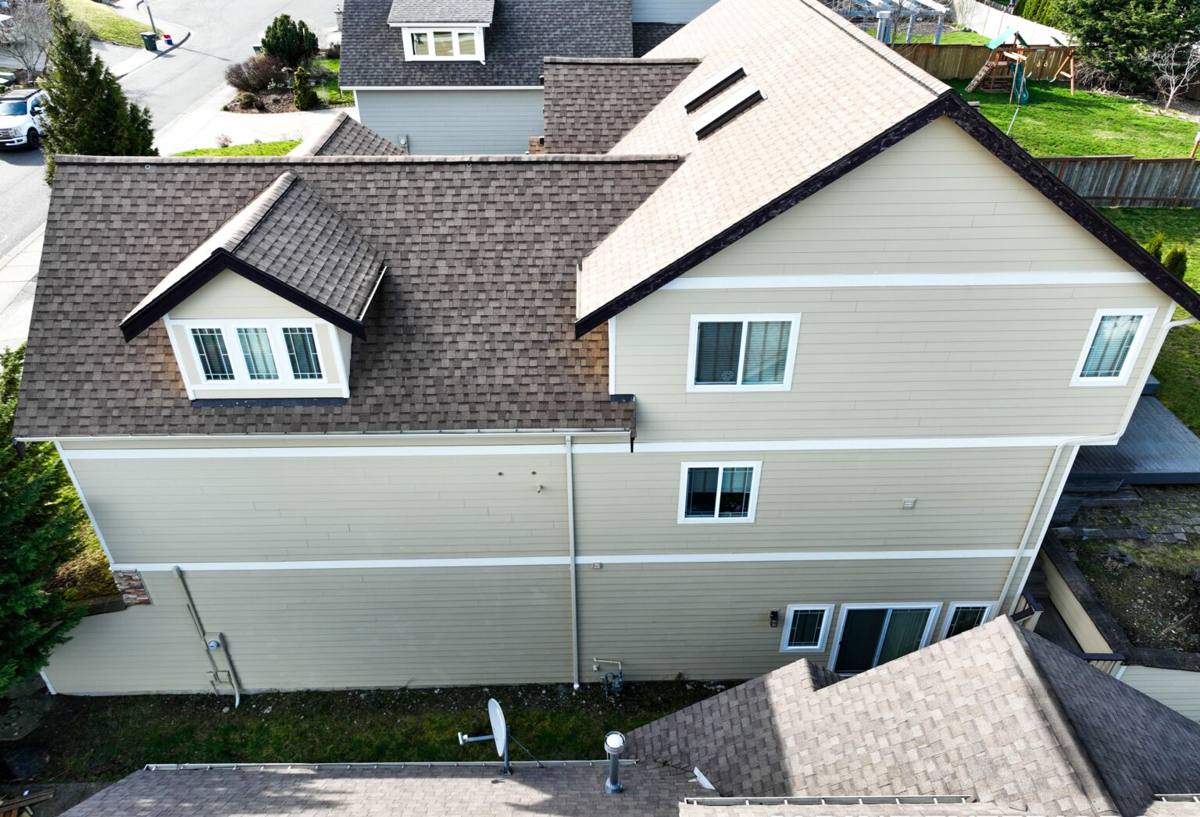
What a Correct Job Looks Like in This Climate
A shingle roof that's going to hold up under Everson's rain and moss pressure needs a few things done right, every time, not just when it's convenient:
- Ice-and-water shield at vulnerable points — eaves, valleys, and around any penetration, not just where code minimums require it.
- Synthetic underlayment, not felt — felt absorbs moisture and can wrinkle under prolonged damp conditions; synthetic underlayment sheds water and holds up better through a wet install season.
- Proper nailing pattern and depth — underdriven or overdriven nails are one of the most common causes of early shingle failure, and it's not something you can see once the roof is finished.
- Balanced intake and exhaust ventilation — a roof deck that can't breathe stays damp longer after every rain, which is exactly what moss and algae need to take hold.
- Flashing that's actually integrated with the shingle courses — not just caulked on top, which fails within a few seasons in a climate this wet.
Skipping any one of these doesn't usually show up as a leak in year one. It shows up as a leak in year eight, when the underlayment has been quietly failing under a shingle that still looks fine from the ground.
Why Moss Is More Than a Cosmetic Problem Here
Moss on a roof in Everson isn't just an eyesore — it's a moisture trap. Moss holds water against the shingle surface long after the rest of the roof has dried, which softens the asphalt mat, lifts shingle edges, and accelerates granule loss underneath the moss itself. On shaded roof planes, especially north-facing slopes or sections under overhanging trees, moss can establish within a couple of seasons if the roof isn't cleaned or treated periodically. A roof with good ventilation and proper drainage detailing resists moss longer, but nothing makes a shaded, damp roof plane immune to it. It has to be managed, not just installed and forgotten.
Signs an Everson Roof Needs Attention
Most asphalt shingle failures in this area give warning signs well before there's an active leak inside the house. Worth checking for, or having a contractor check for, at least once a year:
- Granules collecting in gutters or at downspout outlets — a sign the shingle surface is wearing down
- Dark streaking or green-black patches, especially on shaded slopes — early algae or moss growth
- Shingle edges that look curled, cupped, or lifted rather than lying flat
- Soft spots or discoloration on ceilings below valleys or around chimneys/vents
- Visible daylight or gaps at flashing when viewed from an attic
- Moss buildup thick enough to hold a screwdriver upright
Any one of these on its own might not mean an emergency, but they're the kind of thing that's much cheaper to address as a repair than to ignore until it's a full re-roof.
Our Asphalt Shingle Roofing Process
Whether we're doing a full replacement or a targeted repair on an Everson home, the process follows the same logic every time: understand what's actually happening under the shingles before deciding what the roof needs.
1. Roof Assessment
We walk the roof (or the attic, if walking the roof isn't practical) and look at deck condition, ventilation, existing flashing, and the actual cause of any current problem — not just the symptom. A stained ceiling doesn't always mean the roof over that spot is the source; sometimes water is traveling along a rafter from a valley several feet away.
2. Honest Scope and Options
We tell you plainly whether the roof needs a repair, a partial re-roof, or a full replacement, and what the trade-offs are for each. If a repair will genuinely hold for several more years, we say so — we don't upsell a full roof to a homeowner who doesn't need one yet.
3. Tear-Off and Deck Inspection
On a replacement, we remove existing shingles and underlayment down to the deck and inspect for rot or soft sheathing, which is common on older Everson homes where ventilation was undersized by today's standards. Any compromised decking gets replaced before anything new goes down — covering rotten sheathing with new shingles just hides the problem for a year or two.
4. Underlayment and Flashing
Synthetic underlayment goes down across the field, with ice-and-water shield at eaves, valleys, and penetrations. New flashing is installed and integrated with the shingle courses at chimneys, walls, and vents — the details that determine whether the roof stays dry through the wet months here.
5. Shingle Installation
Shingles are installed to manufacturer nailing specifications, with attention to exposure, alignment, and sealing along ridges and hips. We check nail placement and depth as we go rather than relying on a final walk-through to catch mistakes.
6. Ventilation Check and Final Walkthrough
We confirm intake and exhaust ventilation is balanced for the attic space, clean up the site, and walk the finished roof with you so you know what was done and what to expect from it going forward.
Shingle Product Considerations
Not every asphalt shingle product performs the same way in a wet, moss-prone climate. Here's how the common tiers compare for a home in this area:
| Shingle Type | Typical Lifespan | Moss/Algae Resistance | Best Fit |
|---|---|---|---|
| Standard 3-tab | 15-20 years | Low unless treated | Budget-conscious projects, low-slope or shaded roofs that will need earlier attention regardless |
| Architectural (laminate) | 25-30 years | Moderate; better with algae-resistant granules | Most Everson homes — better wind and moisture performance for the added cost |
| Algae-resistant (AR) architectural | 25-30 years | Higher — copper-infused granules slow algae/moss growth | Shaded lots, north-facing slopes, homes near heavy tree cover |
| Premium/designer laminate | 30-50 years | High with AR granules | Homeowners prioritizing appearance and longevity over upfront cost |
We install products from established manufacturers with algae-resistant granule options, because on a shaded, damp lot the few extra dollars per square for AR granules routinely pays for itself in reduced moss treatment and earlier granule loss avoided over the life of the roof.
Ventilation and Moisture: The Part You Can't See
A shingle roof is only as good as the attic underneath it. In Whatcom County's climate, an attic that traps warm, moist air will sweat moisture onto the underside of the roof deck, which rots sheathing from below regardless of how good the shingles above it are. We check for a balanced ratio of intake (soffit) and exhaust (ridge or roof vents) on every project, and we'll flag it as a needed repair if it's undersized — even on a roof that doesn't otherwise need shingle work yet. It's a cheap fix compared to replacing rotted decking a few years later.
Maintenance That Actually Extends Roof Life Here
A little seasonal attention goes further on an asphalt shingle roof in this climate than in most others. A simple annual routine:
- Clear gutters and downspouts before the fall rains, so water isn't backing up under eave shingles
- Trim back tree limbs that shade roof planes or drop debris that holds moisture against shingles
- Have moss physically removed (not just chemically killed and left) from affected areas before it spreads
- Check attic ventilation isn't blocked by insulation or debris
- Have a visual inspection done after any major windstorm to check for lifted or missing shingles
Why a Local Everson/Whatcom County Crew Matters
A roofing crew that works this area regularly knows which details actually matter here versus what's just a code minimum on paper. We know which shingle products hold up to sustained damp weather without curling early, how much ventilation an attic in this region really needs, and where moss tends to establish first on a given roof orientation. That's the kind of judgment that only comes from doing this work on homes in Whatcom County, season after season — not from a one-size-fits-all install crew passing through from out of the area.
It also means we're around after the job is done. If a question comes up two years into a roof's life — a spot of moss, a question about a warranty claim, a follow-up on ventilation — you're calling a crew that's still working in Everson and still stands behind what we installed.
Get a Straight Answer About Your Roof
If your Everson home's roof is showing granule loss, moss, or you're just not sure how much life is left in it, we're happy to take a look and give you an honest assessment — no pressure, no upsell. Use the form below to request a free estimate, and we'll walk you through exactly what we see and what your real options are.