 Whatcom County
 Building New in Edgemoor: Why Window Installation Deserves Extra Attention
Edgemoor sits close enough to Bellingham Bay that salt-laden air, wind-driven rain, and a long wet season all factor into how a new home should be built from the studs out. When you're framing a new build or a major addition, the window installation isn't a simple swap-and-caulk job like a remodel. It's a integration point between the framing, the weather-resistive barrier, the flashing system, and eventually the siding. Get it wrong at this stage and you're not looking at a drafty window in five years — you're looking at rot in the wall sheathing that nobody sees until the siding comes off.
We install new-construction windows in Edgemoor and the surrounding Whatcom County waterfront and near-waterfront neighborhoods regularly enough that we know what this specific stretch of coastline throws at a house: salt air that accelerates corrosion on hardware and fasteners, driving rain that tests every flashing lap, and a moss and mildew season that runs long here compared to drier parts of the state. New-construction window work is where you get to build the right assembly once, correctly, instead of fighting a retrofit later.
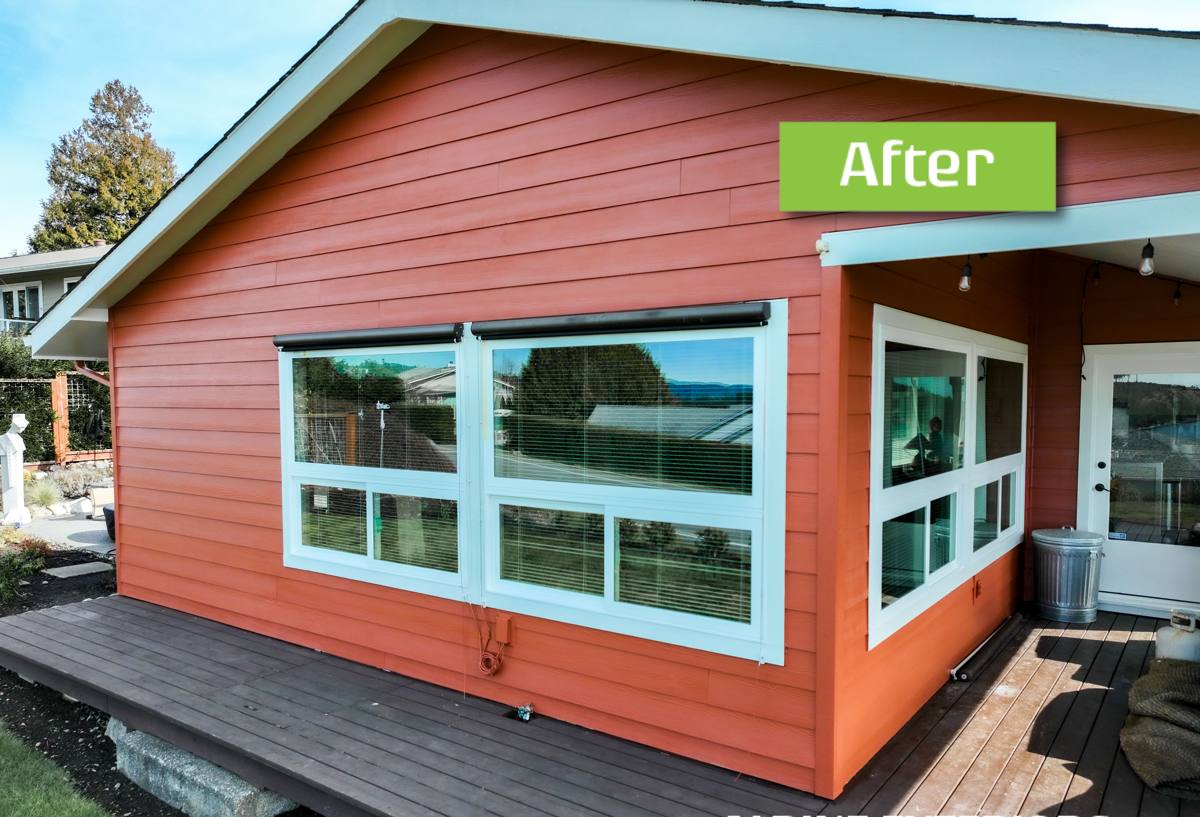
What "New-Construction" Actually Means (and Why It's Different)
New-construction windows have a nailing fin (or flange) around the perimeter that gets fastened directly to the sheathing before the weather-resistive barrier and siding go on. That's different from a "replacement" or "pocket" window, which gets inserted into an existing frame after the fact with no access to the rough opening. On a new build, we have full access to the rough opening, the sheathing, and the framing — which means there's no excuse for a shortcut. Every lap of house wrap, every strip of flashing tape, and every bead of sealant has to be sequenced correctly, because once the siding goes up, that assembly is sealed shut for decades.
The Assembly, Layer by Layer
A correctly installed new-construction window in this climate goes together in this order:
- Rough opening framed square, plumb, and slightly oversized per the window manufacturer's spec
- Sill pan flashing installed first, sloped to drain outward, with end dams to stop water from migrating sideways into the wall cavity
- Window set into the opening, shimmed level and plumb, and fastened through the nailing fin per the manufacturer's schedule
- Jamb and head flashing integrated in the correct shingle-lap order so water sheds down and out, never in
- Weather-resistive barrier (house wrap) lapped over the flashing at the top and sides, tucked under at the sill
- Sealant applied at the specified points only — not everywhere, since over-sealing can trap moisture instead of letting an assembly dry
Skip the sill pan, reverse a flashing lap, or seal a spot that should have been left to drain, and the window will look fine on install day and fail quietly for years before anyone notices the sheathing underneath has gone soft.
What Whatcom County's Climate Demands From This Job
Three things about this area shape how we approach new-construction windows in Edgemoor specifically:
Salt Air
Proximity to Bellingham Bay means airborne salt reaches exterior hardware, fasteners, and cladding faster than it would further inland. We favor corrosion-resistant fastener and hardware specs for anything near the water, and we're careful about mixing metals at flashing joints — dissimilar metals in a salt-air environment can set up galvanic corrosion that eats through flashing from the inside out.
Driving Rain
Whatcom County doesn't just get rain — it gets wind-driven rain off the water that pushes moisture sideways and upward into places a calm-weather installation would never test. That's why the sill pan and flashing sequence above isn't optional detail — it's the difference between a window that sheds a sideways storm and one that lets water track behind the cladding.
Long Moss and Mildew Season
Sustained damp conditions for much of the year mean any spot where water can pool or linger against wood framing becomes a moss, mildew, or rot risk faster here than in a drier climate. Correct drainage detailing at the sill and proper flashing laps aren't just best practice — they're what keeps the wall assembly dry enough, long enough, that moss and mildew never get a foothold inside the wall.
Choosing the Right Window for a New Edgemoor Build
Window selection on a new build is as much about the frame material and glazing package as it is about style. Here's how the common choices stack up for this climate:
| Frame Material | Climate Fit | Trade-Offs |
|---|---|---|
| Vinyl | Good moisture resistance, no corrosion concerns near salt air | Limited color/finish options; can expand/contract with temperature swings |
| Fiberglass | Excellent dimensional stability, holds paint well, low maintenance | Higher upfront cost than vinyl |
| Wood-clad | Strong interior aesthetics; exterior cladding shields wood from weather | Requires correct cladding and flashing detail to keep moisture off any exposed wood; higher long-term maintenance if the exterior finish is neglected |
| Aluminum | Strong and slim sightlines | Poor thermal performance unless thermally broken; can be prone to condensation in our damp climate without the right glazing package |
For glazing, we generally recommend double-pane, low-E, argon-filled units as the baseline for this region — the combination of energy performance and condensation resistance holds up well against Whatcom County's damp, moderate-temperature climate. Triple-pane can make sense on north-facing or particularly wind-exposed walls, but it's not always necessary to justify the added cost on every elevation.
Our Process on a New-Construction Job
We work closely with builders and homeowners on new construction, and our sequencing is built around not being the bottleneck — or the weak link — in the framing-to-siding timeline.
- Plan review: we check window schedules against rough opening sizes and manufacturer specs before anything ships
- Timing coordination: we install once the sheathing and weather-resistive barrier are ready, and before siding crews need access
- Flashing and sill pan installation: done to manufacturer instructions and Whatcom County's wet-climate demands, not a generic national spec
- Fastening and shimming: every unit set level, plumb, and square, fastened per the manufacturer's nailing schedule
- Weather-resistive barrier integration: house wrap lapped correctly at every window opening before we move to the next unit
- Documentation: photos of flashing and sill pan work before the siding covers it, so there's a record of what's behind the wall
That last point matters more than people expect. Once siding goes up, nobody can see the flashing work again without tearing into the wall. We document it so the builder, the homeowner, and any future inspector has a record of how the assembly was built — not just a promise that it was done right.
Cost Factors on a New-Construction Window Job
Pricing on new-construction window installation depends on more than just the number of openings. The factors that move the number most:
| Factor | Why It Matters |
|---|---|
| Window count and size | Larger units and more openings mean more flashing detail work, not just more material |
| Frame material and glazing package | Fiberglass and triple-pane units cost more than vinyl double-pane, but may pay off on exposed elevations |
| Wall height and access | Second-story and vaulted openings take longer to flash correctly and safely |
| Coordination with other trades | Tight scheduling with framers and siding crews can reduce delays, but rushed sequencing raises risk |
| Site exposure | Elevations facing prevailing wind and rain off the bay generally warrant more careful, sometimes more time-intensive, flashing detail |
We'll always walk through these factors with you before quoting a job — a broad, honest range up front, not a lowball number that grows once the flashing work starts.
Why Hire a Crew That Already Works Edgemoor
A crew that's never worked this stretch of Whatcom County can still install a window competently — but they're guessing at the details that matter most here: how much flashing overlap driving rain off the bay actually demands, which fastener and hardware specs hold up against salt air over the long term, and where moisture tends to collect during our wetter months. We're not guessing. We've built and repaired enough window assemblies in this specific climate to know which shortcuts fail here even though they'd pass fine somewhere drier and calmer.
That local pattern-recognition is also why we're comfortable standing behind our installation work — we're not applying a one-size-fits-all national install spec and hoping it holds up against a Pacific Northwest coastal winter.
Get a Local Estimate
If you're framing a new build or planning a major addition in Edgemoor or elsewhere in Whatcom County, we're happy to walk through your window plans, talk through frame and glazing options for your specific site exposure, and give you a straightforward, no-pressure estimate. Use the form below to get started.