 Whatcom County
 Windows That Actually Work for Cordata Homes
Cordata sits inland from the water but still lives under the same weather system as the rest of Whatcom County: long stretches of damp air, driving rain that comes in sideways more often than straight down, and short winter days that keep moisture sitting on and around a house far longer than homeowners in drier climates ever have to deal with. Add in salt-tinged air that moves inland off the Strait and Bellingham Bay on a west wind, and a moss season that can run eight months out of the year, and you've got a climate that is genuinely hard on windows — not because any one storm is dramatic, but because the exposure never really stops.
Older single-pane and early-generation double-pane windows in this neighborhood tend to show it the same way: fogged glass between the panes, cold drafts around the frame in January, sashes that stick from swollen wood or warped vinyl, and condensation on the inside of the glass that feeds mold on sills and trim. None of that is a surprise once you've worked enough Whatcom County homes — it's the predictable result of years of moisture cycling through hardware and seals that were never rated for this kind of sustained damp.
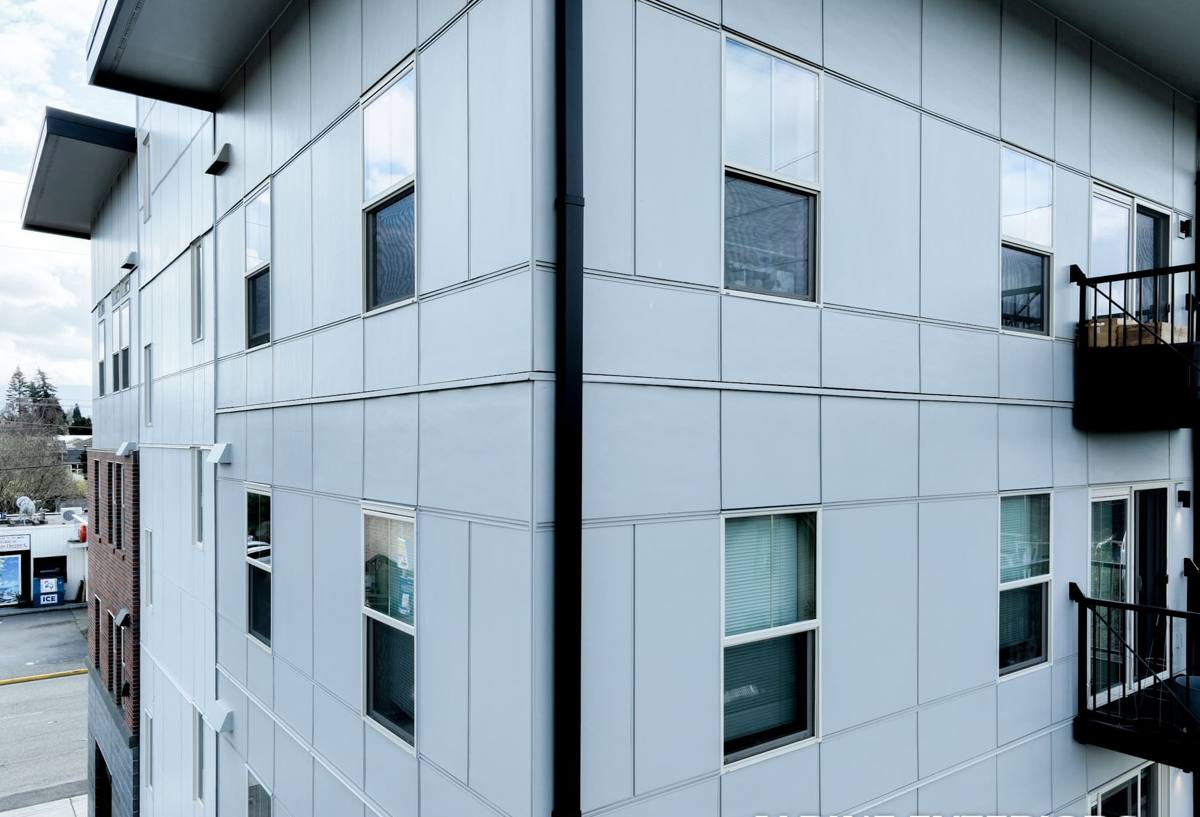
What "Energy-Efficient" Actually Means Here
Energy efficiency in a marketing brochure and energy efficiency in a Cordata living room in February are two different things. The rating that matters most locally isn't just the U-factor on the sticker — it's how the whole assembly (glass, spacer, frame, and installation) holds up to repeated wet-dry cycling without letting air or water past the seal.
The Factors That Matter Most in This Climate
- U-factor: measures how well the window resists heat loss — lower is better for our cool, wet winters and mild summers.
- Warm-edge spacers: the material separating the glass panes affects condensation resistance; this matters more here than in drier regions because indoor humidity plus cold glass is a year-round condition, not just a January problem.
- Frame material behavior in moisture: vinyl, fiberglass, and wood-clad frames all respond differently to constant damp — expansion, contraction, and how they handle bulk water at the sill are as important as their insulating value.
- Air infiltration rating: a window can have a great U-factor and still leak air around a poorly sealed frame — infiltration rating and correct installation matter as much as the glass package.
For most Cordata homes, that means a double-pane (or triple-pane where budget and wall depth allow) unit with a low-E coating, argon or krypton gas fill, and a warm-edge spacer system, set into a frame that's been proven to hold up in the Pacific Northwest rather than a hot, dry climate.
Why Installation Matters More Than the Window Itself
We say this to every homeowner we work with, and it's not a sales line: a good window installed poorly will underperform a mid-grade window installed correctly. In a climate where wind-driven rain regularly tests every seam around a window opening, the flashing, sealant, and drainage plane detailing around the frame are doing as much work as the glass.
What a Correct Installation Includes
- Removing the old window and inspecting the rough opening for hidden rot, soft sheathing, or prior water intrusion before anything new goes in.
- Repairing or replacing damaged framing and sheathing — never sealing a new window over a compromised opening.
- Installing sill pan flashing so any water that does get past the exterior cladding drains back out, not into the wall cavity.
- Integrating window flashing correctly with the home's existing weather-resistive barrier, shingled so water sheds down and out at every layer.
- Setting the window level, plumb, and square, then insulating the gap around the frame without over-packing it, which can bow the frame and cause the sash to bind.
- Sealing the interior and exterior with the right sealants for the substrate — not a single bead of caulk doing every job.
Skip any one of those steps and you can end up with a brand-new, high-efficiency window that still lets water into the wall — which is a far more expensive problem than the drafty old window it replaced.
Reading the Signs a Cordata Home Is Ready for Replacement
Not every window needs replacing just because it's old. Here's how we help homeowners tell the difference between a window that's still doing its job and one that's actively costing money or causing damage.
| Sign | What It Usually Means |
|---|---|
| Fog or haze between panes | Seal failure — the gas fill is gone and the insulating value is largely lost. Not repairable; replacement is the only real fix. |
| Visible daylight or draft around the frame | Failed weatherstripping or a settled/shifted frame; sometimes fixable, sometimes a sign the original install is failing. |
| Soft wood or dark staining at the sill | Active water intrusion — needs an opening inspection, not just a new window dropped in. |
| Moss or algae growth on the exterior sill or trim | Sustained moisture exposure typical of our climate; worth checking whether water is draining away from the opening correctly. |
| Sash sticks or won't stay open | Often hardware or frame swelling — sometimes a repair, sometimes a sign the frame material has reached the end of its service life. |
Quick Homeowner Checklist
- Feel for drafts at the frame edge on a windy day, not just at the glass.
- Check for condensation between the panes (a sign of seal failure, different from ordinary interior condensation on the glass surface).
- Look at the exterior caulk line — cracked, missing, or chalky sealant is an early warning, not a cosmetic issue.
- Open and close every operable window at least once a season — sticking is often the first sign of a bigger problem.
- Note any rooms that feel noticeably colder near the windows than the rest of the house.
Frame Material Trade-Offs for This Area
We install a range of frame materials, and the right one depends on the home, the budget, and how much upkeep the homeowner wants to take on. None of them are wrong choices — they're different trade-offs.
Vinyl
The most common replacement choice in this region for good reason: low maintenance, solid insulating value, and it doesn't rot. The trade-off is that lower-grade vinyl can become brittle over many years of UV and temperature cycling, so we're selective about which vinyl products we install and how they're welded at the corners.
Fiberglass
More dimensionally stable than vinyl across our wet-dry, warm-cold swings, and it holds paint well if a homeowner wants a custom color. It costs more up front, which is the main reason it's not the default choice for every project.
Wood and Wood-Clad
Beautiful on the interior and a good fit for older or historic-style homes, but wood is the material most sensitive to our moisture levels if the exterior cladding or finish isn't maintained. We're upfront with homeowners about that maintenance commitment before recommending it — it's a legitimate choice, just not a low-upkeep one.
Our Process for Cordata Projects
We keep the process the same on every job because skipping steps is how water problems get built into a wall for the next ten years.
- On-site assessment: we look at every window being considered, not just the ones the homeowner flagged, and check the openings themselves, not just the sashes.
- Honest recommendation: which windows genuinely need replacement now, which can wait, and which just need hardware or sealant repair.
- Written estimate: clear on product, install scope, and any framing repair allowance if we find hidden damage.
- Installation: full removal, opening inspection and repair as needed, correct flashing and sealing, and a clean, level set.
- Final walkthrough: every window operated and checked with the homeowner before we call the job done.
Why a Local Crew Matters
Window installation is one of those trades where regional experience shows up directly in the outcome. A crew that mostly works drier climates learns habits that don't hold up here — less attention to sill pan flashing, less concern about long-term moisture cycling, product choices that were never tested against a Whatcom County winter. A crew that works Cordata and the surrounding county regularly knows which frame materials have held up over the years, which flashing details actually stop wind-driven rain, and how to spot early water damage before it becomes a structural repair. That local track record is worth more than any spec sheet.
Get a Straight Answer for Your Home
If you're not sure whether your windows need replacing, repair, or nothing at all right now, we'll tell you honestly after taking a look — not just quote the biggest job. Reach out for a free, no-pressure estimate using the form below, and we'll walk your home's windows with you and lay out what we'd actually recommend.