 Whatcom County
 Deck Replacement Built for Columbia's Weather, Not Just Its Curb Appeal
A deck in Columbia takes a different kind of beating than one on the dry side of the state. Between the salt-laden air coming off the water, long stretches of driving rain, and a moss season that can run from October through May, the wood, fasteners, and framing underneath a deck are under near-constant pressure. Most decks don't fail because the boards look bad — they fail underneath, where moisture sits against ledger boards, joists, and post bases long after the surface looks dry. When we talk about deck replacement here, we're really talking about replacing a structure that's been fighting a losing battle against water and salt for years, and building the next one so it doesn't repeat that fight.
This page covers what deck replacement actually involves for a Columbia property, what our process looks like from first look to final walkthrough, and what to weigh when you're deciding between repair and full replacement.
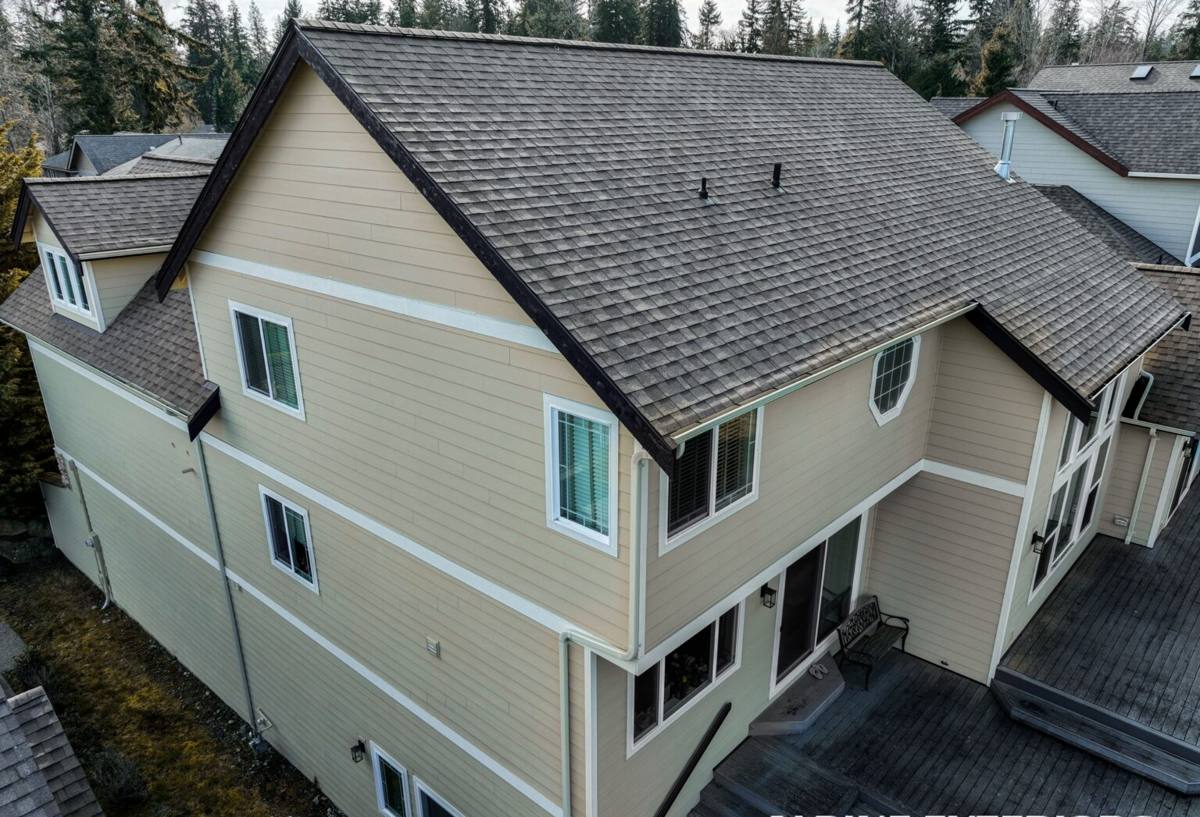
Why Decks Fail Faster in This Part of Whatcom County
Every region has its own deck-killer. Here, it's a combination of three things working together against the structure:
- Salt air: accelerates corrosion on fasteners, joist hangers, and any exposed metal hardware — even hardware rated for exterior use has a shorter working life near the water.
- Driving rain: wind-driven rain doesn't just fall on a deck, it gets pushed sideways into ledger connections, stair stringers, and railing post bases where standard flashing details are often skipped on older builds.
- Extended moss season: moss and algae hold moisture against decking boards for months at a time, which keeps wood fibers wet well past the point where they'd normally dry out between rain events.
None of these three things is dramatic on its own. Together, over ten or fifteen years, they're why a lot of Columbia decks that look structurally fine from the yard turn out to have soft framing, rusted hangers, or a rotted ledger board once we get underneath them.
What This Means for Materials and Detailing
It means the parts of a deck you never see matter more here than the decking boards themselves. Fastener grade, flashing at the ledger, and how the substructure sheds water are what determine whether a replacement deck lasts eight years or twenty-five.
Signs a Deck Needs Replacement, Not Repair
Not every tired-looking deck needs a full tear-off. But there's a point where patching individual boards is just delaying a bigger, more expensive job. Here's how we sort it out on a walkthrough:
| Condition | Usually Repairable | Usually Needs Replacement |
|---|---|---|
| Surface graying, minor cupping on a few boards | Yes | No |
| Soft or spongy spots when you walk the deck | Sometimes, if isolated | Yes, if widespread |
| Rust staining below joist hangers or fasteners | No | Yes |
| Ledger board separating or showing dark staining | No | Yes |
| Persistent moss growth despite regular cleaning | Yes, with a build change | Depends on cause |
| Railing posts that flex or feel loose | Sometimes | Yes, if post base is compromised |
| Deck age 20+ years with original hardware | No | Yes |
The honest answer is that we won't know for certain until we get a few boards up and look at the framing. A deck that's structurally sound underneath with tired boards on top is a very different job — and a very different price — than one where the joists and ledger have to come out too.
What a Correct Deck Replacement Involves
A full replacement isn't just swapping old boards for new ones. Done right, it's a rebuild of everything that keeps water away from the wood.
1. Tear-Off and Inspection
We remove the old decking and railing, then inspect the ledger board, joists, beams, and posts. This is the step that tells us whether the substructure is reusable or needs to come out too — and it's also when we usually find the actual cause of past problems, not just the symptoms.
2. Ledger Board and Flashing
The ledger — where the deck attaches to the house — is the single most common failure point on decks in wet climates. We install proper flashing that directs water away from the house band board rather than letting it wick in behind the ledger, which is the detail most often missing or degraded on older decks.
3. Framing and Hardware
Joists, beams, and posts get sized for the actual load and span, not just matched to what was there before. All structural connections use corrosion-resistant, coated fasteners and hangers appropriate for coastal exposure — standard interior-grade hardware has no place in a deck this close to salt air.
4. Decking Material
Whether you go with wood or composite decking, the board choice affects moss resistance, maintenance, and lifespan differently. We'll walk through the real trade-offs for your situation rather than pushing one product across every job.
5. Railings and Stairs
Post bases and stair stringers get the same attention to water management as the ledger — these are the other spots where standing moisture quietly does long-term damage.
6. Final Grading and Drainage Check
We check that the ground and any surface below the deck still drains away from the house foundation once the new structure is in place. A great deck built over a drainage problem just relocates the moisture issue.
Decking Material Options: Honest Trade-Offs
There isn't a single right answer for every home — it depends on budget, how much upkeep you want to do, and how the deck is used.
| Material | Upfront Cost | Maintenance | Notes for This Climate |
|---|---|---|---|
| Pressure-treated wood | Lowest | Annual cleaning/sealing | Needs consistent upkeep to resist moss and moisture; skipping a season shows quickly |
| Cedar | Moderate | Periodic sealing | Naturally moisture-resistant but still benefits from regular cleaning in a long moss season |
| Composite decking | Higher | Low — occasional washing | Resists rot and moss buildup well, though some boards can still get slick when wet |
| PVC decking | Highest | Lowest | Best moisture performance of the group; higher material cost offsets long-term upkeep savings |
We'll size these options against your budget and how long you plan to stay in the home — a deck you're keeping for five years and one you're keeping for twenty-five call for different decisions.
Our Process for a Columbia Deck Replacement
- On-site walkthrough: we look at the existing deck, pull a board or two if needed, and check the ledger and framing before quoting anything.
- Honest scope and estimate: you get a clear picture of what's repair-level versus full-replacement, with reasoning, not just a number.
- Material selection: we go over decking, railing, and hardware options based on your budget and maintenance preferences.
- Permitting: most deck replacements in this area require a permit, especially if footings, height, or railing height are changing — we handle that coordination.
- Tear-off and rebuild: old structure comes out, framing and flashing go in correctly, then decking, railings, and stairs.
- Final walkthrough: we check the finished deck with you, including drainage and any transitions back to the house.
What to Check Before You Hire Anyone for Deck Work Here
- Do they actually inspect the ledger and framing before quoting, or just measure square footage?
- Do they specify coastal-appropriate, corrosion-resistant fasteners and hangers by name?
- Do they handle the permit, or leave that step to you?
- Can they explain the flashing detail at the ledger board specifically?
- Do they have current licensing and insurance for structural exterior work in Washington?
- Are they familiar with how moss and standing moisture behave on decks in this specific area, not just decks in general?
Why Local Experience on This Specific Problem Matters
Deck framing failures in Whatcom County almost always trace back to the same handful of causes: missing or degraded ledger flashing, standard hardware corroding faster than expected near the water, and moss holding moisture against boards for months instead of days. A crew that's replaced decks across this area has already seen those failure patterns repeatedly and builds around them by default — it's not guesswork, it's what consistently shows up when the old deck comes apart. That's the difference between a deck that needs attention again in five years and one that's still solid in twenty.
Maintaining Your New Deck
A correctly built deck still needs some upkeep to hit its full lifespan in this climate:
- Clean moss and debris off the surface and between boards at least twice a year, more often under trees or in shaded spots.
- Keep gutters and downspouts near the deck clear so runoff isn't dumping extra water onto or under the structure.
- Reseal wood decking on the manufacturer's recommended schedule — don't wait until it visibly needs it.
- Check railing post bases and stair connections annually for looseness or staining.
- Keep planters and furniture feet off direct wood contact where water can pool underneath them.
If you're weighing repair versus replacement, or just want an honest look at what's going on underneath an aging deck, we're happy to come take a look. The estimate is free, there's no pressure, and you'll get a straight answer about what your deck actually needs — use the form below to get started.