 Whatcom County
 Siding Repair Built for Blaine's Coastline Conditions
Blaine sits right where the Salish Sea meets Whatcom County's northern border, and that location shapes how siding ages here. Homes close to the water take on salt-laden air almost year-round, while the broader Whatcom County weather pattern layers on long stretches of driving rain and a moss season that can run from fall through late spring. Siding that would hold up fine forty miles inland often shows problems years earlier in Blaine because it's dealing with three stressors at once instead of one.
Repairing siding correctly in this environment means understanding why it failed in the first place, not just patching the visible damage. A quick caulk-and-paint fix might look fine for a season, but if the underlying cause — trapped moisture, failed flashing, a coating that never sealed against salt exposure — isn't addressed, the same spot will fail again, usually worse.
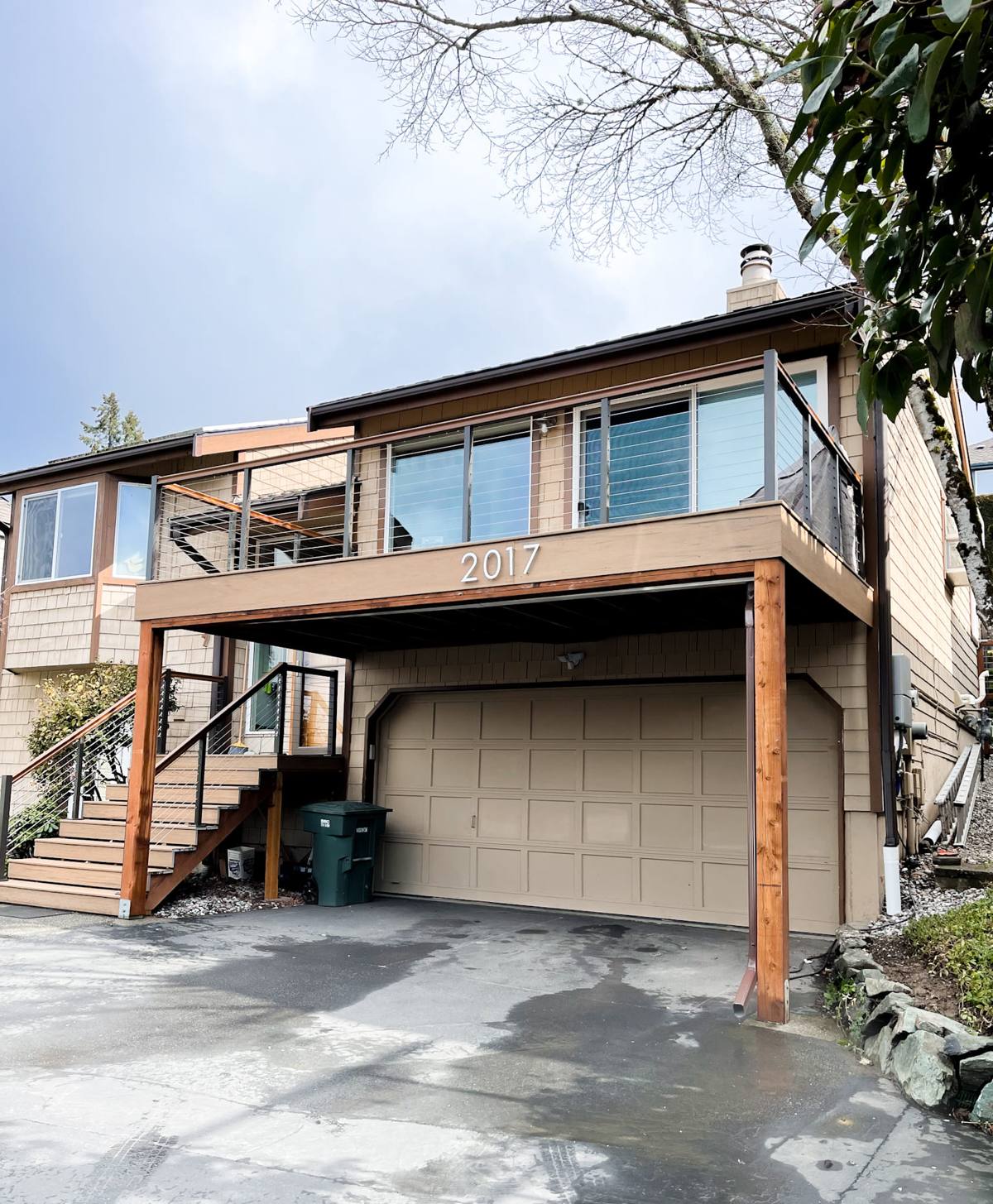
Why Blaine Siding Fails Differently Than Inland Homes
Salt Air and Coastal Exposure
Airborne salt accelerates the breakdown of paint films and can quietly corrode fasteners, flashing, and any exposed metal trim over time. On wood-based siding products, salt exposure combined with moisture speeds up rot at seams and end cuts. Homes with a direct water view or those sitting in the open wind path off the strait tend to show the earliest wear — chalking paint, soft spots at butt joints, and staining that won't scrub off.
Driving Rain
Wind-driven rain doesn't just fall on siding, it gets pushed sideways and upward into laps, seams, and anywhere a board isn't tightly sealed. Over years, this is what turns a small caulk failure into hidden water intrusion behind the siding. By the time a stain or bubble shows on the surface, moisture has often been working on the sheathing or framing underneath for a while.
Moss and Prolonged Dampness
Whatcom County's moss season means north-facing walls, shaded siding, and anything under tree cover stays damp longer than it should. Moss and algae hold moisture against the siding surface, and on products that aren't moisture-resistant by design, that constant dampness is what triggers swelling, delamination, and rot from the surface inward.
What a Correct Siding Repair Actually Involves
A repair that's done right in Blaine goes beyond replacing a damaged board. Our process typically includes:
- Identifying the actual water path — where moisture is getting in, not just where it's showing up
- Checking flashing at windows, doors, and horizontal trim for gaps or corrosion
- Inspecting the house wrap or weather barrier behind the damaged section once siding is opened up
- Replacing any compromised sheathing or framing before new siding goes back on
- Matching or replacing siding with a product that will actually hold up to the same conditions that caused the original failure
- Sealing seams and penetrations with materials rated for coastal, high-moisture exposure
Skipping any of these steps means the repair is cosmetic. In a climate like Blaine's, cosmetic repairs tend to need redoing within a few years.
What We Repair Siding With — And What We Don't Install
We only install James Hardie fiber cement siding, and that standard applies to repairs as much as full replacements. When we're patching or replacing a damaged section, we use Hardie product to match, because fiber cement doesn't share the moisture-absorption problems that drive most of the repair calls we get in this area.
We don't install vinyl, LP SmartSide, primed spruce, cedar, or other fiber cement brands like Cemplank or Allura. That's not a knock on every homeowner who has one of those products — many were installed reasonably and have performed fine for years. But when we're the ones doing the work, we stand behind the material, and fiber cement is what we trust in a salt-air, high-rain environment. Wood-based products can swell, rot, or delaminate at seams when they take on repeated moisture, which is exactly the exposure Blaine siding deals with. Vinyl can crack or warp with age and temperature swings, and it doesn't offer the same fire-resistance or longevity profile.
James Hardie's HZ5 product line is engineered for regions with higher moisture and temperature swings, which fits the Pacific Northwest coastal climate well. The factory-applied ColorPlus finish also matters for repairs specifically — it's baked on and resists fading and chipping far better than field-applied paint, which is one less maintenance cycle for a homeowner to worry about after a repair.
Repair vs. Replace: How We Decide
| Situation | Usually a Repair | Usually a Full Section Replacement |
|---|---|---|
| Isolated board damage from an impact | Yes | No |
| Rot found in one wall section only | Yes, with sheathing check | No |
| Rot or swelling across multiple walls | No | Yes |
| Original siding is 20+ years old and failing broadly | No | Yes |
| Flashing failure at one window or door | Yes | No |
| Moss/algae staining with sound siding underneath | Yes, clean and reseal | No |
Common Repair Scenarios We See in Blaine
Butt Joint Failures
Where two boards meet end to end, that seam is one of the most common water entry points, especially on walls exposed to driving rain off the water. If the joint wasn't sealed or flashed correctly at installation, it's often the first place to fail.
Trim and Corner Rot
Corner boards and trim around windows take more direct weather exposure than flat wall sections. On wood-based trim especially, this is a frequent repair point in Whatcom County's wetter neighborhoods.
Staining and Discoloration Near the Waterline
Homes closer to the water sometimes show a band of discoloration or paint breakdown that's a direct result of salt exposure combined with sun and moisture cycling. This is more of a surface and coating issue than structural, but it's worth addressing before it becomes an entry point for water.
Hidden Damage Behind Older Siding
On older homes, what looks like a small exterior blemish sometimes opens up to reveal more extensive moisture damage behind it. This is common enough in coastal Whatcom County that we always plan for the possibility of finding more than what's visible from the outside before we start.
Our Process for Blaine Repair Calls
- On-site assessment — we look at the damage, but also check surrounding areas, flashing, and drainage paths that may be contributing
- Honest scope discussion — we tell you if it's a straightforward patch or if we're concerned about what we'll find once we open the wall
- Written estimate — clear about what's included, and what could change if we find additional damage once work starts
- Repair work — matched materials, proper flashing and sealing, and attention to the same water-management details that matter on a full installation
- Walkthrough — we show you what was done and what to watch for going forward
Why Hiring a Crew That Already Works Blaine Matters
Siding repair mistakes in a coastal climate usually come from underestimating how aggressive the conditions are. A crew that mostly works drier inland areas may not think to check for salt-related fastener corrosion or may underestimate how much driving rain a north or west-facing wall actually takes near the water. Crews that work Whatcom County's coastal communities regularly know to check these things as a matter of habit, not as an afterthought.
There's also a practical side to this: a contractor familiar with Blaine's housing stock and typical construction details can usually diagnose a problem faster and more accurately, which keeps the repair focused on the actual cause instead of guesswork.
Maintenance Checklist to Catch Problems Early
- Walk the exterior twice a year and look closely at butt joints, corners, and trim
- Check for moss or algae buildup on shaded and north-facing walls
- Look for soft spots by pressing gently on suspect areas — wood-based siding will give where it's compromised
- Check caulking at windows, doors, and penetrations for cracking or gaps
- Watch for paint chalking, bubbling, or peeling, especially on walls facing the water
- Address small issues immediately — in this climate, a small gap becomes a bigger repair fast
Get a Straight Answer on Your Siding
If you're seeing staining, soft spots, or damage on your Blaine home's siding, it's worth having someone look at it before it spreads. We'll give you a clear read on what's actually going on, what it will take to fix it right, and what materials make sense for a home dealing with salt air, driving rain, and moss season year after year. Reach out for a free, no-pressure estimate — we'll walk the exterior with you and tell you exactly what we see.