 Whatcom County
 Siding Installation in Blaine: Why the Marine Climate Changes the Job
Blaine sits about as close to the water and the border as a Washington town gets, and that location comes with a specific set of siding problems. Homes here take on salt-laden air off the strait, driving rain that comes in sideways more often than straight down, and a moss season that can run most of the year in shaded, north-facing spots. Siding installation in this part of Whatcom County isn't just about picking a product and nailing it up — it's about understanding how salt air corrodes fasteners and trim, how wind-driven rain finds every gap in a weak water-resistive barrier, and how moss and algae exploit any surface that stays damp too long. A siding job done to a generic standard, without accounting for that, tends to show its age fast on a Blaine home.
We install James Hardie fiber cement siding exclusively, and we explain that decision on every page of this site, but it matters more here than almost anywhere else we work in Whatcom County. Salt air and constant moisture are exactly the conditions that separate siding products that hold up from siding products that don't.
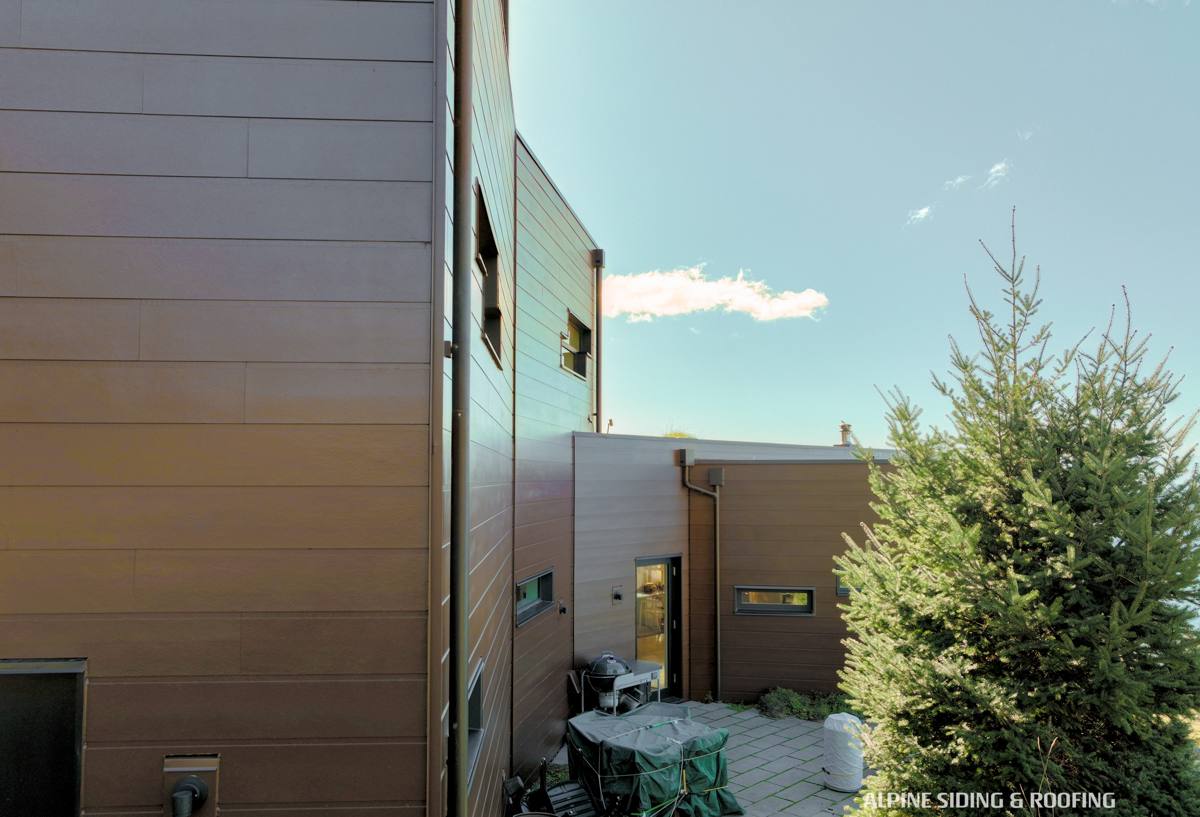
What Blaine's Climate Actually Does to Siding
Salt Air and Metal Fasteners
Proximity to Semiahmoo Bay and the strait means airborne salt is a real factor on Blaine homes, especially those with an open water exposure or facing prevailing winds. Salt accelerates corrosion on exposed metal — nail heads, trim fasteners, flashing — faster than it would inland. Siding systems that rely on face-nailing with standard fasteners, or trim products with unprotected metal components, show rust streaking and fastener failure years before they would in a drier, inland part of the county.
Driving Rain and Wind-Driven Moisture
Wind off the water doesn't just bring rain, it pushes it. Driving rain hits siding at an angle instead of running straight down, which puts far more stress on laps, seams, and butt joints than a calm rainstorm would. Any weakness in how panels are lapped, how joints are flashed, or how the water-resistive barrier behind the siding is detailed becomes a moisture entry point under these conditions. This is where installation quality matters more than product choice alone — even the best siding material fails early if the laps and flashing details aren't built for wind-driven rain.
Long Moss Season
Whatcom County's damp, mild climate supports moss and algae growth for much of the year, and Blaine's marine humidity extends that season further than drier inland towns. North- and west-facing walls, areas shaded by trees or neighboring structures, and low-airflow corners are the spots where moss gets a foothold first. Once established, moss holds moisture against the siding surface, which accelerates whatever underlying wear is already happening from salt and rain exposure.
What a Correct Siding Installation Involves
A siding installation is really a system, not a single product. Getting it right in a marine climate like Blaine's means every layer does its job.
- Tear-off and inspection: removing old siding and checking the sheathing underneath for rot, soft spots, or prior water damage before anything new goes up.
- Water-resistive barrier: a correctly lapped and taped weather barrier that sheds water downward and outward, with special attention to seams facing prevailing wind and rain.
- Flashing at every penetration: windows, doors, vents, hose bibs, and any other wall penetration flashed so water is directed out, not trapped behind the siding.
- Rainscreen or proper drainage gap where called for: giving moisture that does get behind the siding a path to drain and dry instead of sitting against the wall assembly.
- Correct fastening per manufacturer spec: fastener type, placement, and spacing matter more in salt air and high-wind exposure than most homeowners realize.
- Proper lap and joint detailing: laps sized and sealed to resist wind-driven rain, not just standard vertical rainfall.
- Trim and caulking done last, done right: gaps sealed at the right points without trapping moisture where it needs to escape.
Why We Install Only James Hardie Fiber Cement
We don't install vinyl, LP SmartSide, Cemplank, Allura, primed spruce, or cedar. That's a deliberate standard, not a limitation of what we're capable of installing. Each of those alternatives carries a real trade-off that matters in a climate like Blaine's:
| Product | Where it falls short in this climate |
|---|---|
| Vinyl siding | Can warp or deform in temperature swings and wind exposure; seams are more vulnerable to wind-driven rain intrusion; doesn't hold paint if a color change is ever wanted. |
| LP SmartSide (engineered wood) | Wood-based core is more sensitive to sustained moisture exposure; edge sealing and maintenance become critical in a wet, humid marine environment. |
| Cemplank / Allura (other fiber cements) | Similar core material to Hardie, but different factory finish systems and warranty structures; we standardized on one product line so our crews install to one spec, consistently. |
| Primed spruce / cedar | Natural wood requires ongoing repainting and moisture maintenance; in a long moss season and salt air exposure, upkeep demands are significantly higher. |
James Hardie fiber cement is non-combustible, dimensionally stable in wet-dry cycling, and available in the HZ5 product line engineered for climates with more moisture exposure — which fits Whatcom County generally and Blaine's marine conditions specifically. The ColorPlus factory finish is baked on under controlled conditions, which holds up better against salt air and UV than field-applied paint, and it comes with a strong transferable warranty backing the product.
Our Installation Process on a Blaine Home
1. Site Assessment
We walk the property and look specifically at exposure: which walls face prevailing wind and rain, where moss and algae are already established, and where salt air exposure is most direct. This shapes decisions on flashing detail and drainage approach before a single panel goes up.
2. Tear-Off and Sheathing Check
Old siding comes off and we inspect the sheathing for hidden moisture damage — a common finding on older Whatcom County homes where a previous siding system let water in slowly over years.
3. Weather Barrier and Flashing
We install and lap the water-resistive barrier correctly, then flash every window, door, and penetration before siding installation starts. This step is where most of the long-term water performance of the job gets decided.
4. Hardie Installation to Manufacturer Spec
Panels are installed with correct fastener spacing, lap sizing, and joint treatment, following James Hardie's published installation requirements rather than shortcuts that might pass a casual look but fail under driving rain.
5. Trim, Caulk, and Final Detail
Trim goes on last, sealed at the points that need it and left open where the assembly needs to drain and breathe.
6. Walkthrough
We walk the finished job with the homeowner and go over what was done and why, particularly around any exposure-specific decisions made for that property.
Why a Crew That Already Works Blaine Matters
Siding installation isn't a one-size-fits-all process across Whatcom County. A crew that's installed on homes in Blaine already knows which walls typically take the worst of the wind off the water, how far moss and algae exposure can extend into a property, and how much more attention salt air demands around metal trim and fasteners compared to inland jobs. That local pattern recognition shows up in better flashing decisions, better material choices for trim, and fewer callbacks down the road. It's a different job than installing the same product in a dry inland climate, and treating it as identical is how premature failures happen.
Signs Your Current Siding Is Already Losing the Fight
- Rust streaking below nail heads or trim fasteners
- Persistent moss or algae growth that returns quickly after cleaning
- Soft or spongy spots when you press on the siding, especially near the bottom courses
- Visible warping, buckling, or gaps at panel seams
- Peeling or bubbling paint, particularly on wood-based or field-painted siding
- Water staining on interior walls near exterior corners or window trim
Any of these on a Blaine home is worth a professional look before it turns into sheathing damage, which is a bigger and more expensive repair than siding alone.
Cost Factors for Siding Installation in Blaine
Every home is different, so we won't quote a number without seeing the property, but a few factors consistently move the price on jobs in this area:
| Factor | Why it matters here |
|---|---|
| Extent of sheathing repair needed | Older homes with prior water intrusion often need sheathing replaced before new siding goes on. |
| Home size and wall complexity | More corners, penetrations, and trim details mean more flashing and labor time. |
| Exposure level | Homes with direct water-facing exposure may need additional flashing or drainage detail versus more sheltered lots. |
| Current siding removal | Tear-off complexity varies by what's currently on the home and how it was installed. |
| Trim and accent choices | Additional trim boards, accent siding styles, or color variation affect material and labor. |
Get a Local Estimate
If you're weighing a siding project on a Blaine home, we're glad to come take a look, walk the exterior with you, and talk through what your specific exposure calls for — no pressure, no obligation. Use the form below to request a free estimate.