 Whatcom County
 Storm Damage Roof Repair for Birchwood Homes
Birchwood sits close enough to the water and open farmland that its roofs take a different kind of beating than homes further inland. Winter windstorms off the Strait push driving rain sideways under loose flashing, salt-laden air accelerates corrosion on fasteners and metal edges, and the long, wet moss season keeps roofs damp for months at a stretch. When a storm hits, the damage isn't always obvious from the ground — a few lifted shingles or a dented vent cap can turn into a slow leak that rots decking long before it shows up as a ceiling stain. This page covers what storm damage actually looks like on Birchwood roofs, how a proper repair is done, and what to expect if you call us out after a wind or rain event.
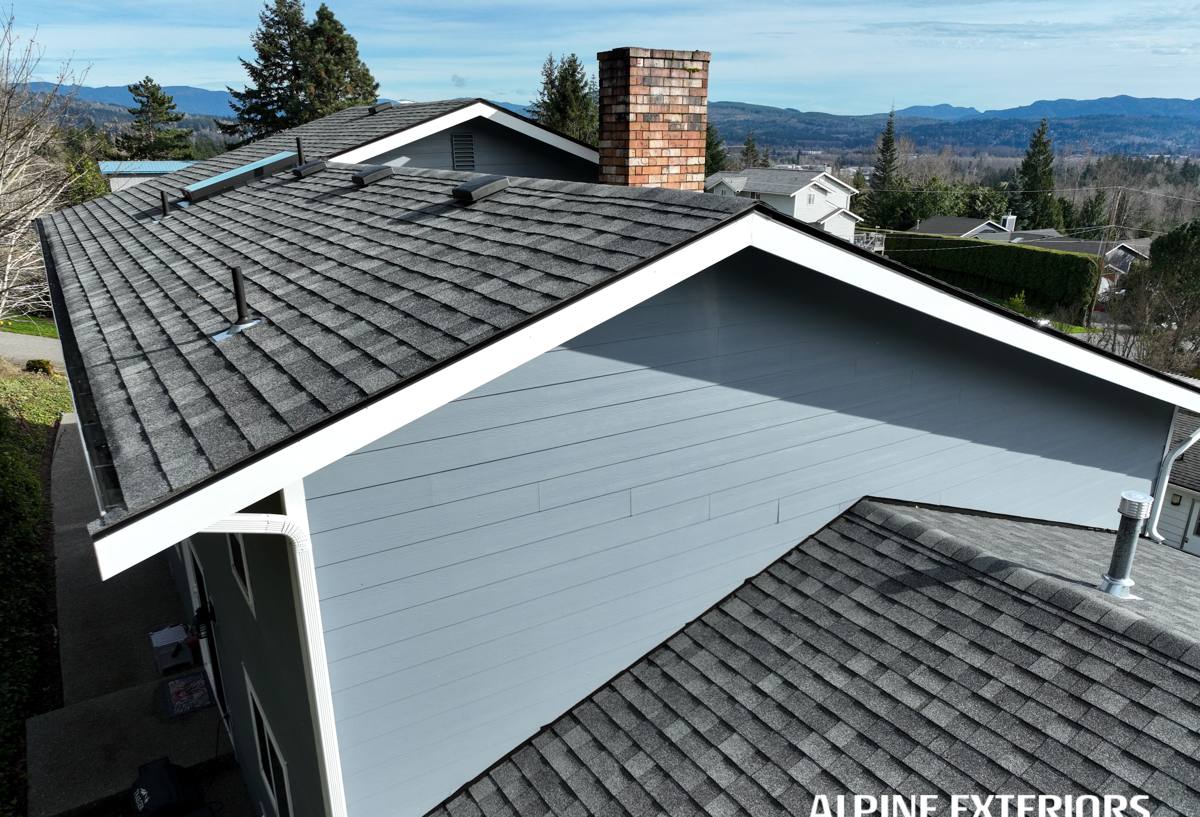
Why Birchwood Roofs Take Storm Damage Differently
Whatcom County weather is not uniform, and Birchwood's mix of exposure and tree cover creates its own pattern of problems.
Wind and Driving Rain
Storms coming off the water tend to arrive with sustained wind rather than short gusts, which is what actually damages roofing. A single gust can flex a shingle without breaking the seal; sustained wind works the same tab back and forth until the adhesive strip fails and the seal never re-sets. Once a shingle loses its seal, wind-driven rain gets pushed uphill under the course above it — the opposite direction water is supposed to shed — and that's how leaks start in places that look untouched from the street.
Salt Air and Corrosion
Homes closer to the water deal with airborne salt settling on metal roof components — flashing, drip edge, nail heads, and vent boots. Salt accelerates rust on exposed fasteners and can pit galvanized flashing over years, which weakens exactly the components that are supposed to keep water out at seams, valleys, and penetrations. A storm doesn't have to be severe to finish off flashing that's already thinned by years of salt exposure.
Moss and Trapped Moisture
Whatcom County's moss season runs long, and Birchwood's tree cover and shaded rooflines give moss plenty of time to establish. Moss holds moisture against the roofing surface year-round, which softens shingle mat and speeds granule loss even before a storm event. When wind then lifts a moss-weakened shingle, it tears rather than flexing back into place, and the damage is worse than it would be on a clean roof.
What Counts as Storm Damage
Not every post-storm issue is dramatic. Most of what we find on Birchwood roofs after a wind or rain event falls into a few categories:
- Lifted, creased, or torn shingle tabs — especially along ridges, edges, and any roof plane facing the prevailing wind
- Bent, lifted, or blown-off flashing at valleys, chimneys, skylights, and wall intersections
- Damaged or dislodged vent caps and pipe boots, which are often the first thing to fail in high wind
- Granule loss visible in gutters or downspouts, a sign shingles have been abraded by wind-driven debris
- Debris impact — broken branches or wind-thrown material puncturing or cracking the roofing surface
- Water staining in the attic or on interior ceilings that appears within days of a storm
Some of these are visible from the ground with binoculars; most aren't. That's the main reason a post-storm inspection matters more than a guess based on what you can see from the driveway.
Why a Ground-Level Look Isn't Enough
A lot of storm damage hides in plain sight. A shingle that's lifted but hasn't torn off can look fine from below, but the seal is broken and it will leak the next time rain comes with any wind behind it. Flashing that's been bent an inch out of place at a valley won't be visible from the yard at all. The only reliable way to know what a storm actually did to a Birchwood roof is to get on it — or use a drone or ladder inspection to check every plane, valley, and penetration — right after the event, not weeks later when a stain has already appeared inside.
Our Storm Damage Repair Process
1. Inspection and Documentation
We walk the roof and document every point of damage — lifted or missing shingles, flashing condition, vent boots, valleys, and any interior signs of water intrusion. If the damage is a candidate for an insurance claim, this documentation is what your adjuster will need.
2. Temporary Protection (If Needed)
If a section is actively leaking or there's an open puncture, we get it covered or tarped before we leave, especially heading into another wet stretch. A properly secured tarp buys time; it isn't a fix, and we're clear with homeowners about that distinction.
3. Repair Scope and Estimate
We separate what needs repair now from what's cosmetic or can wait, and give you a written scope before any work starts. Storm damage repair should never be a blank check — you should know exactly what's being replaced and why.
4. The Repair Itself
Matching shingles are set with proper nailing and sealed correctly along the affected courses — not just the single damaged shingle, since surrounding tabs are often weakened even if they didn't tear. Flashing is replaced rather than caulked back into place; caulk over damaged flashing is a short-term patch that fails again in the next storm. Vent boots and caps are replaced as full units.
5. Final Check
Before we call it done, we recheck the repaired area and the roof generally for anything we may have missed on the first pass — a second set of eyes on storm damage catches things the adrenaline of a first inspection sometimes doesn't.
Repair vs. Replacement: What Drives the Decision
Not every storm-damaged roof needs full replacement, and not every roof can be reasonably patched. The honest answer depends on a handful of factors:
| Factor | Favors Repair | Favors Replacement |
|---|---|---|
| Roof age | Under 10-12 years, good remaining shingle life | Near or past expected lifespan already |
| Extent of damage | Isolated to one or two areas | Widespread across multiple roof planes |
| Underlying condition | Decking and underlayment sound | Existing moss or moisture damage found underneath |
| Shingle match availability | Matching shingles still available | Discontinued product, visible patchwork unavoidable |
| Insurance scope | Adjuster approves targeted repair | Adjuster or contractor documents full-slope damage |
We'll tell you plainly which side of that line your roof falls on. A roof that only needs a repair doesn't need to be sold a replacement, and a roof with hidden moisture damage under the shingles shouldn't be patched over and called done.
Insurance and Storm Claims
If the damage is significant enough to involve your homeowner's insurance, documentation matters more than anything else. We provide a written inspection report with photos that an adjuster can use, and we can walk the roof with your adjuster if that's helpful. What we won't do is inflate a scope to chase a bigger claim number — our job is to document what the storm actually did and repair that, accurately.
What to Check After Wind or Heavy Rain
Between storms, a homeowner can catch early warning signs without getting on the roof:
- Shingle pieces or excess granules collecting in gutters or at the base of downspouts
- Visible gaps, lifted tabs, or dark streaks on roof planes when viewed from the yard
- New water stains, discoloration, or damp spots on ceilings or in the attic
- A vent cap or flashing piece on the ground after a windstorm
- Any sagging or soft-feeling area on the roof surface
Any one of these is worth a call. Waiting through another storm cycle before checking is how a small flashing fix turns into a decking repair.
Serving Birchwood and Whatcom County
A crew that already works Birchwood knows which roof lines take the worst of the prevailing wind, which neighborhoods deal with heavier salt exposure, and how fast moss reestablishes under the local tree cover. That local knowledge shows up in the estimate — we're not guessing at what "storm damage" typically looks like on a Whatcom County roof, we're checking against what we've already seen on roofs like yours nearby. It also means a faster response when a storm has just come through and you need eyes on the roof before the next system rolls in.
If a recent storm has you wondering about your roof's condition, we'll come take a look and give you a straight answer — no pressure, no inflated scope. Use the form below to request a free estimate.