 Whatcom County
 Barkley's Climate Puts Real Stress on Siding
Barkley sits inside Whatcom County's marine climate belt, close enough to Bellingham Bay and the Salish Sea that homes here deal with a combination most inland siding never has to survive: salt-laden air, wind-driven rain off the water, and a moss season that can stretch from October well into spring. None of these are dramatic events. They're slow, constant pressure — and slow, constant pressure is exactly what finds the weak points in a siding job that was installed a little too fast or with the wrong material.
A siding installation in Barkley isn't just about picking a color and nailing up boards. It's about building an exterior wall system that manages moisture correctly for decades, resists the corrosion that salt air causes in fasteners and trim, and doesn't give moss and algae a foothold. Get any of that wrong and the failure shows up two, five, or ten years later — usually as soft trim, streaking, or siding that's cupping and separating at the seams.
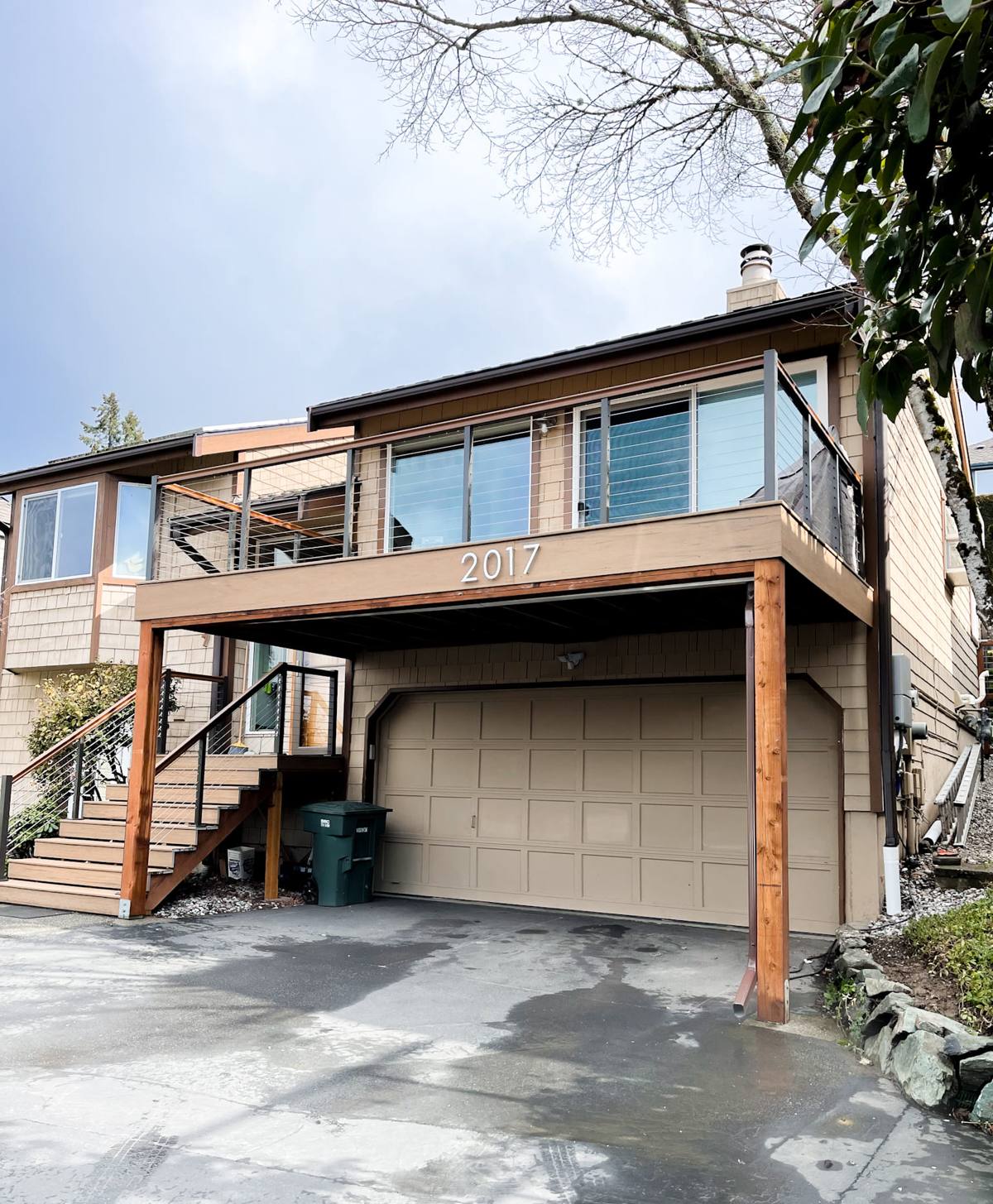
What Barkley Homes Are Actually Up Against
Salt Air and Corrosion
Proximity to Bellingham Bay means airborne salt settles on every exterior surface, including fasteners, flashing, and trim. Untreated or under-rated fasteners corrode faster here than they would twenty miles inland. That corrosion doesn't stay hidden — it stains siding with rust streaks and eventually weakens the connection holding the siding to the wall.
Driving Rain
Whatcom County doesn't just get a lot of rain — it gets a lot of wind-driven rain, pushed sideways by storms coming off the water. Wind-driven rain finds gaps that vertical rain never would: unsealed laps, poorly flashed windows, and butt joints that weren't caulked or backed correctly. A siding system built for a drier climate, or installed to a drier-climate standard, will let water in exactly where Barkley's weather is hardest on it.
Moss Season
The long, wet, mild winters here mean moss and algae have months of ideal growing conditions on any siding that stays damp. Moss holds moisture against the wall long after the rain has stopped, which accelerates rot in wood-based products and keeps the surface perpetually damp — a problem for anything that isn't dimensionally stable and rot-resistant by nature.
What a Correct Siding Installation Actually Involves
The material matters, but so does everything underneath and around it. A correct installation in Barkley's climate includes several layers most homeowners never see once the job is done:
- Weather-resistant barrier: A continuous, properly lapped house wrap or building paper behind the siding, installed so every seam sheds water downward and outward.
- Rain screen gap: A small air gap between the siding and the wall lets any moisture that gets past the siding drain and dry out instead of sitting against the sheathing.
- Flashing at every penetration: Windows, doors, hose bibs, vents, and light fixtures all need flashing details that direct water out and away, not down behind the siding.
- Correct fastener spacing and type: Fasteners rated for the material and the coastal environment, driven at the manufacturer's specified spacing and depth — not just "close enough."
- Sealed and backed joints: Butt joints and transitions sealed with the right sealant, backed so caulk isn't the only thing standing between the house and the weather.
- Proper clearance at grade and roof lines: Siding held up off decks, patios, and grade, and kept clear of roof-to-wall intersections where water concentrates.
Skip any one of these and the siding itself — no matter how good the product is — becomes a cosmetic layer rather than a real moisture management system.
Why We Only Install James Hardie Fiber Cement in Whatcom County
We don't install vinyl, LP SmartSide, Cemplank, Allura, primed spruce, or cedar. That's not a marketing position — it's a standard we set because of what we've seen these products do, and not do, in exactly this climate. Every one of those materials has real strengths. None of them handles the combination of salt air, driving rain, and year-round moisture as consistently as James Hardie fiber cement, factory-finished with ColorPlus.
| Material | Where it struggles in Barkley's climate |
|---|---|
| Vinyl siding | Can warp or distort with temperature swings and doesn't hold up well to wind-driven rain at seams; color is molded-in and fades over time with no refinishing option. |
| LP SmartSide | Wood-strand core is more moisture-sensitive than fiber cement; edge sealing and caulking maintenance is critical, and any lapse in a wet climate shortens its service life. |
| Primed spruce / cedar | Natural wood products need ongoing repainting and are the most susceptible to rot and moss retention in a long, wet, mild winter climate like this one. |
| Cemplank / Allura | Also fiber cement, but we've standardized on one manufacturer's engineered climate line, factory finish, and warranty structure rather than mixing systems. |
| James Hardie (HZ10) | Non-combustible, dimensionally stable, engineered for the Pacific Northwest's moisture cycle, factory-baked ColorPlus finish resists fading and doesn't need repainting on the manufacturer's schedule. |
James Hardie's HZ10 product line is specifically engineered for climates like Whatcom County's — high moisture, moderate temperatures, and long wet seasons. It's non-combustible, won't rot, and doesn't feed moss the way wood-based siding can. The ColorPlus factory finish is baked on under controlled conditions, which holds color and resists fading far better than field-applied paint, and it comes with a real transferable warranty backing both the product and, when we install it, the finish.
Our Installation Process From Estimate to Finish
- On-site assessment: We walk the house, check the current siding and sheathing condition, look at drainage and grading, and note anything — old moisture damage, missing flashing, roofline issues — that needs to be addressed before new siding goes on.
- Written estimate: A clear scope covering material, prep work, flashing and trim details, and timeline, so there are no surprises once work starts.
- Tear-off and inspection: Removing the old siding lets us actually see the sheathing. Any soft or water-damaged sheathing gets replaced before anything else happens — covering damaged sheathing with new siding just hides a problem.
- Weather barrier and rain screen installation: House wrap installed and lapped correctly, with a rain screen gap built in so the wall can drain and dry.
- Flashing and trim: Windows, doors, and penetrations flashed before siding goes up around them.
- Hardie installation: Panels or lap siding installed to manufacturer fastening specs, with proper joint treatment and clearances at grade, decks, and roof lines.
- Final walkthrough: We go over the finished job with the homeowner and check details up close, not just from the curb.
Signs Your Barkley Home Needs New Siding Now
- Visible cracking, warping, or buckling in the current siding
- Soft or spongy spots when you press on the siding, especially near the bottom courses
- Persistent moss or algae growth that returns shortly after cleaning
- Rust streaking coming from fasteners or trim
- Peeling or bubbling paint on wood-based siding
- Rising heating bills without another clear cause, suggesting the wall assembly is no longer sealing properly
- Visible gaps at butt joints, corners, or around windows
Cost Factors for Siding Replacement in Barkley
Every home is different, and we won't quote a number without seeing the house, but these are the factors that actually move the price:
| Factor | Why it matters |
|---|---|
| Home size and wall complexity | More square footage and more corners, gables, and dormers mean more material and more labor-intensive cuts and flashing details. |
| Sheathing condition | Hidden rot found during tear-off adds repair work that's necessary before new siding can go on correctly. |
| Siding profile and trim package | Lap siding, panel systems, and the amount of trim, corner boards, and accent detail all affect material cost. |
| Accessibility | Multi-story sections, steep grades, or tight lot lines can add time and equipment needs. |
| Existing siding removal | Full tear-off versus siding over an already-sound substrate changes labor scope. |
Why Hiring a Crew That Already Works Barkley Matters
A crew that regularly works Whatcom County neighborhoods already knows how the local climate behaves through a full year — where wind-driven rain tends to hit hardest, how long moss season really runs, and what fastener and flashing choices hold up against salt air over time instead of just looking fine on installation day. That local track record shows up in the details: where the rain screen gap actually gets used instead of skipped, how corners and butt joints get treated, and how carefully sheathing gets inspected during tear-off instead of assumed to be fine.
It also means a crew that stands behind its work with people who are still around the following winter, not a traveling outfit that's moved on to the next region by the time the first real storm season tests the job.
If you're weighing siding options for a home in Barkley, we're happy to take a look and walk you through what your house actually needs — no pressure, no obligation. Reach out for a free estimate using the form below.