 Whatcom County
 New-Construction Windows in Barkley: Getting It Right the First Time
Barkley is one of the more active pockets of new residential building in the Bellingham area, and homes going up here face the same climate pressures as the rest of Whatcom County: salt-tinged marine air drifting in off Bellingham Bay, long stretches of driving rain through fall and winter, and a moss and mildew season that can stretch across most of the year on shaded or north-facing walls. For a remodel or replacement project, that climate is something you're working around after the fact. For new construction, it's something you get to build in front of — and that's a real advantage, if the window installation is handled correctly from the start.
New-construction window work is a different job than replacing an existing window. There's no old frame to remove, no prior installation to diagnose or correct — just a rough opening, a weather-resistive barrier, and one chance to integrate the window into the wall assembly the right way before siding closes it all up. Get that sequence right and a Barkley home stays dry through decades of Whatcom County weather. Get it wrong, and the mistake is buried behind finished siding where it won't show up until there's already water damage to deal with.
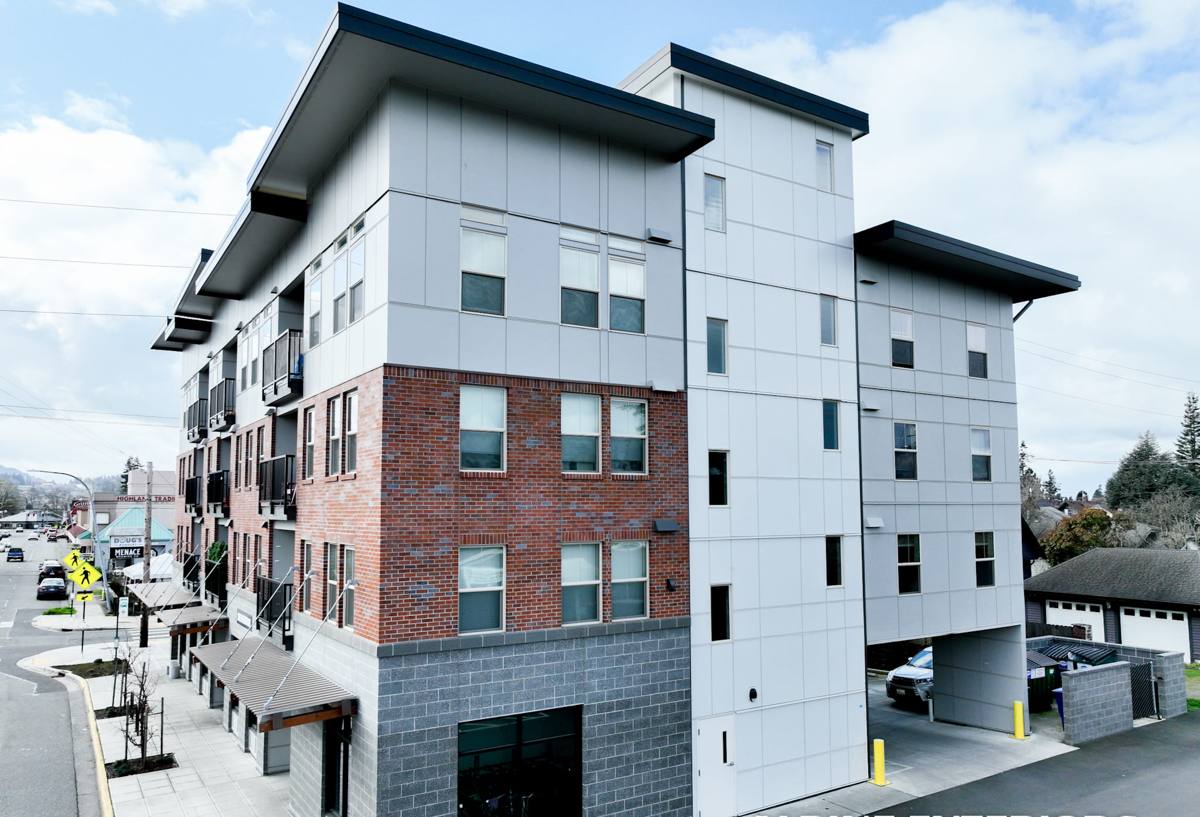
Why Barkley's Climate Matters for a New Build
Driving Rain and Wind Exposure
Storms moving through this part of Whatcom County don't just drop rain straight down — wind pushes it sideways into wall assemblies, which means water reaches seams and gaps that a calmer climate would never test. On a new build, every rough opening in the building envelope is a potential entry point until it's properly flashed and integrated with the weather-resistive barrier. There's no room to treat that as an afterthought.
Marine Air and Long-Term Corrosion
Even set back from the water, Barkley gets enough marine-influenced air to accelerate corrosion on lower-grade window hardware and fasteners over the life of a home. On a new build, that's a spec decision made once — the hardware and fastener grade chosen during construction is what the homeowner lives with for the next twenty or thirty years.
Moss, Mildew, and Sustained Moisture
Mild temperatures and near-constant dampness through fall, winter, and spring give moss and mildew a long growing season across Whatcom County. On new construction, correct drainage detailing at sills and trim — done right the first time, before finish materials go on — keeps water moving out instead of pooling somewhere it will eventually feed growth.
How New-Construction Window Installation Actually Works
New-construction windows are typically nail-fin units, built with an integrated flange that fastens directly to the wall sheathing before the weather-resistive barrier and siding go on. That's different from a replacement or block-frame window, which fits into an existing opening without disturbing the surrounding wall finish. The sequence matters as much as the window itself:
- Rough openings are checked for square, level, and correct dimension before any window goes in
- Sill pan flashing is installed first, sloped to drain water outward rather than let it sit against the sill
- The window is set, shimmed plumb and square, and fastened through the nailing fin per the manufacturer's schedule — not just wherever seems convenient
- Flashing tape laps over the fin at the sides and top in proper shingle-style order, so water sheds down and out at every layer
- The weather-resistive barrier is integrated over the flashing, maintaining the same shingle-lap principle up the wall
- Backer rod and sealant finish the interior air seal without being asked to do the exterior water-shedding job that flashing is actually responsible for
Every one of those steps has to happen in the right order. Skipping the sill pan, taping the fin before the sides are lapped correctly, or relying on caulk in place of proper flashing are the kinds of shortcuts that don't show up as a problem on move-in day — they show up three or five years later, as a stain on drywall below a window that everyone assumed was installed correctly.
Working Alongside Builders and General Contractors
Most new-construction window work in Barkley happens on a schedule set by someone else — a builder or general contractor coordinating framing, dry-in, and finish trades across an entire project. That means window installation has to fit a sequence: openings need to be framed correctly before we show up, windows need to be set before siding starts, and any delay on our end can hold up every trade behind us. We coordinate directly with the builder's schedule rather than treating the job as an isolated task, and we flag framing or sizing issues early — before a window arrives and doesn't fit the rough opening that was actually built.
We also handle the window schedule itself: confirming sizes, configurations, and swing or slide directions against the plans before ordering, since a mistake at that stage means a re-order and a real delay. Custom-sized units for a specific build can take several weeks to arrive, so ordering early and getting the schedule right the first time matters more on new construction than it does on a single-window replacement.
Choosing Windows for a Barkley New Build
We install vinyl and fiberglass window systems suited to the Pacific Northwest's wet, mild climate, and we walk builders and homeowners through real trade-offs instead of defaulting to one brand as the only right answer. What actually matters for a Barkley new build is a well-engineered frame, a glazing package that meets Washington's energy code, and hardware rated to hold up under sustained marine-air exposure.
| Factor | Vinyl Frame | Fiberglass Frame |
|---|---|---|
| Upfront cost | Lower | Higher |
| Dimensional stability across temperature swings | Good | Better |
| Paintable / custom color options | Limited | Yes |
| Rot resistance in this climate | Yes | Yes |
| Best fit | Standard builder-grade specs, budget-conscious builds | Higher-end builds, custom color or trim matching |
Both frame types resist rot in a way uncladded wood frames don't, which matters given how much moisture this region carries through most of the year. The right call usually comes down to the project budget and whether frame color flexibility is part of the design plan — not one product being categorically better than the other.
Meeting Washington's Energy Code
New construction in Whatcom County has to meet Washington's energy code requirements, and window U-factor and solar heat gain coefficient are part of that calculation for the whole building envelope. We spec glazing packages — typically double or triple-pane with low-E coatings — that meet code and also perform well against this climate's specific mix of cold, damp winters and condensation risk. That's a decision made once, at the ordering stage, so getting it right up front avoids a compliance problem discovered at inspection.
Why a Crew That Already Works Barkley Matters
New-construction window work depends on fitting smoothly into someone else's schedule and someone else's framing — and a crew that's done that repeatedly around Barkley and the wider Bellingham area already knows what to expect. That familiarity shows up in practical ways: recognizing a framing dimension that's off before a window shows up and doesn't fit, knowing which flashing tape and sealant products actually perform through a wet Whatcom County winter versus just a dry installation day, and being able to hold up their end of a builder's schedule instead of becoming the trade everyone else is waiting on.
It also means fewer surprises with permitting and inspection. Whatcom County and City of Bellingham building departments both check window flashing and weather-resistive barrier integration as part of the building envelope inspection on new construction, and a crew that installs to that standard as a matter of course — not as something added when an inspector asks for it — keeps a project moving instead of generating a punch-list item that has to be reopened after siding is already on.
A Checklist for Builders and Homeowners Before Hiring
- Ask specifically how they sequence sill pan flashing, fin fastening, and weather-resistive barrier integration — not just what window brand they sell
- Confirm current Washington contractor licensing and active liability insurance
- Ask how they coordinate scheduling with the general contractor and other trades on a new-build timeline
- Get a written scope that separates the manufacturer's product warranty from the installation warranty
- Ask about lead times on ordering, since custom-configured new-construction windows can take several weeks to arrive
- Ask whether they've worked new construction in the Bellingham area specifically, not just replacement work
Our Process on a Barkley New-Construction Project
We start by reviewing the window schedule against the plans — sizes, configurations, and swing directions — before anything is ordered, and we flag any discrepancy with the builder early rather than after materials arrive. Once openings are framed and ready, we install sill pan flashing, set and fasten each window to the manufacturer's nailing schedule, and integrate flashing tape and the weather-resistive barrier in proper shingle-lap order so the whole assembly sheds water correctly before siding ever goes on. We coordinate timing with the builder's broader schedule throughout, and we're available for a final walkthrough once the building envelope is closed in.
If you're building in Barkley — whether you're a homeowner working with your own builder or a general contractor looking for a window crew who won't hold up your schedule — we're glad to talk through the project and give a straightforward, no-pressure estimate.