 Whatcom County
 Why Decks in Barkley Take a Different Kind of Beating
Barkley sits close enough to the water and the weather patterns that move through Whatcom County that a deck here works harder than a deck built somewhere dry and inland. Salt-laden air corrodes fasteners and hardware faster than most manufacturers' spec sheets assume. Driving rain, the kind that comes in sideways off a storm rather than falling straight down, finds its way into joints and end grain that would stay dry in a calmer climate. And the long moss season — realistically stretching from fall through spring in this part of the county — turns any flat, shaded, or poorly draining surface into a slip hazard and a slow-motion rot problem.
None of this means a deck in Barkley has to fail early or need constant upkeep. It means the build has to account for these conditions from the framing up, not just at the surface. A lot of deck problems we get called out to inspect in Whatcom County trace back to a build that would have been perfectly fine in a drier region, but wasn't detailed for ours.
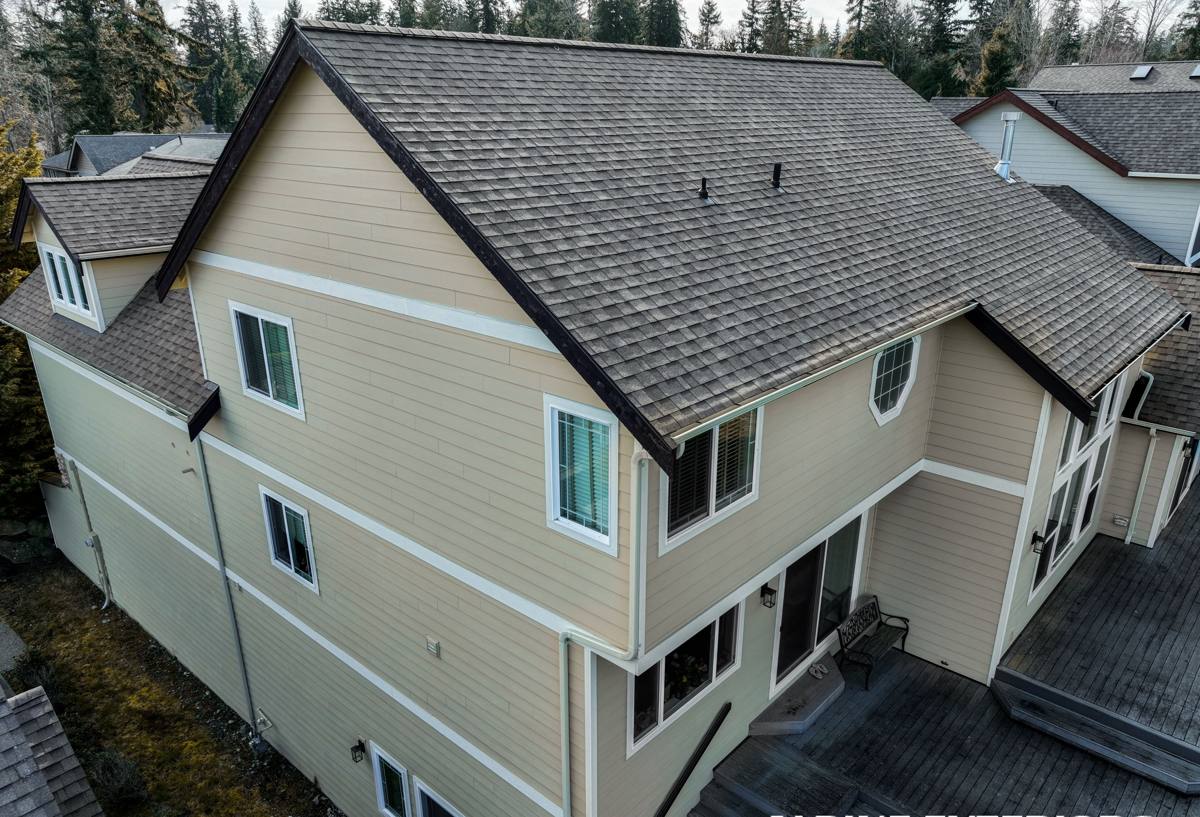
What a Correctly Built Deck Needs Here
Framing and Fasteners
Everything below the decking boards should be treated as the part of the job nobody sees but everybody eventually pays for if it's wrong. In a salt-air, high-moisture environment, we spec stainless or heavy hot-dip galvanized fasteners and structural hardware rather than the standard coated screws and joist hangers that are adequate in drier climates. Cheaper coated hardware can start showing corrosion within a few seasons here, and a corroding joist hanger is a structural issue, not a cosmetic one.
Ledger Attachment and Flashing
Where the deck attaches to the house is the single most common source of hidden rot on any deck, anywhere, but driving rain makes it worse in Whatcom County. Proper ledger flashing — installed so water is shed out and away from the house framing, not just caulked and hoped for — is non-negotiable on every deck we attach to a structure. We also make sure the ledger board itself is held slightly off the house band board or properly flashed to allow drainage and airflow behind it, rather than sitting tight against damp siding.
Joist Protection and Drainage Slope
Joist tape over the tops of the framing members, correct fastener patterns, and a deck surface that's pitched slightly away from the house are all details that matter more here than in a dry climate, because standing water on framing or on the decking surface doesn't just evaporate off in a day or two the way it might elsewhere. It sits, and moss and algae start growing in it.
Decking Material Choices for This Climate
There's no single "right" decking material for Barkley — it depends on budget, how much upkeep the homeowner wants to do, and how shaded or exposed the site is. Here's how the common options actually perform under our conditions:
| Material | Moisture & Moss Behavior | Maintenance | Relative Cost |
|---|---|---|---|
| Pressure-treated wood | Absorbs water, needs sealing to resist moss and cupping | Annual cleaning and re-sealing recommended | Lowest upfront |
| Cedar | Naturally rot-resistant but still needs care in shaded, damp spots | Periodic cleaning, oiling or staining every few years | Moderate |
| Capped composite | Sheds water well, resists moss growth much better than wood | Occasional washing, no sealing or staining | Higher upfront |
| PVC decking | Fully synthetic, best moisture and moss resistance of the group | Lowest ongoing maintenance | Highest upfront |
We're honest about the trade-offs rather than pushing one product line. Wood costs less to install but asks more of the homeowner every year. Composite and PVC cost more upfront but hold up with less babysitting in a climate that grows moss on almost anything left damp and shaded. The right call usually comes down to how much annual maintenance a homeowner actually wants to sign up for.
Dealing With Moss, Algae, and Long-Term Drainage
Moss and algae aren't just cosmetic here — they're slippery, and on a deck that means a real fall hazard, especially on stairs. A correctly built deck fights this in a few ways: proper spacing between boards so water and debris don't sit and collect, a slope away from the house so water actually leaves the surface, and gaps at the perimeter that allow airflow underneath the deck rather than trapping damp air below it. Sites with heavy tree cover or north-facing exposure — common around Barkley — need this attention to drainage even more than an open, sunny lot would.
No decking material is completely moss-proof if it sits in shade and moisture long enough without ever being cleaned. But a deck built with the right slope, spacing, and airflow needs far less scrubbing to stay safe and good-looking than one that was framed without those details in mind.
Permits and Whatcom County Requirements
Most raised decks trigger a building permit in Whatcom County, and there are setback rules tied to property lines that vary by lot and zoning. Deck height, guardrail requirements, and stair details are also commonly inspected items. We handle the permit submittal and coordinate inspections as part of the job rather than leaving that paperwork to the homeowner — it's one less thing to chase down, and it means the deck is built to a standard that will hold up if the property is ever sold and the buyer's inspector takes a close look.
Our Process for a Barkley Deck Project
- On-site assessment — we look at sun exposure, drainage path, existing structure (if attaching to the house), and how the site handles rain today.
- Design and material selection — sizing, layout, and an honest conversation about which decking material fits the budget and the maintenance appetite.
- Permit submittal — we prepare and submit what Whatcom County requires and schedule inspections around the build timeline.
- Framing — ledger flashing, corrosion-resistant hardware, joist tape, and correct slope built in from the start.
- Decking, railing, and stairs — installed to manufacturer spec where a warranty is in play, with fastener patterns and gapping set for our climate, not a generic dry-climate spec sheet.
- Final walk-through — we go over care and maintenance specific to whatever material was installed, so there are no surprises the first wet fall.
Why Hiring a Crew That Already Works Barkley Matters
A deck built by a crew unfamiliar with this specific stretch of Whatcom County can still look fine on installation day and still run into trouble two or three winters later, once the salt air and rain have had time to find every shortcut. A crew that already works in and around Barkley knows which details can't be skipped here — the flashing, the fastener grade, the drainage slope — because we've seen what happens on the decks where those details got skipped. We also already know the county's permit and inspection process, which keeps a project from stalling out on paperwork.
There's also a practical side to hiring local: shorter response times if something needs a follow-up look, and a crew that's easy to reach again down the road rather than a name from an app that did one job and moved on.
Deck Maintenance Checklist for Whatcom County Homes
- Sweep debris off the deck surface regularly, especially in fall when leaves and needles accumulate and hold moisture.
- Clean moss and algae off the surface and stairs at least once a year, more often in shaded areas.
- Check that gaps between boards and around the perimeter are clear and allowing drainage and airflow.
- Inspect fasteners and hardware periodically for corrosion, especially on wood decks with standard coated screws.
- Reseal or re-stain wood decking on the schedule the product calls for — don't wait until it's visibly gray and dry.
- Confirm the deck still slopes away from the house and hasn't settled or shifted over time.
What a New Deck Typically Involves, Cost-Wise
Deck pricing depends heavily on size, decking material, railing choice, and whether the site needs extra framing work for slope or height. As a broad guide, a straightforward pressure-treated deck sits at the lower end of the cost range, cedar runs somewhere in the middle, and composite or PVC decking sits at the higher end due to material cost — though it can even out over time given the lower maintenance. The clearest way to know what a specific project will cost is a site visit, since lot slope, access, and existing structure all move the number more than the decking material alone.
If you're weighing a new deck or a rebuild in Barkley, we're glad to take a look and give you a straightforward, no-pressure estimate using the form below.