 Whatcom County
 Window Replacement Built for Nooksack's Weather, Not Just Any Weather
Nooksack sits in the river-bottom lowlands of Whatcom County, where damp air off the Nooksack River and the surrounding farmland lingers on siding and window frames far longer than it does in drier parts of the state. Add in the driving rain that comes through this corner of the county for much of the fall and winter, plus a moss season that can run six months or longer on north-facing walls, and you've got a set of conditions that punishes old, poorly sealed, or wrong-for-climate windows. Whatcom County as a whole runs a wide range, from the salt air along Bellingham Bay to the humid, low-lying moisture here around Nooksack — but the common thread is that wood and metal components stay wet longer than homeowners expect, and that changes what "correct" window replacement actually looks like.
A window replacement job that would hold up fine in a dry climate can fail here within a few seasons if the flashing, sealants, and frame material weren't chosen with this moisture load in mind. This page covers what we look for in Nooksack homes specifically, what a properly done replacement involves, and how our process works from estimate to final walkthrough.
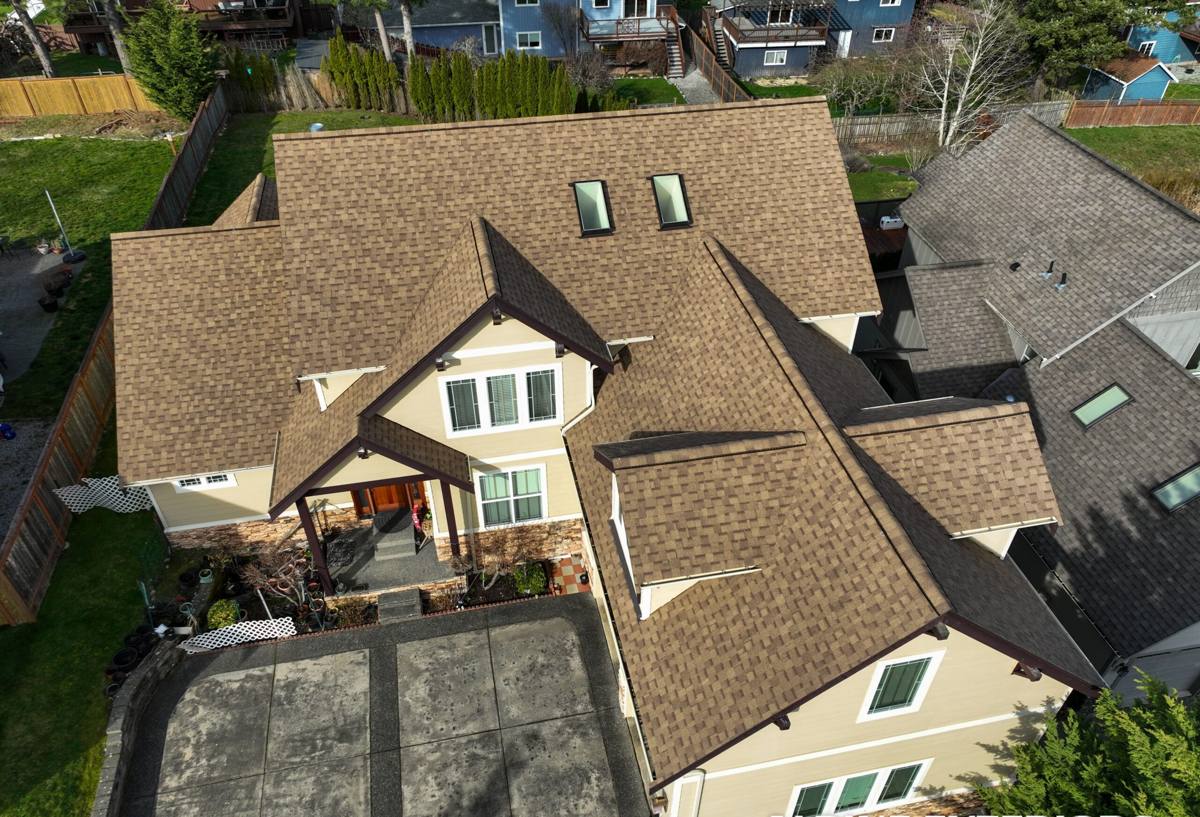
How Whatcom County's Climate Wears Down Windows
Moisture Intrusion
Old wood-frame windows and even many vinyl units from the 1990s and 2000s were never sealed to handle years of near-constant damp air. Once water finds its way behind old flashing or through failed caulk lines, it doesn't dry out quickly here — it sits in the wall cavity, and that's how rot and mold start.
Moss and Organic Growth
Moss doesn't just grow on roofs. It takes hold in window sills, corners, and anywhere water sits against wood or vinyl trim. Once established, it holds moisture against the frame around the clock, which accelerates whatever decay has already started.
Driving Rain and Wind-Driven Water
Storms that push rain sideways test window seals in a way that a light, straight-down rain never will. Older single-hung or slider windows with worn weatherstripping let water in around the sash, not just through obvious gaps — and homeowners often don't notice until there's visible staining or a soft spot on the interior sill.
Condensation and Energy Loss
Foggy glass between panes means the seal has failed and the insulating gas has escaped — that window is no longer doing its job, and it usually means a replacement, not a repair.
Signs Your Windows Need Replacing
- Fogging or moisture trapped between the panes of a double-pane window
- Soft, spongy, or discolored wood at the sill or lower corners of the frame
- Visible moss or black staining building up on the frame or trim
- Drafts you can feel near the frame edges when it's windy outside
- Windows that are hard to open, close, or lock — often a sign the frame has swelled or warped
- Rising heating bills without any other clear explanation
- Peeling paint or bubbling drywall on the interior wall around the window
- Visible gaps between the window frame and the siding or trim
What a Correct Window Replacement Job Actually Involves
Full-Frame vs. Insert Replacement
Not every window needs to come out down to the studs. If the existing frame is sound, dry, and square, an insert (or "pocket") replacement — where the new window fits into the existing frame — is faster and less invasive. But in a climate like ours, we don't assume the frame is sound just because it looks fine from the outside. Part of our job is checking for hidden rot before recommending an insert replacement over a full-frame tear-out.
Flashing and Water Management
This is the step that matters most in Whatcom County and gets skipped most often by rushed installs. Proper flashing — integrated with the house wrap or building paper, sloped correctly, and sealed at every overlap — is what actually keeps driving rain out of the wall. A window that looks great but was flashed wrong will leak eventually; it's just a matter of time.
Sealing and Insulation
Gaps around the new frame need to be filled with the right material — typically low-expansion foam, not just caulk — to stop both air infiltration and moisture migration into the wall cavity.
Interior and Exterior Trim
Trim gets reinstalled or replaced so the finished look matches the house, and any exterior trim is caulked and sealed against the same wind-driven rain that caused problems in the first place.
Choosing the Right Window Materials for This Climate
Material choice matters more here than in drier regions, because whatever you install is going to spend a lot of its life damp. Here's how the common options compare for a Nooksack-area home:
| Frame Material | Moisture Behavior | Maintenance | Typical Fit for This Area |
|---|---|---|---|
| Vinyl | Doesn't rot or absorb water; seams need good manufacturing to stay tight | Low — occasional cleaning | Most common choice; good value and low upkeep |
| Fiberglass | Very stable in wet/dry cycles; resists warping | Low | Strong option for homes wanting a longer-term, lower-movement frame |
| Wood (unclad) | Absorbs moisture; needs paint/finish maintained to stay protected | High — regular repainting and sealing | Best reserved for homeowners committed to upkeep; higher risk here without diligence |
| Wood-clad (vinyl or aluminum exterior) | Exterior face protected from moisture; wood core still needs a sound seal | Moderate | Good compromise when interior wood look is wanted |
| Aluminum | Doesn't rot but conducts cold and can condense | Low | Less common for residential replacement in this climate due to condensation risk |
Our default recommendation for most Nooksack homes is vinyl or fiberglass, simply because they hold up to the moisture load with the least ongoing maintenance. Where we don't recommend unclad wood, it's not because the product is bad — it's because it demands a level of upkeep that most homeowners underestimate in a climate this wet, and we'd rather be upfront about that trade-off than sell something that turns into a maintenance burden.
Glass Packages Worth Considering
Double-pane with a Low-E coating and argon fill is the baseline we'd suggest for this area. Triple-pane adds cost and weight but can be worth it on north- or west-facing walls that take the brunt of the wind-driven rain and cold. We'll walk through the actual difference in your specific quote rather than upselling a package you don't need.
Our Process, Start to Finish
- On-site assessment — we look at every window being considered, check for hidden moisture or frame damage, and measure for accurate ordering.
- Honest recommendation — insert vs. full-frame, material options, and glass packages explained in plain terms, with a written estimate.
- Ordering and scheduling — lead times vary by manufacturer and are communicated up front so there are no surprises.
- Removal and inspection — old windows come out carefully, and we check the opening for rot or water damage before anything new goes in.
- Installation — proper flashing, air sealing, and insulation, not just "set it and caulk it."
- Trim and finish work — interior and exterior trim reinstalled or replaced to match the home.
- Final walkthrough — every window opened, closed, and checked for a clean seal before we consider the job done.
What Affects the Cost of a Window Replacement
| Factor | Why It Matters |
|---|---|
| Insert vs. full-frame replacement | Full-frame costs more but is necessary when there's hidden rot or the frame is out of square |
| Number of windows | Per-window cost typically drops when several are done in the same visit |
| Frame material | Vinyl is generally the most budget-friendly; fiberglass and wood-clad cost more upfront |
| Glass package | Triple-pane and specialty coatings add cost but may be worth it on exposed walls |
| Window size and configuration | Large picture windows, bays, or custom shapes cost more than standard sliders or double-hungs |
| Existing damage | Rot repair, resheathing, or rebuilding a rough opening adds labor beyond the window itself |
We won't quote a per-window number here since it depends on all of the above, but we're upfront during the estimate about what's driving the price on your specific home — no padded change orders after the fact.
Why Hire a Crew That Already Works in Nooksack
A contractor who works this part of Whatcom County regularly already knows what to expect when a wall gets opened up — where moisture tends to collect, how long the moss season really runs, and which details of an install actually matter versus which are just upsells. That's different from a crew passing through who treats every job the same regardless of climate. We'd rather flag a rot problem before it becomes a bigger repair than have a homeowner find out the hard way two winters later.
Caring for New Windows After Installation
- Rinse frames and tracks periodically to clear pollen, dust, and organic buildup before it turns into moss
- Check exterior caulk lines once a year, especially after a hard winter, and have any cracks resealed
- Keep gutters and downspouts clear so water isn't running down against window trim
- Operate locks and hardware a few times a season so mechanisms don't seize from disuse
- Wipe down interior sills if condensation appears, and let us know if it's persistent — it can signal a ventilation or seal issue worth checking
If your Nooksack home has windows showing any of the signs above — or you're just ready to stop losing heat and fighting moss around the frames — we're happy to take a look. Fill out the form below for a free, no-pressure estimate, and we'll tell you honestly what your windows actually need.