 Whatcom County
 Why Bellingham Roofs Take a Different Kind of Beating
A roof in Bellingham does not fail the same way a roof does in a dry inland climate. Between the salt air rolling off Bellingham Bay, the long stretches of driving, wind-pushed rain, and a moss season that can run most of the year in shaded and north-facing areas, Whatcom County roofs are under near-constant low-grade pressure. None of it looks dramatic day to day. It shows up later as a soft spot in the decking, a stain on a ceiling, or shingles that have curled and lost their grip years before they should have.
Roof repair here is less about patching a single obvious hole and more about understanding which of these slow processes caused the failure, so the fix actually holds. That is the lens we use on every repair call in Bellingham.
The Roof Problems We See Most in Bellingham Homes
Moss and Organic Growth
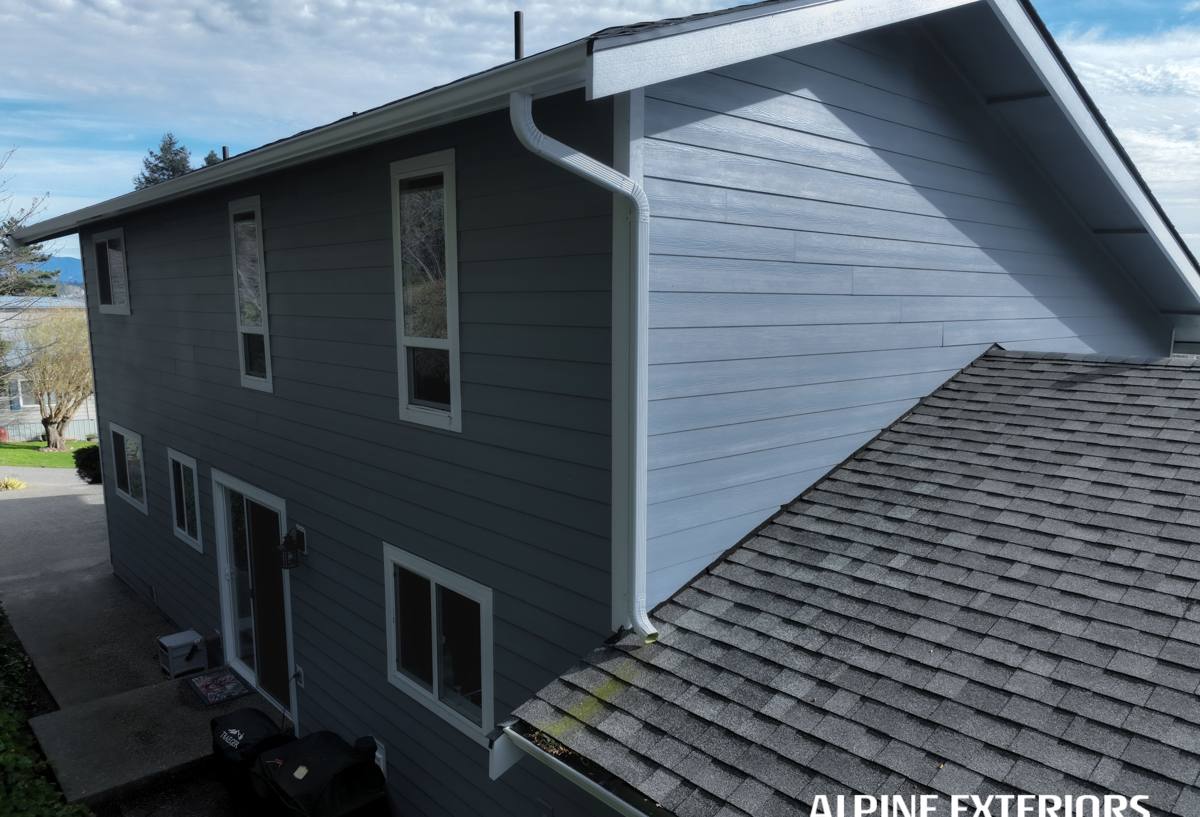
Moss is the signature roof problem in this part of Washington. It thrives on shaded roof planes, in valleys where debris collects, and on north-facing slopes that never fully dry out between rain events. Left alone, moss does more than look bad — it lifts shingle edges as it grows, holds moisture against the roofing material, and slowly breaks down the granule surface that protects shingles from UV and weather. By the time moss is thick enough to notice from the ground, it has often already been working on the roof for a season or two.
Flashing and Valley Leaks
Most leaks we're called out for don't start in the open field of the roof — they start at the transitions: chimneys, skylights, plumbing vents, and valleys where two roof planes meet. These are the spots where wind-driven rain gets pushed sideways instead of running straight down, and where flashing that was installed too thin, sealed instead of properly lapped, or simply worn out over time lets water find a way in.
Wind and Storm Damage
Whatcom County gets its share of fall and winter windstorms off the Strait, and those events are a common trigger for repair calls — lifted or torn-off shingles, damaged ridge caps, and debris impact from nearby trees. Storm damage repairs are usually straightforward once we're up there, but the damage is often bigger than what's visible from the ground, which is why a full inspection matters more than a quick patch over the obvious spot.
What a Correct Roof Repair Actually Involves
Diagnosing the Real Problem First
Water rarely leaks in a straight line. It can enter at a flashing seam near a chimney and travel along the decking before dripping through the ceiling several feet away. A repair that only addresses the visible interior stain, without tracing the path back to the actual entry point, tends to fail again within a season. Our process starts on the roof itself — checking flashing, seals, shingle condition, and the decking underneath before we decide on a fix.
Matching Materials and Technique to the Situation
Not every repair calls for the same approach. A localized moss and granule-loss issue might just need affected shingles replaced and the area cleaned and treated. A flashing failure at a valley usually means removing surrounding shingles to reinstall flashing correctly, not just adding sealant on top of the old metal. And if we find soft or delaminated decking under a leak, that gets replaced — patching shingles over rotten decking just delays a bigger repair later.
Building in Drainage, Not Just Patching the Hole
Because this region gets so much sustained rain rather than short, heavy storms, we pay close attention to how water actually moves off a repaired section — lap direction, underlayment condition, and whether nearby gutters and downspouts are doing their job. A technically sound patch can still fail if water is being funneled toward it by a clogged gutter or a poorly sloped valley nearby.
Our Roof Repair Process
- Inspection. We get on the roof (not just a ground-level look) to check the suspect area and the surrounding roof plane, flashing, and decking.
- Diagnosis and explanation. We tell you what's actually causing the problem, in plain terms, before recommending a fix.
- Written estimate. You get a clear scope of work and price before anything is repaired — no surprise add-ons mid-job.
- The repair. Damaged shingles, flashing, or decking are removed and replaced properly, matched to your existing roofing where possible.
- Cleanup and check. Debris and old material are hauled off, and we walk the repair area with you before we consider the job done.
Repair or Replace? How We Help You Decide
Not every roof problem in Bellingham needs a full replacement, and we don't push one when a repair will genuinely hold. The honest answer usually comes down to a few factors:
| Factor | Leans Toward Repair | Leans Toward Replacement |
|---|---|---|
| Roof age | Well within expected lifespan for the material | Nearing or past the end of its expected service life |
| Extent of damage | Localized to one area, flashing, or a small section | Widespread moss damage, multiple leak points, or granule loss |
| Decking condition | Solid, no rot or sagging | Soft spots, sagging, or rot found in multiple areas |
| Shingle match availability | Matching material is available | Discontinued style makes patch repairs visually mismatched |
| History of repeat leaks | First occurrence, clear single cause | Repeat leaks in different spots suggest system-wide wear |
If a repair is the right call, we do the repair. If we find a roof that's genuinely past the point where patching makes sense, we'll say so directly and explain why, rather than stringing along a roof that's going to keep costing you money in small pieces.
What Affects the Cost of a Roof Repair Here
Every repair is different, but the same handful of factors drive most of the variation we see on Whatcom County roofs:
| Factor | Why It Matters |
|---|---|
| Roof pitch and access | Steeper roofs and harder-to-reach areas take longer and require more safety setup |
| Extent of moss or water damage | Damage that has spread under shingles into decking costs more to correct than surface-level issues |
| Flashing complexity | Chimneys, skylights, and multiple valleys take more labor than a simple field repair |
| Material match | Matching an older or discontinued shingle style can add time and cost |
| Roof height and story count | Multi-story homes require additional equipment and time for safe access |
We'd rather walk you through these factors on your actual roof than quote a number sight unseen. A short in-person look is usually enough to give you a real estimate, not a guess.
Keeping a Bellingham Roof Healthy Between Repairs
A repaired roof stays repaired longer with a bit of regular attention, especially given how much moisture this area deals with year-round. Homeowners who stay ahead of the small stuff generally avoid the bigger, more expensive repairs down the line.
- Clean gutters and downspouts at least twice a year so water isn't backing up under roof edges
- Remove overhanging branches that keep roof sections shaded and slow to dry
- Have moss treated before it spreads, rather than waiting until it's visibly thick
- Check attic insulation and ventilation — poor airflow contributes to moisture buildup from underneath
- After a significant windstorm, do a visual check (or have it checked) for lifted or missing shingles
- Address small leaks immediately — a slow drip left over a winter can mean replacing decking by spring
Why Local Experience Matters for This Kind of Repair
Roof repair is one of those jobs where local experience genuinely changes the outcome. A crew that regularly works on roofs around Bellingham already knows which roof orientations grow moss fastest, which flashing details tend to fail first in this climate, and how to sequence a repair around the region's rain patterns instead of getting rushed by them. That familiarity means fewer surprises, a more accurate first estimate, and a repair that's built for the conditions your roof actually faces — not a generic fix pulled from a drier climate's playbook.
It also matters for the practical side of the job: knowing local permitting expectations, working safely on the wet, moss-prone surfaces common here, and being available if a repair needs a follow-up check after the next big storm rolls through.
Get a Straight Answer About Your Roof
If you're dealing with a leak, storm damage, or a roof that's gotten heavier with moss than you'd like, we're happy to take a look and give you an honest read on what it actually needs. We offer free, no-pressure estimates for roof repair work in Bellingham and throughout Whatcom County — fill out the form below and we'll get back to you.