 Whatcom County
 Window Installation in Everson: A Different Job Than the Coast
Everson sits inland along the Nooksack River, away from the direct salt spray you'd get in Blaine or Birch Bay, but it's still very much a Whatcom County town when it comes to weather. The valley holds fog and humidity longer than the open coast, and the same marine storm systems that soak Bellingham roll right up the river corridor and dump on Everson too. Add in a long, low-sun wet season and you get a climate that's harder on window installations than most homeowners realize — not because of one dramatic event, but because of months of steady moisture finding every gap a builder or installer left behind.
We install windows in Everson knowing that. It changes how we flash an opening, what frame materials we recommend, and how we sequence the work around the weather. A window that's a fine choice in a dry inland climate can be the wrong call here, and an installation method that passes inspection in a drier region can still let water in after a few Whatcom County winters.
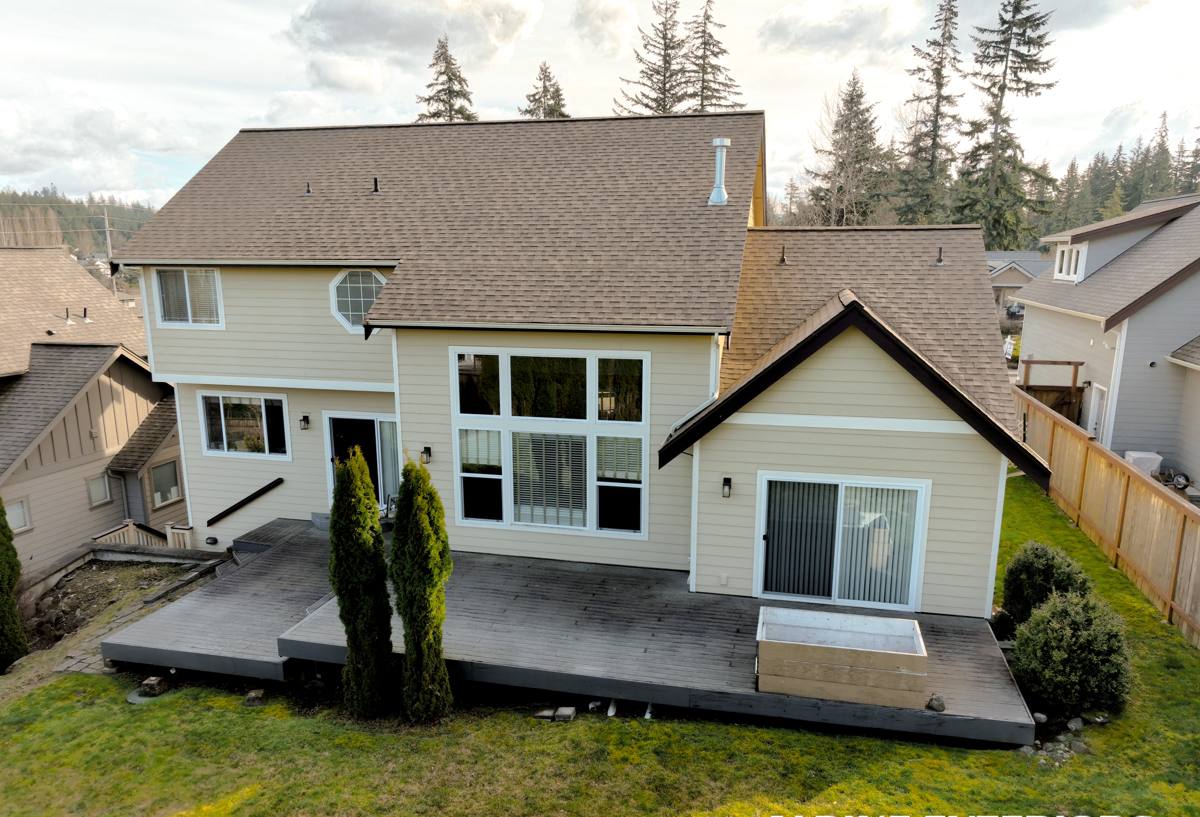
How Whatcom County Weather Wears Down Windows
Windows rarely fail all at once. In this climate, the damage is almost always slow and quiet, showing up in a handful of predictable ways:
- Wind-driven rain finds gaps. Storms off the Pacific push rain sideways, not just down, and it works its way behind trim and siding wherever flashing was skipped or done wrong.
- Moss and algae hold moisture against wood. Whatcom County's long moss season means anything organic growing on a sill or sash stays damp far longer than it should, which accelerates rot in wood and wood-clad frames.
- Failed seals fog up double-pane glass. Constant humidity and temperature swings between day and night stress the seal on insulated glass units; once it fails, moisture gets trapped between the panes permanently.
- Condensation builds up on the inside. Older or poorly insulated frames sweat during our wet, cool months, and that moisture drips down onto sills and drywall, feeding mold over time.
None of these are dramatic on their own. But left alone through a few Whatcom County winters, they compound into rot, drafts, and higher heating bills.
Signs It's Time to Replace, Not Repair
Not every problem window needs full replacement — sometimes new weatherstripping or a re-caulk buys you real time. But there's a point where repair is just delaying the inevitable, and spending on it stops making sense. Here's what tells us a window has crossed that line:
- Fogging or a milky haze between the panes that won't clean off — the seal has failed and the glass unit can't be restored
- Soft, spongy, or discolored wood at the sill or lower corners of the frame
- Visible daylight or a draft you can feel with your hand along the frame edge
- Windows that are hard to open, won't stay up, or don't latch flush anymore
- Paint that keeps bubbling or peeling at the same spot no matter how often it's redone
- Noticeably cold glass or frames to the touch in winter compared to the rest of the wall
If you're seeing two or more of these on the same window, replacement usually costs less over five years than another round of patchwork repairs.
What a Correct Window Installation Actually Involves
The window itself matters less than most people think. What separates a window that lasts twenty-plus years in this climate from one that leaks within a few winters is almost entirely in the installation details.
Flashing and Water Management
Every opening needs a proper drainage path: sill pan flashing that slopes water back outward, head flashing that sheds water over the top, and side flashing that laps correctly with the water-resistive barrier already on the wall. Done right, any water that gets past the window's own seals is directed back out of the wall assembly instead of soaking into the framing. This is the single most important — and most commonly rushed — part of the job in a climate that sees as much driving rain as Whatcom County does.
Air Sealing and Insulation
The gap between the window frame and the rough opening needs to be sealed and insulated, not just caulked at the trim. Low-expansion foam or backer rod and sealant around the full perimeter stops both air leakage and the kind of interior condensation that comes from cold air infiltrating around an improperly sealed frame.
Fit, Level, and Reveal
A window that's out of level or racked in the opening will bind, won't seal evenly, and puts uneven stress on the glass unit's seal — often the exact cause of the premature fogging we see in older installations around the county. Shimming to a true, square fit before fastening is a slow step that's easy to shortcut and expensive to fix later.
Choosing a Window Frame Material for This Climate
There's no single "best" window material — the right choice depends on your home's exposure, your maintenance appetite, and your budget. Here's how the common options hold up in Whatcom County's wet, moss-prone conditions:
| Frame Material | Moisture Tolerance | Maintenance | Notes for This Climate |
|---|---|---|---|
| Vinyl | Very good — won't rot | Low, occasional cleaning | Most common choice locally; good value and consistent performance in wet weather |
| Fiberglass | Excellent | Low | Handles temperature and moisture swings with minimal expansion; higher upfront cost |
| Wood-clad | Good if maintained; vulnerable at joints and sills | High — finish and sealant need regular attention | Classic look, but the long moss season is unforgiving of neglected maintenance |
| Aluminum | Fair — prone to condensation without a thermal break | Low | Less common for residential replacement here due to heat loss and sweating in our cool, humid winters |
For most Everson homes, we steer people toward vinyl or fiberglass. Wood-clad windows can still be the right call for a specific look, but we're upfront that they demand a maintenance routine most homeowners underestimate in a climate this wet — and we'd rather set that expectation honestly than sell a product that ends up neglected.
Window Installation and Siding: Why We Treat Them as One Job
Window openings and siding share the same water-management system — the flashing at the window has to integrate correctly with the weather-resistive barrier and the siding around it, or you've just created a new leak path at the seam. If your siding is aging, cracked, or already showing moisture damage near the window openings, it's usually smarter to plan the window replacement and siding work together rather than sequentially. Installing new windows into old, failing siding means redoing the flashing tie-in twice; replacing siding around old windows means you're stuck working around openings that may need replacing anyway. When we quote window work in Everson, we'll always tell you if we see siding conditions nearby that are worth addressing at the same time — not to upsell, but because it's the difference between one clean water-management system and two patched-together ones.
Our Window Installation Process
- On-site assessment. We look at each opening, the condition of the surrounding wall, siding, and trim, and talk through what's actually failing versus what's cosmetic.
- Product and sizing. We measure precisely and go over frame material, glass package, and style options suited to the home and your budget — no pressure toward the most expensive option.
- Scheduling around weather. Wall openings are exposed during a window swap, so we plan installs for stretches of workable weather where possible and take steps to protect the opening if conditions turn.
- Removal and opening prep. We remove the old unit carefully, inspect the framing and sheathing for hidden rot or water damage, and repair anything compromised before the new window goes in — this is the step where old problems usually surface.
- Flashing and installation. Sill pan, side, and head flashing go in correctly integrated with the existing water-resistive barrier, the window is set level and square, and the perimeter is air-sealed.
- Interior and exterior finish. Trim, caulking, and paint or stain are finished on both sides so the install looks as good as it performs.
- Walkthrough. We check operation on every window with you before we call the job done.
What Affects the Cost of Window Installation
We won't quote a number without seeing the job, but these are the factors that actually move the price up or down:
| Factor | Why It Matters |
|---|---|
| Frame material | Vinyl is the most budget-friendly; fiberglass and wood-clad cost more upfront but differ in longevity and upkeep |
| Number and size of windows | Larger openings and full-house projects have per-unit efficiencies but a bigger total |
| Condition of the rough opening | Hidden rot or water damage found during removal adds repair work before the new window can go in |
| Access and building height | Second-story or hard-to-reach openings take more time and equipment |
| Glass package | Upgraded low-E coatings or gas fills add cost but improve comfort and energy performance |
| Disposal | Hauling and disposing of old windows is a line item some quotes skip and then add later |
As a general, honest range: a single standard-size replacement window installed correctly, with proper flashing and finish work, typically lands in the low-to-mid four figures. Full-home projects scale from there, usually with a lower cost per window as the job size grows. We'd rather give you a real number after seeing your openings than a lowball estimate that grows once we're on site.
Keeping New Windows Working Through Wet Season — and Why a Local Crew Matters
Maintenance Checklist
- Clear moss, leaves, and debris off sills and tracks before the wet season sets in
- Check and re-bead exterior caulking at the trim every couple of years — it's the first thing to fail
- Vacuum weep holes on vinyl and fiberglass frames so condensation and rain can drain out as designed
- Watch for interior condensation on cold mornings; persistent fogging on the inside of the glass can point to a ventilation or humidity issue worth addressing separately
- Operate every window a few times a year, even ones you don't normally open, so hardware doesn't seize
Why Local Experience Matters
A crew that already works Everson and the rest of Whatcom County knows how the valley's fog and rain patterns differ from the open coast, which manufacturers actually stock product locally without long lead times, and how the county's permitting and inspection process runs for window and siding work. More practically, we've seen how the specific installation shortcuts that get away with it in a drier climate show up as callbacks two winters later here. That's not a sales pitch — it's just what happens when you do this work in the same weather, year after year, in the same county.
If you're dealing with drafty, fogged, or aging windows in Everson, we're glad to come take a look. The estimate is free, there's no pressure, and you'll get a straight answer about whether repair, partial replacement, or a full window job makes sense for your home — just fill out the form below to get started.