 Whatcom County
 Why Siding Fails Faster in Sunnyland
Sunnyland sits close enough to Bellingham Bay that salt-laden air is a real factor in how exterior materials age, and it shares the same wind-driven rain and long gray stretches that define weather across Whatcom County. That combination is harder on a home's exterior than most homeowners realize until they're dealing with the results: swollen trim, peeling paint, soft spots at the bottom courses, and dark streaking on shaded walls that never quite dries out between storms.
None of that is unusual here. It's just what this climate does to siding that wasn't built for it, or that was installed without enough attention to water management. A correct installation is the difference between a wall system that shrugs off thirty years of Pacific Northwest weather and one that starts showing problems in year eight or ten.
The Three Climate Factors That Matter Most
- Salt air: Airborne salt accelerates corrosion on fasteners, flashing, and any metal trim that isn't rated for coastal exposure. It also degrades certain paint films faster than inland areas experience.
- Driving rain: Wind-driven rain doesn't just hit siding, it pushes moisture sideways and upward under laps, around penetrations, and into any gap in the water-resistive barrier. Siding that relies on caulk alone to stay dry eventually fails.
- Moss season: Shaded, north-facing, and tree-covered walls in and around Sunnyland stay damp for extended stretches of the year, which is exactly the environment moss and algae need to take hold on porous or textured surfaces.
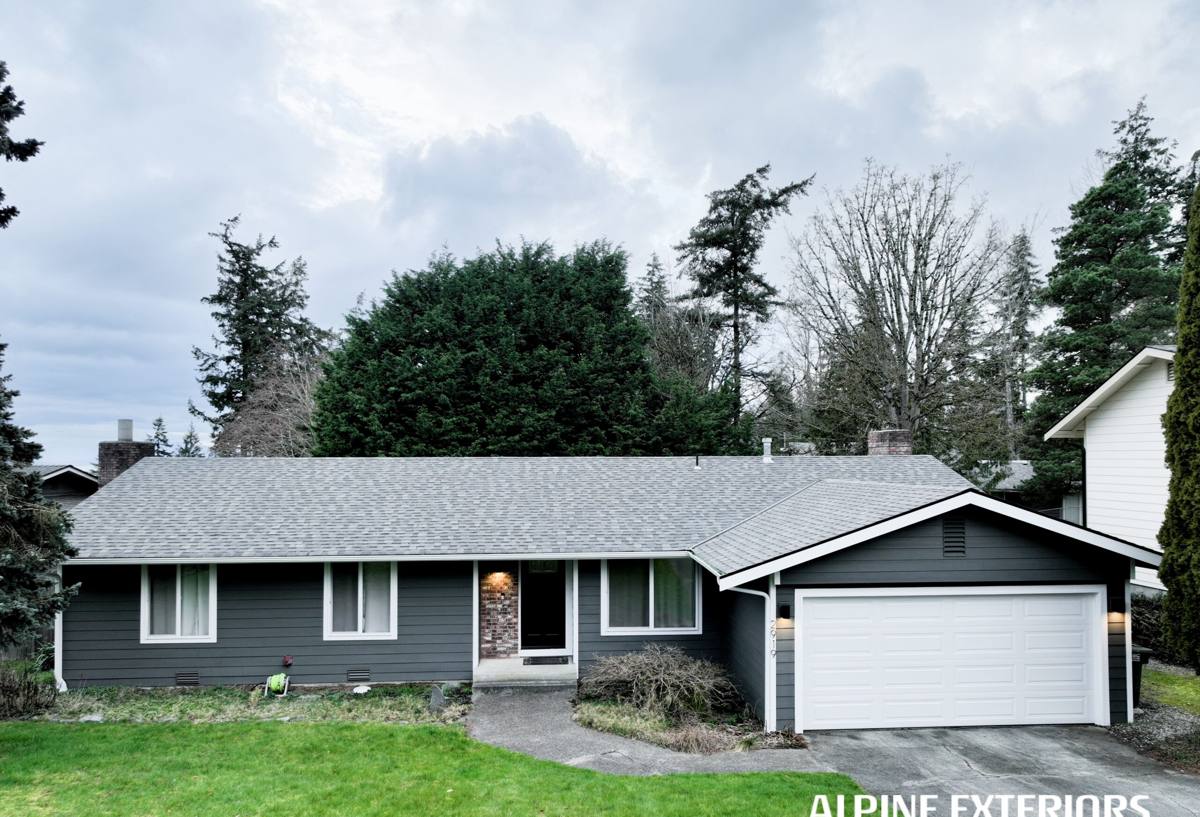
What a Correct Siding Installation Actually Involves
Siding is a water management system, not just a cosmetic layer. A crew that treats it that way builds in redundancy so that if one line of defense gets wet, the wall still dries out and stays protected. A crew that treats it as decoration skips the parts nobody sees until there's a problem.
What We Check and Build Before the First Panel Goes Up
- Sheathing condition — any soft, delaminated, or water-damaged sheathing gets identified and addressed before new siding goes over it, not buried under it
- A continuous weather-resistive barrier, lapped correctly from the bottom up so water sheds outward at every seam
- Properly integrated flashing at every window, door, deck ledger, and roof-to-wall transition — the details that cause the majority of moisture intrusion when skipped or rushed
- Correct fastener type, spacing, and penetration depth for the specific Hardie product being installed
- Proper clearance between the bottom of the siding and grade, decks, patios, and roof lines so water and debris don't sit against the material
- Rain-screen or drainage gap detailing where the wall assembly calls for it, so moisture that does get behind the siding has somewhere to go
Every one of those steps matters more in a climate like this than in a drier region, because the margin for error shrinks when a wall spends months of the year wet.
Why We Only Install James Hardie Fiber Cement
We made a decision as a company to install one siding system — James Hardie fiber cement — and not offer vinyl, LP SmartSide, Cemplank, Allura, primed spruce, or cedar. That's not a marketing angle, it's a standard we hold because of what we've seen this climate do to alternatives over time.
Fiber cement doesn't feed moss the way wood-based products can, doesn't warp or buckle under sustained moisture exposure the way engineered wood siding can when a seam fails, and doesn't become brittle or fade the way vinyl does under UV exposure and temperature swings. Hardie's ColorPlus factory-applied finish is baked on and warranted separately from the substrate, which matters in an area where repainting siding every few years isn't something most homeowners want to budget for. Hardie also engineers specific product lines (their HZ system) for climate zones, so what goes on a Whatcom County home is matched to Pacific Northwest moisture exposure rather than a one-size-fits-all specification.
We're not going to tell you cedar looks bad or vinyl is worthless — both have real appeal and legitimate uses. But we've chosen to put our name behind one product system we can install to spec, warranty with confidence, and stand behind for decades, rather than offer several products and hope each one performs.
Comparing Siding Options in a Marine Climate
| Factor | James Hardie Fiber Cement | Vinyl | Engineered Wood / Cedar |
|---|---|---|---|
| Moss/algae resistance | Strong — non-organic substrate | Moderate — can trap moisture behind panels | Weaker — organic material feeds growth if damp |
| Salt air / corrosion behavior | Not affected; fasteners and trim matter more than the panel | Panel unaffected, but can become brittle over time | Finish and fasteners degrade faster near salt air |
| Moisture/warping risk | Very low when installed to spec | Low, but can bow or distort in heat/cold swings | Higher — swelling, cupping, and rot at damaged seams |
| Finish longevity | Factory ColorPlus finish, separately warranted | Color molded in, can fade/chalk over time | Field-applied paint or stain, needs recoating |
| Fire resistance | Non-combustible | Combustible | Combustible |
Our Installation Process
Step by Step
- On-site assessment: We walk the exterior, check existing siding and sheathing condition, note drainage issues, moss patterns, and any areas where past water intrusion shows.
- Scope and product selection: We determine which Hardie product line, plank width or panel style, and ColorPlus finish fit the home and the homeowner's preferences.
- Tear-off and substrate repair: Old siding comes off, sheathing is inspected, and any damaged material is repaired or replaced before anything new goes on.
- Weather barrier and flashing: A continuous water-resistive barrier goes up first, followed by flashing at every penetration and transition point.
- Installation to manufacturer spec: Hardie siding is installed with the correct fasteners, spacing, clearances, and caulking — following James Hardie's published installation requirements, which is also what keeps the manufacturer's warranty intact.
- Final walk-through: We review the finished exterior with the homeowner, check trim and caulk lines, and confirm everything meets our standard before calling the job done.
Signs a Sunnyland Home May Need New Siding
- Visible warping, cupping, or soft spots when pressed, especially near the bottom courses or under windows
- Persistent moss or dark streaking that returns shortly after cleaning
- Paint that's peeling, bubbling, or has stopped holding color evenly across the wall
- Rising energy bills that coincide with drafty walls or visible gaps at trim and corners
- Rot or discoloration at seams, corners, or anywhere siding meets a roofline, deck, or ground level
Any one of these on its own might just need a repair. Several at once, especially on a home more than fifteen or twenty years old, usually means the water management system underneath has been compromised for a while.
Why a Crew That Already Works Sunnyland Matters
Every neighborhood in Whatcom County has its own mix of exposure, tree cover, and prevailing wind direction, and Sunnyland is no exception. A crew that's worked houses in this area has already seen which walls take the worst of the driving rain, where moss tends to establish first, and how salt-influenced air affects fastener and trim choices over the long run. That's not something you can fully account for from a general spec sheet — it comes from doing the work locally, repeatedly, and paying attention to how earlier jobs held up.
It also means straightforward logistics: someone who can walk your property, give you a real answer about scope and timeline, and be reachable afterward if a question comes up — not a call center or a subcontractor network with no continuity.
Maintenance After Installation
Fiber cement siding is low-maintenance, not no-maintenance. A rinse-down once or twice a year to remove pollen, dust, and early moss growth keeps the ColorPlus finish looking right and prevents organic buildup from taking hold on shaded walls. Caulk joints and trim should get a visual check periodically, since caulk is the one component that wears out well before the siding itself does. Beyond that, correctly installed Hardie siding is built to go decades without repainting or major upkeep.
Simple Homeowner Checklist
- Rinse siding annually, more often on shaded or north-facing walls prone to moss
- Keep gutters clear so overflow doesn't run directly down exterior walls
- Trim back vegetation and tree cover that keeps siding damp longer than necessary
- Inspect caulk lines around windows, doors, and trim every year or two
- Address small issues — a cracked caulk joint, a loose piece of trim — before they become water intrusion problems
Cost Factors to Expect
| Factor | How It Affects Cost |
|---|---|
| Home size and wall complexity | More square footage, corners, and dormers mean more material and labor time |
| Substrate condition | Sheathing repair or replacement adds cost but is essential if damage is found |
| Product line and profile | Plank width, panel style, and specific Hardie line chosen affect material pricing |
| Trim and detail work | Custom trim, corner treatments, and accent details take more time to install correctly |
| Tear-off scope | Full removal of old siding versus a simpler re-side affects labor hours |
Exact numbers depend on the specific home, which is why we walk the property before giving a real figure rather than quoting off a phone call.
If you're in Sunnyland or elsewhere in Whatcom County and want a straight answer about what your siding needs, we're happy to walk the property, explain what we see, and put together a free, no-pressure estimate — no obligation either way.