 Whatcom County
 Silver Beach Sits Right in Whatcom County's Toughest Weather Corridor
Silver Beach homes take on more moisture than most people realize until they're up close on a ladder looking at the siding. Whatcom County's marine climate sends salt-tinged air inland off the bay, dumps driving rain sideways during fall and winter storms, and then hands the region a long, damp moss season that can stretch from October well into spring. Siding in this neighborhood isn't decorative — it's the single layer standing between that weather and the wood framing underneath.
A lot of siding problems here don't show up as an obvious failure. They show up as a slow, quiet decline: paint that won't hold, seams that stay damp longer than they should, and a green tint creeping across north-facing walls. By the time a homeowner notices, the siding itself may already be compromised. Installing the right material, the right way, from the start is what keeps that decline from ever starting.
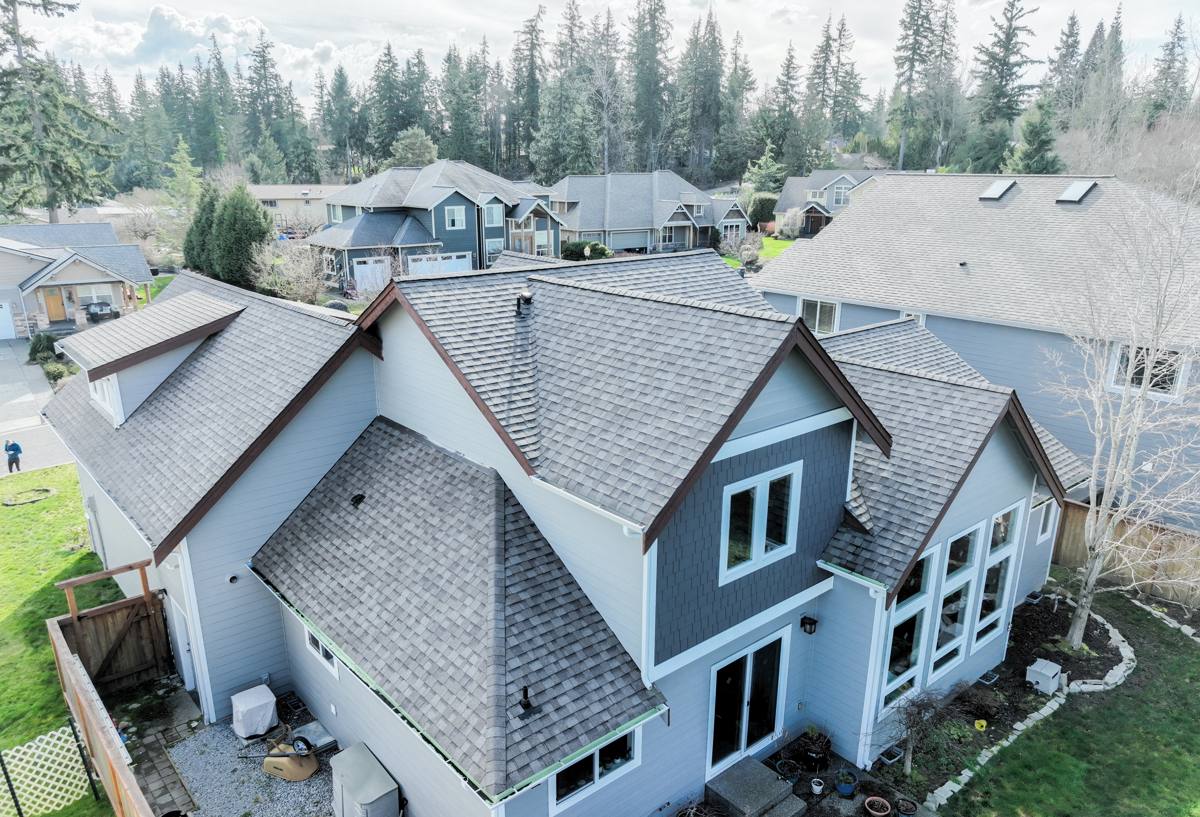
What Whatcom County's Climate Actually Does to Siding Over Time
Understanding the damage pattern is the first step to preventing it. Three forces do most of the work against siding in this part of the county:
Driving Rain and Wind-Driven Moisture
Rain here doesn't just fall — storms off the water push it sideways into wall assemblies, forcing water up under laps and around trim if the installation wasn't detailed correctly. Materials that swell, wick, or delaminate when repeatedly wetted lose their fight with this pattern faster than most homeowners expect.
Moss, Algae, and Constant Shade
Whatcom County's long wet season, combined with shaded lots and tree cover common in established neighborhoods, keeps siding surfaces damp for extended stretches. That constant dampness is exactly what moss and mildew need to take hold. Once organic growth gets a foothold on a porous or absorbent siding surface, it holds moisture against the substrate and accelerates whatever decay process is already underway.
Salt Air and Fastener Corrosion
The marine air that moves through this part of the county carries a light salt content that speeds up corrosion on unprotected fasteners, flashing, and trim. Over years, corroding fasteners loosen, siding shifts, and small gaps open up that let water behind the cladding — a slow leak path that's often invisible from the ground.
Why This Company Installs Only James Hardie Fiber Cement
We don't install vinyl, LP SmartSide, primed spruce, cedar, or other fiber cement brands — not because those products can't work somewhere, but because we've made a professional call about what performs best against this specific climate, year after year, with the least maintenance burden on the homeowner. Fiber cement that's engineered for wet marine conditions handles the moisture cycle Silver Beach sees without swelling, without wicking at cut edges, and without feeding the organic growth that thrives in constant shade and dampness.
James Hardie also builds its HardieZone system specifically around regional climate data. Western Washington falls in the HZ10 zone — engineered for high-moisture, low-freeze marine climates rather than the freeze-thaw cycling of continental regions. That's a meaningful distinction: it means the product spec, the engineered composition, and the factory finish are matched to exactly the kind of weather Silver Beach sees, not a generic national average.
| Material | Moisture & Moss Resistance | Typical Maintenance | Warranty Style |
|---|---|---|---|
| Vinyl siding | Doesn't rot, but seams and J-channels trap moisture; can warp with sustained wet-dry cycling | Periodic cleaning; brittle over time in cooler climates | Often prorated after early years |
| Engineered wood (LP SmartSide) | Treated to resist moisture, but cut edges and fastener points need diligent sealing | Repainting and edge-sealing on a regular cycle | Manufacturer warranty, installation-sensitive |
| Primed wood / cedar | Attractive but absorbs moisture readily; highest risk for rot and moss in shaded, wet conditions | Frequent repainting, caulking, and moss treatment | Limited or none from the material itself |
| James Hardie fiber cement (HZ10) | Non-combustible, engineered for marine moisture cycles, resists swelling and edge failure | Occasional washing; factory ColorPlus finish reduces repainting | Long-term, transferable material warranty |
What a Correct Siding Installation Actually Involves
The material only performs as well as the installation behind it. Most siding failures we're called to diagnose trace back to shortcuts at the water-management layer, not the siding itself.
Getting the Water-Barrier Layer Right
Before a single board goes up, the wall needs a correctly lapped weather-resistant barrier, properly integrated flashing at every window, door, and penetration, and a drainage plane that gives incidental moisture somewhere to go. On a home exposed to driving rain, this hidden layer matters more than the visible finish.
Clearances, Fastening, and Factory Finish
James Hardie siding has specific installation requirements: correct nailing patterns and fastener spacing, proper clearance from grade, decks, and roof lines, and factory-primed cut edges sealed on site. Skipping any of these steps voids the manufacturer's coverage and opens the door to exactly the moisture intrusion the product was designed to resist. Because the ColorPlus finish is factory-applied and baked on, installers also have to handle and cut the boards in ways that protect that finish — a rushed crew can scuff or chip it in ways that show up as a maintenance headache years later.
Our Process for a Silver Beach Siding Project
- On-site assessment: we inspect existing siding, sheathing, and trim to understand what's driving any current moisture or moss issues before quoting anything.
- Removal and sheathing check: old siding comes off and we look at what's underneath — soft sheathing or hidden rot gets addressed before new siding ever goes up.
- Water-management layer: weather barrier and flashing are installed and lapped correctly at every penetration, with particular attention to walls that take the brunt of wind-driven rain.
- Hardie installation to spec: fastening, clearances, and joint treatment follow James Hardie's published installation requirements, not shortcuts.
- Final detailing and cleanup: trim, caulking where specified, and job-site cleanup close out the project.
Signs Your Current Siding Is Losing the Battle
Homeowners in Silver Beach don't need to guess whether siding is holding up. A few visual and physical cues tell the story:
- Green or black staining that returns quickly after cleaning, especially on shaded or north-facing walls
- Soft, spongy, or bubbling spots when you press on the siding surface
- Paint that peels or fails faster than it should between repaints
- Visible gaps, warping, or separation at seams and corners
- A musty smell near exterior walls inside the home, which can point to moisture already working its way in
- Fasteners or trim showing rust streaks running down the siding face
Any one of these on its own might not mean immediate replacement, but a home showing several of them is telling you the current siding has stopped doing its job.
What Drives Cost on a Silver Beach Siding Project
Every home is different, but the same handful of factors move the number up or down on most projects in this neighborhood:
| Cost Factor | Why It Matters |
|---|---|
| Sheathing condition | Rot found under old siding has to be repaired before new siding goes on — this is the most common source of surprises |
| Home size and wall complexity | More corners, dormers, and trim details mean more cutting, fitting, and labor time |
| Siding profile and accessories | Lap width, trim style, and accent details affect material cost and install time |
| Access and site conditions | Slopes, tight setbacks, and mature landscaping near the home can add setup and protection time |
| Removal and disposal | Tear-off and haul-away of the old siding is part of most full replacement quotes |
We walk every one of these through with homeowners before providing a number, so there's no guessing about what's driving the quote.
Why a Crew That Already Works Silver Beach Is Worth Choosing
Siding installation isn't a one-size-fits-all trade, and Whatcom County isn't a one-size-fits-all climate. A crew that regularly works this neighborhood already understands how shade patterns, prevailing wind and rain direction, and the general moisture load here affect where water tends to find its way in. That experience shows up in the small decisions during installation — where extra flashing attention gets paid, how clearances are handled on shaded walls, which details matter most on a home exposed to driving rain — decisions that a crew unfamiliar with this specific climate might not think twice about.
It also means fewer surprises for the homeowner. A local crew has already seen how older Whatcom County homes are built, what's commonly hiding under existing siding, and what a straightforward, honest project timeline looks like in this weather.
If your Silver Beach home's siding is showing its age, or you're planning ahead for a replacement, we're happy to take a look and walk you through what we find. Request a free, no-pressure estimate using the form below.