 Whatcom County
 South Hill's Hillside Location and What It Does to Siding
South Hill sits up above the flatter parts of town, which means homes here catch weather that lower neighborhoods are partly shielded from. Wind off the water carries salt-laden moisture that settles on exterior surfaces year-round, and the elevation means driving rain hits siding at an angle rather than falling straight down — that sideways rain finds every gap, seam, and fastener hole a lower, more sheltered wall would never be tested on. Add in Whatcom County's long, wet stretch of fall through spring, and you get siding that's rarely fully dry for months at a time.
That combination — salt air, wind-driven rain, and extended dampness — is exactly the environment where moss and mildew take hold fastest, especially on north- and west-facing walls that get less direct sun to dry them out. Siding that's rated for a drier, milder climate, or that was installed with shortcuts a drier region might tolerate, tends to show its age early in a spot like South Hill. Siding that's engineered for this climate and installed correctly can handle it for decades.
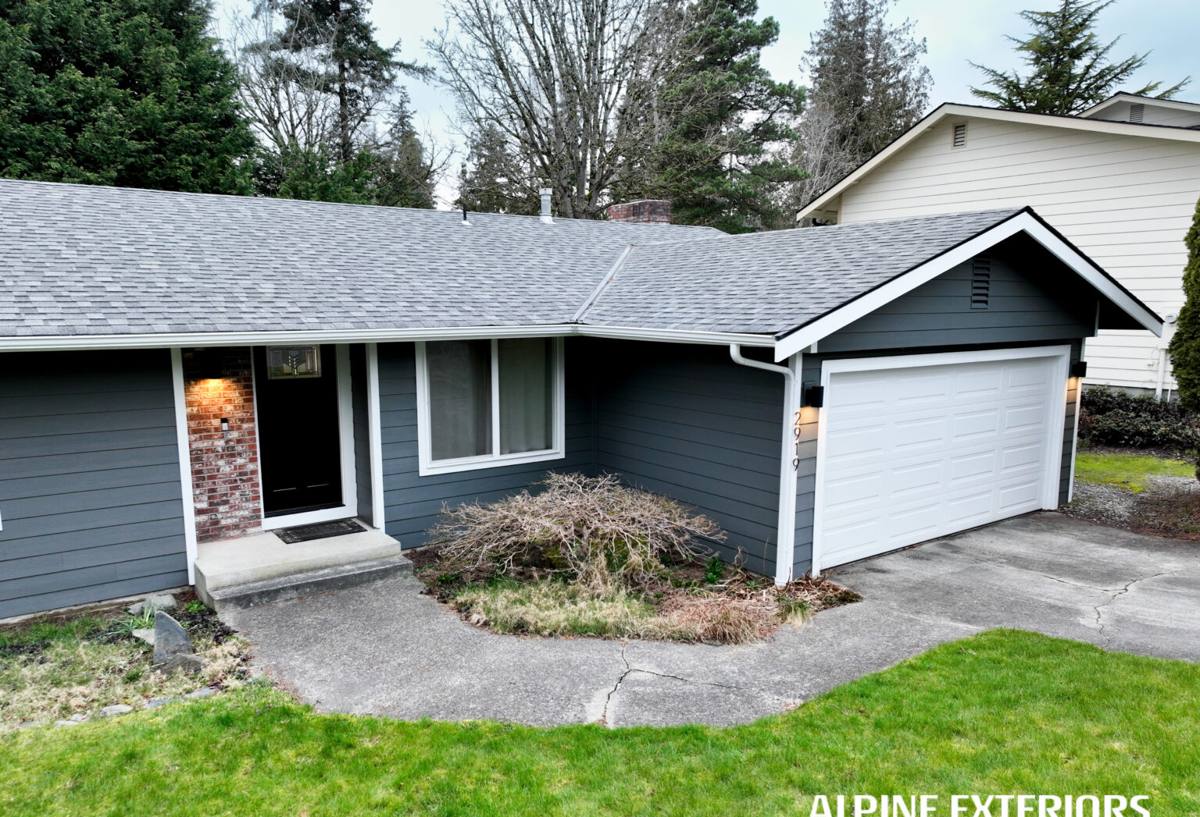
Signs Your South Hill Home Needs Replacement, Not Another Repair
Visual Warning Signs
Persistent moss or dark streaking that comes back within weeks of cleaning is usually a sign the siding surface itself is holding moisture rather than shedding it. Cracking, warping, or bubbling paint — especially on the sun-exposed sides — points to a substrate that's absorbing water and moving with it. Soft spots you can press in with a thumb are a red flag no matter how small the area looks.
Signs Hiding Behind the Surface
Some of the worst damage doesn't show until the old siding comes off. Musty smells near exterior walls, interior drywall that feels cool or damp to the touch, or trim boards that have separated slightly from the wall can all mean water has been getting behind the cladding for a while. On older South Hill homes, it's also common to find layers of past siding stacked on top of each other, each one trapping moisture against the one underneath. A patch-and-paint repair doesn't fix any of that — it just covers it up for another season.
What a Correct Siding Replacement Actually Involves
Tear-Off and What's Underneath Matters More Than the Siding Itself
The siding you see is the last layer of a system, not the whole system. A proper replacement starts with full tear-off down to the sheathing so it can actually be inspected — not just glanced at. Any rotted sheathing, compromised framing, or old trapped moisture gets addressed before anything new goes up. Installing new siding over damaged sheathing just buries a problem that will keep spreading underneath it.
Weather-Resistive Barrier, Flashing, and Fastening
Underneath the siding, a correctly lapped weather-resistive barrier and properly integrated flashing around windows, doors, and roof lines are what actually keep bulk water out — the siding itself is the first line of defense, not the only one. Fastener placement and spacing matter too: too few fasteners, or fasteners driven in the wrong spot, are a common cause of siding that cracks, buckles, or blows loose in a strong storm.
Ventilation and Drainage Behind the Cladding
A rainscreen gap or drainage plane behind the siding lets any moisture that does get past the outer layer drain and dry out instead of sitting against the wall. In a climate with as much sustained dampness as Whatcom County sees, that detail is one of the biggest differences between a job that lasts fifteen years and one that lasts forty.
Why We Install Only James Hardie Fiber Cement
We don't install vinyl, LP SmartSide, primed spruce, cedar, or other fiber cement brands, and we're upfront about why. Each of those products has real strengths — vinyl is inexpensive and low-maintenance in mild, dry climates; engineered wood products can look warm and install quickly; cedar has a natural appearance a lot of homeowners love. But for the specific combination of salt air, driving rain, and extended moss season that South Hill deals with, we've found fiber cement holds up in ways the alternatives consistently struggle to match over the long run.
| Factor | James Hardie Fiber Cement | Vinyl Siding | Wood-Based Products (cedar, LP-type) |
|---|---|---|---|
| Moisture resistance | Engineered not to absorb and swell | Doesn't absorb water, but seams can let it behind the panel | Absorbs moisture; prone to swelling and rot if not maintained |
| Moss & mildew resistance | Factory finish resists organic growth | Can trap moisture behind panels, encouraging growth | Organic material is a natural food source for moss and fungus |
| Salt air durability | Non-organic, doesn't corrode or feed growth | Can become brittle over time in coastal exposure | Needs regular sealing/refinishing to hold up |
| Maintenance | Occasional wash; factory finish holds color | Low, but cracks/warps aren't repairable in place | Regular staining, sealing, or repainting required |
| Fire rating | Non-combustible | Combustible | Combustible |
The maintenance burden is really the heart of it. A wood-based product asks the homeowner to keep up with sealing and refinishing on a schedule, in a climate that makes drying time hard to come by. Vinyl skips that maintenance but is a sealed plastic panel system — once moisture finds a way behind it in a wet climate, it has nowhere to go. Fiber cement, installed correctly with proper drainage behind it, sidesteps both of those problems.
Matching the Right Hardie Line and Color to a South Hill Home
James Hardie engineers its HZ product lines by climate zone, and Whatcom County falls into the wetter, cooler HZ5 category — meaning the product formulation itself accounts for the moisture load a home here actually experiences, rather than using a one-size-fits-all board across the whole country. On top of that, ColorPlus factory-applied finish is baked on and cured under controlled conditions before it ever reaches the jobsite, which gives it a more consistent, longer-lasting resistance to fading and moisture intrusion at the finish layer than a field-applied paint job can match.
For color and profile, South Hill's mix of older character homes and newer builds means there's no single "right" answer — lap siding profiles tend to suit the neighborhood's more traditional homes, while panel or shingle-style accents work well on more contemporary ones. We walk through the available lines and colors as part of the estimate so the choice fits the specific house, not a generic recommendation.
Our Process, Start to Finish
- On-site assessment: we look at the existing siding, sheathing condition where visible, trim, and any problem areas before quoting anything.
- Written scope and product selection: a clear scope of work, product line, and color, with no vague allowances.
- Tear-off and inspection: full removal of old siding, with sheathing and framing checked and repaired as needed before moving forward.
- Weather barrier and flashing installation: properly lapped and integrated around every penetration.
- Hardie installation to manufacturer specification: correct fastener type, spacing, and clearances.
- Trim, caulking, and final detailing: the finish work that determines how clean the job looks and how well it sheds water long-term.
- Final walkthrough: going over the finished work with the homeowner before calling it done.
What Drives the Cost of a South Hill Siding Replacement
Every home is different, so we don't quote a number without seeing the house — but the factors below are what actually move the price up or down, and they're worth understanding before you start collecting estimates.
| Factor | Why It Affects Price |
|---|---|
| Home size & story count | More square footage and taller walls mean more material and labor, plus more staging/access work |
| Number of existing siding layers | Homes with multiple past siding jobs stacked up take longer to strip back to bare sheathing |
| Hidden water or rot damage | Sheathing and framing repairs found during tear-off aren't visible until the old siding is off |
| Trim, fascia & accessory work | Window trim, corner boards, and fascia are often replaced or repaired alongside the siding |
| Site access & elevation | Hillside lots, tight setbacks, or steep grades can add staging and scaffolding needs |
As a broad range, most South Hill homeowners find a full siding replacement lands somewhere between a mid-range and a larger home-improvement project — larger homes, extensive rot repair, or more complex trim work push toward the higher end. We give an exact number only after seeing the house in person, because guessing from a phone call does no one any favors.
Why Local Experience in Whatcom County Matters
A crew that's worked other South Hill homes already knows which walls tend to hold moss longest, how the wind-driven rain pattern up on the hill differs from a job three miles away closer to sea level, and what the local permitting and inspection process actually expects. That's not something a crew based outside the area picks up on their first job here — it comes from repeat exposure to this specific stretch of Whatcom County's weather and housing stock. It shows up in small decisions: where extra flashing attention goes, which elevations get prioritized for drainage detailing, how a job gets sequenced around the wetter months instead of fighting them.
A Practical Checklist Before You Sign a Siding Contract
- Get a written scope that names the exact product line, not just "fiber cement" or "Hardie board"
- Confirm whether full tear-off to sheathing is included, not siding-over-siding
- Ask what happens if rot or damage is found once the old siding comes off
- Confirm weather-resistive barrier and flashing details are spelled out, not assumed
- Check that the contractor is licensed, insured, and can speak to manufacturer installation requirements
- Ask about the manufacturer's warranty terms and whether it's transferable if you sell the home
- Get the color and profile selection in writing before work starts, not decided on-site
If your South Hill home's siding is showing its age, we're happy to take a look and give you a straightforward, no-pressure estimate — no obligation, just an honest read on what your home actually needs. The form below is the easiest way to get that started.