 Whatcom County
 Siding Built for Cordata's Weather, Not Just Its Curb Appeal
Cordata sits close enough to the water and the foothills that its homes take on a specific kind of weather stress: salt-laden air drifting in off the Strait, long stretches of driving rain through the fall and winter, and a moss season that can run eight months out of the year on north- and west-facing walls. Siding here doesn't just need to look good on installation day — it needs to shed water fast, resist the slow biological growth that comes with constant dampness, and hold its finish against airborne salt without chalking or fading. That's a different design brief than siding installed fifty miles inland, and it changes what "correct installation" actually means.
We install James Hardie fiber cement exclusively, and on a Cordata job that choice is doing real work: Hardie's HZ5 product line is engineered specifically for the freeze-thaw and moisture cycling common to the Pacific Northwest, and its factory-applied ColorPlus finish is baked on under controlled conditions rather than field-sprayed, which matters a lot when the goal is a finish that survives salt exposure and repeated wet-dry cycles for decades, not years.
What the Local Climate Actually Does to Siding
Salt Air
Homes in and around Cordata aren't beachfront, but the marine air off the Strait of Georgia and Bellingham Bay still carries salt inland on wind-driven moisture. Over time, salt exposure accelerates the breakdown of paint film on wood and some engineered wood products, and it can corrode standard fasteners and trim hardware if the wrong materials are used. Fiber cement doesn't corrode, and when it's finished with a factory clear-coat and fastened with the right corrosion-resistant hardware, salt exposure stops being a slow-motion failure point.
Driving Rain
Whatcom County's rain doesn't just fall — a good share of it comes in sideways during winter storms, which means it hits vertical wall surfaces directly rather than sheeting off a roof. That puts real pressure on every seam, joint, and penetration in a siding system. If the water-resistive barrier, flashing, and lap spacing underneath the siding aren't done right, driving rain will find the gaps eventually, no matter how good the surface material is.
Moss and Sustained Dampness
Shaded, north-facing walls in Cordata's tree-lined neighborhoods stay damp for extended stretches, which is exactly the environment moss and algae need to take hold. Moss growth on siding isn't just cosmetic — it holds moisture against the surface and, on materials that absorb water, can contribute to slow degradation underneath. Fiber cement doesn't feed mold or moss the way wood-based products can, but proper detailing (ground clearance, drip edges, adequate roof overhangs where possible) still matters for keeping growth from taking hold in the first place.
What a Correct Siding Installation Involves
The siding itself is only part of the system. Most siding failures we get called out to inspect aren't a materials problem — they're an installation or water-management problem. A correct job includes:
- Inspection and repair of the sheathing underneath before anything new goes up — covering rot or soft spots with new siding just hides the problem
- A continuous, properly lapped water-resistive barrier (WRB) installed shingle-style so water is directed down and out, not trapped
- Correct flashing at every window, door, deck ledger, and roof-to-wall intersection — this is where the majority of moisture intrusion actually starts
- Proper lap and joint spacing per manufacturer specs, with factory-cut or properly sealed field cuts to protect the fiber cement's core from moisture wicking
- Corrosion-resistant, manufacturer-approved fasteners set to the correct depth — not too tight, not too loose
- Adequate clearance from grade, decks, and roof lines to keep splash-back and standing moisture away from the bottom course
- Factory-finished ColorPlus panels and trim, minimizing field-painted cut edges that would otherwise be a weak point for water absorption
Skip any one of these steps and the siding can still look right for a year or two before problems show up — which is exactly why so many premature siding failures get blamed on "bad material" when the real cause was a shortcut in the install.
Why We Install Only James Hardie
We made a decision to standardize on one product system rather than offer a menu of options, because the "best" siding for Whatcom County's climate isn't really up for debate once you look at how different materials handle sustained moisture and salt exposure:
- Non-combustible core — fiber cement doesn't burn, which matters increasingly for insurance and wildfire-adjacent building codes across the state
- Engineered for this climate — the HZ5 line is formulated for Pacific Northwest moisture and temperature cycling, not a one-size-fits-all national product
- Factory-applied finish — ColorPlus is cured under controlled conditions, giving more consistent color retention and adhesion than field-applied paint, especially under salt and UV exposure
- Doesn't feed moss or rot — as a cement-based product, it doesn't provide the organic material that wood-based sidings do
- Strong transferable warranty — backed by the manufacturer and structured to carry some value to a future homeowner if the house sells
We're not going to pretend other products don't have their own advantages — vinyl is inexpensive, engineered wood products can be lighter to install, and cedar has a look some homeowners specifically want. But for the wet, salt-influenced, moss-prone conditions Cordata sees for most of the year, we've chosen to put our name behind one system we trust to perform for decades rather than install several products with different long-term risk profiles.
Cost Factors for a Cordata Siding Installation
Every home is different, but the line items that actually move the price on a Cordata project tend to be the same ones:
| Factor | Why It Matters Locally |
|---|---|
| Sheathing condition | Homes with prior moisture intrusion (common on shaded or poorly flashed walls) may need sheathing repair before siding goes on |
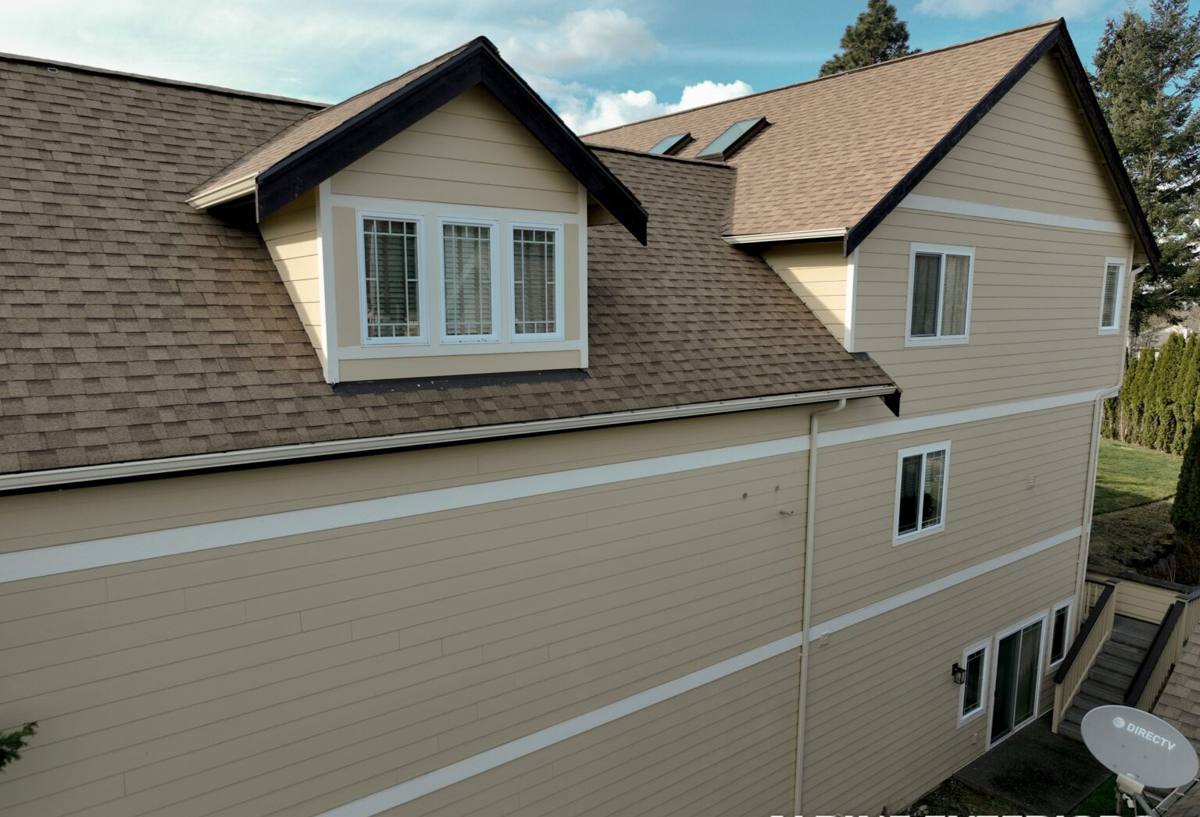
| Wall complexity | Dormers, multiple gables, and bump-outs increase flashing and cut work, which is where labor time concentrates |
| Existing siding removal | Tear-off of old wood, vinyl, or engineered wood adds disposal and labor cost but allows a full WRB inspection |
| Trim and accent scope | Board-and-batten accents, trim boards, and fascia wrap add material and detail time |
| Access and site conditions | Tree cover, tight lot lines, and slope common in Cordata can affect scaffolding and staging |
| Color and finish selection | Standard ColorPlus colors vs. custom field-painted options affect both cost and long-term maintenance |
Broad ranges for a full re-side vary widely depending on home size and the factors above — we'll give you an actual number after walking your specific home, not a number pulled from a national average.
Our Process on a Cordata Job
1. On-Site Assessment
We walk the exterior, check the condition of the existing siding and sheathing where visible, and look specifically at drainage, grade clearance, and any moss or staining patterns that point to chronic moisture areas.
2. Written Scope and Estimate
You get a clear breakdown of what's being replaced, what water-management work is included, product and color selections, and a firm price — no vague allowances.
3. Tear-Off and Sheathing Repair
Old siding comes off, sheathing is inspected, and any rot or damage is repaired before anything new goes up.
4. Water-Resistive Barrier and Flashing
This is the step that determines whether the siding lasts 10 years or 40. We install and lap the WRB correctly and flash every penetration before the first piece of Hardie goes up.
5. Hardie Installation
Panels and trim go up to manufacturer spec — correct fastening, spacing, and clearances — using crews who install this one product system daily rather than switching between materials job to job.
6. Final Walkthrough
We go over the finished job with you, point out anything you should know for long-term care, and make sure you're clear on warranty coverage.
What to Check Before You Hire Anyone
- Are they licensed and insured to do exterior work in Washington State?
- Do they carry manufacturer certification or specific training for the siding product they're proposing?
- Will they inspect and address sheathing and water-resistive barrier issues, or just cover what's there?
- Do they detail flashing at windows, doors, and roof-wall intersections in the written scope — not just "siding install"?
- Can they explain, specifically, why they recommend one siding product over another for your home and its exposure?
- Is the warranty from the manufacturer, the installer, or both — and what voids it?
Why Local Experience in Cordata Matters
A crew that's worked other homes in Cordata and the surrounding Whatcom County neighborhoods already knows which wall orientations tend to hold moss, where driving rain typically finds weak flashing on older homes, and how local permitting and inspection tends to go. That's not something a crew traveling in from outside the area picks up on the first job — it comes from repetition in this specific climate, on this specific building stock. It shows up in small decisions: where we add extra flashing attention, how we handle ground clearance on a lot with a slight grade, which wall we flag for closer moss and moisture history before we ever pull a panel off.
If your Cordata home's siding is showing moss buildup, cracked or warping boards, or you're just planning ahead for a replacement, we're happy to take a look and walk you through what your home specifically needs. Reach out for a free, no-pressure estimate — there's a form right below this page.