 Whatcom County
 Why Energy-Efficient Windows Matter in Sehome
Sehome sits inside Bellingham's Whatcom County marine climate, which means homes here deal with a very specific combination of conditions: salt-laden air drifting in off the water, long stretches of driving rain, cool damp winters, and a moss season that seems to start earlier every year. None of that is dramatic weather compared to other parts of the country, but it is relentless, and relentless is exactly what wears out a window. Old single-pane or early-generation dual-pane windows lose heat fast, fog up between the panes once seals fail, and let cold, damp air creep in around the frame. In a house that's heated most of the year, that adds up on the utility bill and it shows up as drafts, cold spots near the glass, and condensation on the inside of the window during the wetter months.
Replacing those windows with properly rated, properly installed energy-efficient units does two things at once: it cuts heat loss, and it closes off the entry points where wind-driven rain and moisture find their way into wall cavities. In a climate like Whatcom County's, those two goals aren't separate — a window that's efficient but poorly sealed will still let in the moisture that causes rot, and a window that's watertight but has a weak glazing package will still cost you money every winter.
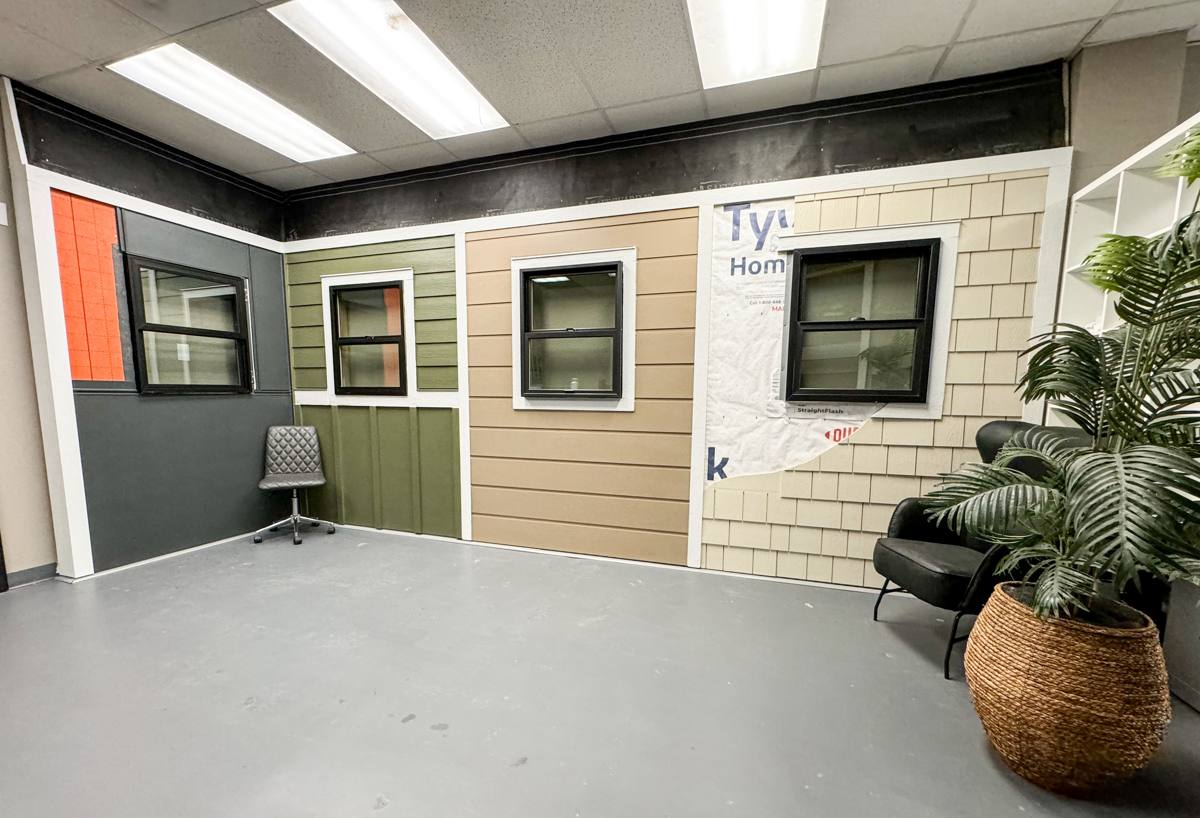
How the Local Climate Wears Down Windows
Salt Air and Metal Components
Homes closer to Bellingham Bay and the Whatcom County shoreline take on salt air that accelerates corrosion of window hardware — hinges, locks, balance mechanisms, and lesser-quality aluminum framing. Once hardware starts to bind or corrode, homeowners often prop windows or force them, which breaks weatherstripping and seals faster than normal wear would.
Driving Rain
Storms here don't just fall straight down — wind pushes rain sideways into window openings, which is why flashing and drainage detailing matter as much as the window unit itself. A window can carry a great efficiency rating and still leak if the opening around it wasn't built to shed water.
Moss and Sustained Dampness
A long moss season means extended periods of shaded, damp conditions on north-facing walls and anywhere airflow is limited. Moisture that lingers against wood trim or sills for weeks at a time is what eventually leads to soft wood, peeling paint, and interior staining below a window if the assembly isn't sealed and drained correctly.
Signs Your Sehome Home's Windows Are Underperforming
- Visible condensation or fog between the panes of a double-pane window (a sign the seal has failed)
- Cold air noticeably moving near the window even when it's closed and locked
- Interior condensation collecting on the glass or sill during cold, wet weeks
- Paint peeling, wood softening, or dark staining on trim below or around a window
- Windows that are hard to open, close, or lock due to swelling or corroded hardware
- A noticeable temperature difference in rooms with older windows versus newer ones
- Rising heating costs without a clear cause elsewhere in the home
What Actually Makes a Window Energy-Efficient
"Energy-efficient" isn't a marketing label — it's a set of measurable properties, and it's worth understanding them before comparing options.
U-Factor
This measures how much heat passes through the window — lower is better. For a marine climate like Whatcom County's, a lower U-factor keeps interior heat in during our long cool, wet stretches.
Low-E Coatings
A microscopically thin low-emissivity coating reflects heat back into the room in winter without noticeably darkening the glass. This is one of the biggest efficiency gains available and doesn't change how the window looks day to day.
Gas Fills and Spacer Systems
Argon or krypton gas between panes reduces heat transfer compared to plain air, and a warm-edge spacer (rather than older metal spacers) reduces the cold bridge at the edge of the glass, which is also where condensation tends to start first.
NFRC and ENERGY STAR Ratings
Look for the National Fenestration Rating Council label on any window you're considering — it lists U-factor, solar heat gain coefficient, and air leakage in a standardized format so you can actually compare products instead of relying on sales language. ENERGY STAR's Northern Climate Zone criteria are the relevant benchmark for our region.
Frame Material: What Holds Up in This Climate
| Frame Material | Performance in Marine Climate | Maintenance | Typical Trade-offs |
|---|---|---|---|
| Vinyl | Good moisture and corrosion resistance; won't rot or rust | Low — occasional cleaning | Frame can't be repainted; quality varies widely by manufacturer |
| Fiberglass | Excellent — very stable in temperature and moisture swings, resists warping | Low | Higher upfront cost than vinyl |
| Wood-Clad | Good if cladding and flashing are done correctly; wood core protected from weather | Moderate — cladding needs periodic inspection at joints | Any flaw in the cladding seal invites moisture into the wood core over time |
| Aluminum | Prone to condensation and corrosion in salt-air areas unless thermally broken | Moderate to high near the shoreline | We generally steer homeowners here away from non-thermally-broken aluminum for this reason |
We don't push one material on every job — the right choice depends on your home's exposure, existing trim details, and budget. What we won't do is install a frame material that we know performs poorly against salt air and standing moisture just because it's cheaper up front; that's a maintenance headache we'd rather you avoid.
Our Installation Process
The window unit itself is maybe half the job. The other half — and often the part that determines whether the installation lasts — is how the opening is prepped, flashed, and sealed.
- Assessment: We check the existing opening for rot, soft framing, or prior water intrusion before anything else. A new window installed over a damaged opening just hides the problem.
- Removal: Old units are removed carefully to avoid damaging siding or trim we plan to reuse.
- Flashing and drainage: We install proper flashing tape and drainage detailing so any water that does reach the opening sheds outward instead of sitting against the framing — this is the step that matters most in a driving-rain climate.
- Air sealing: Low-expansion foam or backer rod and sealant around the frame closes air gaps without bowing the frame out of square.
- Setting and shimming: The window is leveled, plumbed, and shimmed so it operates smoothly and seals evenly for years, not just on install day.
- Exterior finish: Trim and caulking are finished to shed water, matched to the surrounding siding and paint where possible.
- Final check: We test operation, locking, and seal continuity before calling the job done.
Installation Mistakes We See — and Avoid
- Relying on caulk alone as the primary water barrier instead of proper flashing
- Skipping a drainage path at the sill, which traps water against the framing
- Installing a window into a rotten or out-of-square opening without repairing it first
- Over-foaming the gap, which can bow the frame and cause it to seal unevenly or bind
- Ignoring existing moisture damage because it's "not part of the window job"
Any one of these can look fine on install day and cause a problem two winters later — after the driving rain and moss season have had time to find the weak point.
Cost Factors for Sehome Homeowners
| Factor | Why It Affects Cost |
|---|---|
| Window count and size | More or larger openings mean more material and labor |
| Frame material | Fiberglass and higher-end vinyl typically cost more than builder-grade vinyl or basic aluminum |
| Condition of existing openings | Rot or framing repair adds labor beyond a straightforward swap |
| Glazing package | Better low-E coatings and gas fills raise unit cost but lower long-term energy use |
| Trim and siding tie-in | Matching existing exterior trim or siding profiles takes more finish work |
We won't quote a number without seeing the openings — home to home, the condition of the existing framing makes a bigger difference than most homeowners expect. What we can tell you honestly is that the cheapest window on the market is rarely the cheapest option over ten years in this climate, once you factor in failed seals and moisture repairs.
Living With New Windows in a Marine Climate
- Wipe down sills and tracks periodically to keep drainage weep holes clear of debris and moss buildup
- Check exterior caulking annually, especially after a hard winter, and touch up as needed
- Keep gutters and nearby vegetation clear so water and moss have less chance to sit against upper-story windows
- Watch for condensation patterns — a small amount on a very cold morning is normal, but persistent fogging between panes means a seal has failed
- Operate locking hardware regularly so it doesn't seize from disuse or corrosion
Why Hire a Crew That Already Works in Sehome and Whatcom County
A window installer who works this area regularly already knows what Sehome's mix of older and newer housing stock tends to need — where flashing details get skipped in older construction, how local permitting works, and what a wall assembly here has to handle across a wet Whatcom County winter. That's different knowledge than a crew that mostly works drier inland climates and treats every job the same way. We size up each opening on its own condition rather than assuming a one-size install, and we stand behind the flashing and sealing work as much as the window itself — because in this climate, that's the part that actually keeps the water out.
If you're dealing with drafty, foggy, or hard-to-operate windows in Sehome, we're glad to take a look and give you a straightforward, no-pressure estimate — just fill out the form below.