 Whatcom County
 Why Sehome Decks Take More Punishment Than Most
Sehome sits on the hill above downtown Bellingham, close enough to Bellingham Bay that salt-carrying air reaches almost every exposed deck in the neighborhood. Add Whatcom County's long wet season — steady, driving rain from fall through spring, followed by a moss season that can start creeping in as early as October and hang around until late spring — and you've got a climate that is genuinely tough on outdoor lumber, fasteners, and finishes. A deck that would hold up for decades in a dry inland climate can start showing real trouble here in half that time if it wasn't built, or hasn't been maintained, with this weather in mind.
We work on decks throughout Sehome and the surrounding Bellingham neighborhoods, and the damage we're called out for follows a pretty consistent pattern. It's rarely one dramatic failure. It's slow, compounding moisture damage that a homeowner doesn't notice until a board flexes underfoot, a railing post has more give than it should, or dark streaks show up where water's been sitting.
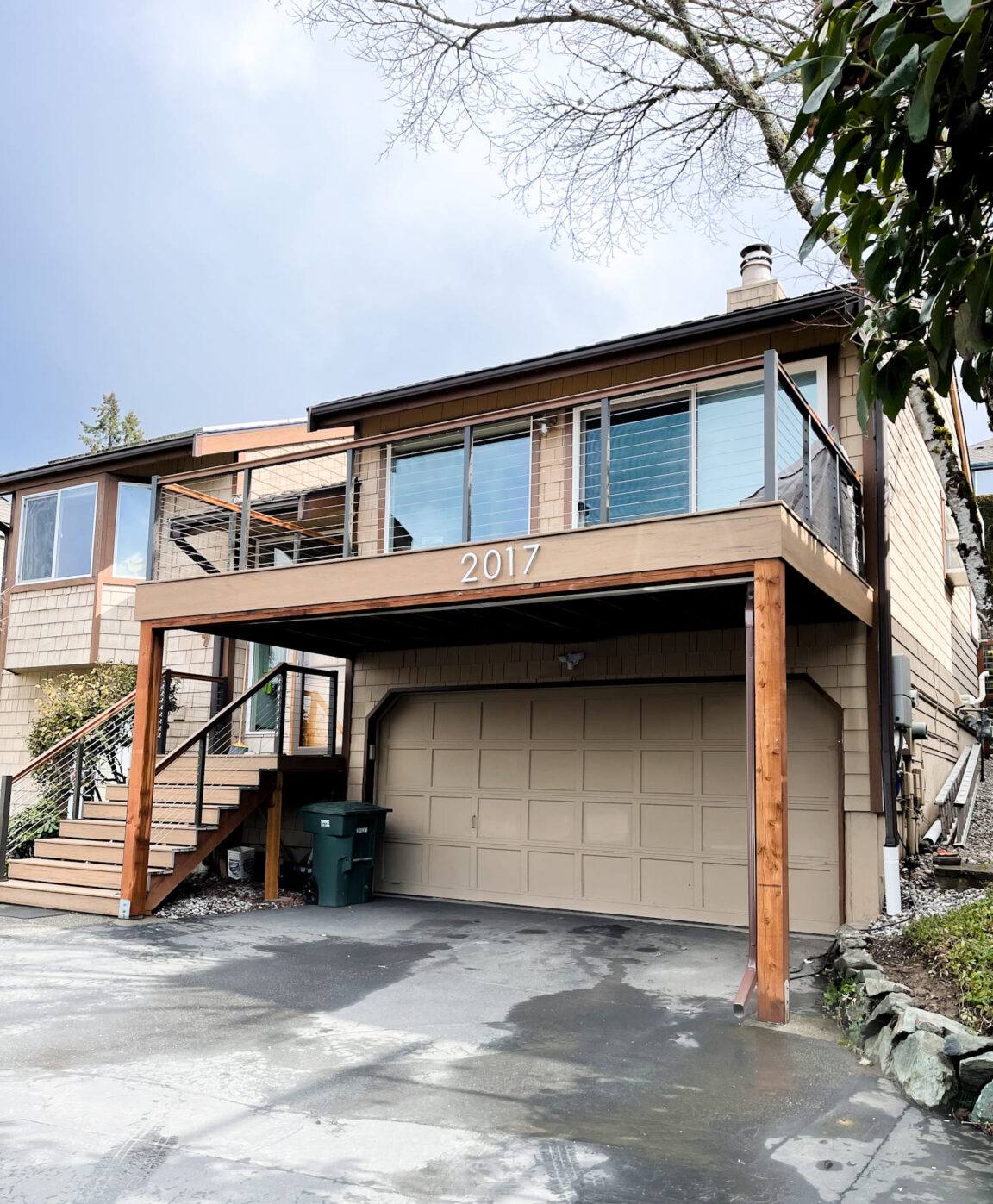
The Deck Problems We See Most Often Here
Rot at the Ledger Board and Post Bases
The ledger board — where the deck attaches to the house — and the bottoms of support posts are the two spots that hold water longest, and they're also the two spots doing the most structural work. When flashing behind the ledger fails or was never installed correctly, water gets trapped between the deck and the house siding and rots the framing from the inside out, often with almost no visible warning from the top. Post bases suffer the same way when they sit in standing water or direct ground contact instead of on a proper footing with an air gap.
Rusted and Failing Fasteners
Salt air accelerates corrosion on anything metal — nails, screws, joist hangers, bolted railing brackets. Once a fastener starts rusting, it loses grip strength long before it looks obviously bad, which is why a deck can feel "a little soft" for months before something actually gives. Older decks built with standard galvanized hardware, rather than the coatings rated for coastal exposure, are the ones we see fail earliest.
Moss, Algae, and Slick Decking
Shaded, north-facing, or tree-covered sections of a deck — common on the sloped, wooded lots around Sehome — stay damp for days after a storm, which is exactly what moss and algae need to take hold. Beyond looking bad, a mossy deck surface is a real slip hazard on stairs and ramps, and moss holds moisture directly against the wood underneath it, speeding up rot in the boards themselves.
Warped, Cupped, or Delaminating Boards
Repeated wet-dry cycling causes wood decking to cup, crown, or split along the grain. On composite decking, the same cycling — plus UV exposure — can cause surface delamination or fading, particularly on older composite products that predate today's capped formulations. Either way, the boards start trapping water instead of shedding it, which accelerates every other problem on this list.
What an Honest Deck Repair Actually Involves
A real repair addresses the cause of the damage, not just the symptom. Screwing down a loose board without checking why the joist underneath it got soft just buys a season or two before the same spot fails again. Every repair we do starts with figuring out how far the damage actually extends, because rot and corrosion both travel — a soft spot on the surface is often the smallest part of the problem.
What a Proper Inspection Covers
- Ledger board attachment and flashing condition where the deck meets the house
- Post bases, footings, and any ground contact or standing water around them
- Joist condition, especially where joist hangers or fasteners show rust staining
- Railing post connections — these take lateral load and fail differently than decking
- Stair stringers and stair connections, a common weak point on sloped Sehome lots
- Surface drainage — whether water is shedding off the deck or pooling on it
Repair vs. Replace: How We Actually Decide
Framing and structural members get judged on strength, not appearance — a joist can look weathered and still be structurally sound, or look fine on the surface and be soft two inches in. We probe suspect wood rather than guess from a visual check. Decking boards and railings get judged more on remaining service life and whether patch-repairing a mismatched section will look worse than it's worth. We'll always tell you plainly which category a given piece falls into rather than defaulting to "replace everything" or "patch everything."
Repair or Rebuild? The Real Cost Factors
Every deck is different, but these are the factors that actually move the decision and the price, more than anything else:
| Factor | Favors Repair | Favors Rebuild |
|---|---|---|
| Extent of rot/rust found | Isolated to a few boards or connections | Found at ledger, multiple posts, or several joists |
| Age of the deck | Under 12-15 years, built to a reasonable standard | Original construction is older or under-built for current use |
| Framing access | Damage is at the surface, framing is sound underneath | Framing itself is compromised or hard to inspect fully |
| Code compliance | Railings, stairs, and footings already meet current code | Older railing height, spacing, or footing depth is out of date |
| Your timeline for the house | Staying long-term, want to preserve what's there | Planning bigger changes to the outdoor space anyway |
Most of the decks we look at in Sehome fall somewhere in between — sound framing with isolated problem areas at the ledger, a few posts, or a section that's been shaded and holding moisture for years. That's the ideal scenario for a targeted repair rather than a full rebuild.
Our Deck Repair Process
- On-site assessment. We walk the entire deck, probe suspect areas, and check the ledger, posts, and railings — not just the boards that prompted the call.
- Written scope and estimate. You get a clear breakdown of what's damaged, what we recommend, and what it costs — no vague allowances.
- Structural repair first. Any compromised framing, ledger flashing, or post connections get addressed before anything cosmetic is touched.
- Fastener and hardware upgrade. Failed hardware gets replaced with fasteners and connectors rated for the corrosion exposure here, not just a like-for-like swap.
- Decking and railing repair or replacement. Damaged boards and rail components are replaced to match as closely as the existing material allows.
- Final check and maintenance guidance. We walk you through what was done and what upkeep will actually extend the life of the repair.
Materials We Use — and the Trade-offs We're Honest About
Pressure-Treated Lumber
Still the most common framing and decking material, and a reasonable choice when the goal is a durable repair at a moderate cost. It needs to actually dry and be sealed or finished on a normal schedule — treated lumber left unfinished in this climate will still gray, check, and eventually cup faster than a maintained board.
Cedar
Naturally rot- and insect-resistant and a good match on homes where appearance matters, but it's softer than treated lumber and needs consistent finish maintenance in a climate this wet — skipping a few years of sealing shows up fast in split or silvered boards.
Composite Decking
Low-maintenance and a good fit for shaded, moss-prone sections where wood struggles, but it's not maintenance-free — it still needs periodic cleaning to keep algae and mildew from taking hold on the surface, and installation details (proper spacing, ventilation underneath) matter more than with wood, since trapped moisture under composite boards causes its own problems.
Fasteners and Hardware
For repairs anywhere exposed to salt air, we use fasteners and connectors rated for coastal/corrosive exposure rather than standard galvanized hardware. It costs a bit more up front and it's the single biggest factor in whether a repair holds for years or needs revisiting in one wet season.
Maintenance That Actually Extends a Repaired Deck's Life
- Clear leaves and debris out of gaps between boards before they trap moisture through the fall and winter
- Rinse or gently brush off moss and algae as soon as it appears rather than letting it establish
- Check the ledger board area and post bases once a year for staining, softness, or gaps in flashing
- Reseal or refinish wood decking on the schedule the finish product actually calls for, not "when it looks bad"
- Keep gutters and downspouts near the deck clear so runoff isn't draining directly onto or under it
- Trim back vegetation that's shading and keeping deck sections damp longer than the rest of the yard
Why Hiring a Crew That Already Works in Sehome Matters
A deck built or repaired without this climate in mind tends to fail in predictable ways — and a crew that's already seen those failures on other Sehome and Bellingham decks catches them faster and fixes them right the first time. We know which details actually matter here: ledger flashing that holds up to sustained rain, hardware that won't give out to salt air in five years, and drainage that accounts for the sloped, often shaded lots common in this neighborhood. We're also familiar with Whatcom County's permitting requirements for structural deck work, so repairs that touch framing, footings, or railings get handled correctly from a compliance standpoint, not just a construction one.
If you're noticing soft spots, rust stains, persistent moss, or a railing that doesn't feel as solid as it used to, it's worth having someone look before it gets worse. We offer free, no-pressure estimates for deck repair in Sehome — use the form below to get a straightforward assessment of what your deck actually needs.