 Whatcom County
 Why Windows Fail Faster in Samish
Samish sits in one of the wetter, wind-exposed pockets of Whatcom County. Homes here deal with a combination that's harder on windows than most inland areas of Washington ever see: salt-laden air drifting off nearby water, driving rain that comes in sideways during fall and winter storms, and a moss season that stretches for months because things simply don't dry out. None of these on their own is unusual for the Pacific Northwest. Together, applied year after year to the same window units, they add up fast.
Salt air is corrosive to metal hardware, screws, and unprotected aluminum components. Driving rain finds any gap in flashing or sealant and pushes water sideways and even slightly upward into wall cavities, which is different from the straight-down rain that most window products and installation methods are designed to shed. And a long damp season means moss and algae get a foothold on sills, trim, and anywhere water sits for more than a day or two, holding moisture against wood and caulk long after the rain has stopped.
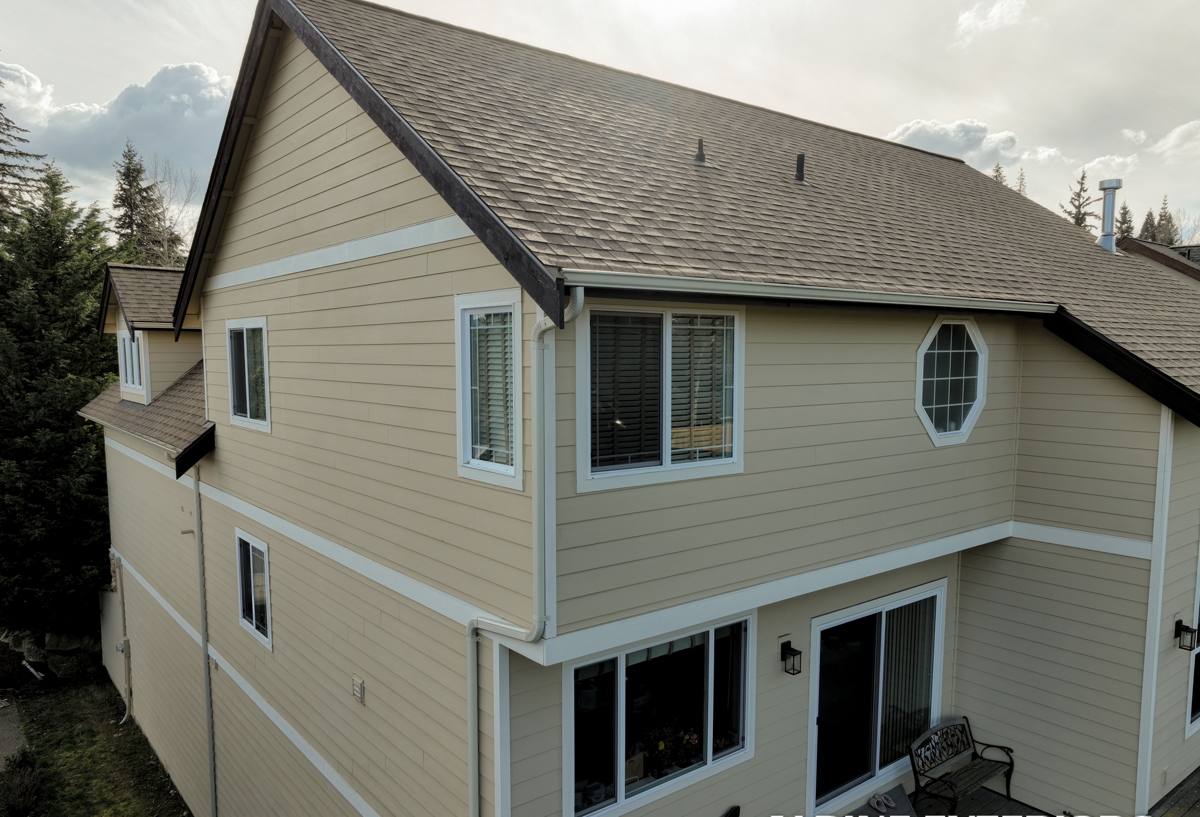
Signs a Samish Home Needs Window Replacement
Most homeowners don't wake up one day and decide they need new windows — the signs build slowly. In this climate, watch for:
- Fogging or a permanent haze between the panes of double-pane glass (the seal has failed and the gas fill is gone)
- Soft or discolored wood at the sill or bottom corners of the frame
- Visible moss or dark streaking on the exterior trim below the window
- Drafts you can feel with your hand near the frame on a windy day
- Windows that are hard to open, close, or lock — frames swelling and shrinking with moisture cycles
- A noticeable jump in heating costs from one winter to the next with no other explanation
- Paint that keeps peeling or bubbling on the interior sill no matter how often it's redone
Any one of these can be a minor fix. Several at once, especially on the same window or the same side of the house, usually means the unit and its surrounding seal are done.
What a Correct Replacement Actually Involves
Swapping in a new window is the easy part. What actually determines whether that window lasts is the work nobody sees once it's done — the flashing, the sealant, and how the new unit ties into the wall.
Flashing and Water Management
In a climate with driving rain, flashing has to be layered so that any water that gets past the outer trim is directed back out and down, never trapped behind the siding. That means proper head flashing above the window, side flashing that laps correctly with the weather-resistive barrier, and a sill pan underneath to catch and drain anything that makes it through. Skipping the sill pan is one of the most common shortcuts in this trade, and it's exactly the detail that fails first in a wind-driven storm.
Sealing Without Trapping Moisture
Caulk and sealant matter, but so does knowing where not to seal. A wall needs to be able to dry out if a little moisture does get in. We use sealants rated for exterior exposure and marine-adjacent conditions, and we leave the correct weep paths and drainage gaps rather than caulking a window shut on all four sides, which can trap water inside the wall assembly.
Fit and Insulation
Gaps around the new frame get filled with low-expansion foam or backer rod and sealant, not just stuffed with fiberglass insulation, which does nothing to stop air or moisture movement. A tight, well-insulated gap is what actually shows up as a lower heating bill.
Choosing Frame Materials for This Climate
Every window material has a trade-off in a salt-air, high-moisture environment. There's no single "best" option for every home — it depends on budget, exposure, and how much upkeep the homeowner wants to do.
| Frame Material | How It Holds Up Here | Maintenance Burden |
|---|---|---|
| Vinyl | Good moisture and salt resistance; won't rot or corrode; solid mid-range choice | Low — occasional cleaning |
| Fiberglass | Very stable in temperature swings, holds paint well, strong resistance to moisture and salt | Low — very durable finish |
| Wood (unclad) | Classic look but most vulnerable to the moss-and-moisture cycle here without diligent upkeep | High — regular painting/sealing |
| Wood-clad (vinyl or aluminum exterior) | Wood interior warmth with a protected exterior shell; performs well if the cladding is properly sealed at joints | Moderate |
| Aluminum | Strong but conducts cold and is more prone to condensation and long-term corrosion near salt air unless it's a marine-grade finish | Moderate to high |
For most Samish homes, we steer people toward vinyl or fiberglass for straightforward performance, or a well-detailed wood-clad unit when the homeowner wants a specific interior look and understands the added care that comes with it. We'll walk through the honest trade-offs for your specific home rather than pushing one product line.
Our Process for a Samish Window Replacement
- On-site assessment. We look at every window being considered, check for hidden water damage around frames and sills, and evaluate the wall assembly, not just the glass.
- Honest scope and quote. You get a clear breakdown of what's being replaced, what materials are recommended and why, and what the job will cost — no pressure to do more than what's actually needed.
- Careful removal. Old units come out without tearing up more siding or trim than necessary, and we check the framing underneath for rot before anything new goes in.
- Correct flashing and sill pan installation. This is the step that determines whether the job holds up through a wet winter, and it's not optional in our process.
- New window installation, sealed and insulated. Set plumb and level, shimmed correctly, foam or backer rod in the gap, sealant only where it belongs.
- Exterior finish work. Trim, caulking, and touch-up paint or cladding restored to match the rest of the home.
- Final walkthrough. We test operation, locks, and seals with you before we call the job done.
What Window Replacement Costs
Pricing depends on window size, material, number of openings, and whether we find hidden rot or framing damage once the old unit is out — which is common in homes that have gone a long time between window services in this climate. Broadly, homeowners should expect:
| Factor | Effect on Cost |
|---|---|
| Frame material (vinyl vs. fiberglass vs. wood-clad) | Vinyl is typically the most budget-friendly; fiberglass and wood-clad run higher |
| Number of windows replaced at once | Doing several together usually lowers the per-window cost versus one-off jobs |
| Hidden rot or water damage found at removal | Adds labor and material cost to repair framing before the new window goes in |
| Window size and style (standard vs. custom shapes) | Larger or custom units cost more than standard sizes |
| Existing siding/trim condition | Older or damaged exterior finishes may need extra repair work around the new opening |
We'd rather give you a real number after seeing the windows than a rough figure that doesn't hold up once we're on site. That's what the free estimate is for.
Why It Matters to Hire a Crew That Already Works This Area
Window replacement isn't the same job in Samish that it is on the dry side of the state. A crew that regularly works Whatcom County's wet, salt-exposed conditions already knows to spend the extra time on flashing and drainage details that a crew from a drier region might treat as optional. That local experience shows up in the parts of the job you don't see — the sill pan under the window, the way the weather barrier is lapped, the sealant chosen for salt exposure — long before it ever shows up as a problem.
It also means we're not guessing at how a given product will hold up here. We've seen which frame materials and finishes actually last through a Whatcom County winter and which ones need more upkeep than homeowners expect, and we'll tell you that plainly instead of just selling what's in stock.
Keeping New Windows Performing After Installation
A correctly installed window still benefits from basic upkeep in this climate. A short seasonal routine goes a long way:
- Rinse salt residue and grime off exterior glass and frames a few times a year, especially after storms
- Brush or wash moss and algae off sills and trim before it builds up and holds moisture
- Check exterior caulking annually for cracking or gaps, particularly after a hard freeze
- Keep gutters and downspouts clear so runoff isn't sheeting directly down over window heads
- Operate locks and hardware periodically so they don't seize from disuse and moisture
- Watch for condensation between panes as an early sign of a failing seal on any window, new or old
None of this is heavy maintenance, but skipping it is how a good installation ends up looking neglected years before it should.
Get a Straight Answer for Your Home
If you're not sure whether your windows need full replacement, a repair, or just some catch-up maintenance, we're happy to take a look and tell you honestly which one it is. Reach out for a free, no-pressure estimate using the form below, and we'll walk your home with Samish's climate in mind, not a generic checklist.